How many times have you been faced with the challenge of designing a cultural center? While this may seem like quite a feat, many architects have had to design a program that blends a community center with culture.
Among the projects published on our site, we have found numerous examples that highlight different responses, from flexible configurations to sites that prioritize central gathering areas for citizens and activities. See our series of 50 community centers and their plans and sections below.
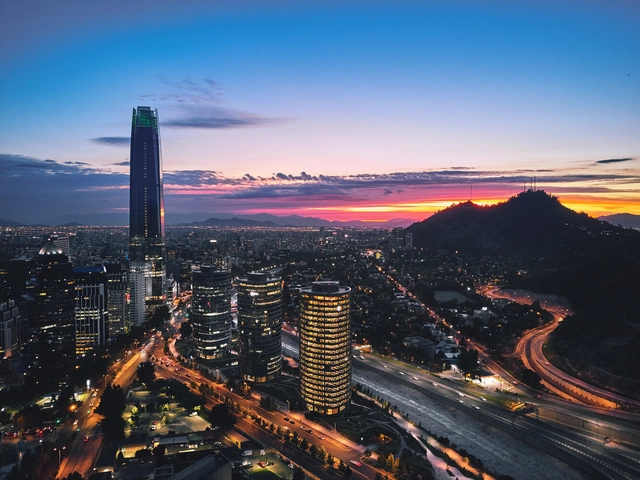
Founded in 1541 by the Spanish conquistador Pedro de Valdivia on indigenous settlements in the valley of the Mapocho River, Santiago is the capital and most populated city of Chile. This South American city is enframed by the Andes Mountains to the east and the Chilean Coast Range to the west, in addition to 26 island hills (cerros islas) scattered throughout the city. Some of these island hills have been converted into urban parks, such as Santa Lucía and San Cristóbal, while Chena, Calán, and Renca are in the process of expansion.
Choice of building materials and the inherent continuous reflection about the reach and capabilities of architecture are an interesting alternative way to approach this issue. The materials used in social housing should address local and economic possibilities and the real needs for access to housing in the contemporary context.
In this article, we analyze different projects published on our site to identify some of the predominant materials used in social housing, both for the formation of structures or enclosures. The intentions of this are two-fold: firstly, to create a worldwide panorama of different case studies with different construction styles from a range of geographical locations, and secondly, to provide inspiration and tools to architects to make better social housing.
Below we present 15 social housing projects and their diverse materials and construction styles.
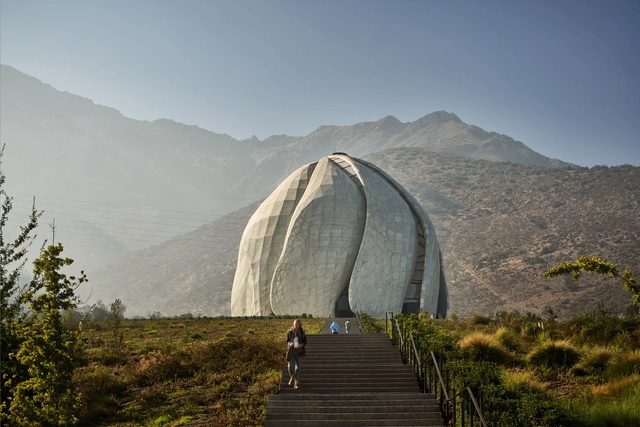
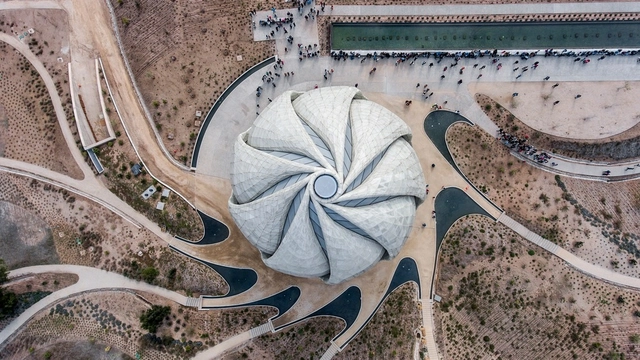
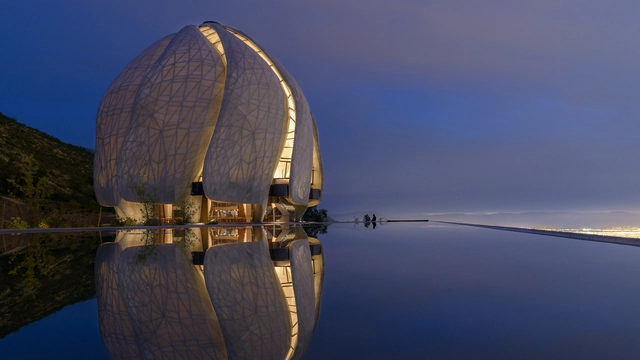
This year, the Bahá’í Temple of South America in Santiago, Chile, designed by Hariri Pontarini Architects of Toronto was selected as the winner of the 2019 RAIC International Prize, by the Royal Architectural Institute of Canada (RAIC). The prize celebrates a “single work of architecture that is judged to be transformative within its societal context and expressive of the humanistic values of justice, respect, equality, and inclusiveness”.
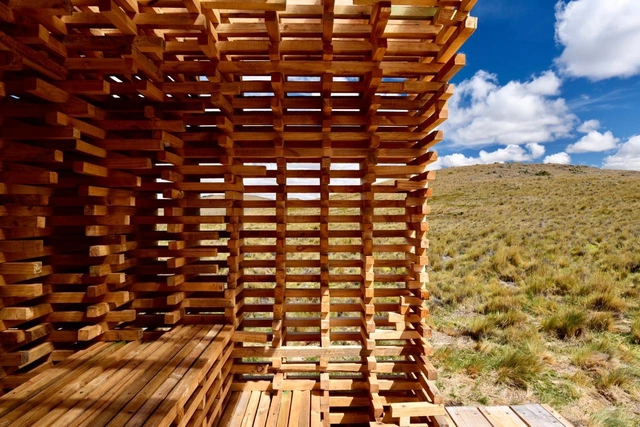
When the time comes to separate or close off spaces, it's important to keep in mind solutions that will adapt and cater to your project. In this step, it's important to define, not only the materials needed to complete the project, but how the final product will interact with the people who will use it. Some of the most highly recommended solutions are foldable, collapsable, stackable, or hanging mechanisms that allow interiors and exteriors to be integrated without completely losing their individual functions.
If you're looking for help or inspiration for this process, take a look at 6 projects that effectively utilize these versatile building systems.
The American Institute of Architects’ (AIA) Technology in Architectural Practice (TAP) Knowledge Community has announced the winners of their 2017 Innovation Awards, honoring “new practices and technologies that will further enable project delivery and enhance data-centric methodologies in the management of buildings for their entire lifecycle, from design, to construction and through operations.”
Located in the foothills of the Andes Mountains outside Santiago, Chile, the domed building was designed and built using computer modeling, measuring, and fabrication software, as well as custom glass, all of which culminated in nine monumental veils that frame an open worship space for up to 600 visitors. Completed in 2016, the project took 14 years to realize.
Now nearing completion just outside Santiago, Hariri Pontarini Architects' Bahá'í Temple of South America is currently one of the most significant religious construction projects in the world. In this article, originally published by Metropolis Magazine as "Sacred Structure," Guy Horton relates how - despite being in progress for almost a decade already - the design has changed remarkably little from the initial design sketch, using the latest technology to create a spiritual and emotional space.
For the last few years, in the Andean foothills just outside Santiago, Chile, a mysterious orb-like structure has been slowly rising under construction cranes. The new Bahá’i Temple of South America will be the first of its kind on the continent when it opens in 2016. It has been a historic journey for the Bahá’i faith in this part of the world—Bahá’i first arrived in Chile in 1919—and a patient journey for the architects, engineers, and builders who have brought the temple to life through a decade-long process of innovation.