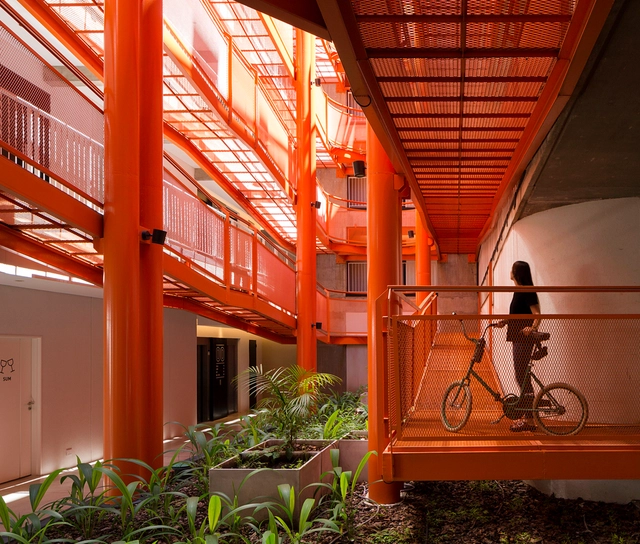
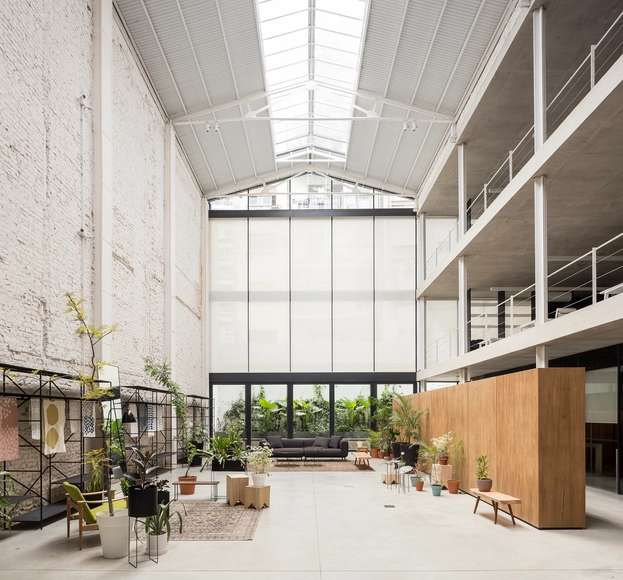
In collective housing projects, apartments, and residential complexes, design intentions regarding spatial qualities and atmospheres typically focus on the spaces where residents spend most of their time: the interiors of the housing units and, when available, common areas like gyms or multipurpose rooms. Circulation spaces, by contrast, are often treated merely as “transitional areas,” meaning they frequently address functional requirements rather than spatial experiences.
When designing residential interiors, architects increasingly lean toward creating environments where flexibility and space optimization provide solutions tailored to programmatic and functional needs, helping to achieve the well-being and comfort that turn a house into a true home.
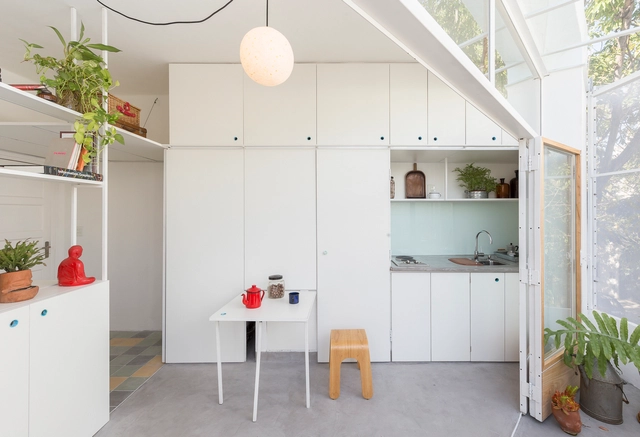
Achieving the best use of space, reducing the footprint of the buildings that are constructed and designing an optimal distribution that can meet the needs of their inhabitants are some of the requirements and challenges faced, day after day, by architects around the world. Through the implementation of certain materials, the definition of the morphology or even the geographical and natural conditions of the terrain, it is possible to carry out various strategies that make it possible to design homes with the comfort that their users need and in the smallest amount of square metres possible.
Regardless of the design adopted for kitchen spaces, for some years now and with increasing frequency, many architects have been deciding to design kitchens by integrating them into other rooms in the home. Free of dividing walls or joinery, integrated kitchens are implemented with the aim of leaving the activities that take place there in full view of everyone, encouraging interaction and communication between the inhabitants.
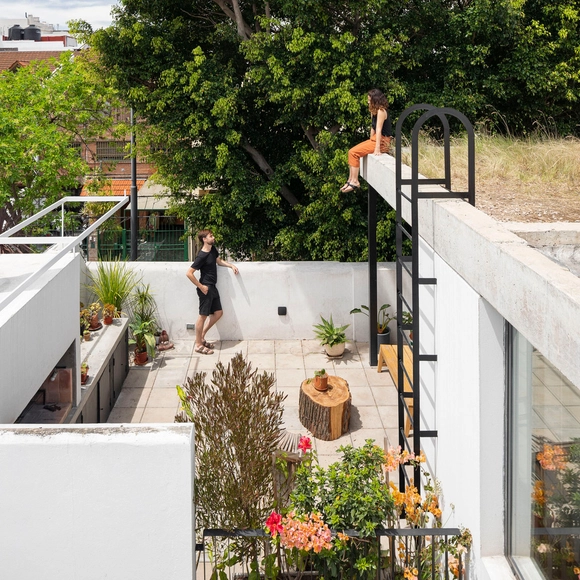
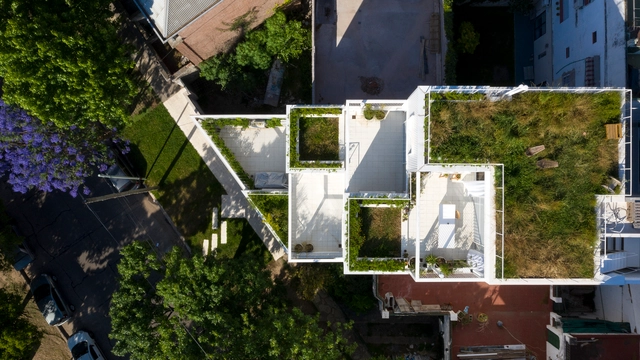
Over the last couple of years, terraces have become an important part of urban life, acting as a refuge, a space for enjoyment and gathering, for contemplation or as an outdoor workspace. As a result of periods of confinement around the beginning of the Covid-19 pandemic, these outdoor spaces where people can exercise, connect with nature, study or work, have become particularly popular with those living in large cities.
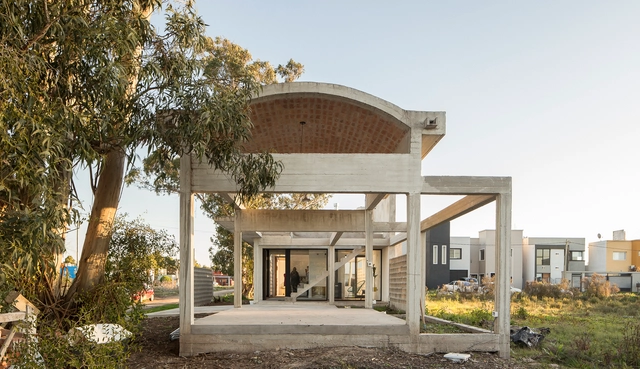
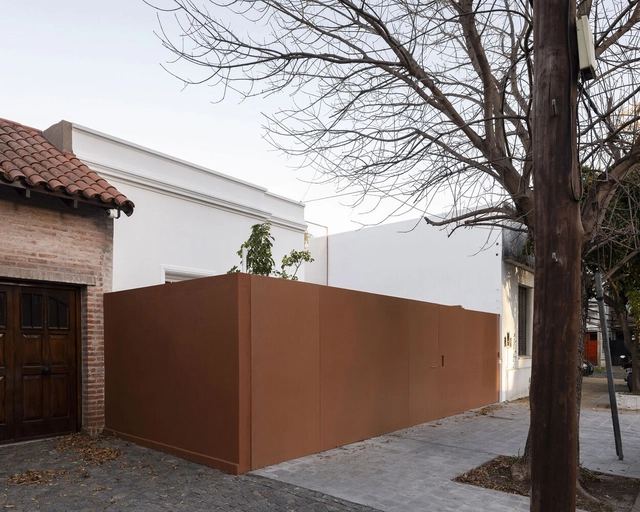
Categoría Viviendas PRO.CRE.AR - Mención: Vivienda en Arturo Seguí. Image Cortesía de Ezequiel Spinelli
The CAPBA Award in Argentina represents an opportunity to showcase the achievements and innovations of architects across their various professional fields. Works located both inside and outside the province of Buenos Aires, completed within the last 10 years, were eligible to enter. Organized by the Association of Architects of the Province of Buenos Aires, the jury for each category evaluated the submissions and awarded first, second, and third prizes, along with several honorable mentions.
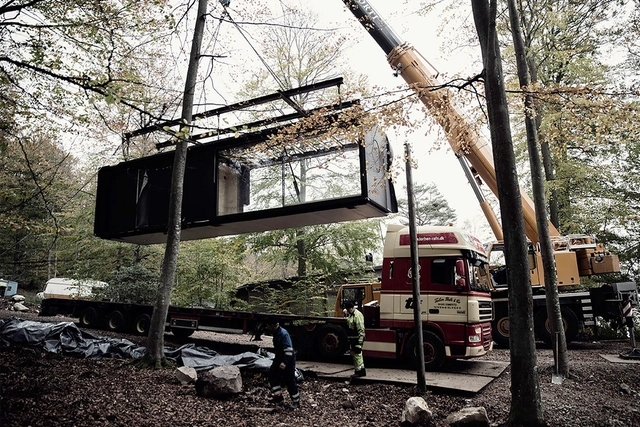
The popularity of pre-designed and pre-fabricated homes is growing, moving much of the construction process from the building site into factories. While countries like Singapore, Australia and the United Kingdom are increasingly adopting modular buildings to meet labor and housing shortages, Nordic countries like Sweden already build 90% of residential single-family houses in prefab wood. Despite the recent surge in interest, off-site building is by no means a new concept. In fact, the construction method has been present throughout history in many attempts to consolidate its use in construction: as far back as A.D 43, the Roman army brought with them prefabricated forts to Britain, while Japan has been building in wood off-site and moving parts in pre-assemblies for at least a thousand years.
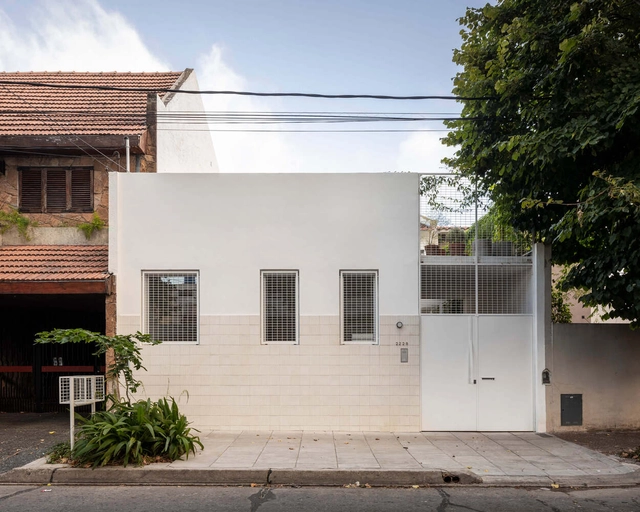
The new and growing demands for change driven by urban population growth mean that, when designing, we face a highly heterogeneous and constantly transforming fabric. Increased urban density directly impacts the open space available for new, standalone construction, leading to a juxtaposition of buildings where the simultaneity and coexistence of individual pursuits result in a varied fabric.
Tools developed for woodworking, along with new production, milling, and treatment techniques, have gradually yielded highly diverse, high-quality products in various sizes, strengths, tones, shapes, and colors. These advancements have allowed wood, as a resource, to meet a wide range of construction needs, serving as structural support, building envelopes, cladding, or furniture in a vast number of architectural projects.
Architectural photography has developed into its own art form, and it might be as important as the built work itself. We consume architecture not only physically and spatially in a building but also through photographs. A good image reportage work can give the viewer a feeling of the atmosphere, senses, and design intentions the project may spark, without actually being in the place. Photography is also a way of documenting the project's process, the use of materials, lighting, and architectural elements, and as a result, tell a complete story behind a building.
To celebrate World Photography Day, we've gathered a list of 25 architectural photographers from around the world who are worth knowing - and following on Instagram. These emerging photographers have been selected for their ability to capture architecture each in their own unique ways. Get to know them!
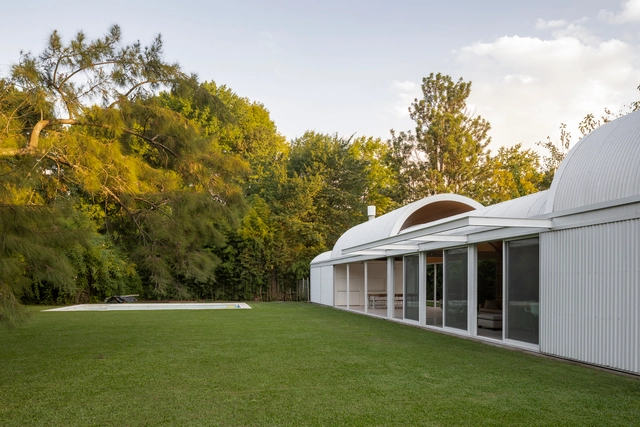
Whether applied as cladding to steel or timber frame structures or to structures built by traditional means, sheet metal offers an array of advantages as a building material, thanks to its low cost, ease of maintenance, and versatility.




.jpg?1654617049&format=webp&width=640&height=580)











_Simone_Bossi.jpg?1629234719&format=webp&width=640&height=580)
_Maria_Gonzalez.jpg?1629145604&format=webp&width=230&height=230&crop=true)
_Triệu_Chiến_01.jpg?1629145656&format=webp&width=230&height=230&crop=true)
_Alex_shoots_buildings.jpg?1629229852&format=webp&width=230&height=230&crop=true)
_Leonid_Furmansky.jpg?1629230142&format=webp&width=230&height=230&crop=true)
_Simone_Bossi.jpg?1629234719)