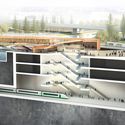
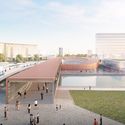
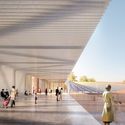
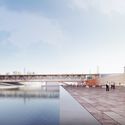
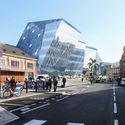
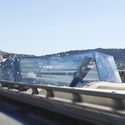
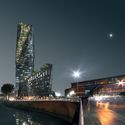
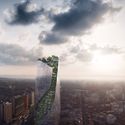
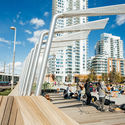
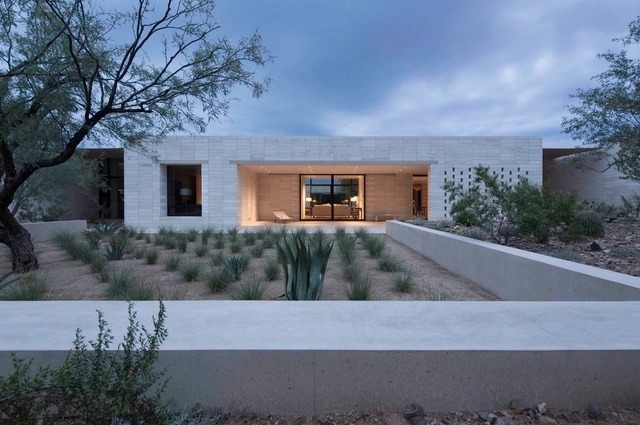
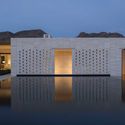
BIG and Silvio D'ascia Architecture have released new images of their competition-winning design for the new Pont de Bondy metro station in Paris. One of a total of 68 new stations commissioned as part of Société du Grand París’ Grand Paris Express project, the Pont de Bondy station will “[continue] the Parisian tradition of utilizing bridges as social spaces and cultural landmarks.”
https://www.archdaily.com/867745/sheridan-college-hazel-mccallion-campus-phase-ii-moriyama-and-teshima-architects-plus-montgomery-sisam-architectsValentina Villa
Until April 30th, the Louisiana Museum of Modern Art in Denmark is exhibiting the work of Wang Shu. The first in a new series of monographic exhibitions collectively titled "The Architect's Studio," this show of the work of the 2012 Pritzker Prize winner features an exhibition catalog that includes essays from Kenneth Frampton, Ole Bouman, Yiping Dong and Aric Chen. The following excerpt from the exhibition catalog, written by Kenneth Frampton, is republished here with the permission of the author and publisher.
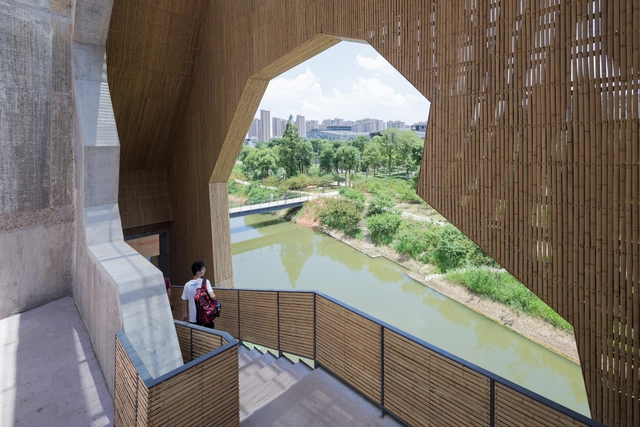
The work of the Amateur Architecture Studio has come into being in categorical opposition to the recent, rapacious development that has engulfed large tracts of the Chinese continent, and which was first set in motion by Deng Xiaoping’s 1983 decision to open up the People’s Republic of China to foreign trade, first with special economic zones and later with regard to the entire country. Based in Hangzhou, Wang Shu and Lu Wenyu have witnessed firsthand the juggernaut of maximizing Chinese modernization from its impact on their own city. Three decades ago, Hangzhou had been expressly chosen by them as a desirable place in which to live and work, largely because of its venerable artistic traditions and its harmonious report with nature, symbolized for them by the virtually sacred West Lake, set in the very heart of the city and traversed, then as now, by the flat-bottomed boats plying across its surface. Wang Shu’s unique sensibility takes as its point of departure the equally panoramic tranquility of traditional Chinese painting. As Wang Shu has written:
“I am always amazed by these paintings when I see that the trees, the buildings and mountains are not just placed haphazardly... every building is laid out in a certain way in relation to the landscape and the trees, the direction it faces depending on the light and the features of the location, which make it suitable for human habitation.”
Videos
Courtesy of Team Aesop (Josh Draper, Lisa Ramsburg, Powell Draper, Edward M. Segal, and Max Dowd)
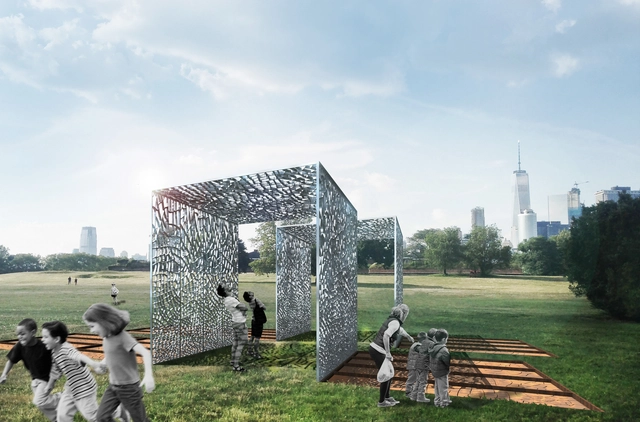
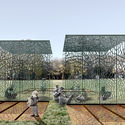
Cast & Place has been announced as the winner of the 2017 City of Dreamscompetition to create a pavilion for New York City’s Governors Island. Held by not-for-profit arts organization FIGMENT, the AIANY Emerging New York Architects Committee, and the Structural Engineers Association of New York, the competition called for a design to be the hub of FIGMENT’s free community arts festival during Summer 2017, based on questions of the future of New York, how design can confront environmental challenges, and how architecture can be built from recycled or borrowed material.
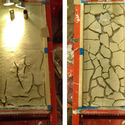
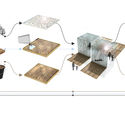
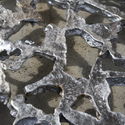
With these questions in mind, Cast & Place was conceptualized as a pavilion made entirely from waste. 300,000 recycled aluminum cans, cast into the cracks of dried clay, will form structural panels that assemble into shaded spaces for performance and play.
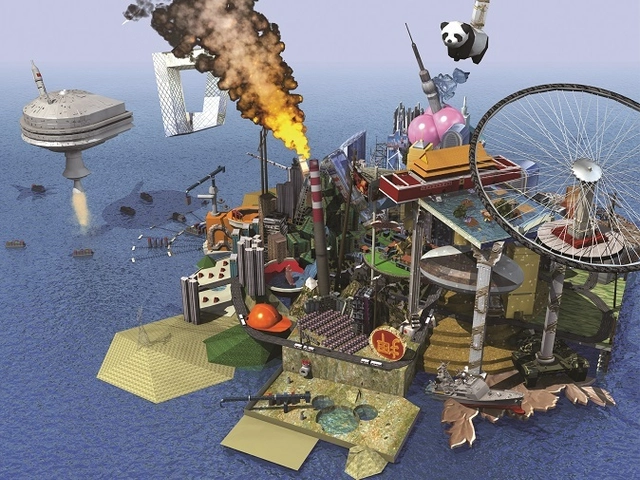
Utopia/Dystopia – A Paradigm Shift. Image Courtesy of MAAT
Following its official opening on October 5, 2016, the new MAAT building reopened to the public on March 22, 2017, with two major exhibitions that take up the whole building: Utopia/Dystopia – A Paradigm Shift, curated by Pedro Gadanho, João Laia and Susana Ventura – and Order and Progress by Mexican artist Héctor Zamora, curated by Inês Grosso.
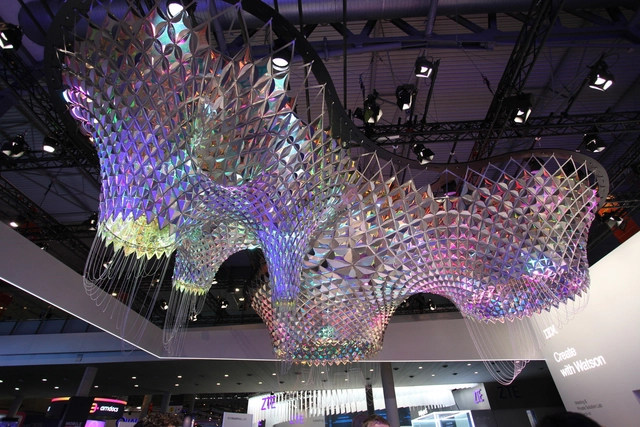
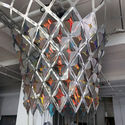
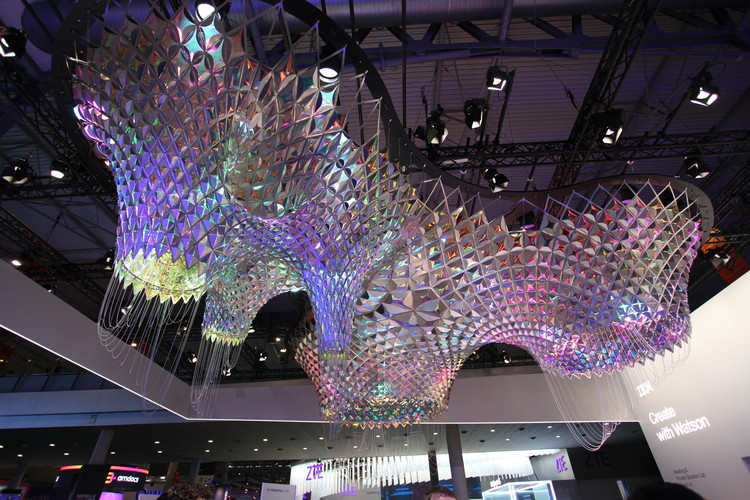
In order to help design the sculpture, Watson was taught about the history and style of Gaudí and the architecture of Barcelona through volumes of images, literary works, articles, and even music. From these references, Watson helped to uncover critical insights on patterns in Gaudí's work—like crabs, spiders, and color palettes—that the design team didn't initially associate with Gaudí. The resulting four-meter-tall sculpture features a structural surface made of over 1200 unique aluminum parts, and is unmistakably reminiscent of Gaudí’s work both in look and feel, yet entirely distinct.
The sculpture was on display from February 27 to March 2 at Mobile World Congress in Barcelona, where it interacted with visitors by changing shape in real-time, in response to sentiments from Twitter. To learn more about the sculpture, ArchDaily was given to opportunity to speak with IBMWatson Manager Jonas Nwuke.
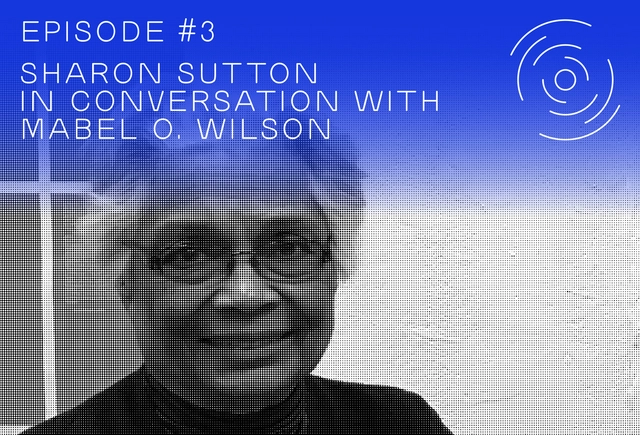
In this third episode of GSAPP Conversations, Columbia GSAPP Associate Professor Mabel O. Wilson speaks with Sharon Sutton about the publication of her new book, When Ivory Towers Were Black, which tells the story of how an unparalleled cohort of ethnic minority students earned degrees from Columbia University’s School of Architecture (GSAPP) during a time of fierce struggles to open the ivory tower to ethnic minority students.
Manufacturers: Cedar and Moss, Design Mode, Dulux, JR Furniture, James Dunlop Textiles, +8Kvadrat Maharam, Loose Leaf Greenery, Maharam, On the Side Pots, Sphera, Taubmans, Tiento Tiles, Unique Fabrics-8
https://www.archdaily.com/867585/no-19-biasolValentina Villa
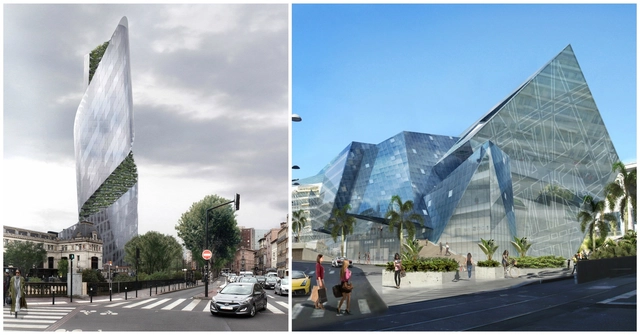
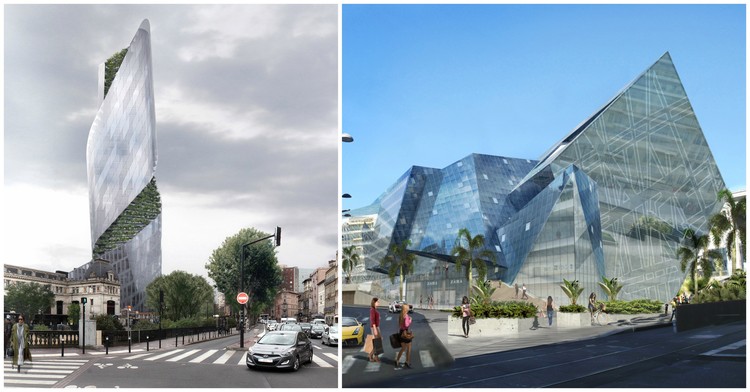
Studio Libeskind has won competitions for two new mixed-use projects in France, the firm announced at the MIPIM world property market conference this past week in Cannes. The first project comprises a retail, conference and transportation center for the city of Nice, while the second will see the firm complete a 150-meter-tall skyscraper in Toulouse.
“With these important projects in two of the main French cities, we unveil our new development strategy to create urban mixed-use buildings. Once completed, both will become new landmarks for Nice and Toulouse. With Studio Libeskind, we are up to great things!” says Philippe Journo, CEO of Compagnie de Phalsbourg, the developer behind both projects.
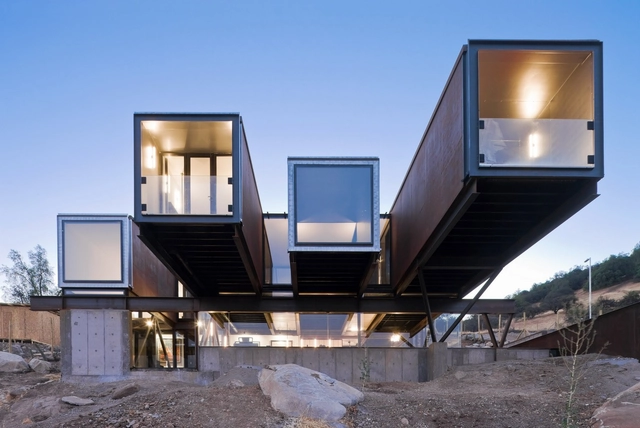
Architecture and music are two very different art forms – one is visual, tactile and logical; the other audial and emotional. So what happens when you bring these two artistic media together?
This is the idea explored by Chilean web series Insigne Sesiones, which aims to “[expose] he ideal mix between contemporary architecture and music, generating the first audiovisual project worldwide that officially joins these two disciplines.” For their first season, Insigne Sesiones invited six world-renowned musicians to perform their music in the intimate settings of some of the most celebrated works of Chilean architects across the country.