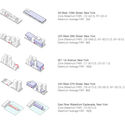
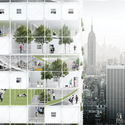
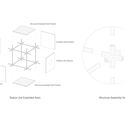
Beomki Lee and Chang Kyu Lee of Atelier L have unveiled their speculative project, Instant City: Living Air-Right, which proposes that affordable housing and public programs be built in the air rights of existing buildings in New York City.
As a response to the lack of home ownership in the city, the project aims to provide living space, as well as to foster community in an overlooked space.
One general trend in today's Information Age involves the absolute transmutation of downtime into productivity or engagement of any kind, however meaningless. We hear it all the time: we have lost our ability to be still. However, as a team at Ennead Lab has observed, some of the same technologies that are causing this shift in routine also have the potential to open new, empty pockets of time in our daily lives, and affect the built spaces with which we interact.
Tasked with designing an electric car charging station for a development in Shanghai, Ennead realized that the five hours required to fill up a single standard charge necessitate a place for customers to wait. In an article on Metropolis Magazine, they show that the promise of transportation-less people to stick around in one place for such a period of time opens up a host of possibilities for what could fill the latency period; the Shanghai project, however, focuses on the opportunity to create a civic space. The team has imagined the modern "gas station" as a vertical charging tower that calls upon the functionality of urban parking elevators in the 20th century, this time clad in reflective silver to serve as a beacon for customers in search of a charge. Rather than standalone charge-park towers, the projects are integrated into a system that encourages patrons to walk to neighboring zones to eat, shop, and socialize while they wait.
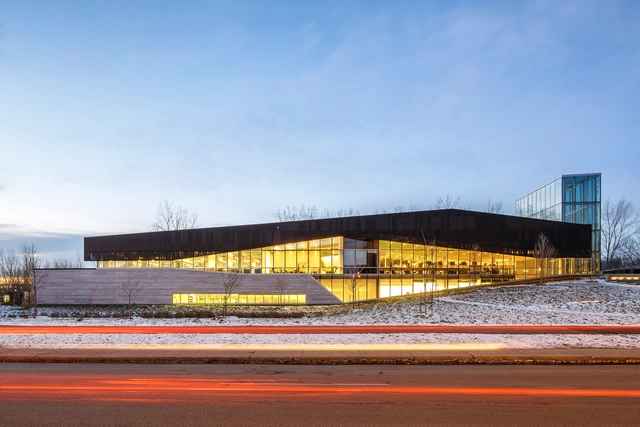
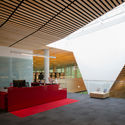
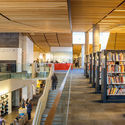
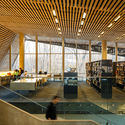
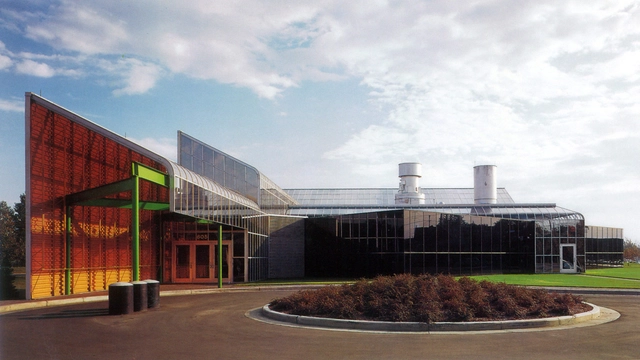
"The library offers a variety of beautifully lit and welcoming spaces throughout, maximizing daylight and views and the use of natural elements, such as wood, to create an environment that contributes to health and wellbeing,” said the jury. “Their approach to high-performance building through whole systems design and strategy has resulted in an impressive achievement.”
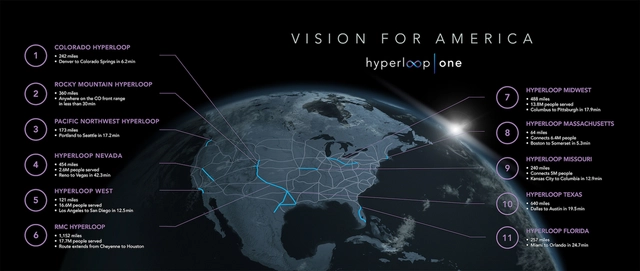
Hyperloop One has revealed the results of the second round of the Hyperloop Global Challenge, which is seeking proposals for future routes for their vacuum-powered transportation system. The semifinalists include 11 different routes connecting various major American cities. Check them out below.
A total of 85 buildings from the British capital have been shortlisted for the 2017 RIBALondonAwards, including projects from Wilkinson Eyre, AHMM, Allies and Morrison, Herzog & de Meuron, and Rogers Stirk Harbour. All 85 buildings will now be visited and carefully assessed by one of four regional juries, before the regional winners are selected in June of this year. Winning projects will continue on to compete for the RIBA Stirling Prize - the UK's highest honor for architecture.
See a complete list of shortlisted buildings after the break.
If I had to guess, I would say that it has been forty years since Columbus, Indiana, was the hot topic of cocktail conversations at design-related get-togethers in New York City. In those days, it was the supercharged patronage of industrialist J. Irwin Miller and his relationships with designers like Eero Saarinen and Alexander Girard that spurred a wave of innovative and provocative architecture in the small Midwestern town. Columbus, with a population of 45,000, has a Robert Venturi fire station, a John Johansen school, a park by Michael Van Valkenburgh, and several buildings by Eliel and Eero Saarinen, including the younger’s iconic Miller House.
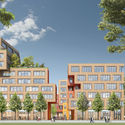
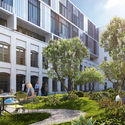
“I could not be more excited to realize our first European project in my hometown. Designed not just as a series of buildings but as an exploration of the spaces between the buildings, Die Macherei is an innovative design for a new way of working and interacting, integrating social activity and behaviors to promote a sense of community,” expressed Matthias Holwich, principal at HWKN.
With the 2017 Salone del Mobile now behind us, photographer Laurian Ghinitoiu has shared a collection of photographs from Milan Design Week. From housing prototypes to immersive "digital installations", the annual design show—which is often touted to be the fourth largest of any kind in the world—this year brought together a wide range of practitioners and design companies. In Milan, unusual collaborations are the order of the day.















.jpg?1490645887)
.jpg?1490646438 "© Yong Kwan Kim")
.jpg?1490645967 "© Yong Kwan Kim")
.jpg?1490646175 "© Yong Kwan Kim")
.jpg?1490646165 "© Yong Kwan Kim")
.jpg?1490645887)

















.jpg?1492020579&format=webp&width=640&height=580)
.jpg?1492020513 "SO-IL. Image © Laurian Ghinitoiu")
.jpg?1492020331 "COS × Studio Swine. Image © Laurian Ghinitoiu")
.jpg?1492020534 "SO-IL. Image © Laurian Ghinitoiu")
.jpg?1492020424 "DS+R. Image © Laurian Ghinitoiu")
.jpg?1492020579)