

-
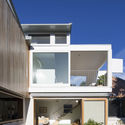
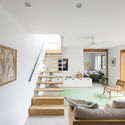
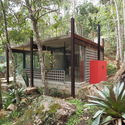
Architects: buck&simple
- Area: 140 m²
- Year: 2017
-
Manufacturers: Fisher & Paykel, American Oak, Astra Walker, Blackbutt, Bosch, +11



An 18th century baroque palace in Karlsruhe, Germany has become the canvas for a dazzling light mapping projection in the latest project by Zaha Hadid Architects.
Named “Behaviour Morphe,” the projection display was created in collaboration with composer Max Cooper and leading digital artists Andy Lomas and Mubbasir Kapadia for the city’s 2017 Schlosslichtspiele Festival, exploring how digital spatial concepts could shape the living spaces of the future.

For me architecture touches on so much of what it means to be human – it touches on society, on politics, on culture. And we need to negotiate all of those thresholds in order to design.
In this video for CNN Style, architect Amanda Levete, founder of London-based practice AL_A, discusses the importance of identifying and creating thresholds in design, in both the literal and abstract definitions of the term. Working at a wide variety of scales, AL_A strives to react to larger societal issues in their designs, creating points where perceptions and emotions can transform.

_Hedrich_Blessing.jpg?1505749276&format=webp&width=640&height=580)
American architect and MacArthur Fellow Jeanne Gang has been selected as the recipient of the 2017 Marcus Prize.
Awarded every two years by the University of Wisconsin-Milwaukee School of Architecture and Urban Planning in partnership with the Marcus Corporation Foundation, the $100,000 prize was established to recognize architects from around the globe currently “on a trajectory to greatness.” In addition to the cash prize, the award will support an upcoming design studio at the school led by Gang.
Previous winners of the award include Joshua Prince-Ramus (2015); Sou Fujimoto (2013), Diébédo Francis Kéré (2011); Alejandro Aravena (2009/2010); Frank Barkow, Barkow Leibinger (2007); and Winy Maas, MVRDV (2005).
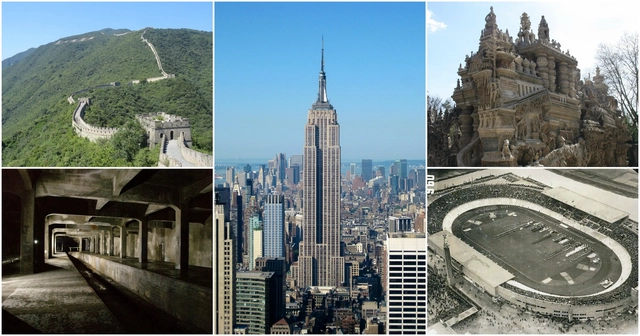
The history of humans building shelters goes back over 10,000 years. Over this time, the human need to build was distilled into the profession of architecture, and in the process it attracted all manner of eccentric, visionary, and stubborn individuals. In light of both architecture's long history and its abundance of colorful characters, it's no surprise that it's full of surprising and unlikely stories. From Lincoln Logs and the Olympics to Ouija boards and 9/11, here are 13 architecture-related facts you may not have previously known.
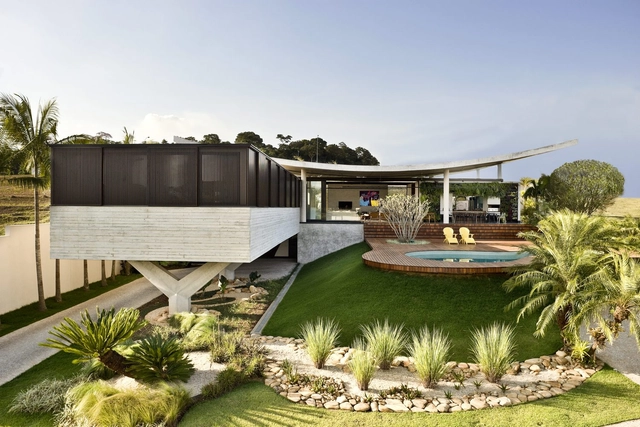

"Does this come in black?" is probably the most used phrase during any architect's shopping trip, but nobody really knows why. Search the internet for the reason that architects wear black, you will find that numerous people have written about the subject,—there’s even a book about it! The fact is that other people don't quite understand how many shades of black there actually are like you do. And it's also a common misconception that wearing black is all in the name of convenience, since looking for a specific item in your wardrobes takes 5 times longer when everything looks the same. In short, architects will continue to wear black... at least until something darker comes out.

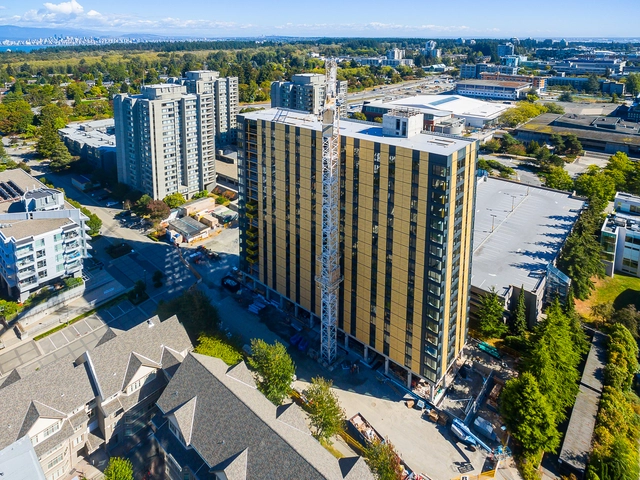
“Plyscraper,” “woodscraper,” call it what you will, but the timber age is upon us. Brock Commons Tallwood House, the recently completed student residence building at the University of British Columbia (UBC) in Vancouver, now occupies a prominent position within architecture: the tallest building with a timber structure in the world.


YAC – Young Architects Competitions – launches “Pinocchio Children’s Library,” an architectural competition to design a library dedicated to Pinocchio’s Adventures and available to children and adults alike. The initiative is in cooperation with the Foundation Carlo Collodi and supported by the Council of Architects of Pistoia, the School of Fine Arts of Florence, Touring Club, ISI Florence, and Casabella magazine, and it is part of the wider project “Collodi European Capital of Culture”. A cash prize of € 20,000 will be awarded to the winners selected by an internationally-renowned jury made by, among the others, Italo Rota, Fabio Novembre, Fedele Canosa (MECANOO Architecten), and Emmanuelle Moureaux.
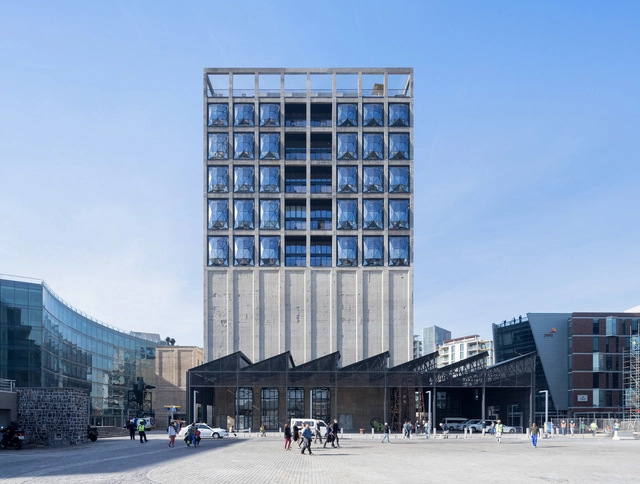
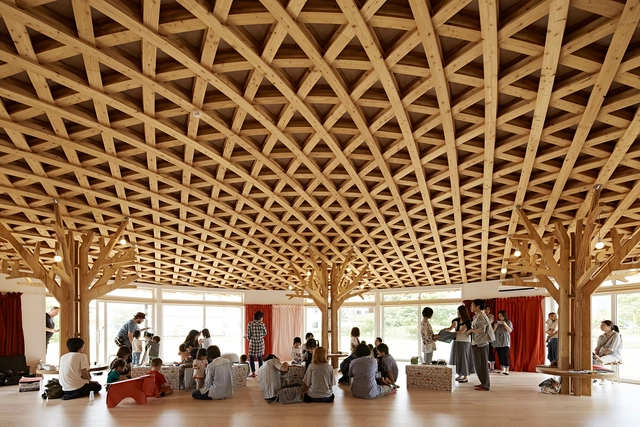

"The Glass Chain" (Die Gläserne Kette in its native German) was an exchange of written letters initiated by Bruno Taut in November 1919. The correspondence lasted only a year, and included the likes of Walter Gropius, Hans Scharoun, and Paul Gösch. In the letters, the penfriends—thirteen in all—speculated and fantasized about the possibilities of glass, imagining, in the words of Fredrik Hellberg and Lara Lesmes (Space Popular), "fluid and organic glass follies and colourful crystal cathedrals covering entire mountain chains and even reaching into space."
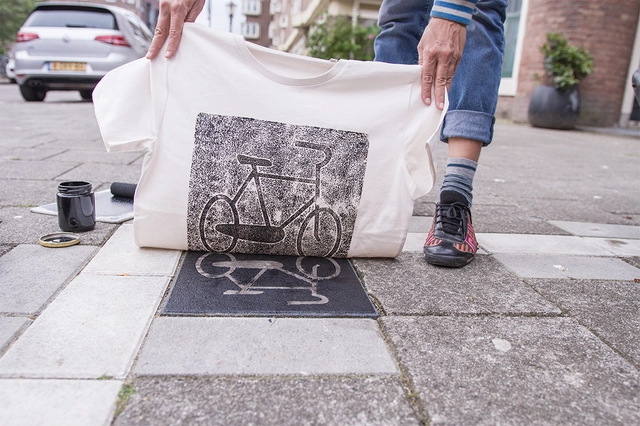
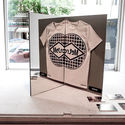
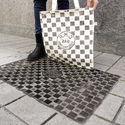
Raubdruckerin – German for pirate printers – have been traveling around Europe turning city streets into printing presses to develop a range of t-shirts, hoodies and bags. The result is fashion not just for the street but from the street.
Taking inspiration from the urban landscape and the often over-looked surfaces of the city, Raubdrucken apply their eco-friendly ink to man-hole covers, grids and patterned streetscapes and relief-print the outcome directly on to the fabric of their line. It is proof that everything can be inspiration for good design, and that beauty and richness can be found in the mundane, the utilitarian or perhaps in this case, the misunderstood.
.jpg?1505510121&format=webp&width=640&height=580)
When it comes to tall building design, it’s often the structural system where the most groundbreaking innovations are made. Premiering this week in partnership with the Chicago Architecture Biennial is a new exhibition highlighting the innovative structural systems of an architecture firm that has completed their fair share of tall buildings: SOM.
Titled SOM: Engineering x [Art + Architecture], the exhibition uncovers the concepts and forms of the firm’s greatest achievements, including revolutionary tall buildings such as the John Hancock Building, the Willis Tower and the current world’s tallest building, the Burj Khalifa. The exhibition reveals the research and thought processes through a range of media: hand-drawn sketches, interactive sculpture, immersive video, and most notably, a lineup of models at 1:500 showing the structural skeletons of 30 significant projects.

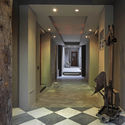

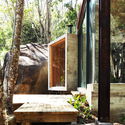
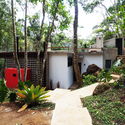
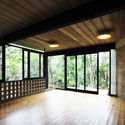

_Hedrich_Blessing.jpg?1505749257 "Arcus Center for Social Justice Leadership. Image © Steve Hall / Hedrich Blessing")
_Hedrich_Blessing.jpg?1505749243 "WMS Boathouse at Clark Park. Image © Steve Hall / Hedrich Blessing")
_Tom_Harris.jpg?1505749667 "University of Chicago Campus North Residential Commons. Image © Tom Harris")
_Ronald_Leon_Hale_-_Diner_en_Blanc_Chicago_2014.jpg?1505749688 "Diner en Blanc Chicago 2014 at Lincoln Park Zoo's Nature Boardwalk. Image © Ronald Leon Hale")
_Hedrich_Blessing.jpg?1505749276)
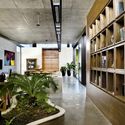
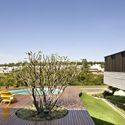
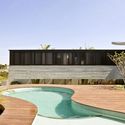




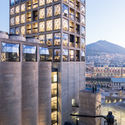






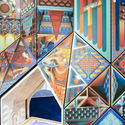
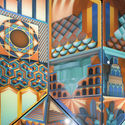
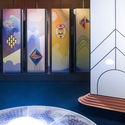



.jpg?1505510260 "© Laurian Ghinitoiu")
.jpg?1505510187 "© Laurian Ghinitoiu")
.jpg?1505510144 "© Laurian Ghinitoiu")
.jpg?1505510136 "© Laurian Ghinitoiu")
.jpg?1505510121)


