-
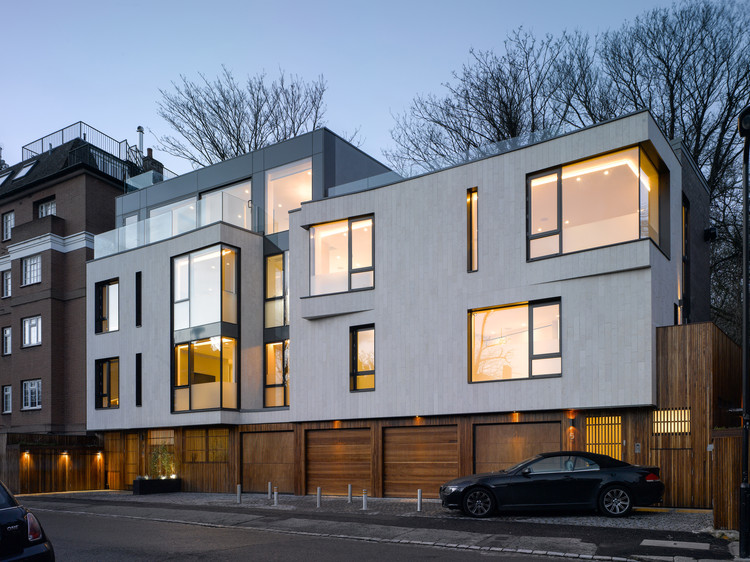
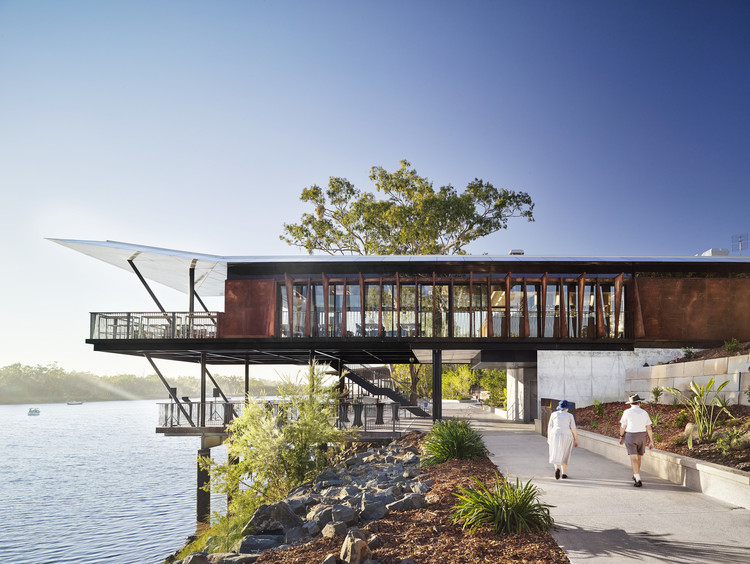
Architects: PleasantHouse
- Area: 2800 m²
- Year: 2017




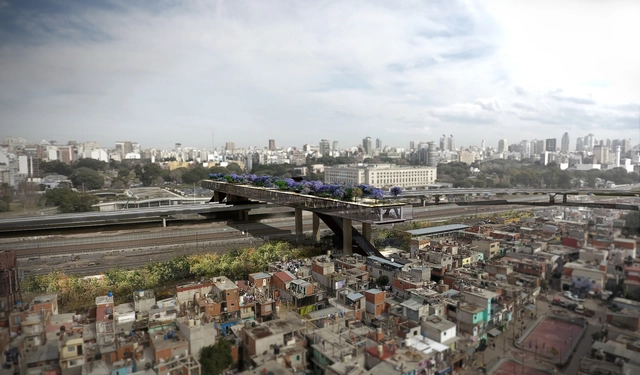
ELEMENTAL, the architecture office led by Alejandro Aravena, has proposed a solution to the physical integration of Villa 31 in the city of Buenos Aires. The building includes a raised linear park that aims to be the new headquarters for the Southern Cone of the Inter-American Development Bank Group and to facilitate access of the residents of the neighborhood to other areas of the city.
Learn more about the project, below.


Cornell University has named J. Meejin Yoon as the next dean for the School for Art, Architecture and Planning. Yoon, co-founder of Boston-based practice Höweler + Yoon, is the first woman to be named dean in the school’s 122-year history. She moves to Cornell after serving as dean for the architecture School at MIT, where she has been on faculty since 2001.
.jpg?1528082768)
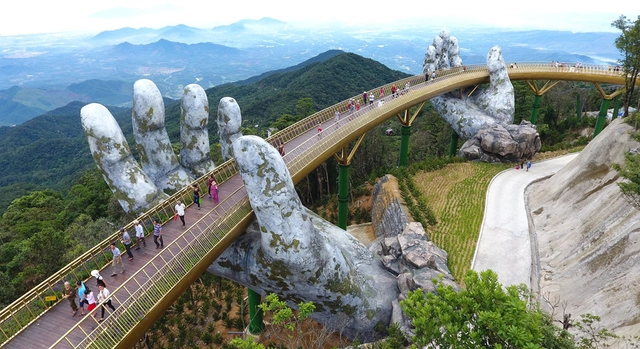
In the mountains above Da Nang, Vietnam sits a unique piece of bridge design. Winding its way around a 150-meter course lined with flowers, a golden bridge shimmers against the Ba Na Hills, supported by a pair of giant hands.
The Golden Bridge opened to visitors in early June, in the tourist retreat of Thien Thai Garden. The bridge sits 1,400 meters above sea level, an altitude which creates the illusion of a silk strip hiding in the clouds above Da Nang.

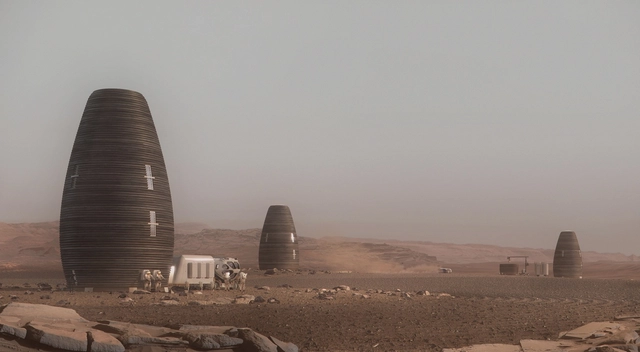
AI SpaceFactory has released details of their proposed cylindrical huts for the Planet Mars, designed as part of the 3D Printed Habitat Challenge organized by NASA. Project MARSHA (Mars HAbitat) was endorsed by NASA with a top prize of almost $21,000, one of five designs selected from a field of seventeen.
The competition asked participants to design an effective habitat for a crew of four astronauts to be located on the Red Planet, using construction techniques enabled by 3D printing. The submitted schemes were then ranked based on their innovation, architectural layout, and level of detail in BIM modeling.

This article was originally published by Common Edge as "Letter From Mexico City: An Insidious Memorial to a Still-Unfolding Tragedy."
You wouldn’t think it looking at Mexico City today—a densely populated metropolis, where empty space is hard to come by—but decades earlier, following a devastating earthquake on September 19, 1985, more than 400 buildings collapsed, leaving a collection of open wounds spread over the cityscape.
Exactly thirty-two years later, the anniversary of that disaster was ominously commemorated with an emergency evacuation drill. Then, in one of those odd occurrences in which reality proves to be stranger than fiction, a sudden jolt scarcely two hours after the drill led to what would be yet another of the deadliest earthquakes in the city’s history. Buildings once again collapsed, leaving a rising-by-the-hour death toll that eventually reached 361, as well as swarms of bewildered citizens wandering the streets, frantically attempting to reach their loved ones through the weakened cell phone reception. “We’d just evacuated for the drill,” people said, like a collective mantra. “How could this happen again?”

.jpg?1531461018)

On construction sites, workers are increasingly using drones to do what humans can’t. In the past, we’ve covered brick-laying drones, their impact (for better or worse) on the urban environment, and how the technology can help improve the accuracy of architectural renders. CNBC recently reported on how drones can be used to take aerial photos of construction sites at hard-to-reach angles—an innovation that has caused drone sales to sharply increase. According to the article, "construction drone usage has skyrocketed by 239 percent year over year."










.jpg?1532490622 "© Jatinder Marwaha")
.jpg?1532490706 "© Jatinder Marwaha")
.jpg?1532490746 "© Jatinder Marwaha")
.jpg?1532490687 "© Jatinder Marwaha")
.jpg?1532490637)





.jpg?1528082873 "© Ehsan Hajirasouliha")

.jpg?1528082852 "© Ehsan Hajirasouliha")
.jpg?1528082567 "© Ehsan Hajirasouliha")











.jpg?1531461302 "© Manolo R Solis")
.jpg?1531461057 "© Manolo R Solis")
.jpg?1531460902 "© Manolo R Solis")
.jpg?1531461153 "© Manolo R Solis")
.jpg?1531461018)