

-
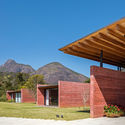
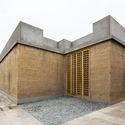
Architects: Sergio Mannino
- Area: 176 m²
- Year: 2018
-
Professionals: Minas Construction



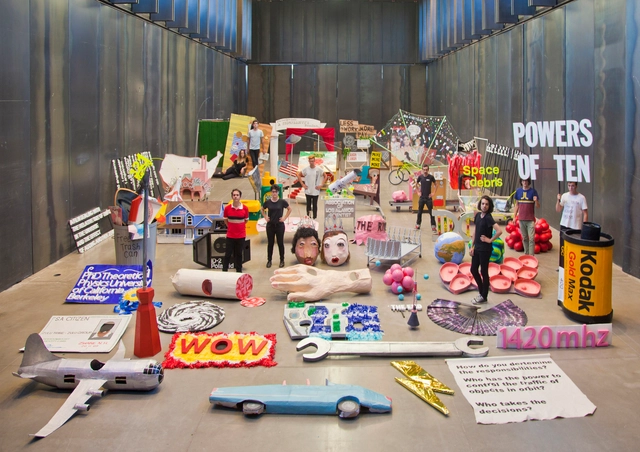
Dean Amale Andraos of the Columbia GSAPP has announced the appointment of Andrés Jaque as the new Director of the Master of Science in Advanced Architectural Design program (AAD). Jaque is the founder of the Madrid-based Office for Political Innovation and has been teaching advanced design studios at Columbia GSAPP since 2013.
On June, 1, Jaque will succeed Associate Professor Enrique Walker, who directed the program from 2008 to 2018. "I’m very thankful for the rigorous vision and dedication that Walker has brought to the program during his directorship," acknowledged Andraos. "Enrique established a strong legacy of bringing experimental approaches to research and design and built a program that is firmly grounded in forming positions through design," added.

Update: The final entry deadline has been extended to June 1st. Register your projects here.
It's time to get your applications ready! Now in its 11th year, the World Architecture Festival will take place in Amsterdam from November 28 to 30. Organizers expect nearly 500 architectural practices to compete for prizes in over 30 categories. The event moves to the historic Dutch city following two years in Berlin.
The Festival is the world's largest live architecture awards event--all shortlisted architecture projects are presented in person by the architects to an esteemed panel of judges. And this year, nearly half of the 120 judges are expected to be women.
This year’s Completed Buildings final super-jury will be chaired by MVRDV's Nathalie de Vries, and will also include Sir David Adjadye, Li Xiadong and Harvard GSD dean, Mohsen Mostafavi.
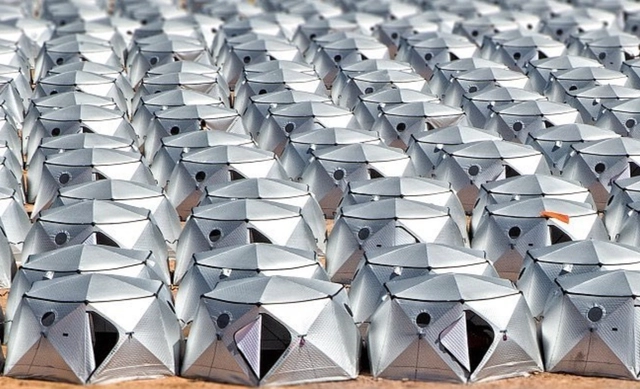
Following natural disaster or conflict, architecture plays a critical role in not only reconstructing lost infrastructure but also responding to the need for comfort and safety for those affected. Successful post-disaster architecture must meet both the short-term need for immediate shelter, as well as long-term needs for reconstruction and stability. Eight years after the 2010 Haiti earthquake, those displaced continue to reside in temporary shelters without adequate access to plumbing and electricity, revealing the critical importance of addressing long-term needs after disaster and conflict.
Below, we've rounded up 10 impressive examples of post-disaster architecture that range from low-cost, short-term proposals to those that attempt to rebuild entire communities from the ground up:

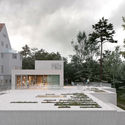
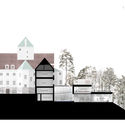
Transborder has announced their estimated completion date of 2020 for the extension to Oslo's Center for Studies of the Holocaust and Religious Minorities. The building, Villa Grande, was once the residence of the leader of the Norwegian Nazi Party during the invasion years. "This faceted legacy where important contributions to the appearance of the villa arose from a dark and hateful ideology, demanded a critical adaptation of the extension where one had to have a conscious attitude to historical layers of the building."


108 hours of lessons, a 60-hour workshop and internships/lectures held by internationally-renowned architectural firms like Foster+Partners (London), Studio Libeskind (New York) Partisans (Toronto) Emmanuelle Moureaux Architecture+Design (Tokyo) Dejaco+Partner (Bolzano) Alberto Apostoli (Verona) Veneziano+Team (Milan) Matteo Thun & Partners (Milan).


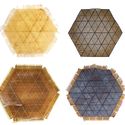
Neri Oxman and MIT have developed programmable water-based biocomposites for digital design and fabrication. Named Aguahoja, the project has exhibited both a pavilion and a series of artifacts constructed from molecular components found in tree branches, insect exoskeletons, and our own bones. It uses natural ecosystems as inspiration for a material production process that produces no waste. “Derived from organic matter, printed by a robot, and shaped by water, this work points toward a future where the grown and the made unite.”
Architecture isn’t just about big names and big buildings but about all kinds of social practices.
In the latest video from NOWNESS' Design Futures series, Eva Franch i Gilabert walks the streets of New York as she discusses the role of architecture and its potential for the future. Franch i Gilabert is a Catalan architect, educator, and curator. She is also London's Architectural Association's youngest, and first woman director.
.jpg?1525434430)

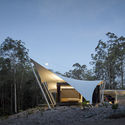
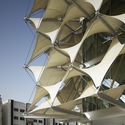
Capable of transforming a facade or shaping a sculptural roof form, tensile structures test the limits of our imagination (and understanding of geometry). This week’s photo set features structures that rely on cables, anchors, posts and membranes to create expansive, dramatic spans of open space bathed in natural light. Stark shadows and fair curves make tensile structures particularly photogenic, as captured in this set of images from Christopher Frederick Jones, Marie-Françoise Plissart, Yoshihiro Koitani and more.








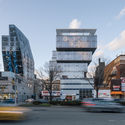


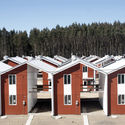
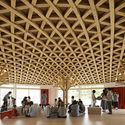
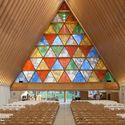



























.jpg?1525434765 "© Nico Saieh")
.jpg?1525434633 "© Nico Saieh")
.jpg?1525434861 "© Nico Saieh")
.jpg?1525434828 "© Nico Saieh")
.jpg?1525434430)