With the opening of the 16th Venice Architecture Biennale comes a look at the first ever contribution by the Holy See, an exhibition that brings together architects to design chapels that, after the Biennale, can be relocated to sites around the globe.
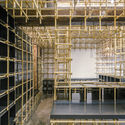
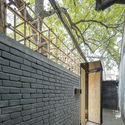
Located in a wooded area on the Venetian island of San Giorgio Maggiore, 10 chapels by architects including Norman Foster, Eduardo Souto de Moura, and Smiljan Radic, are joined by the Asplund Chapel by MAP Architects. This 11th structure serves as a prelude to the other chapels, while reflecting on Gunnar Asplund's 1920 design for the Woodland Chapel.
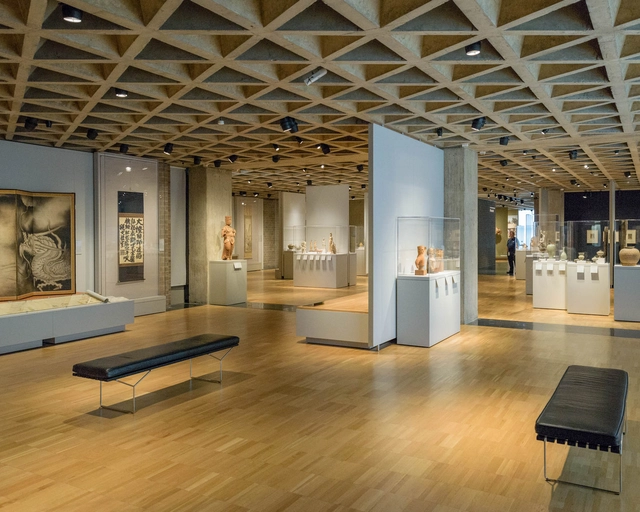
Yale University’s School of Architecture was in the midst of pedagogical upheaval when Louis Kahn joined the faculty in 1947. With skyscraper architect George Howe as dean and modernists like Kahn, Philip Johnson, and Josef Albers as lecturers, the post-war years at Yale trended away from the school’s Beaux-Arts lineage towards the avant-garde. And so, when the consolidation of the university’s art, architecture, and art history departments in 1950 demanded a new building, a modernist structure was the natural choice to concretize an instructional and stylistic departure from historicism.[1] Completed in 1953, Louis Kahn’s Yale University Art Gallery building would provide flexible gallery, classroom, and office space for the changing school; at the same time, Kahn’s first significant commission signaled a breakthrough in his own architectural career—a career now among the most celebrated of the second half of the twentieth century.
While 2016's Golden Lion-winning project 'The Unfinished' surveyed architecture after the construction crisis, this year's Spanish pavilion will explore architecture's future through the eyes of researchers.
The 'becoming,' an exhibition curated by Spanish architect Atxu Amann, opens its doors to the works and productions of architecture students developed between 2012 and 2017. According to the curators, "becoming makes an allusion to a vector of the future, with a common educational background in the 'EscuelaS,' which extends to other learning experiences in space and time, in dialogue with other disciplines."
https://www.archdaily.com/894879/spanish-pavilion-at-the-2018-venice-biennale-to-reflect-architectural-learning-environmentsArchDaily Team
Selected along with nine other architects by the Vatican, Carla Juaçaba has shared images of her proposed chapel design as part of the Venice Architecture Biennial, which marks the city-state's first time participating in the largest architectural event in the world.
The proposed chapel design seeks a harmonious integration between the water and trees that surround Venice, with the nearby vegetation outlining the interior space of the chapel. The space between the treetops - which offers a view of the sky - functions as the ceiling of the chapel.
Louisiana Channel has released a new video interview with acclaimed architect Daniel Libeskind, in which he retraces the story behind his architectural career. In the interview, Libeskind unravels his view of architecture, and the architectural profession, drawing comparisons between architecture and music, while reflecting on the adherence to legislation and inherent optimistic outlook required to practice architecture.
In the 30-minute in-depth interview, Libeskind guides observers through his childhood, the roots of his architectural career, and reflects upon his most noted schemes, including the Jewish Museum in Berlin and the World Trade Center Masterplan in New York.
https://www.archdaily.com/895087/daniel-libeskind-retraces-his-life-and-architectural-career-in-engaging-in-depth-interviewNiall Patrick Walsh
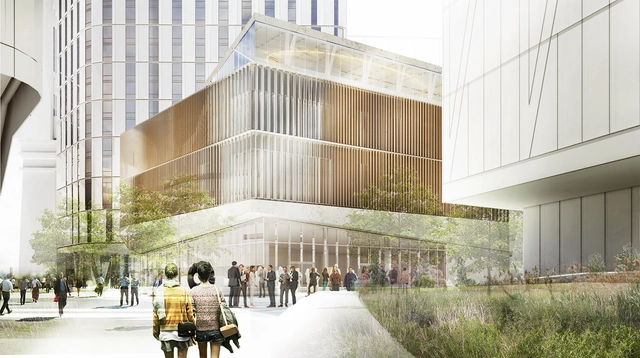
Verizon Executive Education Center and Graduate Hotel / Snøhetta and James Corner Field Operations. Image via New York City Public Design Commission
The New York City Public Design Commission and Mayor Bill de Blasio have announced the 11 projects selected as winners of their 2018 Awards for Excellence in Design. Established in 1983, the award has been bestowed annually to projects from the city’s five boroughs that “exemplify how innovative and thoughtful design can provide New Yorkers with the best possible public spaces and services and engender a sense of civic pride.”
The 2018 awards recognized projects which responded to the de Blasio Administration’s commitment to providing an “equitable, resilient, and diverse city for all New Yorkers.” All five New York boroughs feature in the awards, with schemes encompassing education, culture, art, and recreation.












.jpg?1526658323)



.jpg?1526658296)