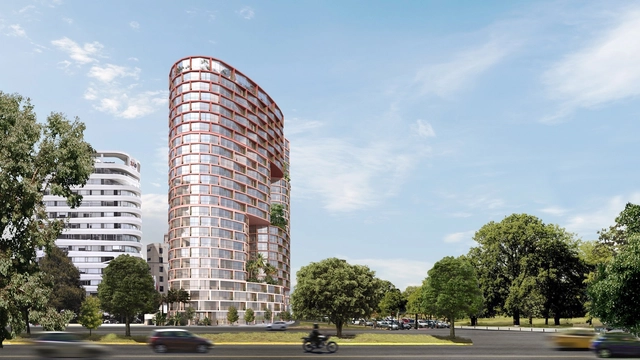
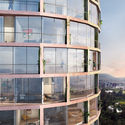
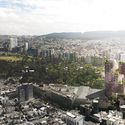
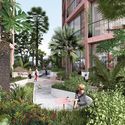
Bjarke Ingels Group and Uribe & Schwarzkopf have designed a 24-story rose-colored tower in Quito, Ecuador inspired by natural beauty, diversity, and the community of the city. EPIQ is BIG’s second building in the city, with a dynamic, porous structure clad in colored titles to echo the beauty of Quito, and to be the face of a new sustainable urbanism in the growing city.
Jennifer Bonner of MALL has been named one of the 2019 recipients of The Architectural League Prize for Young Architects + Designers. Each year, The Architectural League announces six firms as winners of the award, which spotlights young, innovative North American architects and designers. Bonner is known for work that reinvents materials, hacks typologies, and playfully reimagines everyday architectural elements from gable roofs to brick facades.
Architects are often noted for having bad work-life balance, a lot of stress and little free time. How can you take time off while still improving your skills as an architect? Can that time off even give you an extra edge? Compared to other fields, architecture stands out as a field in which you need to “know a little bit about everything." Thus, in order to live up to our name we must also do a little bit of everything, and as they say, a little goes a long way. So with that in mind, here are 11 activities which, while not obviously architectural, just might make you a better architect.
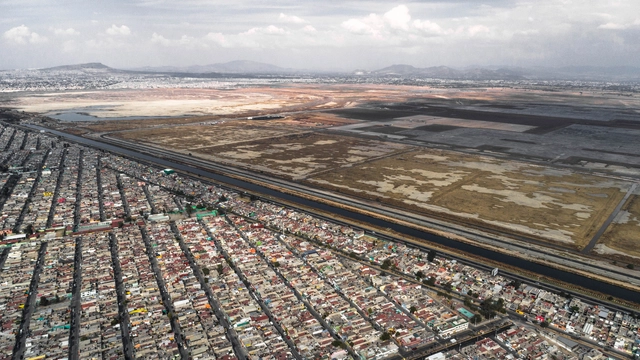
"Soy de Azteca" (Or "I'm from Azteca") is a photographic project by Zaickz Moz that seeks to re-think the expressions of community and identity of the periphery of Mexico City—which is becoming more diffuse and overflows beyond its geographical limits. The objective of this project is to re-think the interpretations of community and identity of the residents of Ciudad Azteca (State of Mexico) manifested in private, public and urban spaces, through photographic series that addresses issues such as appropriation and modification of space habitable, urban development and the sense of community in the neighborhood of Ciudad Azteca.
The particular characteristics of a community give the inhabitants a sense of identity and belonging. Does this happen in any inhabited place? When observing that the history of Ciudad Azteca always exists in relation to Mexico City, it is worth asking if identifying traits have emerged among the inhabitants of Ciudad Azteca. As in other areas of the capital's periphery, it is possible to observe in this group of neighborhoods located in the municipality of Ecatepec the capacity of the locals to build and transform a space into a variety of forms of urban habitat.
The Fundació Mies van der Rohe, together with BOZAR and UNINA, promotes the European project Artists in Architecture. Re-activating Modern European Houses. An initiative that aims to promote collaboration between artists, architects, students, professionals in the field of heritage and the public in general and at the same time opens an intergenerational and interdisciplinary dialogue that helps to define a contemporary vision and the future approach to conservation, restoration and reuse of a heritage as delicate and at risk as the single-family home.
Manufacturers: Afrisam, Blackwood, Chartwell, Cladcom, Dracon National, +13Ecosense, Infin8, Krost engineering, Magnet engineering, Prestige tiling, Restaurant shopfitting, Space Lift, Union Steel, Upfront Media and Jalite, WBHO, Wescape & Hensjen, White Head, World of decorative concrete-13
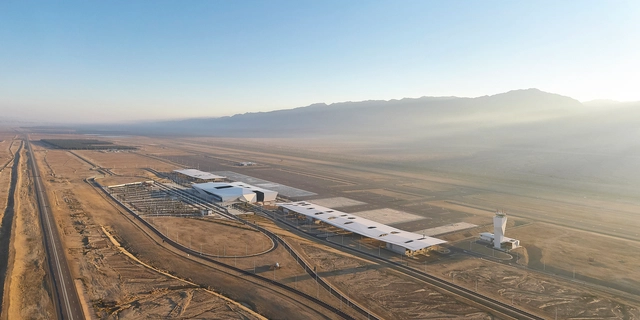
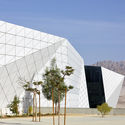
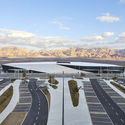
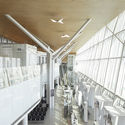
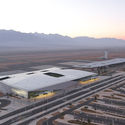
The Ilan and Asaf Ramon International Airport has opened in the Negev Desert of Israel. Designed by Amir Mann-Ami Shinar Architects and Moshe Zur Architects, the project was made to service the Red Sea resort city of Eilat and the surrounding region. The airport's design was influenced by the futuristic world of aviation and the project's natural desert surrounding. Commissioned by the Israel Airport Authority, the project is Israel's first civil airport built from scratch.
































.jpg?1556245161)
.jpg?1556245201 "© Federico Cairoli")
.jpg?1556245277 "© Federico Cairoli")
.jpg?1556245340 "© Federico Cairoli")
.jpg?1556245289 "© Federico Cairoli")
.jpg?1556245161)
.jpg?1548949170&format=webp&width=640&height=580)
.jpg?1548948676 "© Dave Southwood")
.jpg?1548949093 "© Dave Southwood")
.jpg?1548948182 "© Dave Southwood")
.jpg?1548948366 "© Dave Southwood")
.jpg?1548949170)