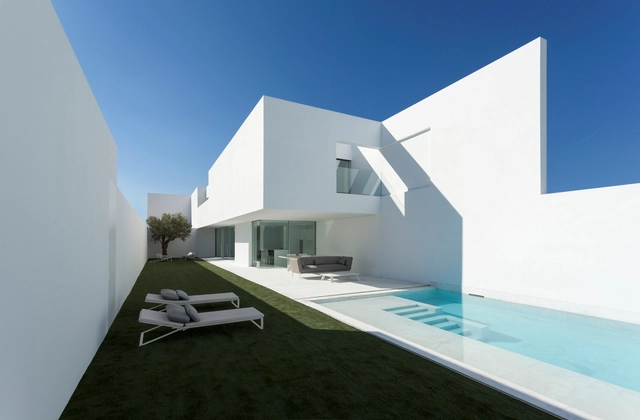
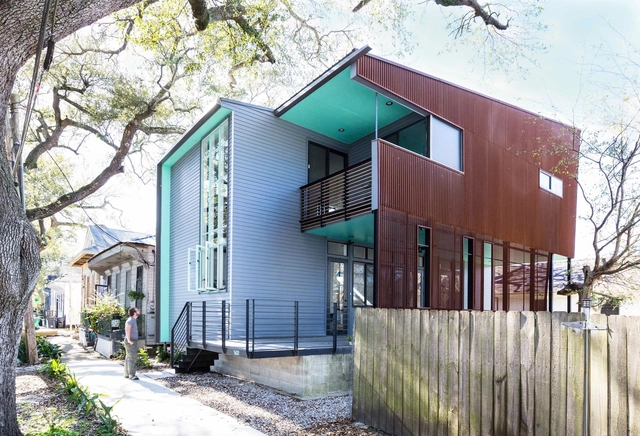
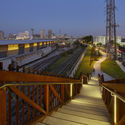
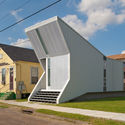
New Orleans is a city unlike any other. Defined by a rich cultural history, the Big Easy has been shaped by it's geography along the Mississippi Delta and the local climate. After the devastation of Hurricane Katrina in 2005, designers and architects looked to the city with a renewed focus to build a better future. From the Lower 9th Ward to the French Quarter and beyond, modern designs were created within a diverse urban fabric.
Our lives as architects and designers revolve around inventing new ways to change both the profession in which we practice, and the world for which we build. From the individual buildings, all the way to the urban planning strategies that we propose, the way that we consider a project's longevity and impact on the world play an immense part in how we think about design.
To further explore how we can design cities, environments, and buildings, we are excited to announce the lineup for ArchDaily x LifeCycles: The Future of our Cities; a three day (May 26-28) series of panel discussions featuring architects from around the world who will be sharing their ideas and experiences for how we can build a better future.
https://www.archdaily.com/940034/archdaily-x-lifecycles-stream-the-panel-discussions-liveAD Editorial Team
Future Shanshui City · Dwellings in Lishui Mountains International Urban Design Competition aims to methodically construct a Shanshui city spatial framework in order to set a model image for this city typology, to create a new ShanShui city lifestyle, and to explore contemporary, sustainable urban planning strategies.
The profession mourns the loss of a trailblazer. Robert Coles was the first African American chancellor of the AIA's College of Fellows, and a founding member the National Organization of Minority Architects https://t.co/eTCHv7S6AO
American architect Robert Traynham Coles, a founding member of the National Organization for Minority Architects (NOMA) has passed away at the age of 90 on Saturday, May 16, 2020. Considered one of the lead advocates for diversity in architecture, he was the first African American chancellor of the AIA's College of Fellows.
Back in February this year, the American architectural community was scandalised by a draft executive order from the White House threatening to make neoclassical or traditional regional styles compulsory for all new federal buildings. The initiative fails to recognise the specificity of the architectural expression and the innovation that stems from understanding the local context. Metropolis Magazine has gathered together several examples of civic architecture that succeed in expressing the needs and aspirations of their communities, thus building a compelling argument against a mandated, unified architectural expression.
JOA is honoured to participate in the 2019 Bi-City Biennale of Urbanism\Architecture (Shenzhen). We have always taken the research led perspective as the starting point of the design, trying to discuss the story behind the architecture in greater depth, and present it to the public through the exhibition. Our understanding of the future world is more based on the perspective of architecture rather than sci-fi movies. The premise of envisioning the future is actually to discuss the current social pain points, and then come up with critical reflections in a future dimension, which we call "The Post Anthropocene” project.
https://www.archdaily.com/939698/the-post-anthropocene-joas-exhibition-envision-life-in-hard-futureJust Open Architecture




.jpg?1590031771)
.jpg?1590030770 "© Alexander Bogorodskiy")
.jpg?1590031129 "© Alexander Bogorodskiy")
.jpg?1590031374 "© Alexander Bogorodskiy")
.jpg?1590030572 "© Alexander Bogorodskiy")
.jpg?1590031012)