


-
Architects: Charged Voids
- Year: 2019




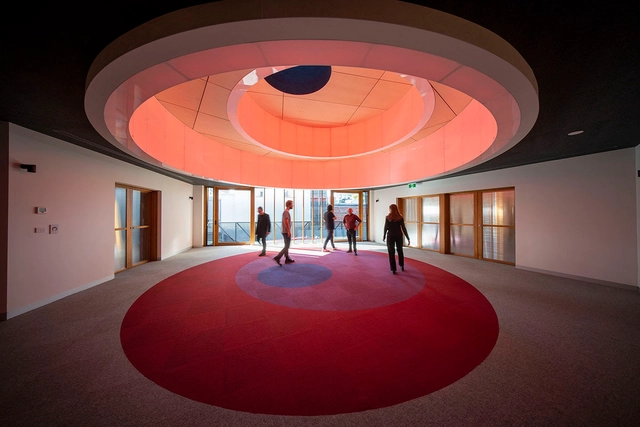
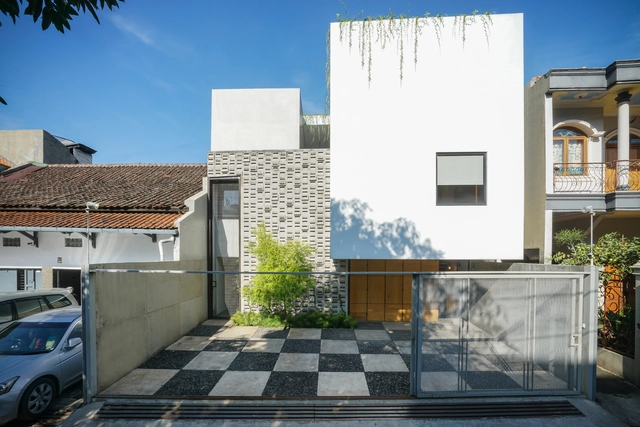
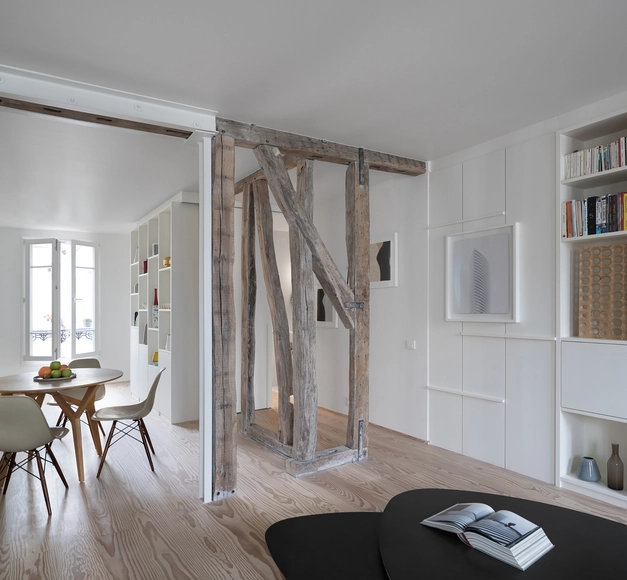
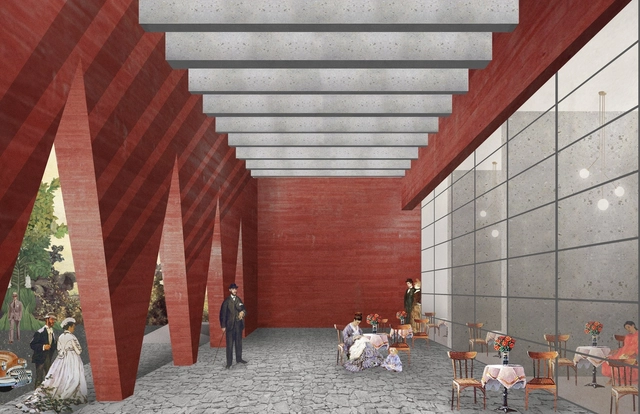
During the first stages of architecture design architects must find the best way to convey their ideas to their clients so that despite having no technical knowledge, they can fully grasp the concepts. Therefore, professionals often rely on a certain tool or set of tools to represent what they have initially idealized, either through two-dimensional drawings, physical models, or perspective images. The latter seems to be the easiest for laypeople to comprehend, so architects have constantly sought to incorporate a set of new artistic approaches with the support of technological resources.
 Autonomous vehicles can read Baidu POIs (Point of Interests) and digitally enable a physical interaction between riders and surrounding landscapes. (Image © Shuman Wu, Huai Kuan Chung, Carmelo Ignaccolo for the UABB 2019 “Transforming the landscapes of mobility”)
What happens when the sensor-imbued city acquires the ability to see – almost as if it had eyes? During the 2019 Shenzhen Biennale of Urbanism\Architecture (UABB), titled "Urban Interactions," Archdaily is working with the curators of the "Eyes of the City" section at the Biennial to stimulate a discussion on how new technologies – and Artificial Intelligence in particular – might impact architecture and urban life. Here you can find all the information about the “Eyes of the City” section, curated by Carlo Ratti, Politecnico di Torino, and SCUT - including exhibits, events, and project's blueprints.
From horse-drawn trolley to railways to the automobile, innovations in transportation have shaped not only the way our cities develop but also how people experience the surrounding landscapes while in motion. When in the 5th millennium BCE, Sumerians developed the first freely-spinning wheel with axle mechanism, this invention not only brought significant military advantage during the city-state wars in Mesopotamia but it also boosted the development of cities.
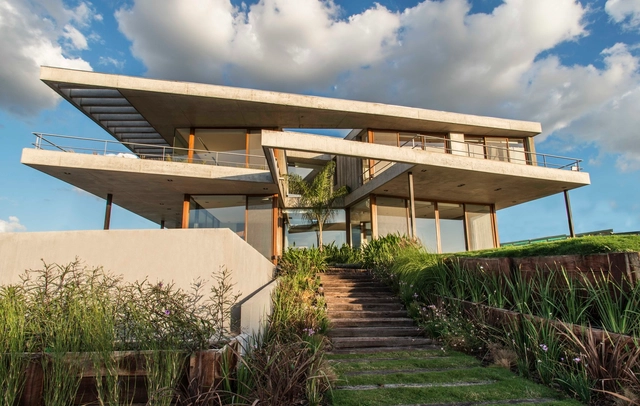

In countries where architecture adapts to the seasons, projects must respond so that they are comfortable for the users, both in the hot summer temperatures and in the cold winter. Tropical countries, such as Colombia, are a bit luckier. The temperature of construction sites depends less on the seasons and more on where they are located geographically according to the altitude above sea level; the closer they are to the sea, the warmer it is. For this reason, it is not essential to seal or insulate the interior spaces. On the contrary, the good management of constant ventilation creates a more permeable and contextual architecture.
We have put together a series of projects with different architectural programs: local markets, health facilities, cultural, education and housing projects. They show that with different construction techniques, you can begin to control the permeability, air flow, privacy or solar heat gain. Explore each of these projects below.