


Raintree House / Khosla Associates


https://www.archdaily.com/984842/raintree-house-khosla-associatesPilar Caballero
Nasari Café / Architects Group RAUM


-
Architects: Architects Group RAUM
- Area: 2646 m²
- Year: 2021
-
Manufacturers: Ajin Glass, Build on Development.co.,Ltd, EUROLIMESTONE
-
Professionals: In Structure Engineering, Geomyeong Construction, Sinheung ENG, Youngsin ENG, Gaon Engineering, +1
https://www.archdaily.com/984888/nasari-cafe-architects-group-raumHana Abdel
La Clairiere Residence / Studio PHH Architects


-
Architects: Studio PHH Architects
- Area: 7800 m²
- Year: 2021
-
Manufacturers: Glen-Gery, Kolbe, Techtona
-
Professionals: A\Z Landscape Architecture, KSI Professional Engineers PC
https://www.archdaily.com/985001/la-clairiere-residence-studio-phh-architectsValeria Silva
Learn Scape / INNOCAD Architecture


-
Architects: INNOCAD Architecture
- Area: 1050 m²
- Year: 2020
-
Manufacturers: Buzzispace, Lapalma, Artemide, Artifort, Discipline, +9
-
Professionals: EMC GmbH, IB Ingl. Siegfried Feiel, DI Michael Judmayer ZT GmbH
https://www.archdaily.com/984837/learn-scape-innocad-architectureLuciana Pejić
Le DomiNO Head Office, Co-working & Shops / Atelier Ronan Prineau
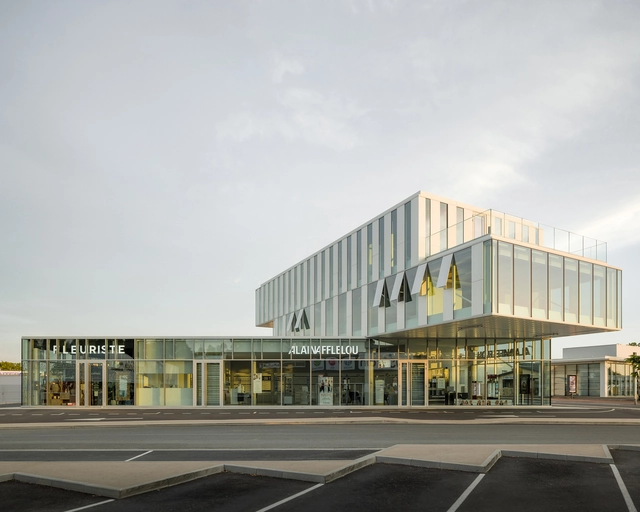


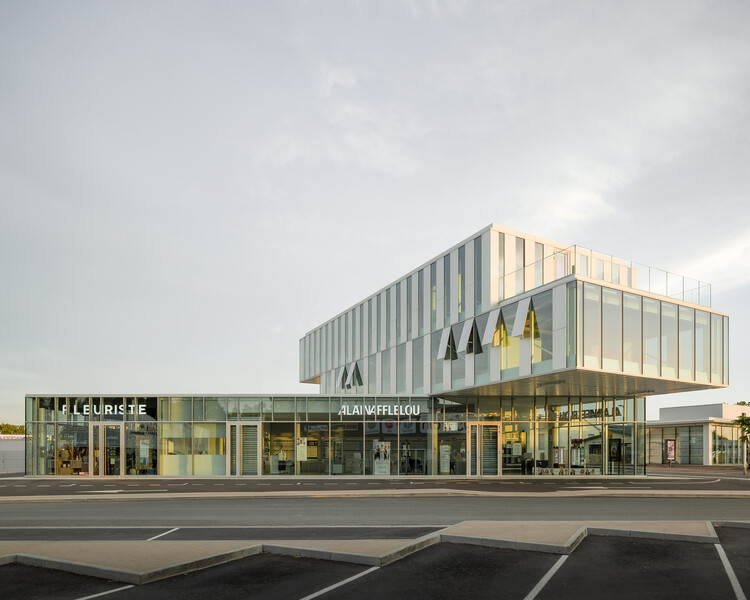
https://www.archdaily.com/984760/le-domino-head-office-co-working-and-shops-atelier-ronan-prineauLuciana Pejić
Son Caulelles Archaeological Site / Montis Sastre Arquitectura + ACN Arquitectura


-
Architects: ACN Arquitectura, Montis Sastre Arquitectura
- Area: 321 m²
- Year: 2022
-
Manufacturers: AutoDesk, Cantera Can Casetes
https://www.archdaily.com/985022/son-caulelles-archaeological-site-montis-sastre-arquitectura-plus-acn-arquitecturaAgustina Coulleri
Interiors of Today: 17 Projects that Show How Current Cities and Living Trends are Influencing Modern Interior Architecture

The past couple of decades introduced the world to new ways of living as a result of different social, economic, and ecological changes. Naturally, these changes found their way into the architecture and urban practice, provoking new concepts within traditional typologies. Designing a space, regardless of its function, has always prioritized users' needs and ensured practicality and functionality, but recently, keywords like flexibility, privacy, inclusivity, and eco-consciousness have become driving forces behind design processes. In this interior focus, we will look at how current cities and living trends across the world have reshaped interior design and introduced modifications to typical typologies.


https://www.archdaily.com/984976/interiors-of-today-17-projects-that-show-how-current-cities-and-living-trends-are-influencing-modern-architectureDima Stouhi
The International VELUX Award 2022 Announces Ten Regional Winners
| Sponsored Content

The International VELUX Award jury has selected ten regional winners from the 507 submitted projects, from 211 schools of architecture around the world. The renowned jury was comprised of Anupama Kundoo, Anupama Kundoo architects (IN), John Ronan, John Ronan Architects (US), Rainer Hofmann, Bogevischs Buero (DE), Fuensanta Nieto, Nieto Sobejano Arquitos (ES), and Lotte Kragelund from VELUX A/S (DK), all of whom met for the jury meeting in Copenhagen.
https://www.archdaily.com/984934/the-international-velux-award-2022-announces-ten-regional-winnersRene Submissions
Sharjah Architecture Triennial Announces "The Beauty of Impermanence" as its 2nd Edition Theme

Hoor Al Qasimi, the President of the Sharjah Architecture Triennial, and its curator Tosin Oshinowo, have announced the title and theme of the 2023 Triennial as "The Beauty of Impermanence: An Architecture of Adaptability". The theme reflects on the issues of scarcity in the Global South, and how this challenge has created a "culture of re-use, re-appropriation, innovation, collaboration and adaptation". Through these differing modes of practice, the event, which will be inaugurated in November 2023, will explore how people can "reorient global conversations to create a more sustainable, resilient, and equitable future".


https://www.archdaily.com/985057/the-beauty-of-impermanence-announced-as-2023-sharjah-architecture-triennial-themeDima Stouhi
Barajas House / Nomic




https://www.archdaily.com/985026/barajas-house-nomicAgustina Coulleri
Notre Dame to Receive New Landscape Design: Bas Smets Wins Competition to Reimagine the Cathedral's Surroundings

In parallel with the restoration works underway at the Notre Dame de Paris cathedral, the city of Paris has launched a design competition to redevelop the cathedral’s surroundings. On June 27, the jury announced the team led by landscape designer Bas Smets as the winner of the competition. The project, planned to start in 2024, will reimagine the square and the underground parking spaces beneath it, including the archeological crypt, the Jean XXIII square located behind the cathedral, the Seine riverbanks, and the adjacent streets. This extensive project aims to bring Parisians back to the heart of Paris and welcome the 12 million visitors coming each year in better conditions.


https://www.archdaily.com/985049/new-design-of-the-notre-dame-de-paris-surrounding-area-is-revealedMaria-Cristina Florian
The Aestheticisation of Inequality: Contrasting Landscapes on the Periphery of Mexico City
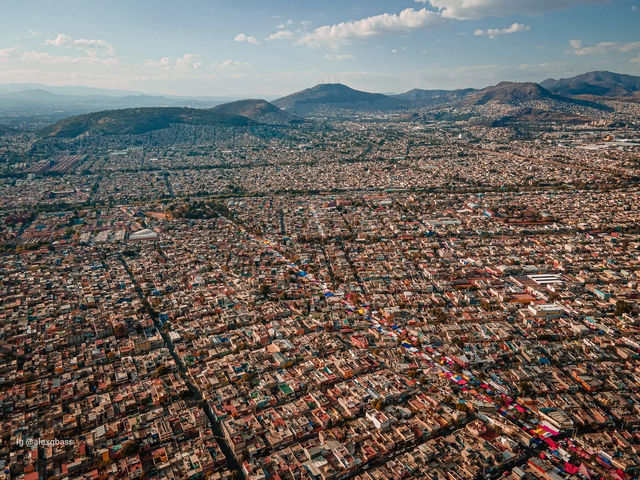
The region we know today as the Metropolitan Zone of the Valley of Mexico (ZMVM) has had a continuous and dynamic occupation for more than 4,000 years. Archaeological and anthropological evidence reveals the presence of complex human societies on the banks of the lake basin, starting with Tlatilco and Cuicuilco in the Preclassic period, passing through Teotihuacan in the Classic period, and culminating with the different urban centres of Nahua affiliation in the Postclassic period, with the cities of Mexico Tenochtitlan-Tlatelolco, as well as Texcoco, Azacapotzalco, Iztapalapa and Chalco, among many others, undoubtedly standing out.
https://www.archdaily.com/984712/the-aestheticisation-of-inequality-contrasting-landscapes-on-the-periphery-of-mexico-cityMónica Arellano y León Villegas
Architecture Between a Glorious Past and a Questionable Present: Interview with Greek Architect Andreas Angelidakis

How might your persona or act differ if you were to put yourself before society’s expectations and limitations, embracing your queerness and preferences? Looking into the impact of individuality, we talked with Andreas Angelidakis, an architect to who refers to himself as “an architect who doesn’t build”, but views architecture as a site of social interaction, creating works that reflect on the urban culture by mixing ruins, digital media, and psychology to better understand the power of finding different design paths.
https://www.archdaily.com/984893/unauthorized-buildings-and-people-finding-new-ways-to-think-architecture-with-andreas-angelidakisVictor Delaqua
How Do the Critics of Yesteryear Think About Urban Density?

This article was originally published on Common Edge.
In the 1960s and 1970s, a series of critiques of the modern city appeared. Jane Jacobs’s attack on those intent on redeveloping New York City was the most immediately impactful, loosening the grip of Robert Moses and his followers, but others had a broader influence on practicing architects and planners. As an observer of San Francisco Bay Region’s cities, I wondered if their books from this period would shed light on current issues of adding density in urban contexts.

https://www.archdaily.com/985024/how-do-the-critics-of-yesteryear-think-about-urban-densityJohn J. Parman
Interstitial Spaces and Public Life, the Overlooked Interventions that Weave our Built Environment

Throughout the years, urban settings have been shifting and taking on new forms. Workspaces became more flexible, home-based offices are common and the increasing costs of housing have led to changes in the way dwellings are designed and built; while turning us towards public and communal outdoor areas for leisurely activities and social gatherings. Our shifting lifestyles are therefore shaping a new urban landscape that’s influencing the way we conceive and use these spaces. Despite everything, some smaller and often unrecognized typologies have persisted and remain as necessary as they’d always been.
They are not places of defined function, yet they still host valuable instances within our day-to-day lives. The latter are the Interstitial (or In-between) spaces, that act as buffers to, and link our private spaces to the public and functional buildings or landscapes. They are the hallways, waiting areas, elevators, staircases, entrances, and transitional zones weave our built environment together.


https://www.archdaily.com/984818/interstitial-spaces-and-public-life-the-overlooked-interventions-that-weave-our-built-environmentHana Abdel & Paula Pintos


House in Nishichiyoda / Seiichi Yamada and Associates
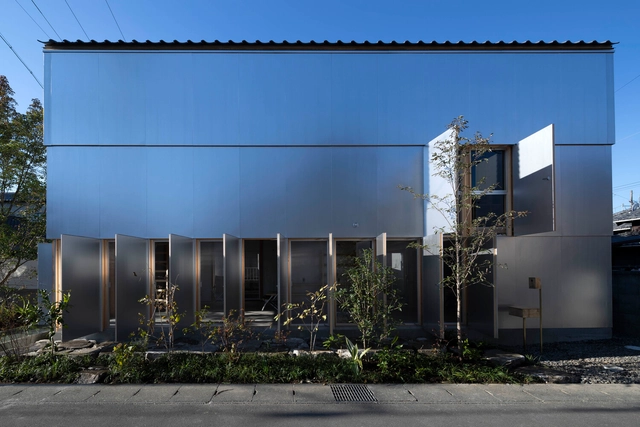


-
Architects: Seiichi Yamada and Associates
- Area: 116 m²
- Year: 2021
https://www.archdaily.com/984714/house-in-nishichiyoda-seiichi-yamada-and-associatesHana Abdel
National Bank of Kuwait Headquarters / Foster + Partners



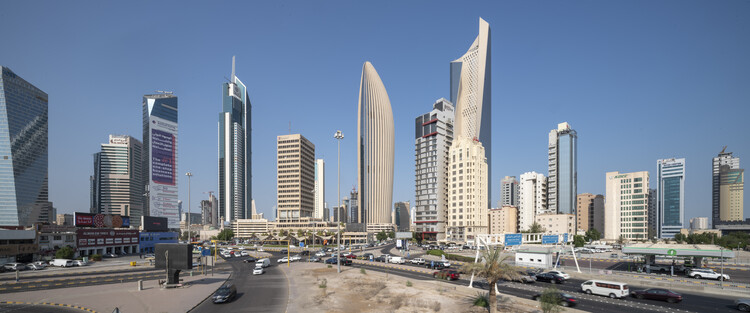
https://www.archdaily.com/985036/national-bank-of-kuwait-headquarters-foster-plus-partnersPaula Pintos