

Produce personalized presentation boards that distill complex concepts into simple visual representations with a few helpful tools and effects.
Mini
How to Create Architectural Presentation Boards
| Sponsored Content
https://www.archdaily.comhttps://www.archdaily.com/catalog/us/products/37234/how-to-create-architectural-presentation-boards-lumion
Laboratory Design: It's Time for a Breakthrough

As science continues to propel forward, it seems that the architecture to support scientists and their advancements is falling behind. The problem of laboratory design was recently brought up in an article by The Financial Times' Edwin Heathcote, who cited labs around the world, from Mendelsohn's Einstein Tower to Cern's giant timber globe, as great examples of an architecture of collaboration and experimentation. If some of our greatest discoveries today are often happening in mundane environments, what would happen if the architecture of labs and offices began to support and inspire innovation? Read the full story here.
https://www.archdaily.com/444473/laboratory-design-it-s-time-for-a-breakthroughEric Baldwin
Current Work: David Adjaye's Lecture at The Cooper Union

Each year The Architectural League in its Current Work program presents the work of significant international figures who powerfully influence contemporary architectural practice and shape the future of the built environment. David Adjaye will present his work in a public lecture to be followed by a conversation with moderator Gregg Pasquarelli, founding principal at SHoP Architects.
https://www.archdaily.com/447889/current-work-david-adjaye-s-lecture-at-the-cooper-unionSebastian Jordana
SLO Architecture Wins Inaugural Dwell Vision Award
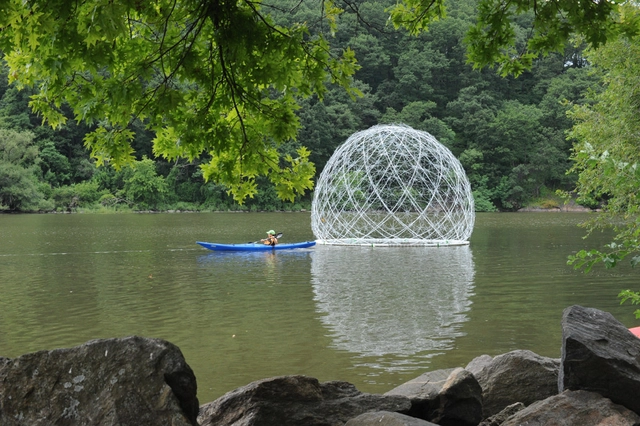
The inaugural Dwell Vision Award, designed to "celebrate excellence in innovation and skill in the fields of architecture or interior design," has been awarded to New York based Amanda Schachter and Alexander Levi of SLO Architecture for "Harvest Dome 2.0". According to Dwell, "the gigantic Harvest Dome structure, made from recycled materials, captured the imagination of the judges by emphasizing the human connection to nature and New York’s waterways, often overlooked by the urban population."
https://www.archdaily.com/448242/slo-architecture-wins-inaugural-dwell-vision-awardJames Taylor-Foster
Arup Associates Celebrates 50 Years of Innovation
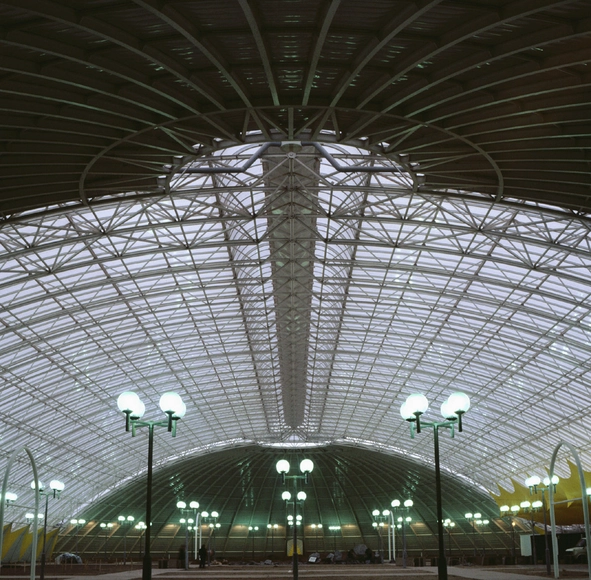
Arup Associates was founded in 1963 by the legendary engineer Ove Arup as a design practice in which engineers and architects worked on an equal footing; it later became a subsidiary of Arup (also founded by Arup as Arup and Partners in 1946). These early origins marked Arup Associates as a forward-thinking and revolutionary practice in an era where truly multi-disciplinary practices were almost unheard of.
https://www.archdaily.com/447495/arup-associates-celebrates-50-years-of-innovationRory Stott
Frank Lloyd Wright Building from 1939 Finally Built
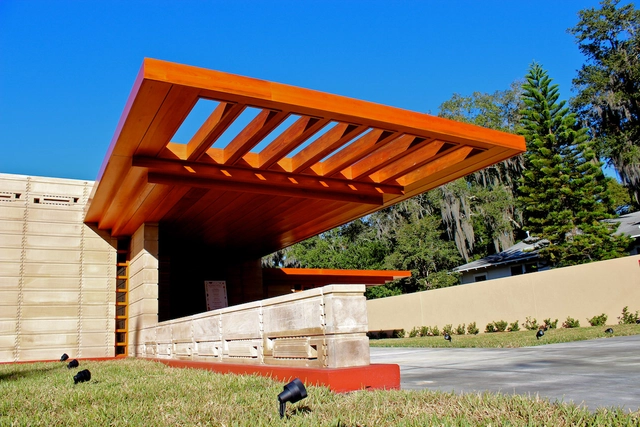
54 years after the death of Frank Lloyd Wright, Florida Southern College, home to the largest collection of Frank Lloyd Wright buildings in the world, opened another structure designed by the famed architect last Friday. Originally called the Usonian house, it was envisioned as a professor's home in 1939 but wasn't built until this year using blueprints left by Wright.
https://www.archdaily.com/446202/frank-lloyd-wright-building-from-1939-finally-builtEric Baldwin
From STEM To STEAM: The Value of Art
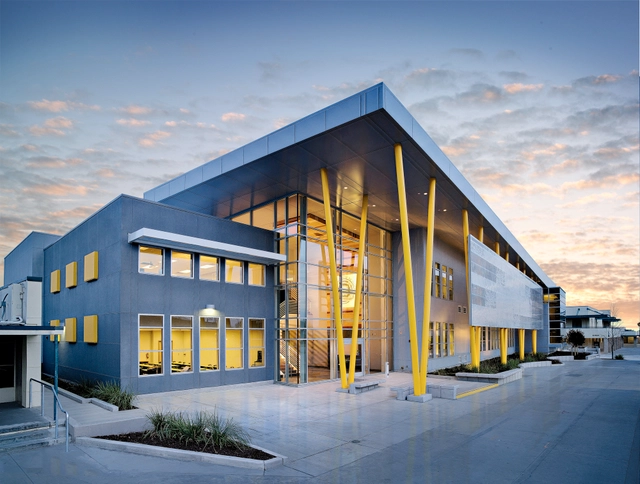
In a recent article for the Seattle Daily Journal of Commerce, Barney Mansavage champions the idea of transforming STEM into STEAM (Science, Technology, ART, and Mathematics). He argues that overlapping science and art helps launch cross-disciplinary conversations and relationships, and in turn, promote experimentation; he thus suggests that educational spaces be designed to bring these fields together. Check out the article here, and more about the TED talk that inspired it, here.
https://www.archdaily.com/446797/from-stem-to-steam-the-value-of-artEric Baldwin
Venice Biennale 2014: Morocco to Participate with First Pavilion
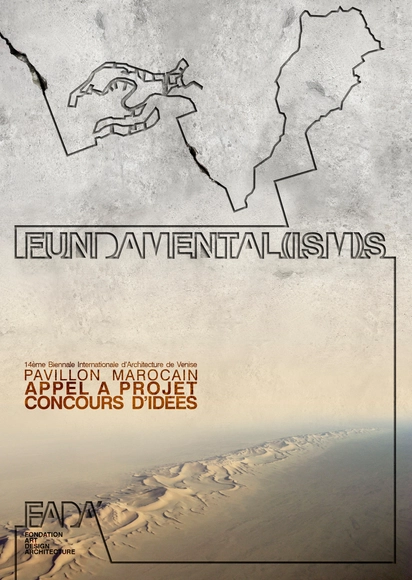
Morocco will host its first pavilion at the 2014 Venice Architecture Biennale. Curated by the Foundation FADA’ (Fondation pour l’Art, le Design, et l’Architecture) and directed by architect Tarik Oualalou, the concept for the Moroccan pavilion will be based upon Morocco’s role as an urban and architectural laboratory in the twentieth century. The project, entitled “Fundamental(ism)s,” will be organized in two parts:
https://www.archdaily.com/447139/venice-biennale-2014-morocco-to-participate-with-first-pavilionKarissa Rosenfield
Green Infrastructure: Not Enough For Storm Protection

Since Hurricane Sandy struck New York, much has been made of "green infrastructure" and its potential to defend cities against waves and floods. Now though, two articles, from the New York Times and Grist, claim that green infrastructure would actually protects us very little. But, since engineered "gray" solutions, such as storm-walls, also have their limitations (namely just moving the surge elsewhere), it seems the solution is a combination of both "gray" and "green" (moving the surge to where it can safely release its energy). Read the original articles here and here.
https://www.archdaily.com/446160/green-infrastructure-not-enough-for-storm-protectionRory Stott
Projects in Contemporary Art & Architecture: Between Vision and Function
_11.32.27.jpg?1383842723&format=webp&width=640&height=580)
This exhibition features projects by renowned architects of schools, museums, art galleries and cultural spaces via models, photos, prints, and drawings. Art works by National Academy School faculty and students continue the debate of line, form, space and light as inspired by architectural forms and interiors.
https://www.archdaily.com/446788/projects-in-contemporary-art-and-architecture-between-vision-and-functionSebastian Jordana
Almost Anything Goes: Architecture and Inclusivity

The Museum of Contemporary Art Santa Barbara (MCASB) welcomes six Los Angeles-based creatives whose work embraces cross-fertilization, collaboration, and adaptation—thus creating new methodologies for research and implementation in the fields of architecture and beyond.
https://www.archdaily.com/445910/almost-anything-goes-architecture-and-inclusivitySebastian Jordana
Exhibition: Aalto’s architecture in Rovaniemi
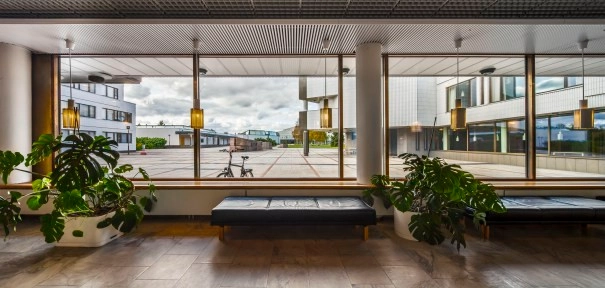
Aalto’s architecture in Rovaniemi, a new exhibition at the Alvar Aalto Museum, takes an in-depth look at Alvar Aalto’s work in and around Rovaniemi. As well as the administrative and cultural centre, the works on show include lesser-known residential and commercial buildings. The exhibition, collated by the Provincial Museum of Lapland, will be open in the Gallery at the Alvar Aalto Museum from 1.11.2013 to 2.2.2014.
https://www.archdaily.com/446298/exhibition-aalto-s-architecture-in-rovaniemiSebastian Jordana
AEC Hackathon
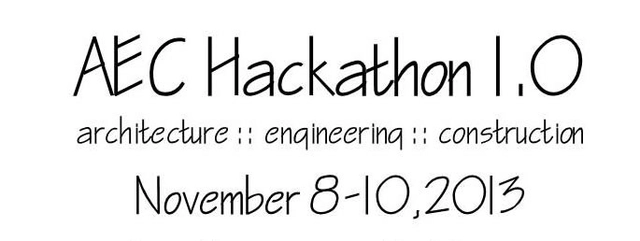
A first for the AEC Industry, the AEC Hackathon is a non-profit event that brings together teams of Silicon Valley technologists and industry stakeholders to help shape the future of our built environment. Formatted as a traditional "hack", the AEC Hackathon provides a playful, exploratory environment where disruption, innovation, and creative ideas are brought to life.
https://www.archdaily.com/445861/aec-hackathonSebastian Jordana
IIDA NY: Design for Learning
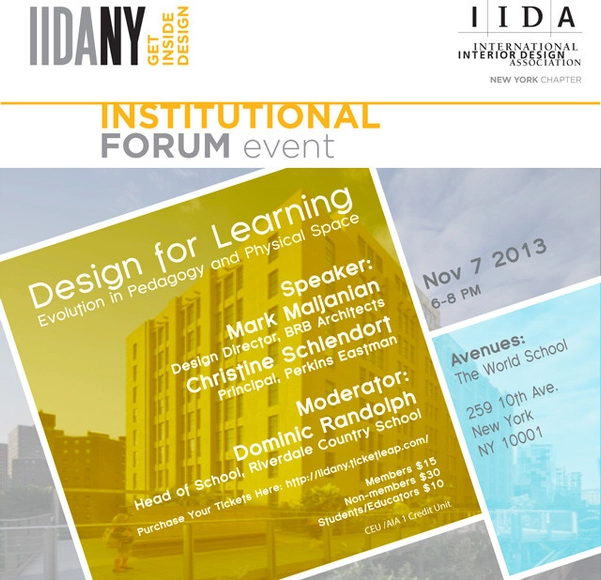
This course will discuss the principal changes in pedagogy and how it affects institutional design. The evolution of pedagogy can be summarized by the following four principals: Learning is at its best constructivist, experimental, connected, and lifeline and informal. Using these principals we will explore different case studies of contemporary institutional design (k-12 and higher education), and see how these changes in pedagogy affect the way students learn , teachers teach, and architects and designers design.
https://www.archdaily.com/445908/iida-ny-design-for-learningSebastian Jordana
Starchitecture Comes to Miami: Chad Oppenheim & Bjarke Ingels in a Roundtable

Starchitecture has come to Miami — in a big way. Developers are using the name recognition of some of the world’s star architects to bring in buyers for their posh towers.
https://www.archdaily.com/445964/starchitecture-comes-to-miami-chad-oppenheim-and-bjarke-ingels-in-a-roundtableSebastian Jordana
Mexico & Swizterland in Tug-of-War Over Luis Barragán Archive
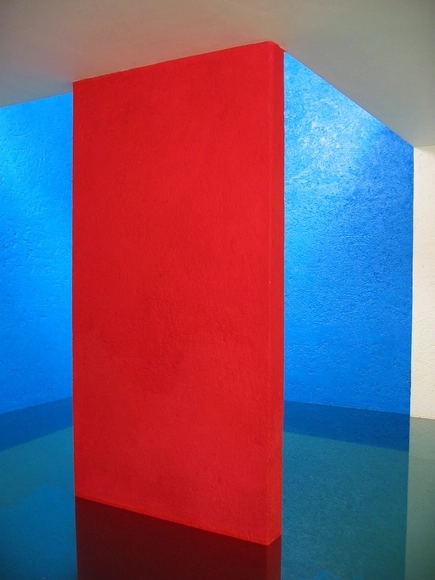
Mexico, Switzerland and their constituent art collectors are in a tug-of-war over the coveted professional archive of late, famed hero Luis Barragán - considered one of Mexico's greatest architects. After his death, the heads of the Swiss furniture company, Vitra, bought a collection of Barragán's personal designs and images, leaving those in Mexico puzzled as to why the archive ever left the country from which his work is rooted. "It would be as if the ‘rights’ for Frank Lloyd Wright or Louis Kahn were held and managed from another country, ruling over their work and limiting access to the American public." Read the full article here, "Tug of War Stretches Architect’s Legacy".
https://www.archdaily.com/446133/mexico-and-swizterland-in-tug-of-war-over-famed-architect-s-archive-luis-barraganJose Luis Gabriel Cruz
Where Automobiles & Architecture Meet

Where does architecture and the automobile industry meet? Many architects, including Le Corbusier, have tried to understand how building construction can be more like car manufacturing, with mass-produced parts that can be easily assembled on site. Ford recently explored the idea at their Design with a Purpose: Built Tough panel discussion held at New York's Center for Architecture. Click here to read The New York Times' coverage of the discussion, and check out ArchDaily editor-in-chief's thoughts on cars and architecture here.
https://www.archdaily.com/444467/where-automobiles-and-architecture-meetEric Baldwin
Were Brutalist Campus Buildings Designed to Suppress Student Protests?
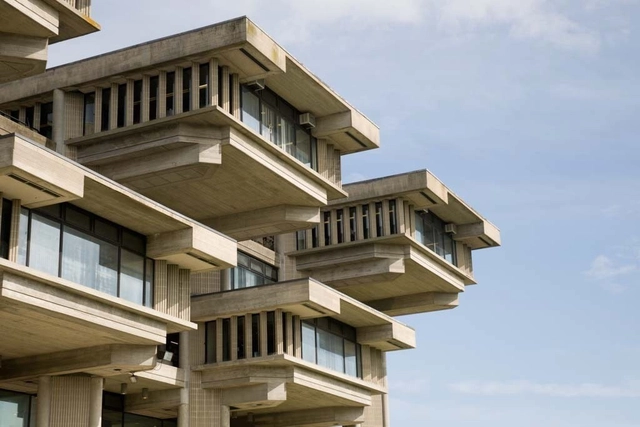
In this fascinating article on the Slate design blog, J Bryan Lowder takes on a commonly held myth: that brutalist buildings on college campuses were designed to prevent student riots. From the egalitarian design ethos of brutalism to the fact that many of these buildings were around before the widespread student uprisings of the late 1960s, he finds no support for the theory - however he does end with a possible reason why these buildings are now regarded with such suspicion. You can read the full article here.
https://www.archdaily.com/443620/were-brutalist-campus-buildings-designed-to-suppress-student-protestsRory Stott
3D Laser Technology to Digitally Preserve The World's Greatest Sites
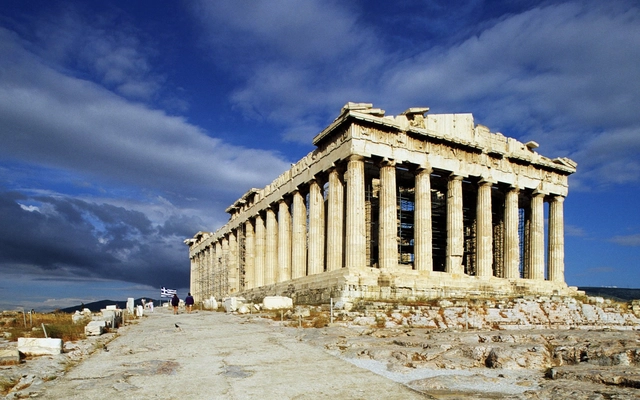
CyArk, a non-for-profit 3D laser scanning organization, is scanning the world's greatest monuments, hoping to preserve over 500 cultural heritage sites around the globe, The Independent reports. The portable laser system creates such a detailed, digital blueprint of structures and ruins that each building can then be reproduced in 3D, with a margin of error of only two millimeters. So far, the statues of Easter Island, the Tower of London, Mount Rushmore, the Tower of Pisa have been preserved. Check out more about the technology in Ben Kacyra's TED Talk.
https://www.archdaily.com/444445/3d-laser-technology-to-digitally-preserve-the-world-s-greatest-sitesEric Baldwin