
For the second year in a row, Indexnewspaper will organize ‘Porto Academy’ at the Faculty of Architecture of the University of Porto (FAUP) in Portugal from the 21st to the 28th of July 2014.


For the second year in a row, Indexnewspaper will organize ‘Porto Academy’ at the Faculty of Architecture of the University of Porto (FAUP) in Portugal from the 21st to the 28th of July 2014.

"Architectural education is very abstract." Virginia Tech professors and Rural Studio alumni Keith and Marie Zawistowski sit down to talk about the importance of a hands-on experience, suggesting a fundamental restructuring of curriculums. With projects such as the Masonic Ampitheater, they — together with their students — set out to prove that somethings are simply solved by building. Read the full article here, "What Architecture Schools Get Wrong"

As part of their coverage of the Global Agenda Council on Design and Innovation, Grasp Magazine interviewed Joi Ito, director of MIT's Media Lab. He voices his opinion that current strategies for masterplanning do not work, as designers struggle to reliably "predict and cause a future to occur" (a better approach is to enable and empower innovation on a grass-roots level); that designers need to find the right balance between intuition and data; and that new technologies should not just improve existing systems, but preferably overhaul them entirely. You can read the full article here.

In this interview with Grasp Magazine Tim Brown, the CEO of IDEO, explains his belief that in order to develop solutions to the complex problems found in cities, the only successful approach is from the bottom-up. In order to make this possible, he says, we need to democratize the design process by encouraging and empowering more people to engage in design, by operating with 'codes' rather than 'blueprints' which invite further contribution. Platforms like Kickstarter are one way that this process is already in motion. You can read the full article here.

How will data shape mobility in future mega-cites? This is precisely what three innovation teams are striving to answer for the 2014 Audi Urban Future Award. Review each team’s revolutionary idea after the break and cast your vote on the most innovative solution here. The winner of the voting will be announced by Audi's CEO, Rupert Stadler, at the International CES in Las Vegas on January 6, 2014, and will be one participant in next year's Audi Urban Future Award.

UPDATE: REM's Kickstarter campaign was successfully funded!

The relationship between Architecture and Power has been the main character in the urban transformation with no space-time boundaries. Architecture has historically demonstrated its Power in creating different urban landscapes capable of influencing spaces that are lived.

According to this article on Quartz, Facebook is now so widely-used (providing readily available information about the hometowns of millions - or even billions - of people) that it can help researchers analyze migration patterns and trends. Find out more here.

In this interview in Metropolis Magazine, Raphael Sperry elaborates on the goal of his organization Architects / Designers / Planners for Social Responsibility to ban members of the AIA from designing execution chambers and certain forms of prisons. He explains why the AIA's existing charter should make this ban a no-brainer as well as highlights the success and support the campaign has received, even in unexpected places. You can read the full article here.

Mayor Bloomberg's decade long administration may be ending this January, but not before he ensures the approval of $12 billion worth of privately developed projects throughout New York City. Under Bloomberg, 40 percent of NYC has been rezoned, creating a hot-bed of new construction. From multi-million dollar research centers to multi-billion dollar neighborhoods — complete with luxury waterfront apartments, outlet malls and the western hemisphere's largest Ferris Wheel — each one of these megaprojects will undoubtedly transform NYC in the coming decades. Check them out here.

Like many in architecture, the Blindspot Initiative has grown tired of "the exclusive, winner takes all mentality of competitions." Instead, they value collaboration and open access to design ideas, and so are renting a studio in East LA for an exhibition that will display the work of 10 fringe (blindspot) designers, "presenting work on a neutral ground to encourage conversations and practice which lives outside the conventions of typical design outputs and practices." Visit their kickstarter project to learn more and contribute to their cause (and check out their video, after the break).

An interesting article on io9 unveils a curious law that can apparently predict the size of cities - a law developed by a linguist. The original version of Zipf's law states that in any language, the most common word was used twice as much as the second most common, three times as much as the third and so on. It seems though, that this law also applies to the populations of the cities in a given country. And the most interesting part? Nobody really knows why. You can read the full article here.

After a 12 year mayoral run, many have been wondering what Michael Bloomberg's next move will be. The answer: be mayor of every city (kind of). Bloomberg, along with most of his New York City Hall team (including transportation commissioner Janette Sadik-Khan), has shifted his focus to Bloomberg Associates, a consultancy group that - like an 'urban SWAT team' - offers advice to cities that call for it. For free. To learn more about Bloomberg's newest initiative, read the full article here on The New York Times.

The prognosis does not look good for Foster + Partners' plan for an airport hub in the Thames Estuary. The Guardian reports that the Independent Airports Commission has released an interim report, revealing a shortlist of potential options for the UK - and the Thames Hub (with an estimated price tag of £112bn) isn't on it. Yet hope (however slim) does remain for the proposal, as its persistent defender, London mayor Boris Johnson, has managed to convince the commission to revisit the idea in early 2014. Get the whole story at The Guardian.
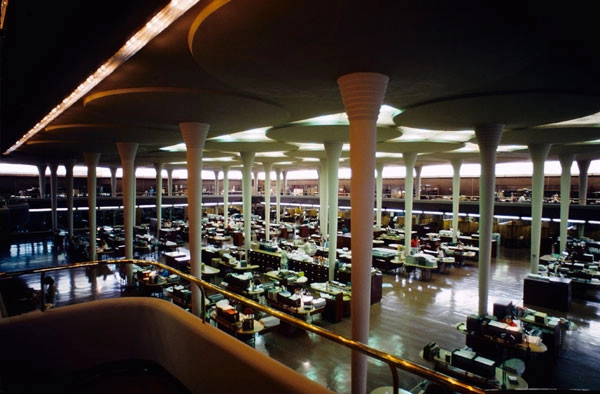
December has been a month of disappointment for fans of Frank Lloyd Wright: first, a plan to build a house designed by Wright and adapted for the English countryside has been rejected by Wraxall Councillors (Bristol Post), who believe that Frank Lloyd Wright "can't be that influential". This was followed by the news that SC Johnson, the company for whom Wright designed the famous Johnson Administration Building, is trying to stop the high profile Sotheby's auction (ArtInfo) of a desk and chair designed for their building - claiming that the items were in fact stolen from them way back in the 1950s. More on the Bristol rejection here and the Sotheby''s controversy here.
.jpg?1387213921&format=webp&width=640&height=580)
Helene Combs Dreiling, FAIA, executive director of the Virginia Center for Architecture, has been inaugurated as the 90th president of the American Institute of Architects (AIA). She succeeds Mickey Jacob, FAIA, in representing nearly 83,000 AIA members.


Inspired by our wildly popular article "Why Japan Is Crazy About Housing," CNN has interviewed Tokyo-based author and architect Alastair Townsend in order to dig a bit deeper into why radical design has become more common in Japan. The video features interviews with the residents of House T by Hiroyuki Shinozaki Architects, who share what it's like to live in a multi-storied home with step ladders and no walls, as well as Sou Fujimoto, who takes us on a tour of his whimsical, tree-house inspired House NA. Watch the video after the break.