Funded by the Getty Foundation, The Society of Architectural Historians (SAH) is offering between 14-16 grants to attend the SAH 2016 International Conference. Application will be open to professionals in the field of the “built environment,” including heritage conservation specialists, academics and museum professionals who work with the history of the built environment.The conference will be taking place in Pasadena/Los Angeles, California from April 6-10.
BW International is now accepting entries for its Design a Beautiful House competition, an international call offering £25,000 (about $39,000 USD) to winner(s). The competition is open to all designers, students, artists, and others from anywhere across the globe, and requires no registration fee.
Entrants are asked to think about the definition of beauty in order to create a design that considers the ways that beauty and aesthetics can enhance the function of a home and the experiences of its users.
Videos
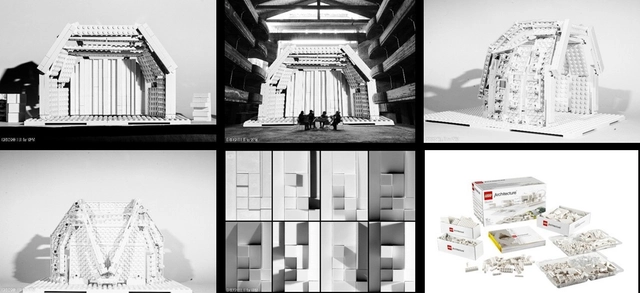
Press Pictures - photo by Tiziana Portera and Daniele Lancia - LEGO models by Gridshell.it
A theatre destroyed by a fire, a unique architecture workshop, a classical music festival and a creative challenge. Can architects design a structure to amplify the sound and put the music back in the theatre? LEGO Architecture Studio is helping out.
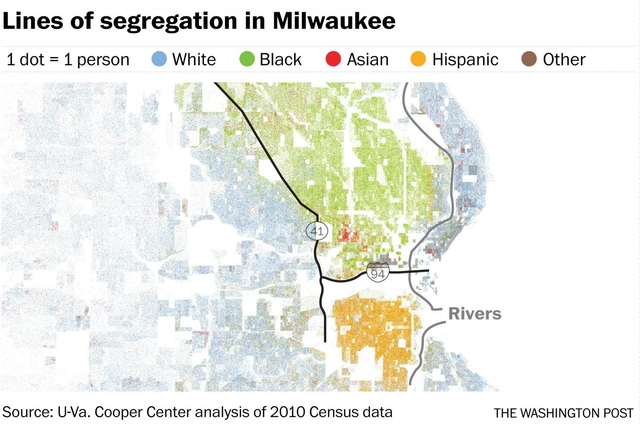
The Washington Post has published a piece looking at how infrastructure acts as a form of segregation in cities in the US. Using racial dot maps from the University of Virginia’s Weldon Cooper Center for Public Service, they show how highways, railroads, historically uncrossable avenues, and similar urban design decisions have a huge impact on the physical isolation of different races. These types of infrastructure were also found to reinforce boundaries set by natural patterns of topography and bodies of water. Cities found to have clear infrastructural segregation include Pittsburgh, Hartford, Detroit, Washington, D.C., and Milwaukee. Read the full article, here.
The Royal Institute of British Architects (RIBA)’s Future Trends Survey for June 2015 shows "an all-time high," with the workload index ascending to +44 compared to +37 last month. All nations and regions within the United Kingdom returned positive balance figures, with practices in the Midlands and East Anglia responding most confidently about workloads in the next quarter. Following a slight fall last month, the private housing sector workload forecast increased to +39 (from +34), while the public sector saw a modest increase back into positive figures. Workload forecast balance figures have remained extremely high. The survey reports that large-sized practices continue to be the most optimistic about growth, while small and medium-sized practices "remain in strongly positive territory."
eVolo Magazine has announced the start of their 11th annual Skyscraper Competition. Inviting architects, students, engineers, designers and artists, the competition places no restrictions on site, program or size, leaving participants free to explore the skyscraper as creatively as possible.
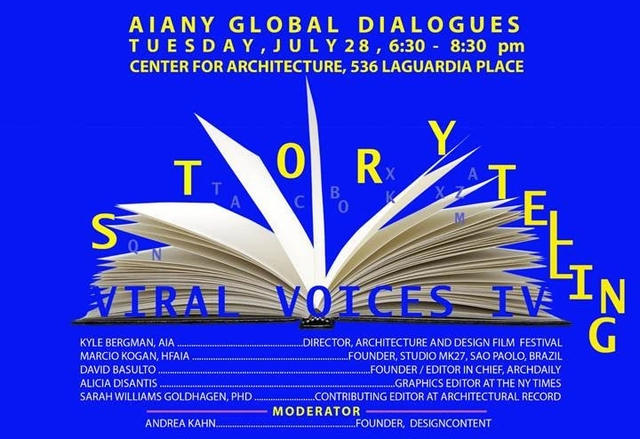
How are contemporary architectural narratives created? And what are the various tools / media used to ‘tell the story’?
How is the said story tailored to a varying audience?
What story do journalists/editors/filmmakers like to tell about the architect? And the architecture? How does that profile shape our work, reach and influence?
What is architectural journalism for architects? What is it for the general public?
Are we in a crisis of architectural representation? What is the future of the publication and representation of architecture across various platforms?
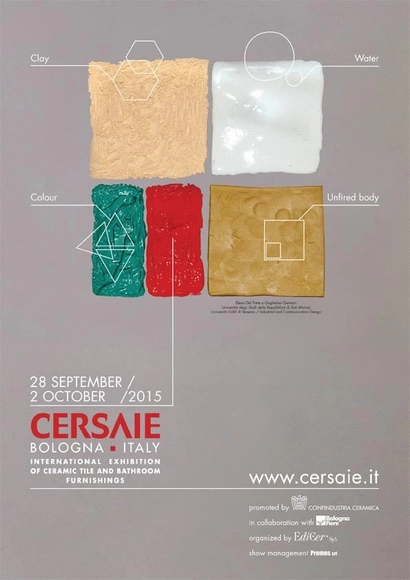
Cersaie—the world’s largest exhibition of ceramic tile and bathroom furnishings—will take place at the Bologna Exhibition Center in Bologna, Italy from September 28-October 2, 2015 for its 33rd year. The show is organized by Edi.Cer SpA and promoted by Confindustria Ceramica in collaboration with Bologna Fiere.
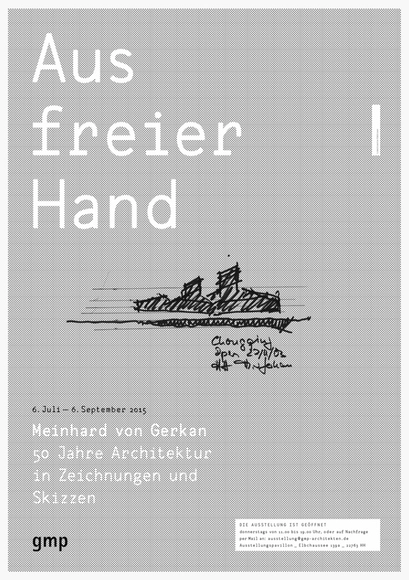
Together with his partners, Meinhard von Gerkan has written architectural history over the past 50 years: the practice started life with a drum roll, with the Berlin-Tegel Airport being the first project; today, over 380 projects have been completed.
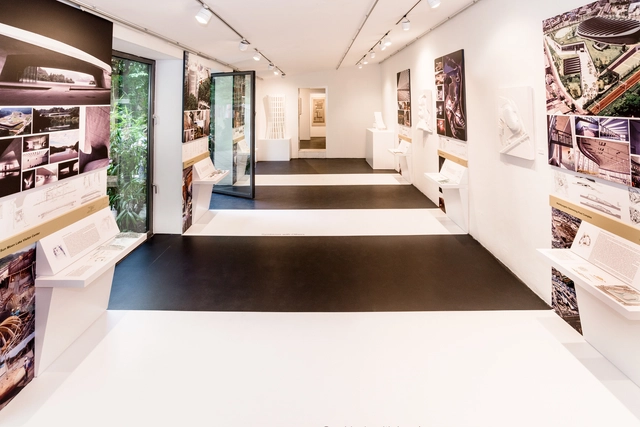
To this day, von Gerkan develops his designs with the help of sketches. On the occasion of the 50-year anniversary of gmp – Architects von Gerkan, Marg and Partners and von Gerkan’s 80th birthday, the "Lines of Thoughts" exhibition in the newly built Architecture Pavilion at Elbchaussee presents selected projects from his archive, which includes well over 3,000 architectural sketches, in order to illustrate how his projects develop.
Videos
The Brutalist Playground by Assemble and Simon Terrill (Photo by Tristan Fewings & Getty Images for RIBA)
Join us in a day-long celebration of all things play and take over the RIBA headquarters at 66 Portland Place. Participate in free activities, tours and workshops for all the family, inspired by The Brutalist Playground installation.
Norihiko Dan exhibition at Architekturgalerie München, Credits: Saskia Wehler
A concrete tree trunk growing in the middle of a commercial street in Tokyo, an airport terminal that looks almost like a bird’s wing, a skyscraper facade that seems to move like ocean waves, a visitors’ center perfectly integrated into the landscape of Taiwan’s largest lake – nature is everpresent in Japanese architect Norihiko Dan’s buildings. His architecture never stands alone, for Dan always seeks symbiosis; this appears in his combination of geometric-archetypical with organic forms, in his urban planning projects, which bring submerged historic and cultural identities back to light, as well as in the ecological orientation of his buildings. With dramatic contrasts in architectural language and choice of materials Norihiko Dan insistently calls for a relationship between human beings and their surroundings.
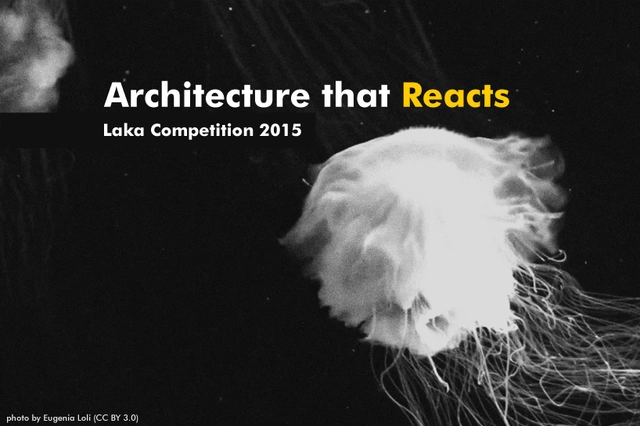
Laka Competitions invites designers from around the world to submit their ideas of ‘architecture that reacts’. That means architecture which is able to respond and adjust dynamically to the current needs and circumstances. These circumstances are often unpredictable, but their consequences can be crucial. The architecture that reacts is the architecture that lives as a living organism, since it responds to the external stimuli and it develops because of it.— to react is to live
https://www.archdaily.com/770550/laka-competition-2015-architecture-that-reactsAD Editorial Team
As an unavoidable art form, “architecture is one of humanity’s most visible and long-lasting forms of expression,” writes Complex Media. Within the past 150 years—the period of modern architecture—a distinct form of artistry has developed, significantly changing the way we look at the urban environments around us. To highlight some of the key figures in architecture over the past 150 years, Complex Media has created a list of “25 Architects You Should Know,” covering a range of icons including Zaha Hadid, Ieoh Ming Pei, Philip Johnson, Oscar Neimeyer, SOM, Daniel Libeskind, and more. Read the full list to learn more about each iconic architect, here.
Now in their 17th year, the AR Emerging Architecture Awards are one of the world's most popular and prestigious prize for up-and-coming architects, giving emerging practices invaluable impetus on their trajectory to wider recognition and success. Previous winners of the Awards have included Sou Fujimoto (Japan), Thomas Heatherwick (UK), Sean Godsell (Australia), Jurgen Mayer H. (Germany) and Li Xiaodong (China).
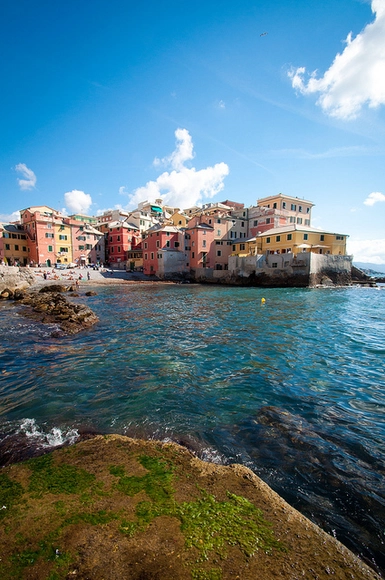
In a recent article published by The Guardian, Renzo Piano encourages architects to make sandcastles. "There is no age limit," he says, "... it helps you think like a child." The Italian architect credits the start of his career to the first sandcastle he ever made on the Genoa shoreline. "Making things has always been a pleasure for me – happy hands, happy mind – and making sandcastles was my training in fantasy."
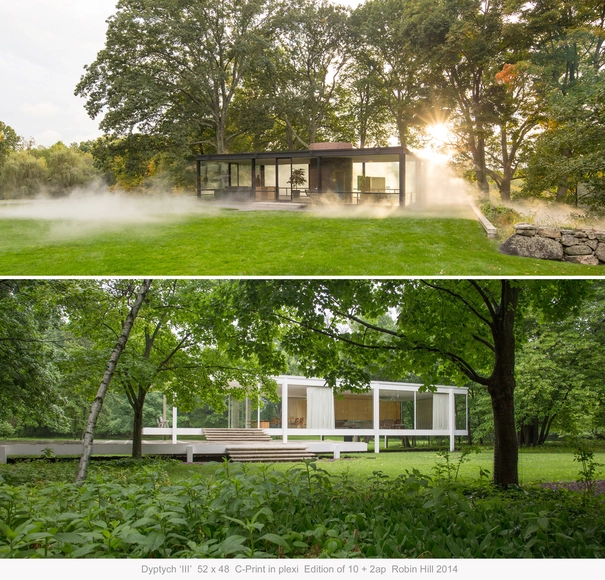
Exhibition print for Side by Side. Top: The Glass House. Bottom: The Farnsworth House
Side by Side is an exhibition by photographer Robin Hill that explores the similarities and differences between two of America's most iconic houses. The Glass House by Philip Johnson and The Farnsworth House by Mies van der Rohe. Through a series of dyptychs, Mr. Hill's lens explores both the geometry of the structures and their place in the environment. Tellingly the exhibition is housed in the Seagram Building designed by Mies van der Rohe and assisted by Philip Johnson. The lobby of The Four Seasons is an ideal venue for this exhibition as much of the design aesthetic of both architects is prevalent in the space as well as in the photographs.
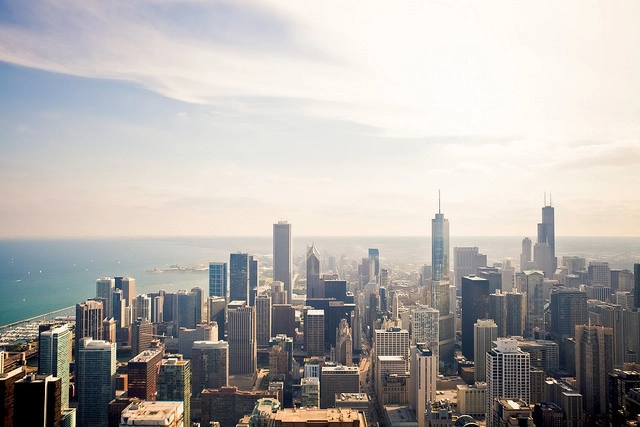
The Chicago Architecture Foundation has launched an open international ideas competition for a facility that will include a new headquarters, visitor center and exhibition space for CAF; a new headquarters for the Council of Tall Buildings and Urban Habitat (CTBUH); a design and allied arts high school; and flexible learning spaces for out-of-school-time youth programs. The project, dubbed the Center for Architecture, Design and Education (CADE) will a new kind of learning campus aimed to "equip young people to be stewards for the built environment of the 21st Century."
The Royal Academy of Arts in London have launched a new international ideas competition which aims "to refocus attention to the huge potential of the brownfield sites that still exist across London." 'Brownfield' sites, or those earmarked for potential building development that have had previous development on them, are plentiful in the UK capital. This competition seeks "speculative ideas [which] make the most of these missing pieces in London’s urban jigsaw."





_James_Bailey_(7).jpg?1436860605&format=webp&width=640&height=580)