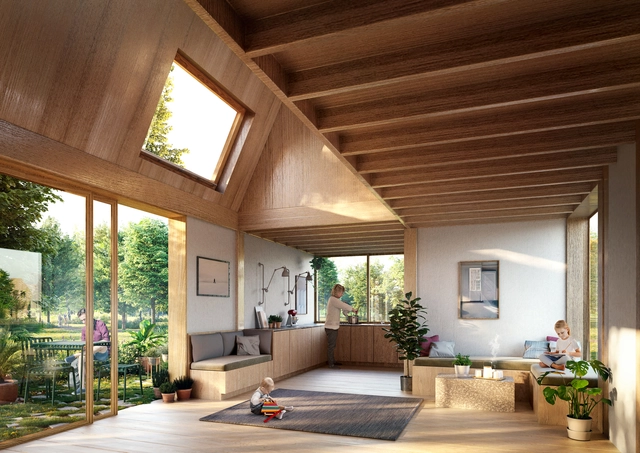
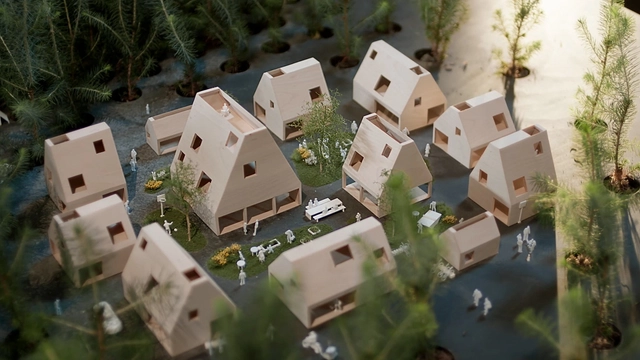
VELUX Group reveals The Build for Life concept aimed at creating sustainable communities and built environment through affordable, socially-oriented designs and new housing models, healthy indoor climates and the use of low-impact materials. Developed together with EFFEKT, MOE engineers and Danish construction company Enemaerke & Petersen A/S, the concept provides architects and city planners with a “compass’ for navigating the sustainability imperatives of the moment while encouraging the design of healthier living places.
Seeking to actively respond to the climate-related challenges of the 21st century, VELUX's sustainability strategy includes a series of measurable steps towards positive change as we focus on how buildings can help solve global challenges with sustainable solutions and practical actions. One of these steps is Build for Life, a pioneering, multidisciplinary initiative launched in 2021 to help connect people and the planet through better building design.
The Build for Life 2021 Conference will be held on November 15-17, and is an open invitation to join a global conversation on how buildings can benefit the environment and improve the quality of life for people around the world.
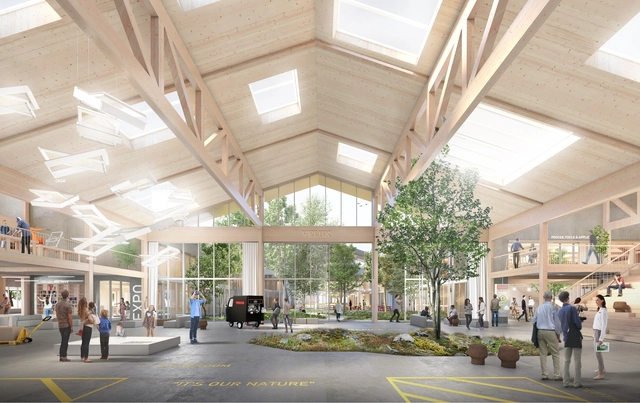
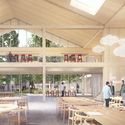
Praksis Arkitekter has won the competition to transform an old timber warehouse for VELUX Group in Østbirk, Denmark. As the company's largest production site, it will be transformed into a best-in-class innovation center. The existing wooden building was originally inaugurated in 1995 as a warehouse. The new rebuilt building will house most of the product development that VELUX Group is doing, which today is spread across the country and abroad.
On the UNESCO International Day of Light, The Daylight Award announces its 2020 Laureates: Juhai Leiviskä for his architecture, Russell Foster for his research, and this year, exceptionally, The Daylight Award is also given to Henry Plummer for his lifetime achievement.
'While laureate Russell Foster studies the science behind the effect of light on human behaviour and physical and mental wellbeing, laureates Juha Leiviskä and Henry Plummer approach the effects and implications of daylight intuitively through architectural design, photographic expression and verbal mediation of these human responses. Whether elucidating the neural effects of light or invoking the poetic essence of light, the laureates of the 2020 Daylight Award demonstrate to us the power of natural light,' states the jury.
Danish company VELUX began with a belief in building healthier homes. Created over 75 years ago by Villum Kann-Rasmussen, the manufacturer has now expanded around the world, with millions of people getting fresh air and daylight through their products. With recent events on the COVID-19 pandemic, Lone Feifer and Peter Foldbjerg of VELUX explore how architects and designers can find better ways to work at home and create healthy living spaces.
On the occasion of the 8th VELUX Daylight Symposium held on October 9 and 10 of 2019 in Paris, we talked with David Briggs, CEO at The Velux Group, to learn about the present and future of the company. We wanted to know how they address innovation and new technologies – especially through the biennial event – to improve quality of life for people who incorporate Velux's products and services into their homes and other spaces in more than 46 countries around the world.
Humans spend almost 90% of the time indoors; that's approximately 20 hours a day in closed rooms and 9 hours a day in our own bedrooms. The architectural configurations of these spaces are not random - that is, they have been designed or thought of by someone, and are at least slightly "guided" by the conditions of their inhabitants and their surroundings. Some people inhabit spaces specially catered to their needs and tastes, while others adapt and appropriate designs made for someone else, perhaps developed decades before they were born. In either case, their quality of life may be better or worse depending on the decisions that are made.
Understanding the importance of carefully designing our interiors, particularly through the lens of access and enjoyment of natural light, was the purpose of the 8th VELUX Daylight Symposium, held on October 9 and 10 of 2019 in Paris. This year, more than 600 researchers and professionals attended and reaffirmed the importance of natural light, presenting a series of concrete tools that could help quantify and qualify light by designing its entry, management, and control with greater depth and responsibility.
The BLL Awards for Architecture & Design comes from “Bringing light to life” which is the slogan of VELUX world brand for roof windows, which distribute daylight and fresh air into buildings through the roof. The idea of the Awards is to popularize good architecture, from architects and designers across countries in the CEE (Central and Eastern Europe) region, which demonstrates the effective distribution of daylight into buildings and the utilization of the space under the roof elements. It is a platform to showcase the work and products of architects and designers to a global audience. This year is the 6th edition of the BLL Awards, and is now open for entries. Seven countries from the CEE region are included – Bulgaria, Bosnia and Herzegovina, Romania, Serbia, Macedonia, Montenegro, and Turkey.
Aiming at bringing science, architecture practice and the building industry closer together, VELUX two knowledge-sharing and best-practice platforms will for the first time be held back to back. More than 500 scientists, architects, developers, urban planners, building owners, professional housebuilders, government representatives, and building professionals from North America, China and Europe will convene in the historic site Le Carreau du Temple of Paris, 9 and 10 October, to introduce and exchange their latest research and building practice but also discuss how healthy buildings can be a cornerstone in everyday living today.
https://www.archdaily.com/923496/8th-velux-daylight-symposium-designing-with-nature-in-mind-shaping-buildings-that-make-people-thriveAD Editorial Team
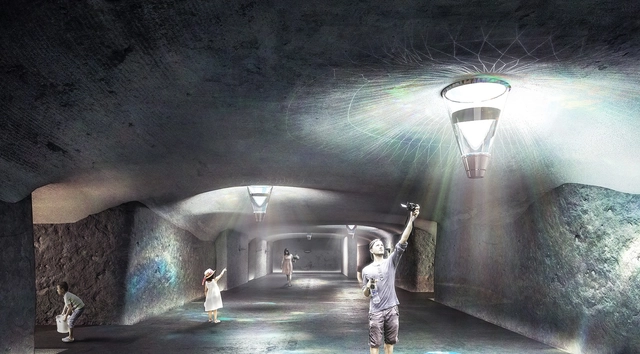
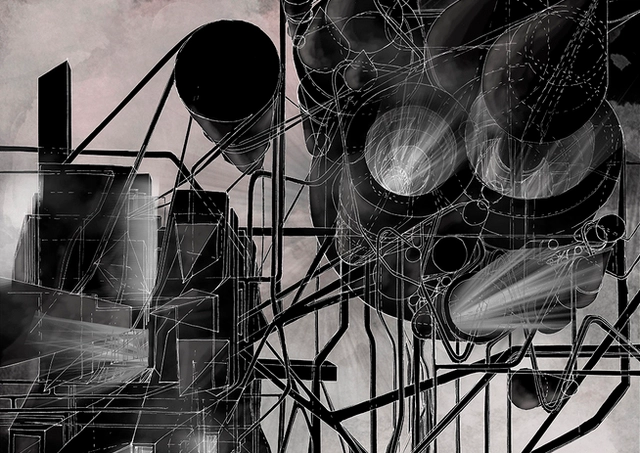
The International VELUX Award 2018 sought to highlight the work of architecture students around the globe who challenge the use of daylight in built environments. The award, titled “Light of Tomorrow,” was launched in 2004 and is awarded biennially for creative interpretation, exploration, and investigation of daylight in built environments. This year, the winners were selected from over 600 submissions.
Did you know that 64 million European children spend more time at school than anywhere else other than their home? European children spend approximately 200 days each year at their primary schools. With this information, how do we go about designing healthier classrooms that create productive learning environments? This question is perhaps more important than ever, as this will be the first time since the 1970s that Europe and the UK will see a boom in the construction and renovation of schools. What a tremendous opportunity this is for both architects and educators to rethink what an educational facility should be and how the physical environment can be designed to have a positive impact on learning.
Casa FOA is one of the most important exhibitions for architecture, interior design, landscaping, and industry in Latin America. Chilean architects SUMATORIA were selected to represent their country in the 'Emerging Design of Miniature Housing,' or the Tiny Home, a living space of only 15 square meters (equivalent to the size of a container module).
Held every two years, the International VELUX Award challenges students to generate projects that take advantage of daylight, with the aim of developing a deeper understanding of this energy source.
A jury of renowned architects chose 9 regional winners for its 2018 iteration, who will now compete for the winning title at the World Architecture Festival in November. The winners were chosen from projects presented by students from 250 different architecture schools in 58 countries.
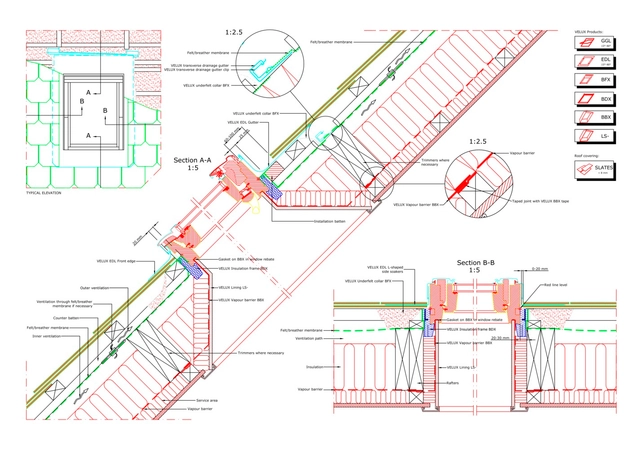
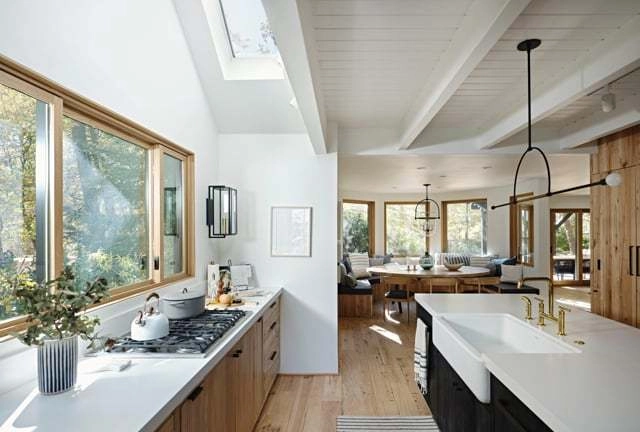
In the spirit of supporting our readers’ design work, the company Velux has shared a series of .DWG files with us of their different roofing windows models. The files can be downloaded directly from this article and include great amounts of detail and information.
Check the files below, separated into 'Pitched Roofs', 'Flat Roofs' and 'Light Tube'.
https://www.archdaily.com/802109/16-cad-files-of-skylights-and-light-tubes-available-for-your-next-projectArchDaily Team
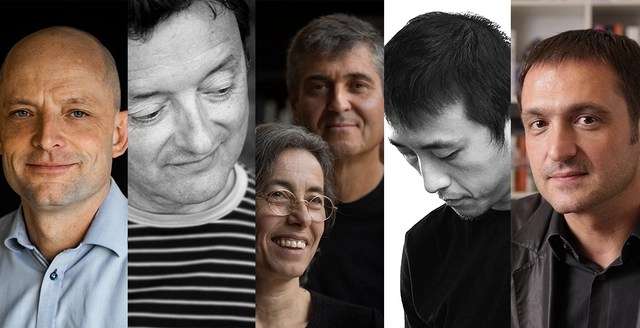
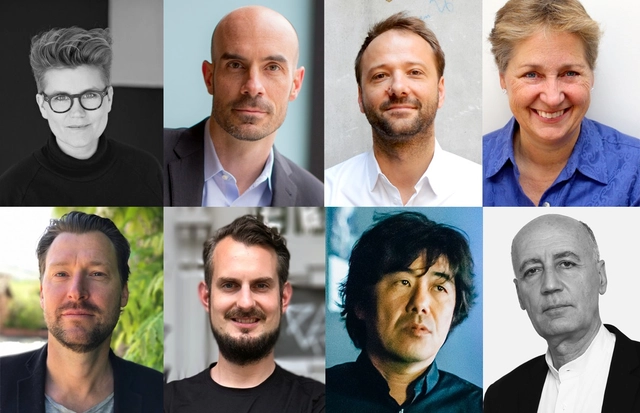
The VELUX Group has announced the esteemed architects that will make up the jury for the 2018 VELUX Award for Students of Architecture. The award, given every two years, challenges students of architecture all over the world to explore the theme of daylight and consider its role in our lives as an ever-relevant source of light, life and energy in buildings. The four internationally acclaimed jury members will elect the winners among the hundreds of daylight-focused project entries from all over the world.
"We are thrilled and proud to present this esteemed jury to the works of engaged students from all over the world and we truly hope that all efforts will be made to showcase explorations and excitement in the two award categories 'daylight in buildings' and 'daylight investigations'," says program manager of the award Per Arnold Andersen, from the VELUX Group.
The members of the jury are:
https://www.archdaily.com/884624/exceptional-and-noteworthy-jury-to-select-winners-of-the-international-velux-award-2018AD Editorial Team
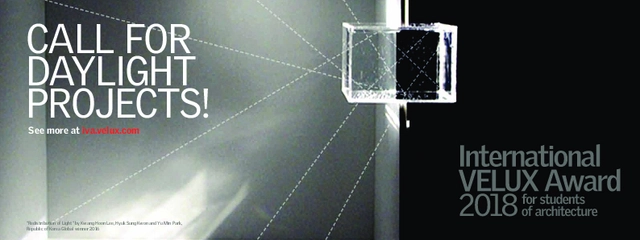
The International VELUX Award 2018 for Students of Architecture challenges students of architecture all over the world to explore the theme of daylight and consider its role in our lives as an ever-relevant source of light, life and energy in buildings - and as an important discipline in architecture. Students can register from 1 September 2017 to 1 April 2018 and submit their daylight projects before 15 June 2018.
https://www.archdaily.com/878484/call-for-entries-international-velux-award-2018-for-students-of-architectureAD Editorial Team
Under the theme "Healthy & Climate Friendly Architecture - From Knowledge to Practice", the 7th VELUX Daylight Symposium, held in Berlin on 3-4 May 2017, was attended by 39 speakers from research and architectural practice.
Participants were able to contrast the information presented by researchers with the 'built experience' of architects from Europe, Canada and USA, generating interesting discussions about the need to go deeper in the understanding of this natural resource, and then design more effectively.
Anne Lacaton (France) is an award-winning architect and part of the duo Lacaton & Vassal, having made reuse of existing materials and integration of daylighting in standard construction their signature architecture and adding a social dimension to architectural design.










.jpg?1534865234&format=webp&width=640&height=580)
.jpg?1534865165 "Cortesía de Sumatoria")


.jpg?1534865234)