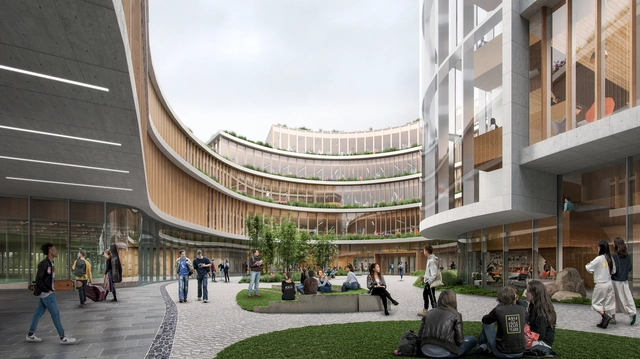
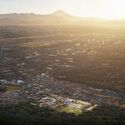
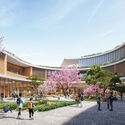
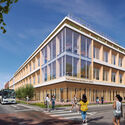
Ennead Architects has been enlisted to redefine the campus of The American School in Japan (ASIJ) to align the international school’s academic mission with its environment. Currently defined by its aging and fragmented infrastructure, the campus is set to become a dynamic and innovative space, encouraging integrated learning, cohesion, and collaboration across age groups. Sustainability principles, along with the experience of Japanese heritage, also play an important role in the design of the master plan, which proposes a toolkit of solutions intended to help create a unified, sustainable and resilient campus.
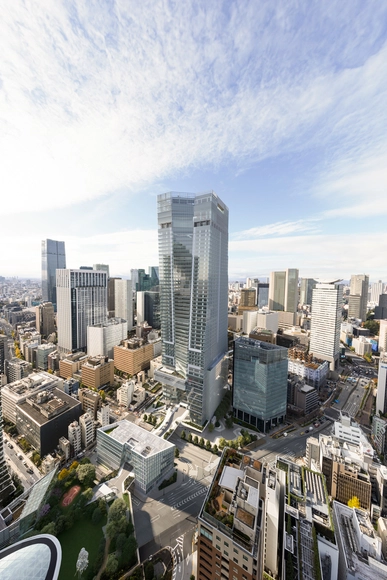
Toranomon Hills Station Tower. Image Courtesy of OMA and The Boundary
OMA’S inaugural tower in Tokyo and Japan, designed by Shohei Shigematsu and OMA New York, the Toranomon Hills Station Tower, will open this fall, 2023. The inauguration of the Toranomon Hills Station Tower will mark a significant milestone in Mori Building's Toranomon Hills development, an emerging global business center, and urban hub. A multi-layered transportation node integrated into the tower will establish a new gateway linking Central Tokyo with the rest of the world.
In the following interview with Paul Tange, the chairman and senior principal architect at Tange Associates in Tokyo, we discussed the relationship with his famous architect-father Kenzo Tange (1913-2005; the most influential architect in postwar Japan and the winner of the 1987 Pritzker Prize), the fate of the house Tange senior built for his first family, the decision of joining his father’s practice right after graduation from Harvard, sharing his father’s design principles, and the vision behind his first independent built work – a 50-story Mode Gakuen Cocoon Tower in Tokyo, a vertical campus that can accommodate up to 10,000 students; the project won an international competition, in which 50 international architects participated.
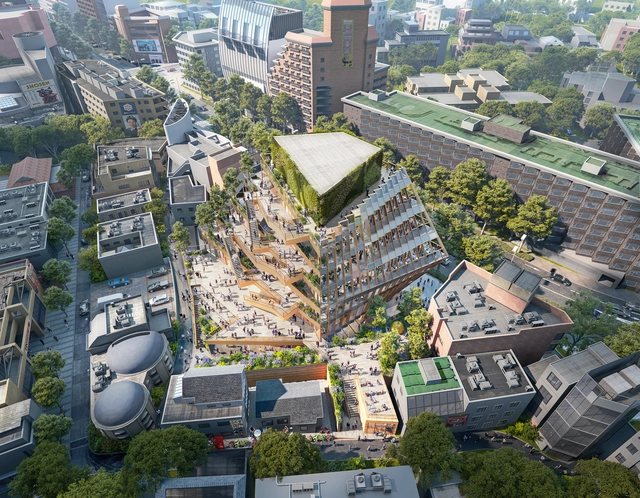
The Harajuku Quest, designed by Shohei Shigematsu and OMA New York, represents a renewed commercial and cultural center in the Harajuku district of Tokyo. Located on a site in between Omotesando and Oku-Harajuku, the building is the newest phase of NTT’s “With Harajuku”, a larger urban development that aims to facilitate the flow of people through a series of squares and commercial areas. Harajuku Quest plans to draw people and activities from both Omotesando and Oku-Harajuku and connect the two areas for the first time. Construction is expected to complete in 2025.
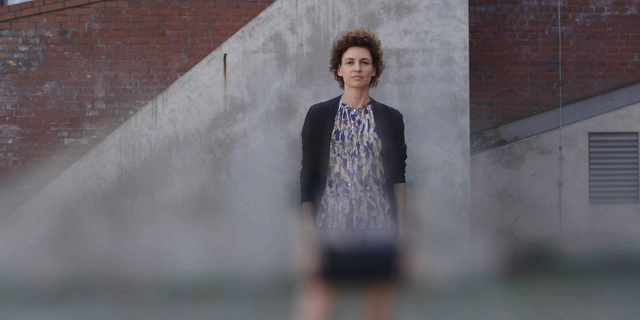
From ending up by accident in architectural studies, to eventually falling in love with the complexity of the field and the multitude of its layers, Johanna Meyer-Grohbrügge was amazed by the dual nature of architecture; its intellectual aspect, and physical outcome. Founder of Meyer-Grohbrügge in Berlin, the architect, and her studio seek to spatialize content, create relationships, and find solutions for living together.