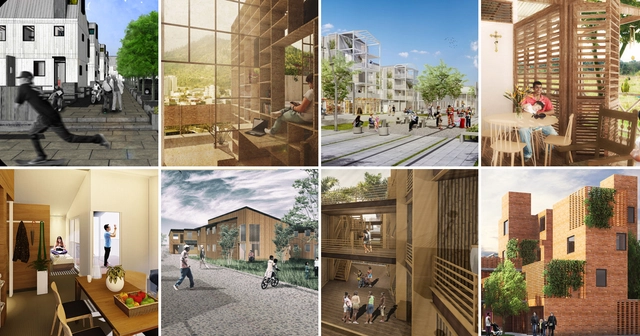
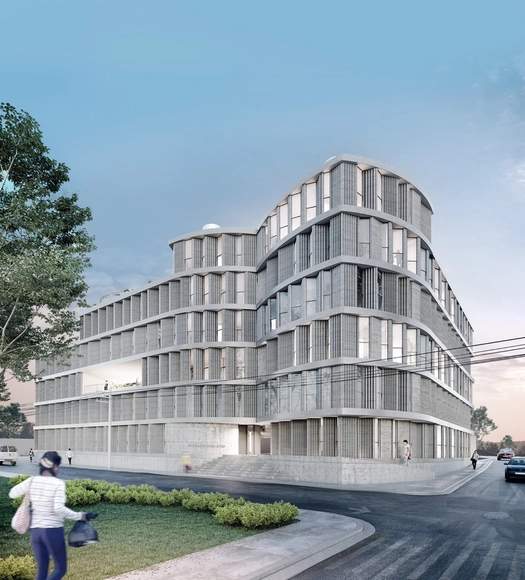
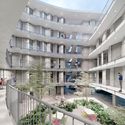
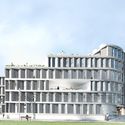
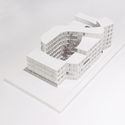
SO-IL has released details of their Las Americas social housing project in León, one of Mexico’s fastest-growing cities. Seeking to establish a solution to the nation’s housing crisis, SO-IL collaborated with the Instituto Municipal de Vivienda de León (IMUVI) in the development of the prototype development.
Last week, we asked our social media followers, "What does public architecture mean to you?" These thoughts are intrinsic to the architectural debate and come into play in various types of projects, especially in those related tothe planning of common-use spaces in cities.
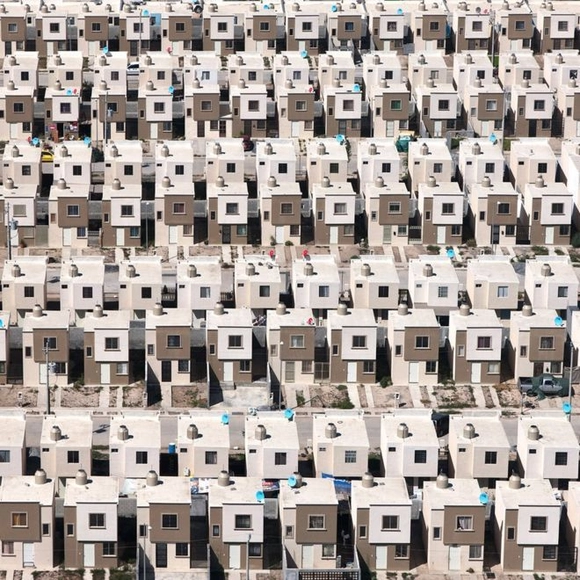
Continuing the series of articles developed by Nikos A. Salingaros, David Brain, Andres M. Duany, Michael W. Mehaffy, and Ernesto Philibert-Petit, in this article we'll be exploring how observations on social housing in Latin American have been approached from an outdated and antagonistic point of view. Notions and errors committed in previous studies - in some cases simply by inertia - are discussed in the Latin American context, and propose adaptable solutions focused on the long-term, urban roots of residents.
https://www.archdaily.com/914752/anti-patterns-of-social-housing-in-latin-americaNikos A. Salingaros, David Brain, Andrés M. Duany, Michael W. Mehaffy & Ernesto Philibert-Petit
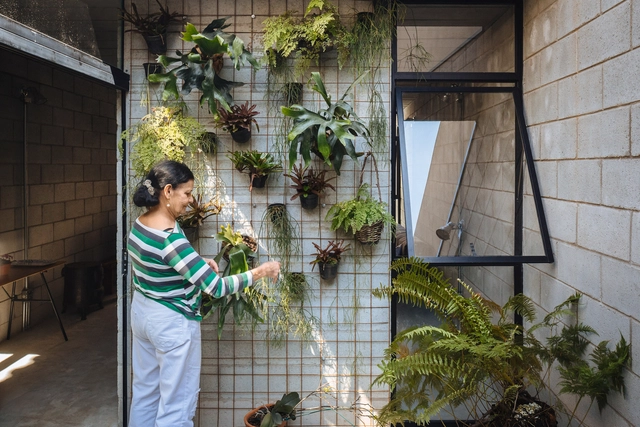
Casa en Vila Matilde / Terra e Tuma Arquitetos Associados. Image
Developed by Nikos A. Salingaros, David Brain, Andrés M. Duany, Michael W. Mehaffy, and Ernesto Philibert-Petit, this series of articles offers here a set of evidence-based optimal practices for social housing, applicable in general situations. Varying examples are discussed in a Latin American context. Adaptive solutions work towards long-term sustainability and help to attach residents to their built environment.
They propose, then, new insights in complexity science, and in particular the work of Christopher Alexander on how to successfully evolve urban form. By applying the conceptual tools of “Pattern Languages” and “Generative Codes”, these principles support previous solutions derived by others, which were never taken forward in a viable form.
https://www.archdaily.com/913586/socially-organized-housing-design-that-establishes-emotional-ownershipNikos A. Salingaros, David Brain, Andrés M. Duany, Michael W. Mehaffy & Ernesto Philibert-Petit
The new graphic identity of the 2019 Chicago Architecture Biennial. by LA-based ELLA. Image Courtesy of Chicago Architecture Biennial
The third Chicago Architecture Biennial will occur from September 19, 2019, to January 5, 2020, and yesterday the first group of contributors to the 2019 edition and publication was announced. This year’s theme, “...and other such stories,” will bring together a multi-faceted and international exploration of architecture and the built environment. Newly commissioned projects for the Biennial will highlight issues including public housing, social justice, and the appropriation and preservation of the natural environment.
Microsoft has unveiled plans to commit $500 million to advance affordable housing solutions across the city of Seattle, Washington. The money, to be distributed as loans and grants, will kick-start new solutions to the city’s housing crisis, where income increases have lagged behind rising housing prices.
The investment breaks down as $225 million committed to subsidize middle-income housing construction in six targeted cities, $250 million to support low-income housing across the King County region, and $25 million to philanthropic grants to address homelessness in the greater Seattle region. The tech giant has targeted the region in close proximity to the site of its Redmond headquarters expansion, expected to accommodate 8,000 new employees.
https://www.archdaily.com/909841/microsoft-is-investing-500-dollars-million-in-seattle-affordable-housingNiall Patrick Walsh
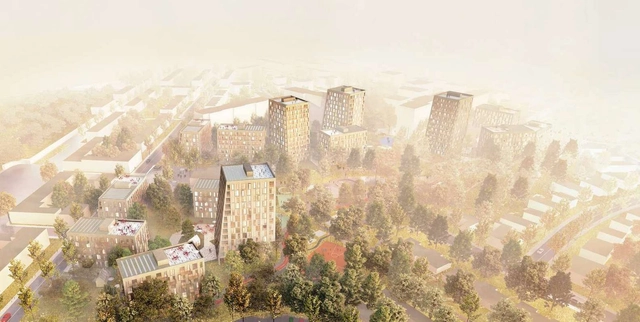
C.F. Møller Architects and BRUT have won a competition for the design of an ambitious urban development in Ostend, Belgium. The neighborhood of 500 houses demonstrates a method of using a human scale to improve the quality of life the residents and the urban realm.
The project centers on the De Nieuwe Stad quarter, where an existing social housing scheme from 1972 has become outdated. The competition for the site’s complete redevelopment attracted 54 firms, from which C.F. Møller Architects and BRUT.
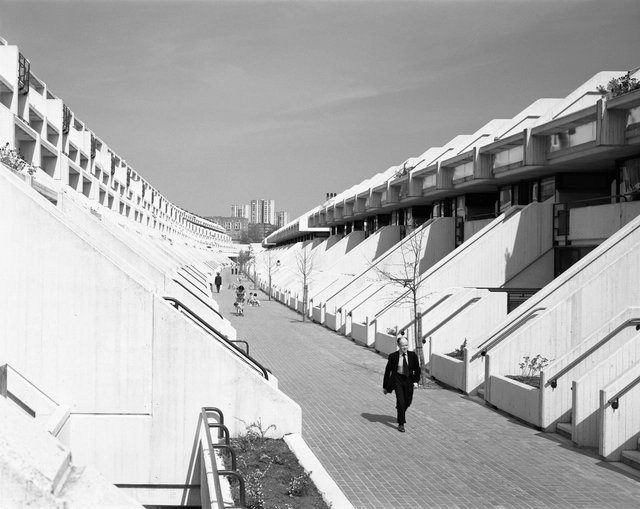
The RIBA and Victoria and Albert Museum (V&A) have joined forces to display six pioneering experiments in social housing from their archives. “A Home for All” features designs “from a tower block that up-ended the terraced street, to a DIY kit that encouraged residents to design their own homes.”
The six projects, all commissioned by public authorities, demonstrate both the crucial role played by the state in providing housing, and the role of the architect in creating high-quality housing through personal philosophy, new ideas, integration of best practice, and lessons from previous mistakes.
The RIBA's ‘Ten Characteristics of Places Where People Want to Live’ combines a series of case studies that illustrate components of contemporary community housing design. This study was completed to identify and analyze specific, successful elements of past projects that can be easily incorporated into future projects not only in England but also internationally.
The study hopes to demonstrate to its readers the relationship between design quality and the rate of supply in the delivery of much needed well-built affordable housing. Each building example illustrates how appealing and successful design can be easily replicated.
Rural Studio, a student-centered design/build program at Auburn University’s College of Architecture, Design and Construction, has announced a collaboration with the mortgage loan company Fannie Mae to support the school’s 20K Initiative. This initiative continues to contribute to the development of "beautiful, healthy and resilient houses that afford financially vulnerable homeowners the ability to live in dignity, security and well within their means."
As a means to address the shortage of affordable housing in the U.S., the research produced from this collaboration with Fannie Mae is being shared with educational institutions industry groups. Auburn University is also providing funding for the initiative through a grant to "further strengthen the collaboration with Fannie Mae, as well as support the development of additional stakeholder collaborations."
When we think of public housing architecture in the United States, we often think of boxes: big, brick buildings without much aesthetic character. But the implications of standardized, florescent-lit high-rises can be far more than aesthetic for the people who live there. Geographer Rashad Shabazz, for one, recalls in his book Spatializing Blackness how the housing project in Chicago where he grew up—replete with chain link fencing, video surveillance, and metal detectors—felt more like a prison than a home. Accounts of isolation, confinement, and poor maintenance are echoed by public housing residents nationwide.
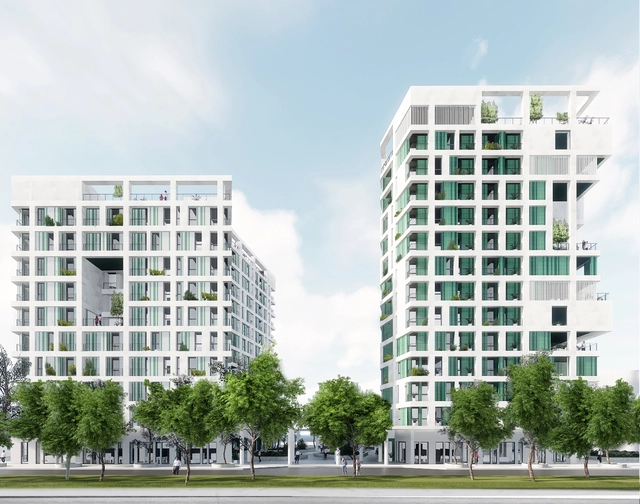
Mecanoo has released images of their competition-winning social housing proposal for the city of Kaohsiung, Taiwan. The 234-unit-scheme embodies Mecanoo’s philosophy towards social housing, “defined by flexibility, the right balance of private and communal spaces, mixing housing types, connection with the environment and identity.” Comprised of two buildings linked by a green canopy, the scheme is designed for a variety of users, including students, young families, the elderly, or people with special needs.
Mercer released their annual list of the Most Livable Cities in the World last month. The list ranks 231 cities based on factors such as crime rates, sanitation, education and health standards, with Vienna at #1 and Baghdad at #231. There’s always some furor over the results, as there ought to be when a city we love does not make the top 20, or when we see a city rank highly but remember that one time we visited and couldn’t wait to leave.
To be clear, Mercer is a global HR consultancy, and their rankings are meant to serve the multinational corporations that are their clients. The list helps with relocation packages and remuneration for their employees. But a company’s first choice on where to send their workers is not always the same place you’d choose to send yourself to.
And these rankings, calculated as they are, also vary depending on who’s calculating. Monocle publishes their own list, as does The Economist, so the editors at ArchDaily decided to throw our hat in as well. Here we discuss what we think makes cities livable, and what we’d hope to see more of in the future.
The dream of universal affordable housing has been an idea tried and tested by architects throughout history. From the wacky Dymaxion House by Buckminster Fuller, an imagining of how we would live in the future, to mail-order houses able to be assembled like IKEA furniture, many proposals have tackled the challenge of creating affordable housing or dwellings which could be replicated no matter the time and place. However, although their use of techniques such as pre-fabrication and cheap materials seemed, in theory, to be able to solve pressing issues of homelessness and the global housing crisis, time and time again these proposals have simply failed to take off. But why?
IKEA’s research lab SPACE10 is attempting to find an answer to this question through open-source collaboration. By releasing their design of a micro-house that used only one material and one machine to make it and an accompanying website that catalogs the process and invites feedback, they are inviting architects, designers, and aspiring home-owners to work together in creating a solution which could improve the lives of millions. “The vision,” they say, “is that by leveraging the world’s collective creativity and expertise, we can make low-cost, sustainable and modular houses available to anyone and, as a result, democratize the homes of tomorrow.”
Building and growing are two actions that should be considered more often than not at the same time. This is how the 2017 "Build to Grow" social housing competition, looked to establish bases that sustain a flexible way of living. The event took place in the Belén district in the city of Iquitos, on 3.7 hectares plot of land. The project that received first place proposed to locate 120 incremental homes, that alternatively allowed users to modify and expand it according to their needs and economic means. In short, a home with a solid nucleus formed by a structure that supports changing activities.
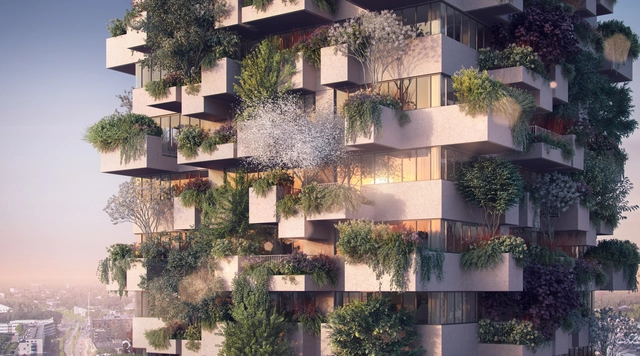
The new social housing project by Stefano Boeri Architetti is the first to integrate a vertical forest into an affordable residential skyscraper, improving the living conditions often incurred within such developments. 5,200 shrubs and 125 trees will be planted up the 75m tall structure in Eindhoven.
Trudo Vertical Forest will contain 125 social housing units over 19 floors to house lower income social groups, particularly young people. Each apartment will include a balcony filled with an array of trees, plants and shrubs for a forest soaring into the city's sky.
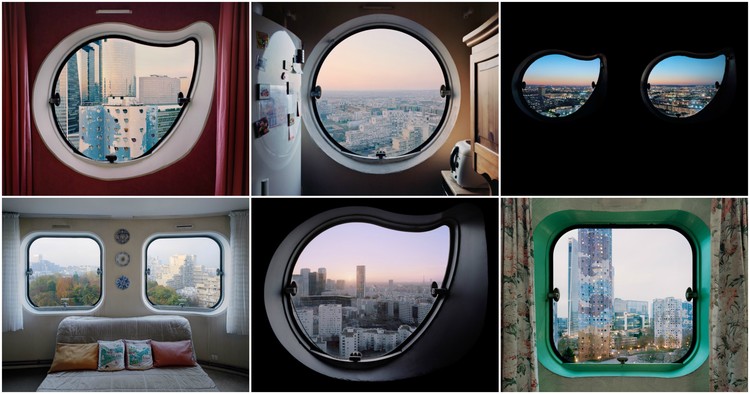
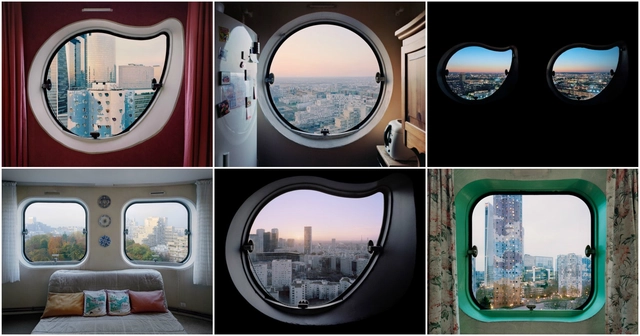
French photographer Laurent Kronental’s latest photo series, “Les Yeux des Tours” views of Paris, are framed by the quirky windows of the Tours Aillaud, and by the subtle differences in which the spaces around them are inhabited. Kronental considers the towers as some of the most spectacular of the Grands Ensembles built in the post-war economic boom in France. For him, photographing these buildings was a form of nostalgia, a way of satisfying a deep sense of childhood wonder and curiosity that fostered in him as a young boy perceiving them from the nearby business and shopping center "La Défense," questioning the lives of the people who live there.
At the end of September, we invited our Spanish-speaking readers to send us their social housing proposals completed at a university level. Social housing is still a challenge for much of Latin America and although every year hundreds of architecture students work on projects that reflect their concerns in the social housing field, its visibility is very low and its materialization is null. At a time when the Global South has pursued its own responses to its own problems, the university response on social housing should be taken into account by the State, both of whom are interested in the common good.
Out of 116 proposals received from Spain and 11 Latin American countries, this selection of 20 ideas represents the different challenges and state of the problems in social housing. While some approach Colombia's post-conflict scenario for rural inhabitants, some propose answers to the insertion of social housing in already densified areas, to which the beneficiaries tend to be relegated by the value of land and housing. Other ideas point to the reconversion of infrastructure, modulation, the integration of indigenous peoples and natural disasters.
We believe that the selection not only highlights the efforts of students and academics to address contingent problems but will also open up the discussion about social housing, often relegated only as a one-dimensional problem when in reality, poverty is multidimensional.
https://www.archdaily.com/883952/the-best-university-proposals-for-social-housing-in-latin-america-and-spain-in-2017ArchDaily Team






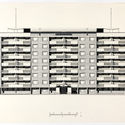
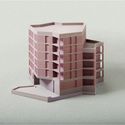
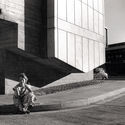


.jpg?1531354161)


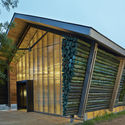
.jpg?1531865940)
.jpg?1527852711 "The Navy Green development in Brooklyn was a key case study in the report. Here, the supportive housing from that development, designed by Architecture in Formation and Curtis + Ginsburg. Image © Tom Powel Imaging")
.jpg?1527852699 "The Tetris Apartments in Ljubljana, by OFIS Arhitekti, were identified by the report as a case study for their massing. Image Courtesy of OFIS Arhitekti")



.jpg?1511735650 "SAVE. Image © Laurent Kronental")
.jpg?1511735614 "SAVE. Image © Laurent Kronental")
.jpg?1511735644 "© Laurent Kronental")
.jpg?1511735634 "© Laurent Kronental")