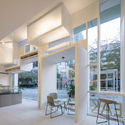

-
Architects: Onexn Architects
- Area: 190 m²
- Year: 2018
-
Professionals: Essence Atelier, Onexn Architects
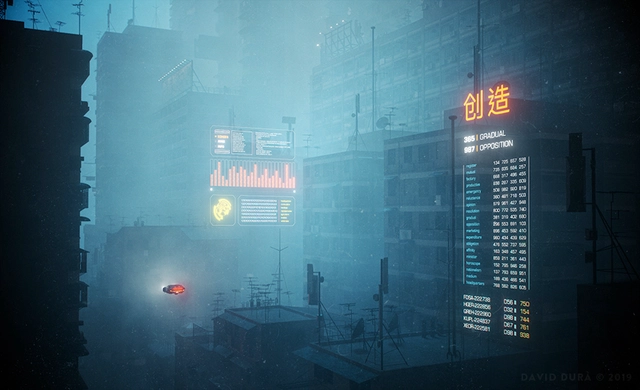
What happens when the sensor-imbued city acquires the ability to see – almost as if it had eyes? Ahead of the 2019 Shenzhen Biennale of Urbanism\Architecture (UABB), titled "Urban Interactions," ArchDaily is working with the curators of the "Eyes of the City" section at the Biennial to stimulate a discussion on how new technologies – and Artificial Intelligence in particular – might impact architecture and urban life. Here you can read the “Eyes of the City” curatorial statement by Carlo Ratti, the Politecnico di Torino and SCUT.
Technologies of the virtual realm present an opportunity to rethink the experience of space, society, and culture. They give us the possibility to engage with the city of the future, shaping the built environment of the 21st century.

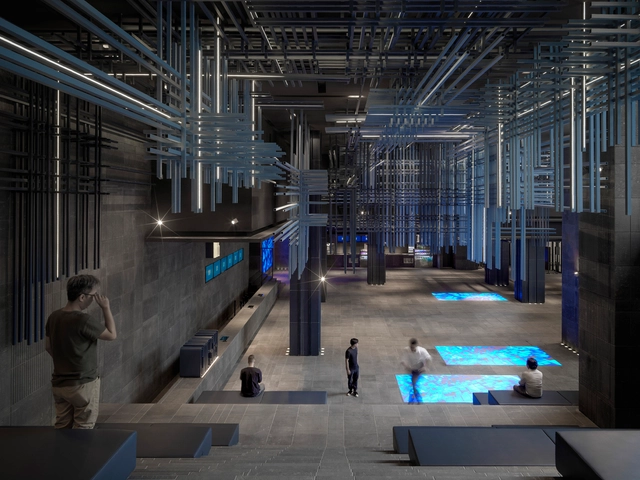
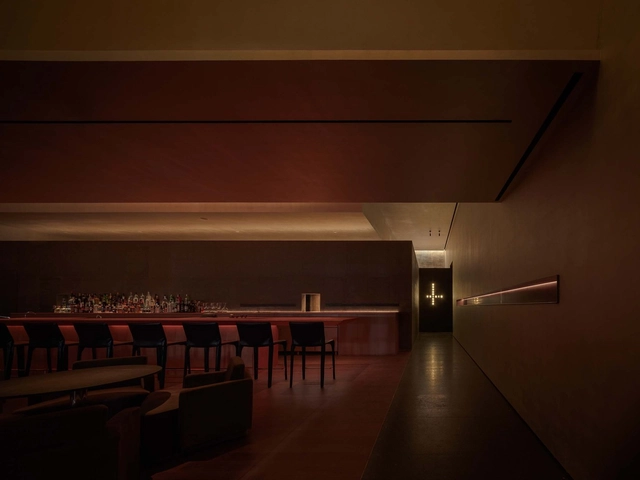

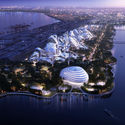
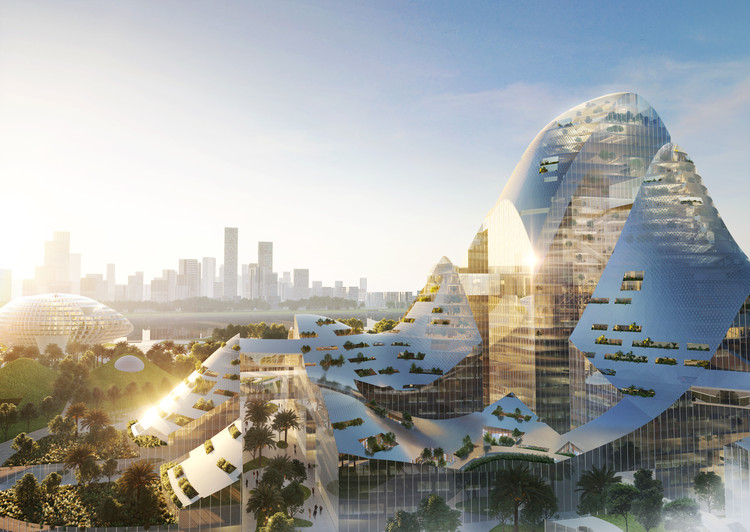
MVRDV has just released images of the firm’s competition entry for the next Tencent headquarters campus, located in Qianhai Bay, Shenzhen. Highlighting the green potential of Smart City Technology, the project imagines an entire urban district including offices, homes for Tencent employees, commercial units, public amenities, schools, and a conference center.

What happens when the sensor-imbued city acquires the ability to see – almost as if it had eyes? Ahead of the 2019 Shenzhen Biennale of Urbanism\Architecture (UABB), titled "Urban Interactions," ArchDaily is working with the curators of the "Eyes of the City" section at the Biennial to stimulate a discussion on how new technologies – and Artificial Intelligence in particular – might impact architecture and urban life. Here you can read the “Eyes of the City” curatorial statement by Carlo Ratti, the Politecnico di Torino and SCUT.
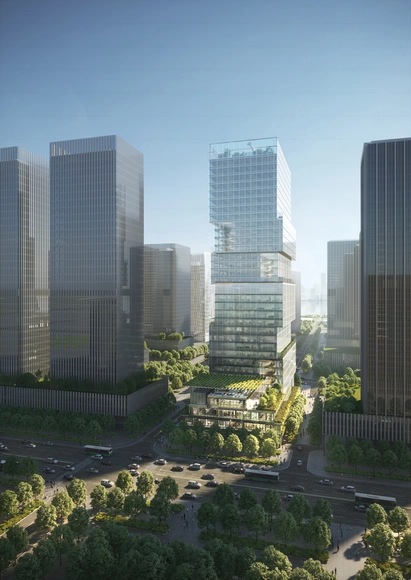
Jaeger Kahlen Partner is one of the joint winners of the international competition for the Bao’An Bay Industrial Investment Tower in Shenzhen, China. With a distinctive design approach, the landmark building will generate modern office spaces and enhance the surrounding urban fabric.


The 8th Bi-City Biennale of Urbanism\Architecture (Shenzhen) has officially opened in Shenzhen, China. Hosted at both the Shenzhen Museum of Contemporary Art and Planning (MOCAUP) and the Futian Railway Station, the event is the most visited architecture biennale in the world, and holds the distinction of being the first major architectural event where all materials for the exhibitions were sourced in the host city of Shenzhen.
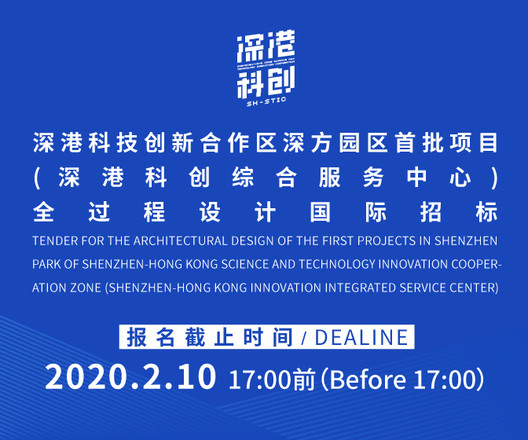
This announcement is hereby issued for International Tender for the Architectural Design of the First Projects in Shenzhen Park of Shenzhen-Hong Kong Science and Technology Innovation Cooperation Zone (Shenzhen-Hong Kong Innovation Integrated Service Center), and excellent design agencies at home and abroad are invited to join. We desire to solicit the most creative design scheme with the international vision and high standards.

What happens when the sensor-imbued city acquires the ability to see – almost as if it had eyes? Ahead of the 2019 Shenzhen Biennale of Urbanism\Architecture (UABB), titled "Urban Interactions," ArchDaily is working with the curators of the "Eyes of the City" section at the Biennial to stimulate a discussion on how new technologies – and Artificial Intelligence in particular – might impact architecture and urban life. Here you can read the “Eyes of the City” curatorial statement by Carlo Ratti, the Politecnico di Torino and SCUT.
Architectural practice naturally results in an extraordinary accumulation of visuals and archival media that demand sorting, cataloguing, and organizing at a certain moment in time in order to avoid their amorphous accumulation to invade the working order of a firm. Tagging, numbering and classifying the accumulated traces of architectural creativity and data, has become a way of organizing the log of creative options and scenarios developed in practice, a directory of successful examples and of failures, all arranged to be used as a self-referential working catalogue of options that may be mobilized at any moment in time.

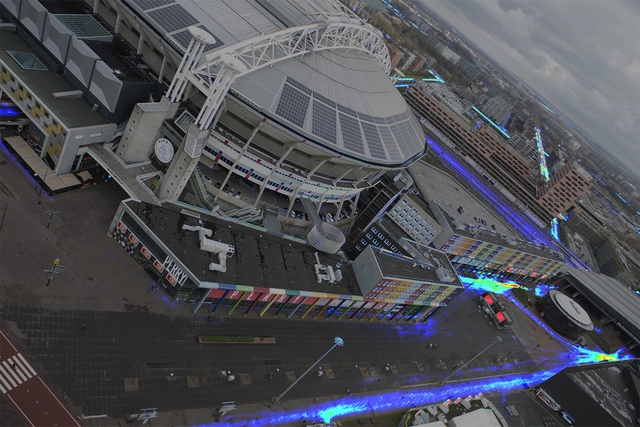
What happens when the sensor-imbued city acquires the ability to see – almost as if it had eyes? Ahead of the 2019 Shenzhen Biennale of Urbanism\Architecture (UABB), titled "Urban Interactions," Archdaily is working with the curators of the "Eyes of the City" section at the Biennial to stimulate a discussion on how new technologies – and Artificial Intelligence in particular – might impact architecture and urban life. Here you can read the “Eyes of the City” curatorial statement by Carlo Ratti, the Politecnico di Torino and SCUT.
Cities, as Goethe had already pointed out, should be understood as continuously developing 'forms in motion' (see Batty 2018). In the past, technological developments and our hopeful, as well as our dystopian imaginations of them, have been one of the main sources of kinetic energy to kick-off the shapeshifting processes of urban transformations. Most of the time with unexpected side-effects, evolving center stage in retrospect.