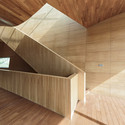
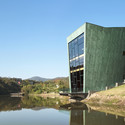
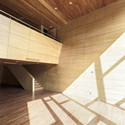
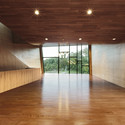
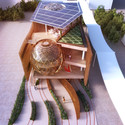
Azerbaijan has recently unveiled the design of “Treasure of Biodiversity,” its dedicated pavilion for Expo Milano 2015, marking the first time the country has participated at a Universal Exposition. Designed by Italian firm Simmetrico Network, the pavilion aims to reflect the unique cultures and landscapes of Azerbaijan while acting as a model of sustainable design. Complete with biospheres and undulating walls, the pavilion’s unique form takes cues from the central Expo theme of “Feeding the Planet, Energy for Life,” and hopes to engage visitors with the values of protected biodiversity.
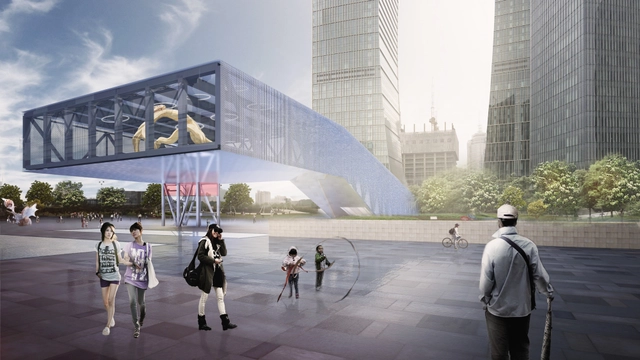
OMA has won a competition to design the Lujiazui Exhibition Centre, a 1,500 square meter space in Shanghai Pudong on the site of the former "Shanghai Shipyard." The design aims to create a concentrated culture and event space within the surrounding financial district, on the edge of the Huangpu River, one of the most photographed waterfronts in the world.
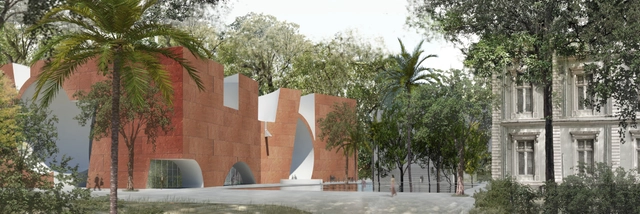
Steven Holl Architects has been selected to design a new extension to one of India’s oldest museums, the Mumbai City Museum, also known as the Dr. Bhau Daji Lad Museum. Selected over OMA, Studio Mumbai Architecture, Zaha Hadid and four others, Holl is now the first architect ever to be chosen through an international competition to design a public building in Mumbai.
Continue reading to learn more about Holl’s winning design.
Videos
Courtesy of FR-EE / Fernando Romero EnterprisE
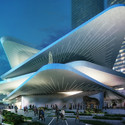
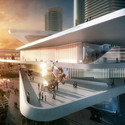
On the heels of President Barack Obama’s recent decision to reform US immigration policy, FR-EE / Fernando Romero EnterprisE has released designs for a new Latin American Art Museum (LAAM) in Miami. The four-story museum, characterized by elongated, cantilevering terraces and sculpture gardens, hopes to become “the most significant institution for displaying Latin American art in America.” Continue reading to learn more.
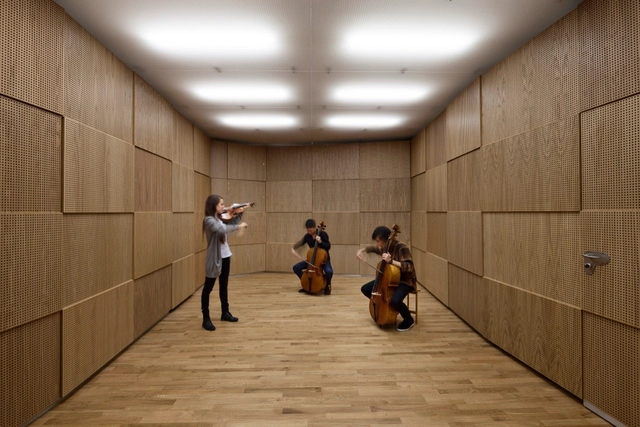
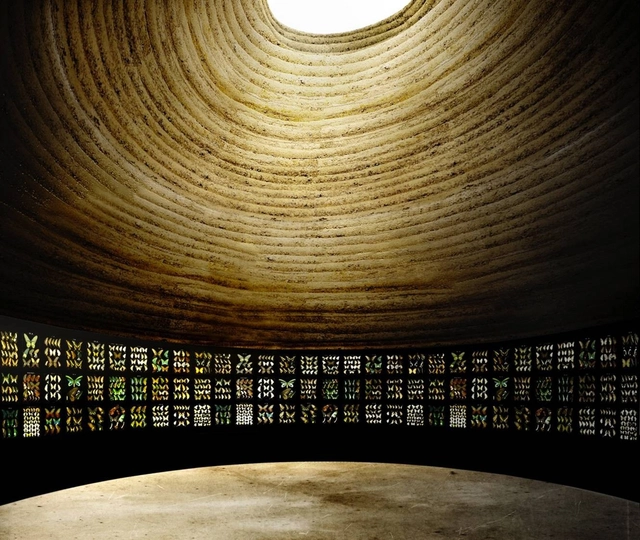
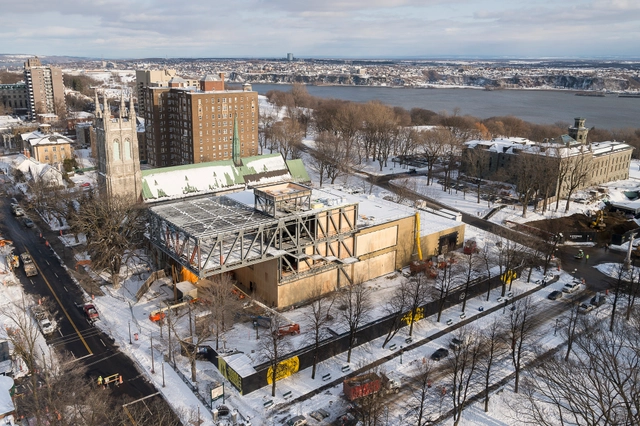
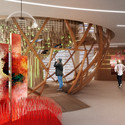
Kuehn Malvezzi, Pelletier De Fontenay, Jodoin Lamarre Pratte, Dupras Ledoux, andNicholet Chartrand Knoll (NCK) have won one of three first place positions in Montréal’s Space for Life International Architectural Competition, which seeks to reinvent mankind’s relationship with the natural world for the city’s 375th birthday, with their proposal for the redesign of the Montréal Insectarium. Titled Insectarium Metamorphosis, the project provides new spaces for visitors to get up close and personal with the multitude of insects housed in the museum.
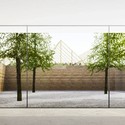
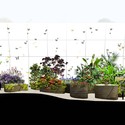
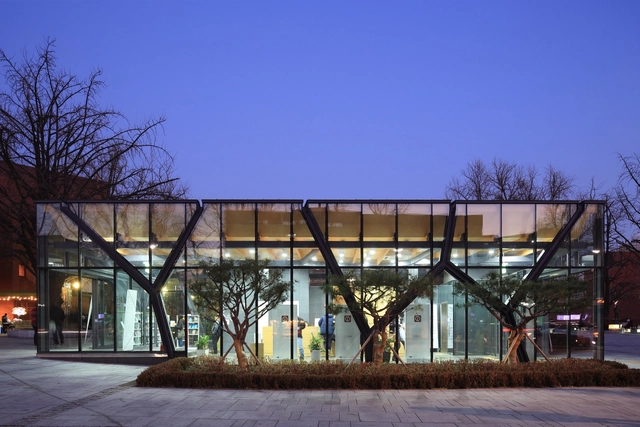
The Space for Life International Architectural Competition of Montréal has recently announced its three winners. The competition prompted designers to rekindle an interest in the natural world through an architectural intervention at a pre-appointed venue. Located in the city’s Botanical Gardens, this winning proposal by Lacaton & Vassal, Frédéric Druot, FABG, and SNC Lavalin does so in a simple, elegant way, with a glass pavilion for the Gardens that serves a variety of purposes. Learn more, after the break.
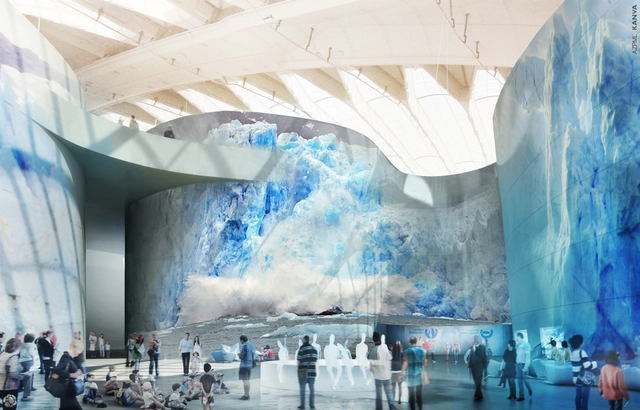
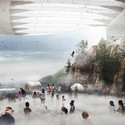
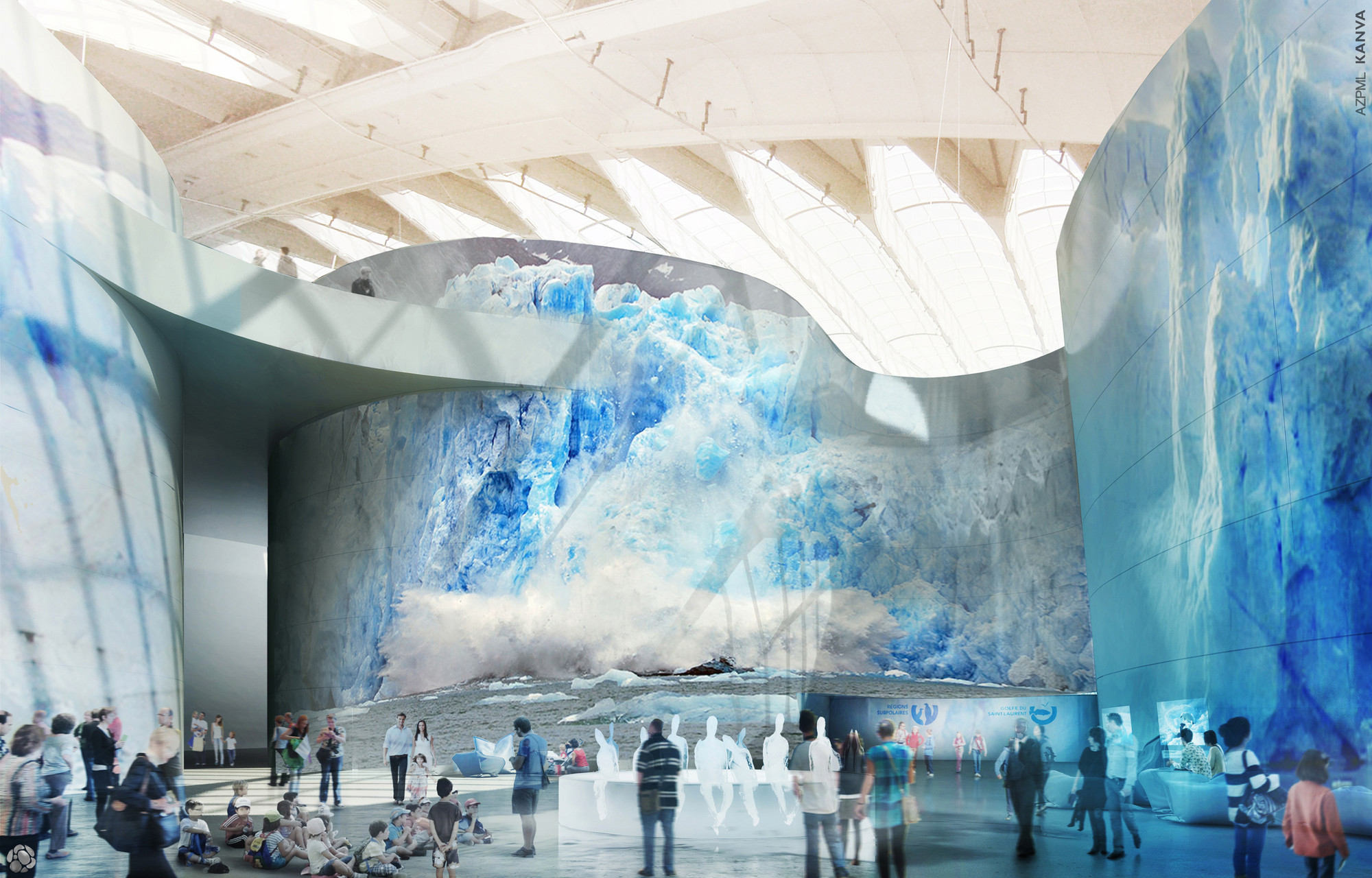
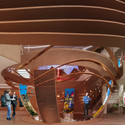
Montréal’s Space for Life competition has recently announced its winners, with design firms AZPML and KANVAnamed as one of three first winners with their joint design. The competition demanded that entrants reinvigorate the relationship between humanity and the natural world through an intervention at Montréal’s Biodome. The two firms’ winning proposal, Migration du Biodome, does that with the installation of a series of undulating walls.
The question of whether the traditional museum survive in the digital age has been bounced around since the dawn of digital art and archiving. In an article for The Independent, Christopher Beanland examines the issue of a global "museum boom" (especially in China where a new one opens every day), and how this is having an undoubtedly positive impact on people's quality of life. For Beanland, it's curious that "we don't splash out on council houses or universities or hospitals any more – but we do build museums and galleries." Perhaps it's because they are "a reliquary for our collective memories" and "a triumph of our collective will" or, in most cases, because they employ excellent PR and branding strategies. He notes that "despite being swamped by possessions, we've changed our views towards those things. In the second half of the 20th century, people defined themselves by what they had. But today people increasingly define themselves by what they do."












.jpg?1417636600&format=webp&width=640&height=580)
.jpg?1417636610 "Courtesy of FR-EE / Fernando Romero EnterprisE")
.jpg?1417636586 "Courtesy of FR-EE / Fernando Romero EnterprisE")
.jpg?1417636600)