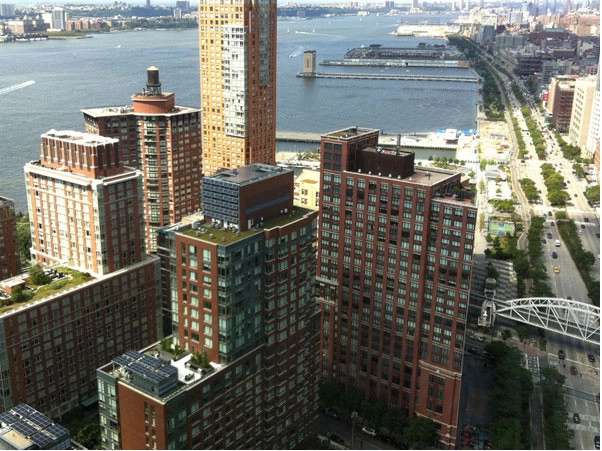
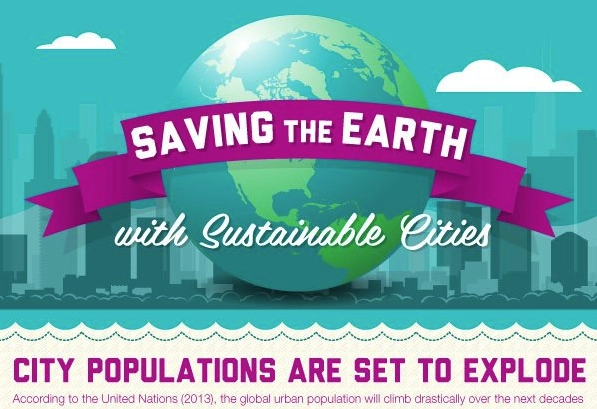
Which cities are embracing the green revolution? This infographic compares the efforts of six leading cities - New York, Vancouver, Copenhagen, London, Amsterdam and Stockholm - in the race to drastically reduce global C02 emissions. Based predominantly on 2009 statistics, Stockholm seems to be leading the way in carbon reduction. Continue reading after the break to see who claims the blue ribbon for renewable energy, efficient water consumption and rigorous recycling.
After generously donating an archive of over 6000 drawings and 150 projects, architect Charles Correa sat down with RIBA President Angela Brady to discuss his life and work as one of “India’s greatest architects.” The short interview touches on a wide range of topics, from the inspiration behind some of his greatest projects to advice for future architecture students.
“The thing about architecture is that you cannot teach it. You can learn it, but you cannot teach it. And a good school is a school which makes you passionate about architecture and that teaches you how to ask questions. [...] If you know how to ask the right questions, you will develop your own philosophy and your own visual vocabulary.”
Originally published on Intercon, Ohioan and Africa-based architect Charles Newman, LEED AP discusses the pitfalls of LEED in rural Africa. Newman, who is currently working for the International Rescue Committee in Bukavu, Democratic Republic of Congo, is dedicated to the integration of sustainability in communities worldwide. Learn more about his work and travels on his blog Afritekt.
While in a small southern town of the Democratic Republic of Congo in mid-2012, a colleague of mine approached me for some guidance on a large health proposal he was putting together. A portion of the grant would be earmarked for the construction of hundreds of clinics across the DR Congo, and he mentioned that the donor would be very interested in “green” building standards. Knowing that I was a LEED Accredited Professional, he began asking how we might be able to incorporate such building standards into the designs for the pending projects. I rattled off some general guidelines such as using local materials – recycled ones if available, incorporating existing infrastructure, natural ventilation, etc. He jotted down a few notes, then began to pry a little deeper. “What about the LEED point system? Could we incorporate that into our strategy?”
My response was frank: “No, not really. LEED doesn’t work here in rural Africa.”
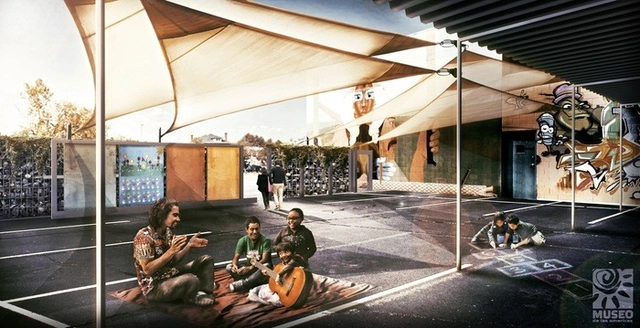
Architecture for Humanity-Denver is seeking to raise money for the transformation of a museum parking lot into an outdoor classroom for children in need. The goal of Denver's Museo de las Americas is to educate the community about the diversity of Latino Americano art and culture from ancient to contemporary through innovative exhibitions and programs, but the museum is lacking the necessary space for its increasingly popular youth summer camp.
“We don’t live in nature any more – we put boxes around it. But now we can actually engineer nature to sustain our needs. All we have to do is design the code and it will self-create. Our visions today – if we can encapsulate them in a seed – [will] grow to actually fulfill that vision." - Andrew Hessel in a recent ArchDaily interview
"Engineering nature to sustain our needs" is exactly what the Glowing Plant Project aims to do. Synthetic biologist Omri Amirav-Drory, plant scientist Kyle Taylor and project leader Antony Evans are working together to engineer "a glow-in-the-dark plant using synthetic biology techniques that could possibly replace traditional lighting" - and perhaps even create glow-in-the-dark trees that would supplant (pun intended) the common street light.
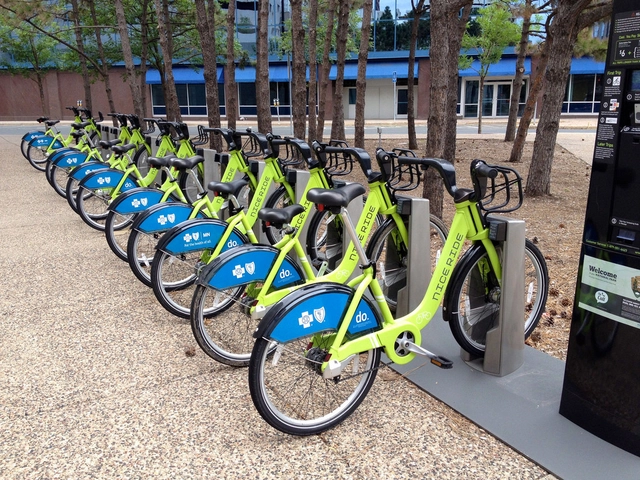
Bike sharing has become a staple for urban commuting in city's all over the world. Since its reintroduction into urban culture in the 1990s, it has taken on many forms. Today it is being optimized to serve dense cities to help alleviate traffic congestion, provide people with more transportation options, and to encourage a healthy way of commuting. An article by the Earth Policy Institute by Janet Larsen marks the exponential progress of bike-sharing programs, noting innovative solutions in cities across the world that make the programs safer, more accessible and more streamlined.
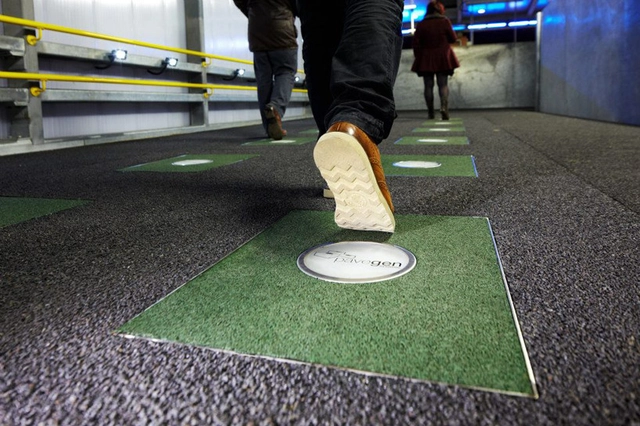
The potential to generate energy is hidden in many places, from skyscrapers to ski-slopes. But new research is showing that a potent source of energy is hiding right beneath our noses, or feet to be more specific.
The American Institute of Architects today released a letter from more than 350 different associations and companies expressing opposition to efforts by special interests to gut energy conservation requirements for federal buildings.
The letter, which is addressed to Energy and Natural Resources Chairman Ron Wyden, D-Ore., and ranking Republican Lisa Murkowski of Alaska, was released one week ahead of the scheduled mark-up of the Energy Savings and Industrial Competitiveness Act by the Senate Energy and Natural Resources Committee May 8.
That legislation, introduced by Senators Jeanne Shaheen (D-N.H.) and Rob Portman (R-Ohio), would promote greater use of energy efficiency technology in commercial and residential buildings and by manufacturers.
Videos
NYC Department of City Planning, Zone Green Courtesy of APA
The American Planning Association has released its list of 2013 National Planning Awards winners that exhibit the best planning efforts that create communities of lasting value. Among the recipients are regional plans that seek to revitalize post-industrial cities, plans to preserve and rehabilitate native settlements, restore blighted communities, reassess planning and zoning in major cities, develop environmental conservation programs, regenerate access to our natural topography and develop guidelines and regulations for more sustainable approaches to building. The projects are diverse and span a significant realm of urban reclamation and development.
With Stockhom, Hamburg and Copenhagen leading the way, urban metropolis’ worldwide are beginning to rethink their infrastructure and envision ways to transform their city into an efficient, sustainable model of the future in an effort to preserve a high quality of life and stay competitive in the global society. This shift is already being reflected in the education system, with the rapid growth of sustainability-focused academic programs and a sizable, projected increase in “green” jobs.
Get an understanding as to how sustainable cities will save the earth with an infographic after the break.
Could a new revolution in wind-turbines be on its way? A team from Australia's University of Wollongong (UOW) have collaborated with leading marine engineering firm Birdon Pty Ltd, to develop PowerWINDows - a new type of wind-to-energy converter that could potentially be appearing on skyscrapers near you soon.
The American Institute of Architects (AIA) and its Committee on the Environment (COTE) have selected the top ten examples of sustainable architecture and green design solutions that protect and enhance the environment.
The COTE Top Ten Green Projects program, now in its 17th year, is the profession's best known recognition program for sustainable design excellence. The program celebrates projects that are the result of a thoroughly integrated approach to architecture, natural systems and technology. They make a positive contribution to their communities, improve comfort for building occupants and reduce environmental impacts through strategies such as reuse of existing structures, connection to transit systems, low-impact and regenerative site development, energy and water conservation, use of sustainable or renewable construction materials, and design that improves indoor air quality.
This article, which originally appeared on GreenBiz, is by Lance Hosey, the chief sustainability officer of the global design leader RTKL.
Sustainability leader Hunter Lovins once called the building industry "dynamically conservative — it works hard to stay in the same place."
But old habits cannot fully address new challenges. According to 350.org, fossil fuel corporations currently have in their reserves five times the amount of carbon that, if burned too quickly, may raise atmospheric temperatures to a catastrophic level where Hurricane Sandy-scale storms could become the norm. Quicker, deeper progress is imperative.
Architecture is an essential arena for sustainable innovation. Buildings represent about half the annual energy and emissions in the U.S. and three-quarters of its electricity. With the built environment growing — the U.S. building stock increases by about 3 billion square feet every year — architects have a historic opportunity to transform its impact for the better.
Keep reading to find out the 6 Steps architects can take to transform the profession, after the break...
Mayor Bloomberg's controversial plans to rezone midtown New York, allowing for bigger and bolder skyscrapers, has found an unlikely ally in the form of environmentalists.
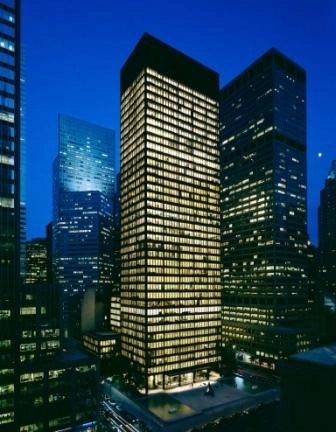
Re-zoning midtown would ultimately lead to the demolition of the corporate steel and glass skyscrapers, which preservationists argue are emblematic of the cutting edge modernism that swept 1950's America. However, landlords contest that - for the most part - they are poorly built copycats of seminal landmarks such as the Seagram and Lever buildings and are not particularly significant or suited for modern needs.
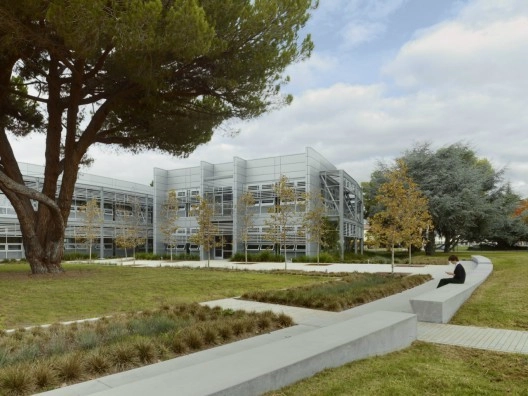
NASA Sustainability Base / William McDonough + Partners and AECOM
William McDonoughof William McDonough + Partners has decided to become Stanford University's first "living archive" in an effort to change the way we as humans remember and record our daily lives. Although technologies such as Facebook, Twitter, Instagram, and Vimeo have made verbal and visual documentation a much larger part of our lives, McDonough has decided to record nearly every moment of his day - every day - for the greater, intellectual good.
In celebration of World Water Day, we have complied a list of ten environmentally conscious designs that epitomize the importance of water conservation. See what they have to offer, after the break.
Shigeru Ban just can’t get enough of paper tubes. The Japanese architect, renowned for his design of structures that can be quickly and inexpensively erected in disaster zones, is at it again in the city of Christchurch, New Zealand, which was hit hard by a devastating earthquake last February. The earthquake of magnitude 6.3 killed over 200 people and inflicted irreparable damage on the city’s iconic gothic cathedral of 132 years. The cathedral was a copy of one in Oxford, England, and was one of the most famous landmarks of the Christchurch, pictured on postcards, souvenirs and tea towels.
A pioneer in so-called “emergency architecture,” Shigeru Ban has begun construction on a highly anticipated, unique replacement: a simple A-frame structure composed of paper tubes of equal length and 20 foot containers. The tubes will be coated with waterproof polyurethane and flame retardants that the architect has been developing since 1986 - years before environmental friendliness and the use of inexpensive recycled materials were even a concern in architecture.
Read more about Ban's visionary Cardboard Cathedral after the break...