1. ArchDaily
  2. Craft

Craft: The Latest Architecture and News

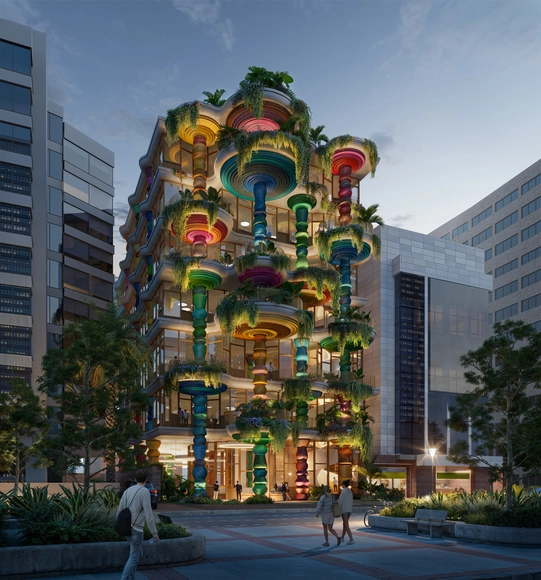
Heatherwick Studio's Educational Hub Celebrates Indigenous Crafts in Bogotá, Colombia

Heatherwick Studio has just been selected to design a new educational facility for a university in Bogotá, Colombia. Marking Heatherwick’s Studio’s debut in South America, the construction is set to begin in 2025. Located on the existing campus in central Bogotá, the new design school and makers’ space for Universidad EAN will become a home for the university’s school of sustainable design. The seven-story structure features a striking façade adorned with colorful artistic columns and open terraces.
Arab Designers Crafting their Own Narrative: Design Doha 2024 Explores Identity and Innovation

Subscriber Access | 

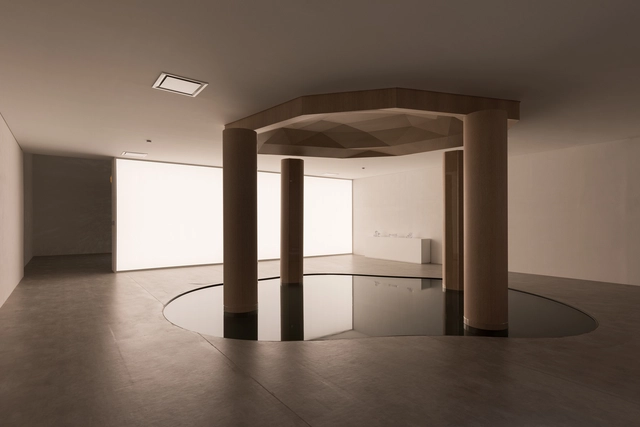
Establishing a platform in the Arab world, Design Doha 2024 debuted its inaugural edition in Doha, Qatar. Facilitating dialogues between designers, the event challenges the misconception that the Arab world is composed of a singular culture. It highlights, therefore, the diversity of populations, landscapes, and histories it encompasses.

Centered on "Arab Design Now," a regional survey showcasing the works of over 70 Arab designers, featuring 38 commissioned pieces, Design Doha is running from February 24 to August 5, 2024. ArchDaily had the opportunity to talk to Rana Beiruti, curator of the main exhibition, during the event's opening, to grasp the significance of the biennial and delve into some of the key installations, exploring the stories behind these interventions, learning about the designers involved, and gaining insights into their creative processes.

Arab Designers Crafting their Own Narrative: Design Doha 2024 Explores Identity and Innovation  - Imagen 1 de 4Arab Designers Crafting their Own Narrative: Design Doha 2024 Explores Identity and Innovation  - Imagen 2 de 4Arab Designers Crafting their Own Narrative: Design Doha 2024 Explores Identity and Innovation  - Imagen 3 de 4Arab Designers Crafting their Own Narrative: Design Doha 2024 Explores Identity and Innovation  - Imagen 4 de 4Arab Designers Crafting their Own Narrative: Design Doha 2024 Explores Identity and Innovation  - More Images+ 12

Sculpting Facades: Using New Technology to Create a More Textural and Expressive Architecture

Subscriber Access | 

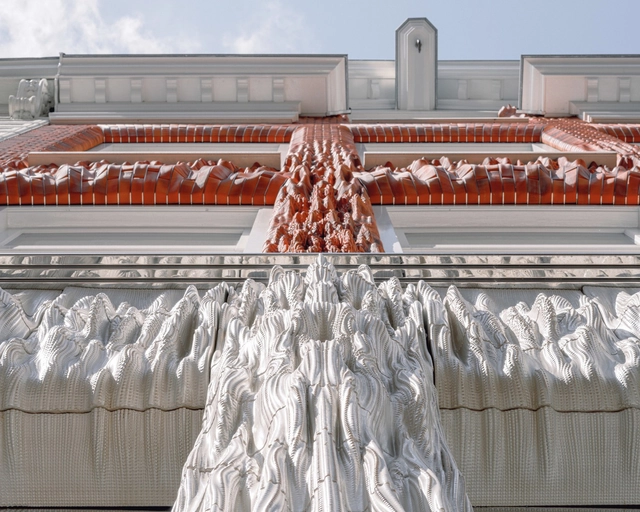
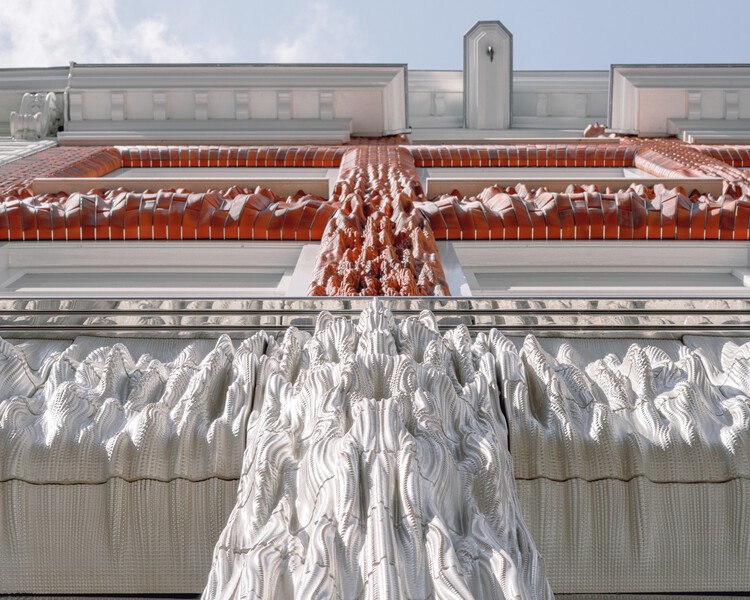
Advancements in 3D printing technology are progressing at an unprecedented pace, accompanied by a parallel surge in computational power for manipulating and creating intricate geometries. This synergy has the potential to offer architects an unprecedented level of artistic freedom in regards to the complex textures they can generate, thanks to the technology's remarkable high resolution and rapid manufacturing capabilities. If the question of production was out of the way, and architects could now sculpt virtually anything into a facade effectively and efficiently, what would they sculpt?

Sculpting Facades: Using New Technology to Create a More Textural and Expressive Architecture - Imagen 1 de 4Sculpting Facades: Using New Technology to Create a More Textural and Expressive Architecture - Imagen 2 de 4Sculpting Facades: Using New Technology to Create a More Textural and Expressive Architecture - Imagen 3 de 4Sculpting Facades: Using New Technology to Create a More Textural and Expressive Architecture - Imagen 4 de 4Sculpting Facades: Using New Technology to Create a More Textural and Expressive Architecture - More Images

Snøhetta Integrates Norwegian and Upper Midwest Traditions in the Design of the Vesterheim Cultural Campus in Iowa, US

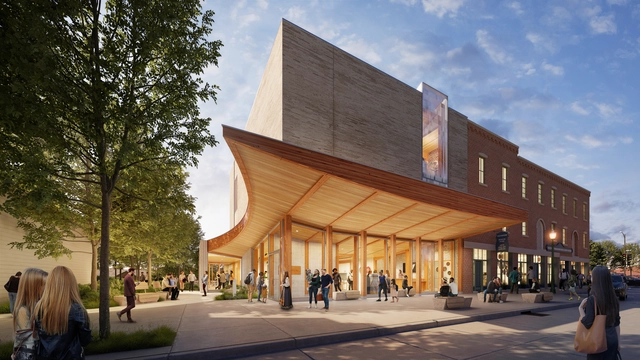
Snøhetta unveiled the design of a new building and landscape design for the Vesterheim campus in Decorah, Iowa. The campus, which also contains the National Norwegian-American Museum and Folk Art School, explores the diversity of American immigration through the lens of the Norwegian-American experience. The new 8,000-square-foot building, known as “the Commons,” is set to become the entry point and main gathering space for the cultural campus. Aside from anchoring the site, the intervention also aims to strengthen the site’s connection to the city. The building is scheduled to be completed in the Summer of 2023.

Crafts against Climate Change: Eco-materials from India

Indians have traditionally lived close to the earth, their cultures shaped by symbiotic relationships with ecosystems. Indian arts and crafts strongly rely on nature for its form, philosophy, and existence. Native landscapes aroused the artistic sensibilities of resident communities, evolving craft practices that met utilitarian and ritualistic needs. The intersectionality of ecology and culture is evident through ancestral forms of craft.

Crafts against Climate Change: Eco-materials from India  - Image 1 of 4Crafts against Climate Change: Eco-materials from India  - Featured ImageCrafts against Climate Change: Eco-materials from India  - Image 2 of 4Crafts against Climate Change: Eco-materials from India  - Image 3 of 4Crafts against Climate Change: Eco-materials from India  - More Images+ 4

Materials to Build India's Identity

Subscriber Access | 
Materials to Build India's Identity  - Featured Image
© Andre J Fanthome

Upon becoming a sovereign country, free from British Rule, the people of India found themselves faced with questions they had never needed to answer before. Coming from different cultures and origins, the citizens began to wonder what post-independence India would stand for. The nation-builders now had the choice to carve out their own future, along with the responsibility to reclaim its identity - but what was India's identity? Was it the temples and huts of the indigenous folk, the lofty palaces of the Mughal era, or the debris of British rule? There began a search for a contemporary Indian sensibility that would carry the collective histories of citizens towards a future of hope.

Materials to Build India's Identity  - Imagen 1 de 4Materials to Build India's Identity  - Imagen 2 de 4Materials to Build India's Identity  - Imagen 3 de 4Materials to Build India's Identity  - Imagen 4 de 4Materials to Build India's Identity  - More Images+ 26

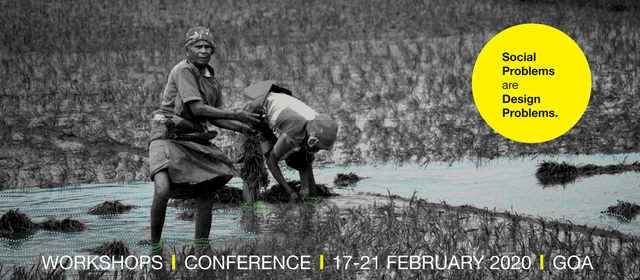
Social Design Festival

A five-day national festival to seed, incubate and showcase socio-environment design successes.
Workshops are three-day hackathons that address design issues in the social realm.
Conference as a forum to understand how design can bridge the deficit in the public domain.

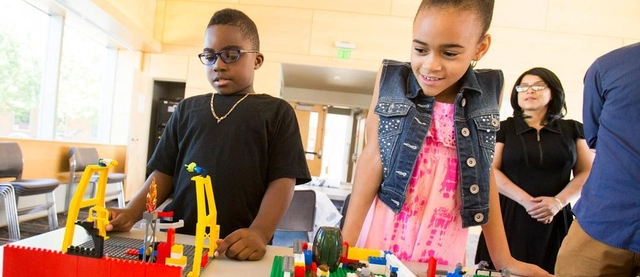
Drop-in Building Challenge: Designing Boston with LEGOⒸ Bricks

It is vacation week! Looking to get out of the house and build?

In Praise of Drawing: A Case for the Underrated Craft

Subscriber Access | 
In Praise of Drawing: A Case for the Underrated Craft  - Featured Image
© Jim Keen

I was part of the last generation of architectural students who didn't use computers (we’re only talking the early 1990’s here; there was electricity, color TV’s, rockets, just no renderings.) In my final year at college I miscalculated how long it would take me to finish my thesis project. As the deadline approached, I realized it was too late for me to match my fellow students’ presentations. At the time Zaha Hadid, and her deconstructivist paintings, set the style for architectural illustration. That meant many student projects being rendered in oil paints on large canvases.

Will Architecture in the Future Be a Luxury Service?

This article was originally published by Common Edge as "In the Era of Artificial Intelligence, Will Architecture Become Artisanal?"

Like food and clothing, buildings are essential. Every building, even the most rudimentary, needs a design to be constructed. Architecture is as central to building as farming is to food, and in this era of rapidly advancing technological change farming may offer us valuable lessons.

At last census count there were 233,000 architects in the United States; the 113,000 who are currently licensed represent a 3% increase from last year. In addition there’s a record number of designers who qualify for licensure: more than 5,000 this year, almost the same number as graduates with professional degrees. There is now 1-architect-for-every-2,900 people in the US. A bumper crop, right?

IKEA's SPACE10 Lab Reimagines Craftsmanship Through Digital Techniques

Picking up on the debate surrounding digitization in fabrication and its impact on traditional crafts, Copenhagen-based SPACE10, the future-living laboratory created by IKEA, recently invited three architects—Yuan Chieh Yang, Benas Burdulis, and Emil Froege—to explore the potentials of CNC milling for traditional craft techniques. The architects came up with three divergent yet equally innovative solutions to address the fundamental issue that plagues digital production: an apparent lack of a "human touch." In a Post-Fordist world increasingly dominated by customization, this investigation holds obvious importance for a company which deals primarily in mass-produced ready-to-assemble products; however, with its advocation for the infusion of dying classical craft techniques into the digital manufacturing process, the experiment could be meaningful for many other reasons.

IKEA's SPACE10 Lab Reimagines Craftsmanship Through Digital Techniques - Image 1 of 4IKEA's SPACE10 Lab Reimagines Craftsmanship Through Digital Techniques - Image 2 of 4IKEA's SPACE10 Lab Reimagines Craftsmanship Through Digital Techniques - Image 3 of 4IKEA's SPACE10 Lab Reimagines Craftsmanship Through Digital Techniques - Image 4 of 4IKEA's SPACE10 Lab Reimagines Craftsmanship Through Digital Techniques - More Images+ 25