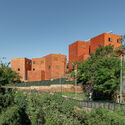
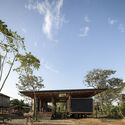
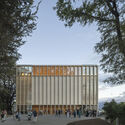
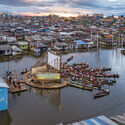
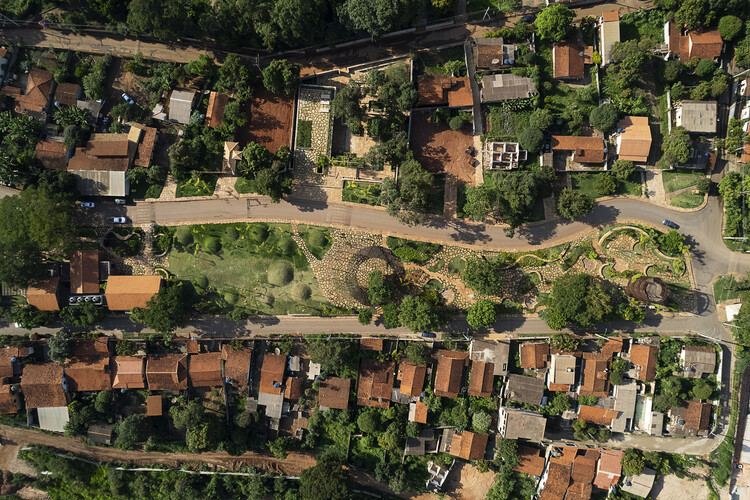
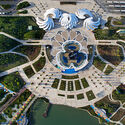
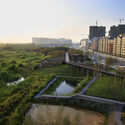
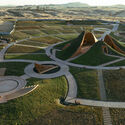
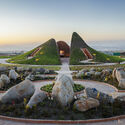
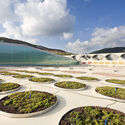
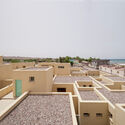
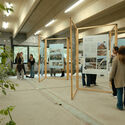
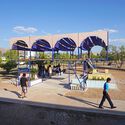
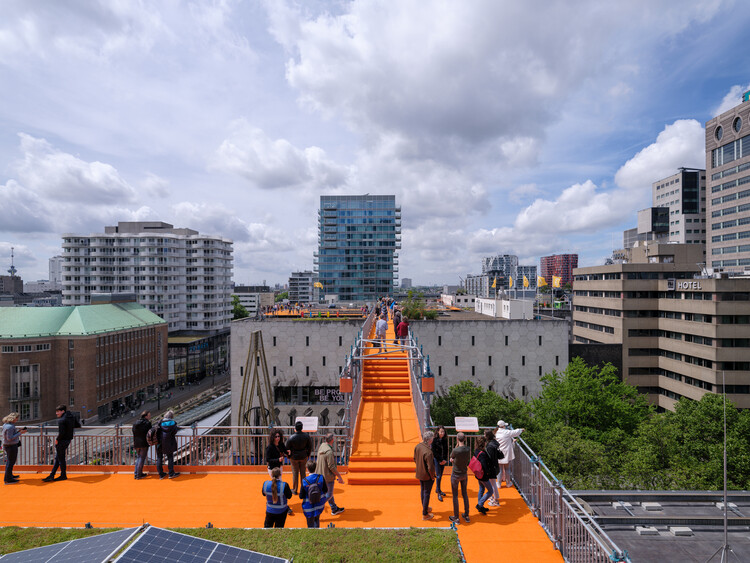
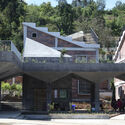
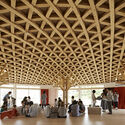
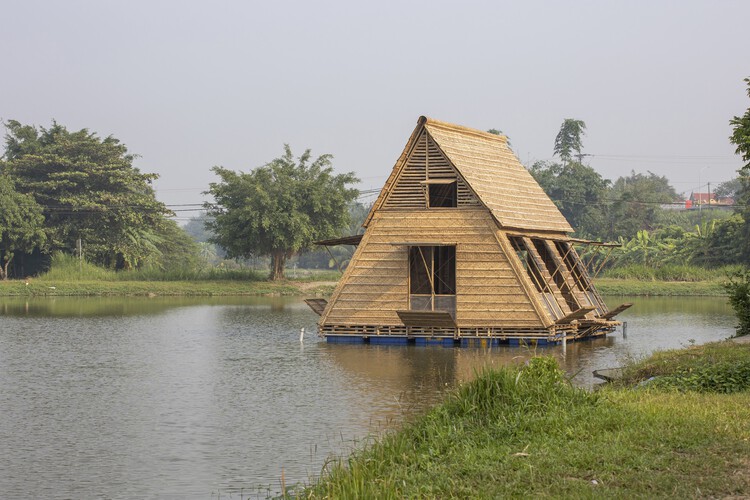
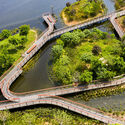
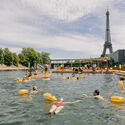
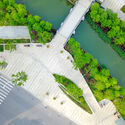
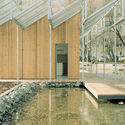
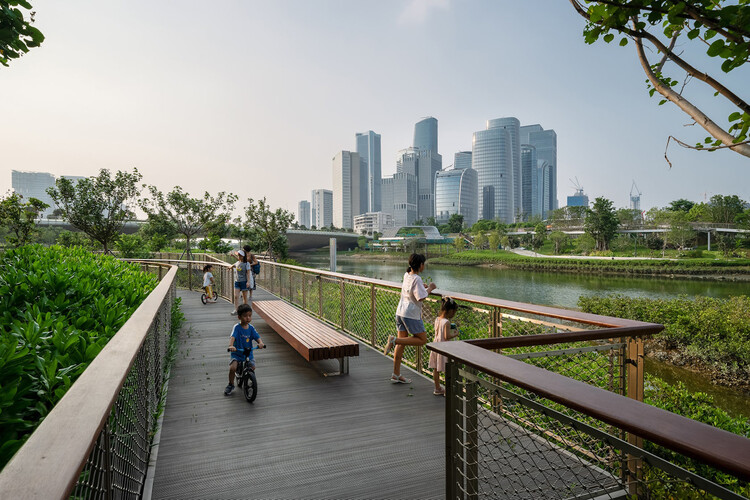
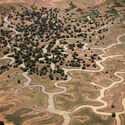
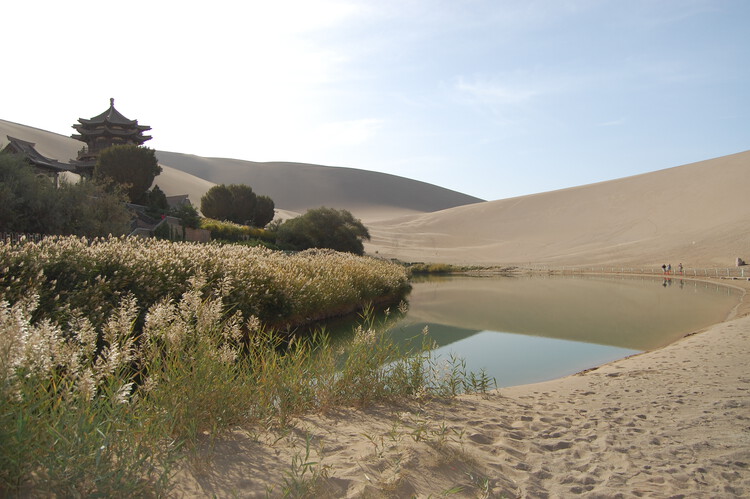
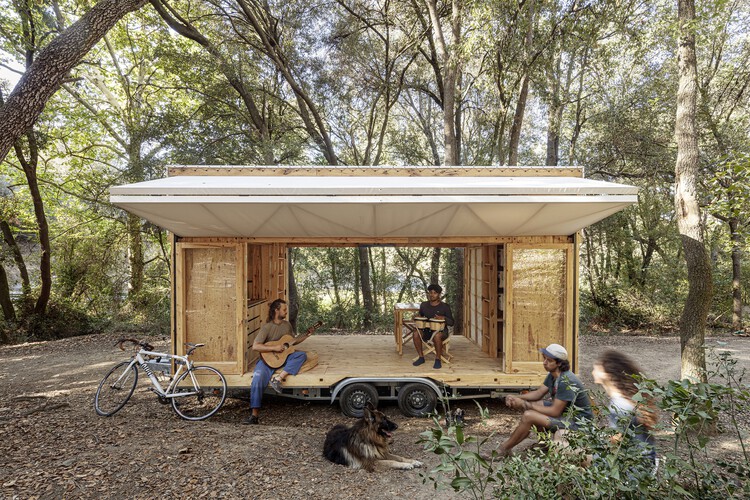
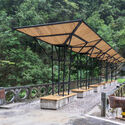
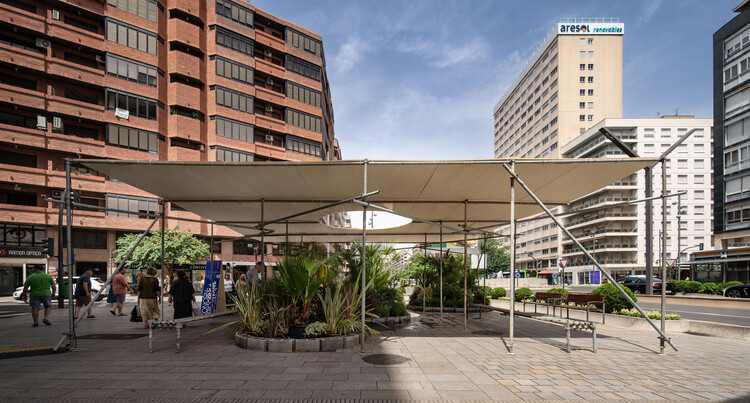
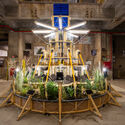
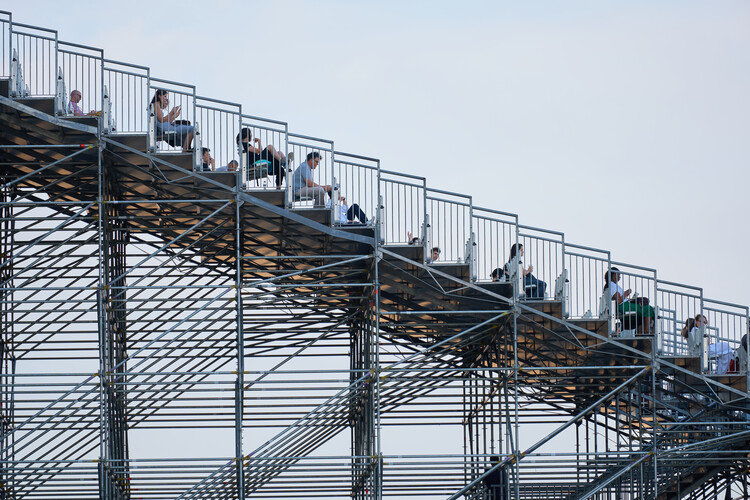
Território-parque / Fernando Maculan e Mariza Machado Coelho (MACh Arquitetos) e Edgar Mazo e Sebastian Mejía (Connatural y Paisaje). Image Cortesia de Bienal Ibero-Americana de Arquitetura e Urbanismo
Caring for life: this was the motto of the XIV edition of the Ibero-American Architecture Biennial (BIAU) held in Brasília from November 3 to 6, 2026. The choice of care as a theme is significant, as is its presentation as an infinitive verb—lacking tense or mood—serving as an urgent call to action. Structured around the thematic axes of water, vegetation, housing, communities, and new territories, the discussions made it clear that these elements are not mere resources or means for caring for life. Rather, they must be understood as subjects of care, demanding an attentive and respectful consideration of their natural and social cycles within architectural practice.
Videos
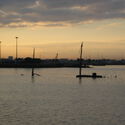
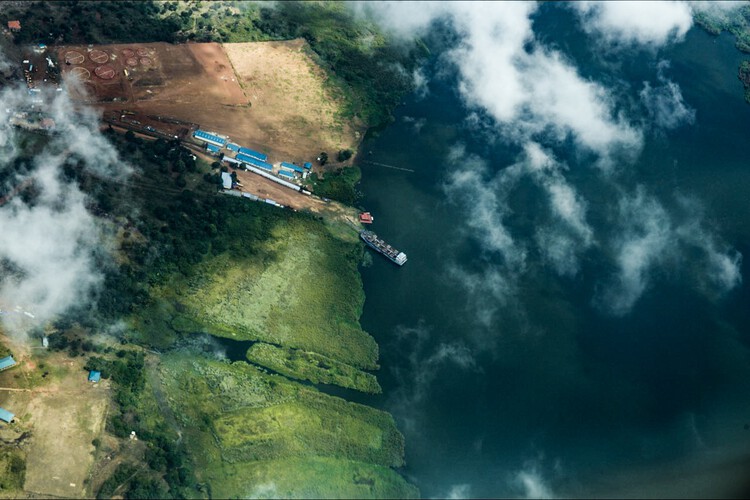
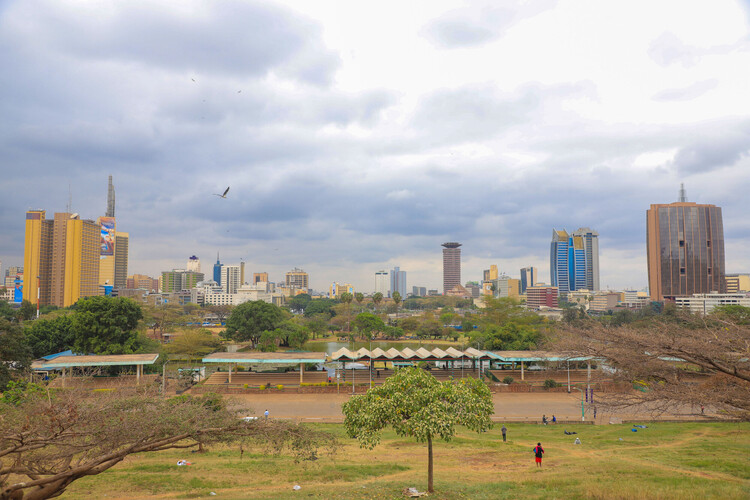
“Above the shores on Lake Victoria”. Image Courtesy of Tsaubah via Wikimedia Commons. Used under CC BY-SA 4.0 (https://creativecommons.org/licenses/by-sa/4.0/deed.en)
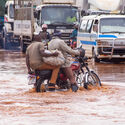
To limit the toll of El Niño's October-December rains, IGAD's specialized climate institution, the Climate Prediction and Applications Centre (ICPAC), has released a practical guide with UN-Habitat for Horn of Africa cities. The Intergovernmental Authority on Development (IGAD) is a regional bloc in Eastern Africa of governments from the Greater Horn of Africa, and their High-Level Call to Action on El Niño Preparedness establishes a regional commitment to move from reactive disaster response to proactive action for long-term resilience. Emphasizing cross-border coordination and crediting local knowledge, the call states: "We recognize that climate and disaster risks do not respect national borders, and that no single country or institution can manage them alone."
But what does it look like when the framework is read along the current of "governance-as-design" through two contrasting urban realities within the Greater Horn of Africa, such as wetland Kampala and arid, coastal Djibouti? Will it illustrate the adaptability of the anticipatory design tool to different urban topographies as well as governance systems? And will it also reveal how the guide navigates the eddying of national advocacy, municipal authority, community-led infrastructure and informal land tenure?
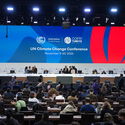
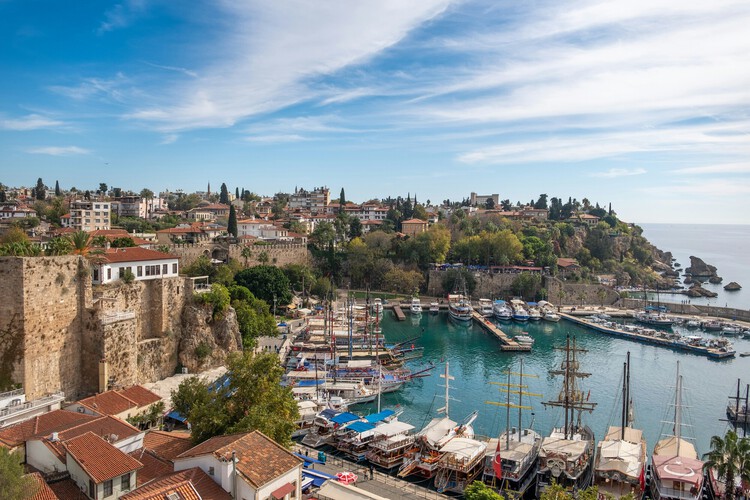
The 31st United Nations Climate Change Conference (COP31) concluded on November 22, 2026, in Antalya, Türkiye, following negotiations that extended beyond the scheduled closing date. Hosted by Türkiye with Australia leading the negotiations, the summit brought together representatives of nearly 200 Parties, alongside researchers, businesses, climate organizations, and civil society, to advance international climate action. While countries reached decisions on climate finance, adaptation, just transition, and other agenda items, they failed to agree on the proposed overarching Antalya Pact, with disagreements over fossil fuels, finance, and the level of ambition in the final text. For the built environment, COP31 advanced several initiatives addressing building energy performance, electrification, urban resilience, and climate investment, while leaving broader questions of implementation and international coordination unresolved.
El Niño is a natural climate pattern expected to peak from October 2026 through March 2027. It is characterized by a strong impact on global weather patterns, bringing floods, droughts, heat waves and storms to different regions. On November 5, 2026, the United Nations Human Settlements Programme (UN-Habitat) and the Climate Prediction and Applications Centre (ICPAC) of the Intergovernmental Authority on Development (IGAD) launched a short practical guide for city governments to help them prepare for the upcoming season. The guide offers considerations applicable to different climate regions, but it is framed by IGAD in the context of preparedness, anticipatory action and resilience in the Horn of Africa (Djibouti, Eritrea, Ethiopia, Kenya, Somalia, South Sudan, Sudan and Uganda). Its aim is to offer actionable guidance to improve urban resilience, protect vulnerable communities and reduce the impacts of climate-related hazards.
Utopia is commonly understood as an imagined ideal society or place where political, social, and living conditions are fundamentally different from those of the present. Derived from Greek, the word literally means "no-place" or "nowhere." Although utopia may not exist in reality, the act of imagining it has long inspired architects and urban thinkers to envision the world otherwise. Amid the ongoing challenges that cities face today — climate crisis, pollution, soaring land prices, aging populations, housing inequality, lack of social services, growing social and economic disparities, and persistent injustices — some regions face overheating and environmental degradation, while others are fighting for access to nature, land, and communities, which rather makes us think of a dystopian future. Thinking about utopia in such a default condition of contemporary cities shaped by the partially failed logic of modern urban planning, what might a more livable, sustainable, diverse, and inclusive city look like in the 21st century?
This was the underlying question running through Utopian Hours 2026, an international festival dedicated to city-making. Across its talks, exhibitions, and roundtables, the festival explored how to shape urban landscapes and what forms of design thinking can transform urban life.
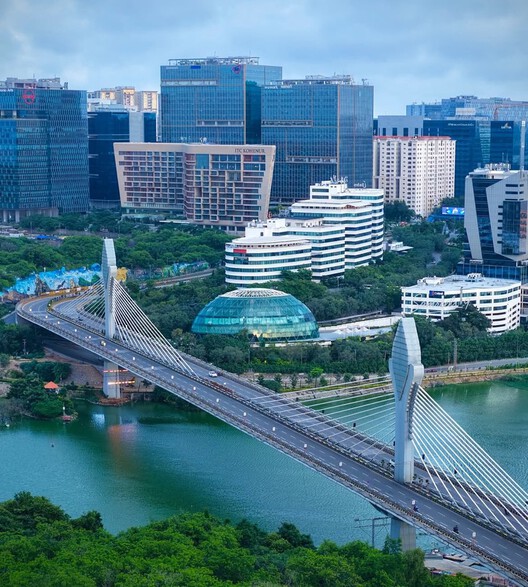
Architecture has treated water either as a backdrop or a problem: a view to be framed, a hazard to be drained, or a utility to be connected. In contemporary India, a more consequential relationship takes shape. Water remains a shared ecological resource, yet the land and infrastructure around it are increasingly financed and defended as economic assets. Coastlines are extended to carry traffic and lake edges become lucrative development zones. The decision to do so passes through multiple institutions with different vocabularies, thereby challenging who determines how water and its surroundings are used, and who faces the consequences.
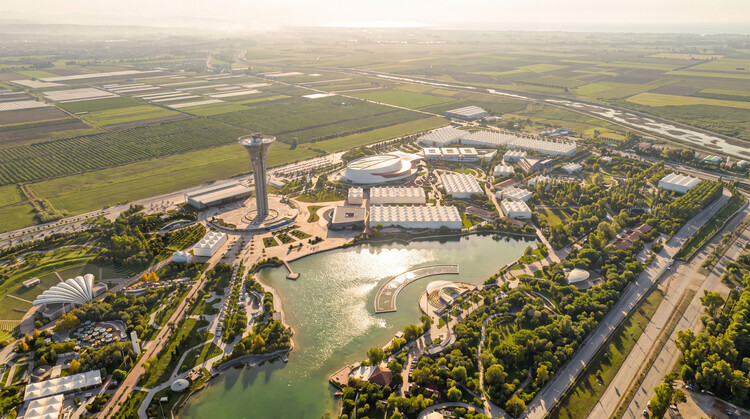
The 31st Conference of the Parties to the United Nations Framework Convention on Climate Change (COP31) will take place in Antalya, Türkiye, from November 9 to 20, under a joint governance model where Türkiye hosts the summit and presidency, while Australia leads the formal negotiations. The conference will bring together national delegations, government representatives, scientists, businesses, and civil society to discuss international climate action, including emissions reduction, adaptation to climate impacts, and climate finance. As countries continue to face the challenges of extreme weather, resource consumption, and the transition to lower-carbon economies, this year's programme includes dedicated discussions on zero waste, energy and transport, and resilient cities. In preparation for the event, SP Architects is adapting the former EXPO 2016 grounds in Antalya to accommodate the conference, with plans for the site to remain in use after it concludes.
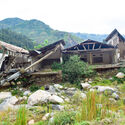
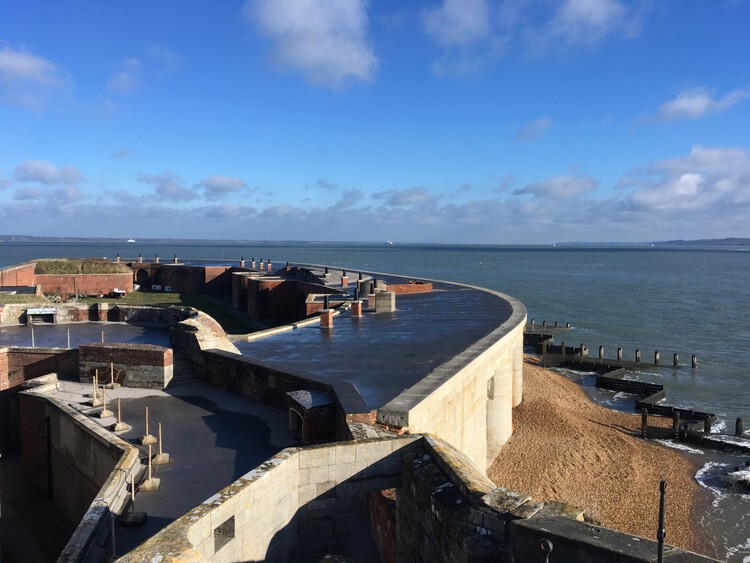
Hurst Castle in Hampshire, England. A fortress built by Henry VIII that suffered partial collapse in 2021. Image via World Monuments Fund
The World Monuments Fund (WMF), an independent nonprofit organization dedicated to the preservation of historic architecture and cultural heritage since 1965, receives nominations through the World Monuments Watch, a flagship advocacy and conservation program. Every two years, the Watch selects 25 sites from the nominations received from individuals and community-based organizations worldwide. Nominations for the 2027 World Monuments Watch closed on March 20, 2026, with a total of 372 public nominations from 84 countries and territories. Before announcing the selected sites in early 2027, the WMF offers an analysis of the nominations. Global data shows three main causes of heritage endangerment worldwide: government austerity, intensifying climate impact, and lack of access to specialized skills and expertise. At a time when political priorities tend to stray from history, the call is to recognize heritage sites as an area of shared opportunity rather than a burden.
Every year on October 13, the International Day for Disaster Risk Reduction (IDDRR) draws attention to the ways communities can reduce exposure and vulnerability to hazards. Established by the United Nations in 1989, the day provides an opportunity to consider how governments, communities, and professionals can strengthen preparedness and resilience before disasters occur. For its 2026 edition, the United Nations Office for Disaster Risk Reduction (UNDRR) has selected "Resilience Starts at Home" as its theme, placing housing at the center of this year's campaign.
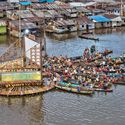
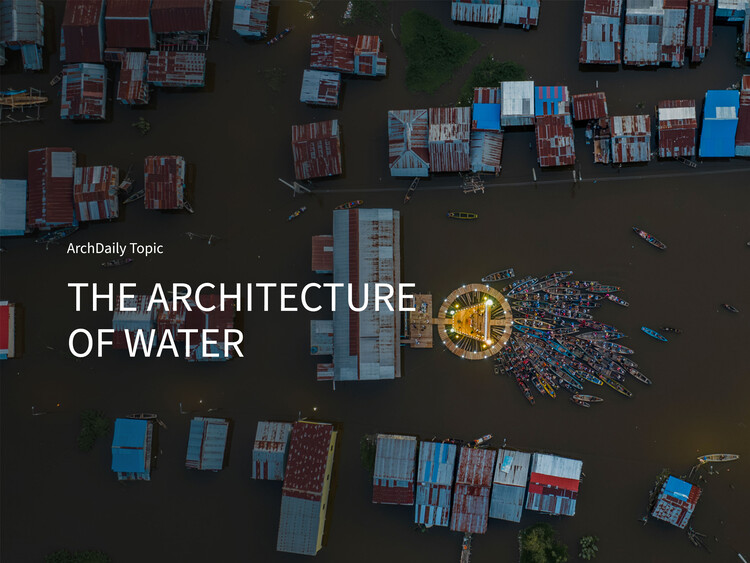
Water is life. Animals, plants, fungi, and bacteria all depend on it: water structures their cells, carries their nutrients, and hosts the chemistry that keeps them alive. Even the rare exceptions confirm the rule. Some seeds and spores can lose nearly all their water and enter a dormancy so deep that their metabolism almost stops, yet it is water that brings them back. In the most literal sense, water connects us.
But it also divides us. Every year, thousands of people leave North Africa in overcrowded boats bound for Lampedusa, seeking better living conditions in Europe; more than 30,000 have died or gone missing in the Mediterranean since 2014. Water draws borders and controls flows. Before the war on Iran began in February 2026, the Strait of Hormuz carried around 25% of the world's seaborne crude oil, with effects felt in fuel prices far from the Gulf. Water also sits at the center of the environmental debate, where its excess can be as lethal as its absence. Severe floods increasingly strike countries that have contributed least to global emissions, while the largest polluters remain better equipped to resist. If water is life, it can also mean death. Ultimately, water is political.
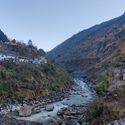
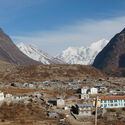
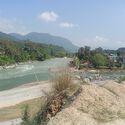
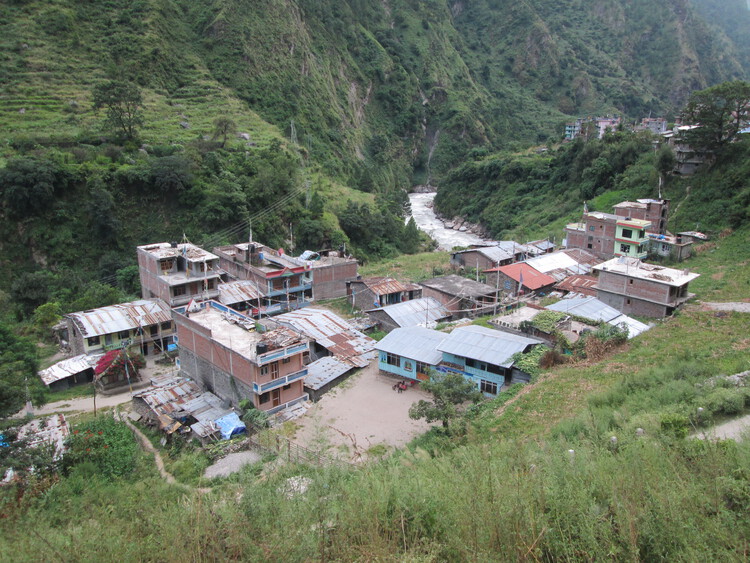
A lower section of a Himalayan glacier collapsed on Wednesday, August 26, creating an ice and rock avalanche down the Lhende River valley that triggered severe flash floods on the Nepal-Tibet border. The floods destroyed entire villages, with at least 350 confirmed dead and more than 1,300 people still missing. Characterized by their sudden and violent nature, flash floods occur within the first six hours after heavy rainfall or another floodwater source. In this case, the event has been attributed to a glacier collapse higher in the Himalayas, linked, in some scenarios, to a heat wave in the area. The speed of the movement is also distinctive of this type of flood, whose path of destruction in this case follows the Trishuli River basin in Nepal. According to the International Federation of Red Cross, the most affected areas are the Nepalese Rasuwa and Nuwakot districts. A more detailed assessment is expected in the coming days as floodwaters recede; in the meantime, it is already possible to outline some of the evidence from a territorial point of view.
The idea of a "Great Green Wall" designates a large-scale reforestation initiative undertaken specifically to halt desertification. Currently underway in Africa to prevent the advancement of the Sahara Desert and in China around the Gobi Desert, it is a landscape, agriculture, economic, and social development project in reaction to the rise of global temperatures, over-farming, and unsuitable land management. Both projects, currently underway, are intersectional initiatives involving governments from different countries, civil society organisations, and both individual volunteers and organised groups, guided by the idea of a unified response to global environmental issues through wildlife restoration. It is a large-scale, infrastructural application of a 'green' or 'wildlife corridor': a linear strip of vegetation or natural landscape that connects fragmented ecosystems and wildlife populations separated by human development on a continental scale.
Few conditions have shaped contemporary architectural discourse as profoundly as uncertainty. Across international biennials, exhibitions, and forums, architecture increasingly imagines its relationship to the world through flexibility, reversibility, and responsiveness—qualities intended to engage with climate emergencies, political instability, and unprecedented human mobility. Buildings are designed to transform, infrastructures to evolve, and cities to accommodate conditions that appear increasingly unpredictable. This emphasis on agility has expanded the discipline's capacity to engage with environmental change, offering valuable strategies for a world in constant transformation.
Yet this evolution points to a deeper shift in how architecture mediates the human condition. Architecture has long functioned as a mechanism for existential orientation—a way for human consciousness to carve an intelligible coordinate out of an indifferent cosmos, anchoring memory and identity to a fixed point. Within much contemporary architectural discourse, uncertainty increasingly appears less as an external condition to be mitigated than as the horizon from which architectural thinking begins. Spatial experience is increasingly shaped by environments designed around the persistence of flux, where static reference points give way to conditions of continuous transformation.
Barcelona has just become the first city in the history of the UIA World Congress of Architects to host the event twice. Thirty years separate the two editions, and the distance between them says as much about architecture's changing self-understanding as anything spoken from a stage. In 1996, the congress placed the city at the center of the debate, consolidating a post-Olympic urban model that would go on to be studied and contested for decades.