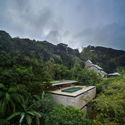
From Portuguesearchitectural photographerFernando Guerra comes imagery of MAD's Huangshan Mountain Village in China. This residential design, comprising ten housing blocks that mimic the mountain range they are embedded in, is just one piece of the Taiping Lake tourism master plan; architecture and nature blend together to create modern apartments with differing panoramic views.
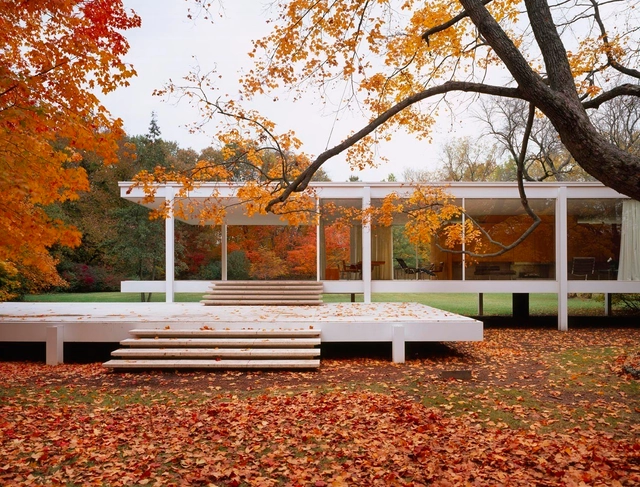
As the northern hemisphere says goodbye to the final month of fall and gives thanks for architecture’s splendid (and fulfilling) beauty, the time is ripe for revisiting a selection of canonical projects that look their grandest during “leaf peeping” season. Either the brilliant reds, oranges, browns and yellows of the foliage echo the natural colors of the project’s materials or the reflective properties of ample glass magnify the natural phenomenon. This annual period of transition provides photographers with a “golden” opportunity.
https://www.archdaily.com/884216/works-of-classic-architecture-captured-during-autumnal-splendorAD Editorial Team
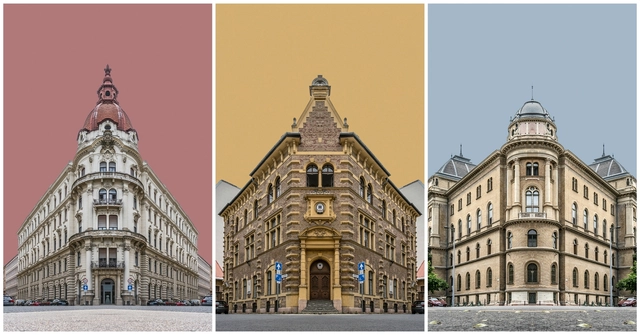
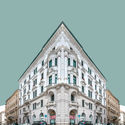
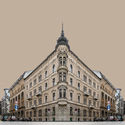
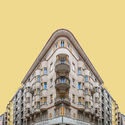
In his new series, “Corner Symmetry,” Hungarian photographer and printmaker Zsolt Hlinka captures some of his home city of Budapest’s most stunning buildings, manipulating them to make them appear as if they are perfectly symmetrical when viewed from the corner.
Overlaid on a variety of pastel-colored skies, the photographs are taken from extreme 2-point perspective, making the buildings appear to pop straight off the page. The study is a continuation of his Wes-Anderson-reminiscent series, “Urban Symmetry.”
The Republic of Georgia’s past is defined by turbulence and a struggle for identity. A former republic of the USSR, Georgia is perhaps best known as the birthplace of Joseph Stalin. The nation's history has been anything but calm, and remnants of the architectural past provide a glimpse into the nation that was.
The country's remaining Soviet landmarks give Georgia an air of being caught between the past and the present. Italian photographers Roberto Conte and Stefano Perego capture this in their photo series, Soviet Architecture Heritage in Georgia, with a compilation of photos that highlights the existing Soviet heritage in Georgian architecture today.
Architecture is always a reflection on how to interact with and relate to nature. Some architects show a preference for distinctive shapes and materials that contrast with the landscape, while others prefer to mimic the surroundings with organic works. But regardless of the techniques employed, architecture has reached the most remote and incredible places on the planet. Below is a selection of 16 images which show the combination of architecture and landscape by prominent photographers such as Su Shengliang, Sergio Pirrone and Valentin Jeck.
In the past decade or so, smartphones and social media apps have revolutionized our culture's relationship to images. From Instagram to Facebook to Pinterest to Youtube, photographs and videos are now so ubiquitous that they have become literally disposable, with apps such as Snapchat trading on their promise to delete your images after a certain period of time. But while smartphones are a very visible driver of this change, what is often forgotten are the huge developments in image-editing software that have supported this revolution—from the HDR built into your smartphone's camera to the wide range of filters provided by Instagram.
Now, as reported by MIT News, Google and MIT's Computer Science and Artificial Intelligence Laboratory may have created another cosmic leap forward: an algorithm that can provide automatic, professional-level image retouching so quickly that you can see a preview before even snapping the photograph.
Architect and author of the Architect + Entrepreneur book series Eric Reinholdt recently released a video detailing the results of his research into the best drone for architects and designers. The drone he chose is the Mavic Pro from DJI, which he says balances multiple factors like cost, portability, camera quality, stability, ease of operation, and flight time. The only major negative Reinholdt mentions is the camera’s fixed aperture; he recommends counteracting this by purchasing neutral density filters, which help adjust the camera’s exposure. But why architects? Reinholdt mentions the variety of possible uses for a drone throughout a project, but most importantly, he sees video as the future of telling the story of architecture. Through video, you can simulate a user's movement through spaces and mimic the experience of architecture.
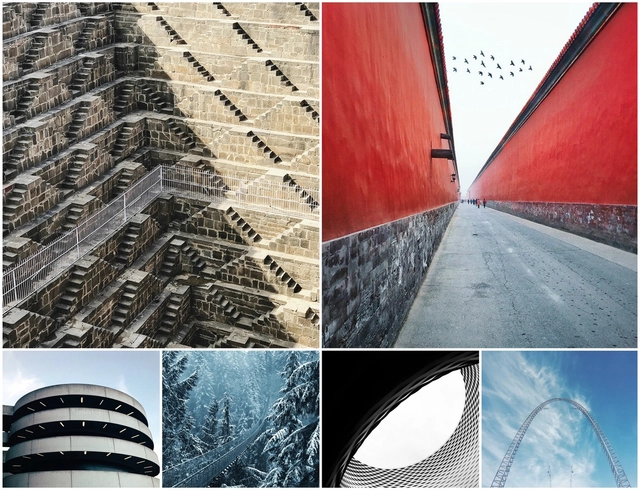
The year's best architectural photos have been announced as winners of 2017 iPhone Photography Awards (IPPAWARDS). Founded in 2007 – the same year as the release of the first iPhone – IPPAWARDS is the first and longest running iPhone photography competition. Now in its 10th year, the awards continue to select the best images taken by iPhone, iPad or iPod touch from a variety of categories including Landscape, Animals, People, Still Life and Architecture.
This year’s architecture category was won by Paddy Chao for his photo of Chand Baori, one of the deepest stepwells in India. Second prize was awarded to Naian Feng for his shot of the red walls of Beijing's Forbidden City.
Continue after the break to see the winning and honorable mention photos.
Early in the 19th century, an invention arrived that would change the form and function of cities for generations.
Like all new technologies, it started out rudimentary, expensive, and nearly ineffectual. But it caught many imaginations and developed dramatically, eventually reaching the point of mass accessibility. Soon enough, it took aim at the public realm, with consequences that were indirect and unintended yet profound.
It reconfigured streets. It influenced the height of buildings. It altered foot traffic. It recast the relationship between buildings and streets. It changed how people felt about their cities and changed their points of reference. It turned cities into abstractions and, in some ways, turned city-dwellers against each other. Its influence nearly complete by the close of World War I, the invention has remained fundamentally unchanged, and is still universally celebrated, to this day.
A post shared by Office Of Adrian Phiffer (@officeofadrianphiffer) on
Instagram is an app. Instagram shows images. Instagram is a verb. Instagram it! Instagram has 600 million users. Numbers are very important. These days, they are an exact expression of what one is, or isn’t; by the way, how many followers do you have? Instagram is the great equalizer.
I don’t think Instagram is about news. Instagram is about influence. It is that very moment when the old order is changed; the moment when the recent graduate changes the established practice. Instagram is space. Have you seen @archiveofaffinities? It is better than any school library. It is the space to spend your most important time. It is a spa.
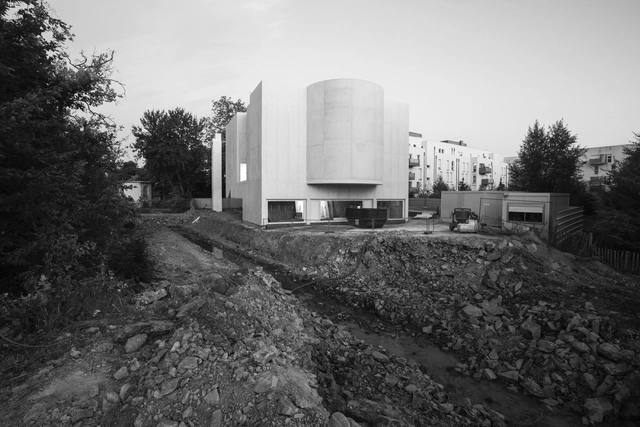
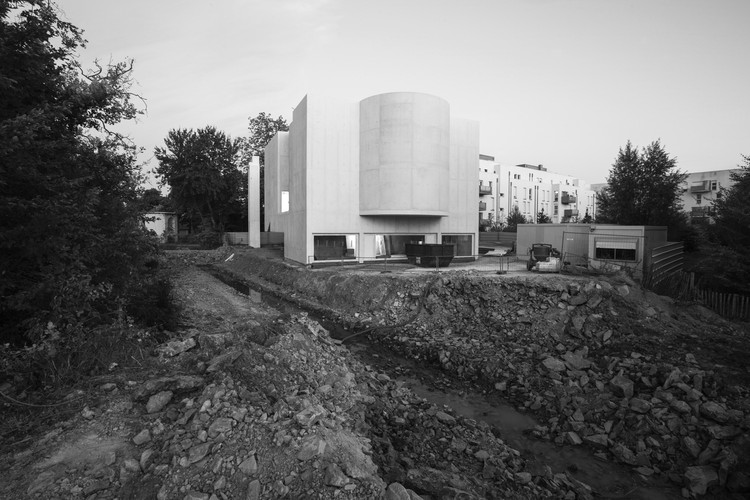
The church of Saint-Jacques-de-la-Lande will be the first church built in France’s Brittany region in the 21st-century. The project has been contracted to the Portuguese architect Álvaro Siza Vieira. Siza’s use of light and white concrete provide a unique ceremonial space that gently folds into the neighborhood south of Rennes, a residential area with five-story housing blocks. The Porto-based Italian photographer, Nicolò Galeazzi, visited the site and shared with us his perspective of Siza’s work in progress.
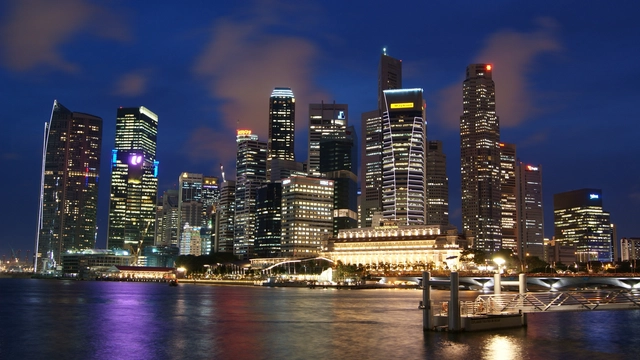
Singapore’s first Housing and Development Board (HDB) housing blocks were erected in November of 1960, in response to a severe lack of adequate housing for the country's 1.6 million citizens. Fast forward to 2017, and over 80% of the Singaporean population live in HDBs, with over 90% of them owning the home they live in. Often painted in vibrant colors, HDBs have a focus on community social spaces, more often than not maintaining the ground floor of the apartment blocks as open public space, exclusively for public meeting areas. These can include hawker centers, benches, tables, grills and pavilions where residents can socialize under cover from the hot Singaporean sun.
Our modern day, image-obsessed culture has got us consuming a large quantity of architecture through photographs, as opposed to physical, spatial experiences. The advantages of architectural photography are great; it allows people to obtain a visual understanding of buildings they may never get the opportunity to visit in their lifetime, creating a valuable resource that allows us to expand our architectural vocabulary. However, one must stay critical towards the disadvantages of photography when it comes to architecture. Jeremy Till, author of “Architecture Depends,” summarizes this in his chapter “Out Of Time”: “The photograph allows us to forget what has come before (the pain of extended labor to achieve the delivery of the fully formed building) and what is to come after (the affront of time as dirt, users, change, and weather move in). It freezes time or, rather, freezes out time. Architectural photography ‘lifts the building out of time, out of breath,’ and in this provides solace for architects who can dream for a moment that architecture is a stable power existing over and above the tides of time.”
The following tips aim to not only improve the visual strength of your architectural photography, but also the stories that they can tell—going beyond the individual images in order to communicate buildings’ relationships with their contexts, space and time.
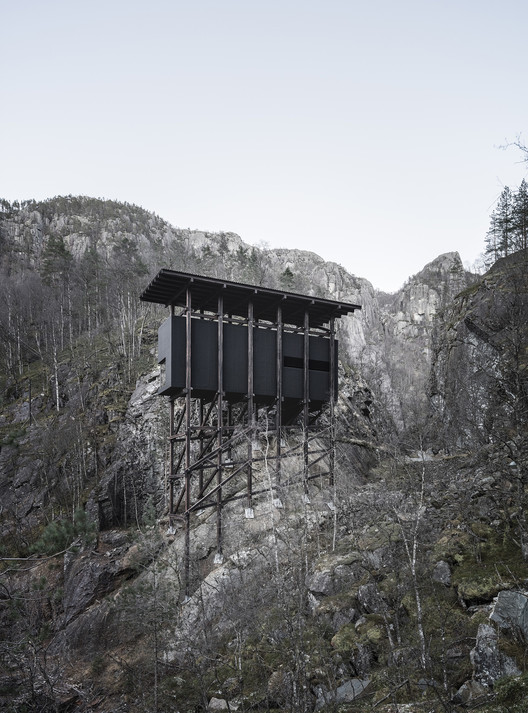
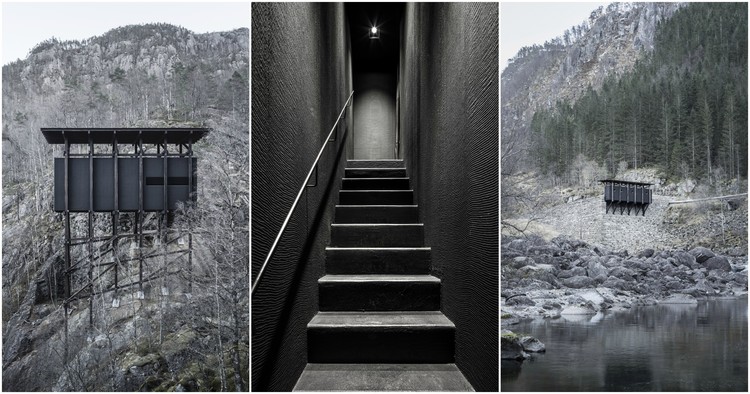
After previously documenting the Bruder Klaus Field Chapel, photographer Aldo Amoretti once again captures the grounded simplicity of Peter Zumthor, this time with images of his Allmannajuvet Zinc Mine Museum in Sauda, Norway. The three-building campus calls upon the aesthetics of the country's abandoned zinc mines from the 1800s, evoking the toilsome labor of the workers in its rough stone and exposed joint work. The museum is situated on one of Norway's National Tourist Routes and was commissioned by the state as part of an effort to increase tourism in the region. As such, the buildings are poised in and above the landscape, providing views of the natural gorge that unfold as visitors move through Zumthor's dark, shaftlike interiors.
Amoretti's photos express the modesty of the project, from the blackness of the interior galleries to the thin stilts that support the buildings within their rocky surroundings. The museum structures are suspended in balance with the harsh, gray climate—a noble representation of the working conditions of the miners the project aims to memorialize.
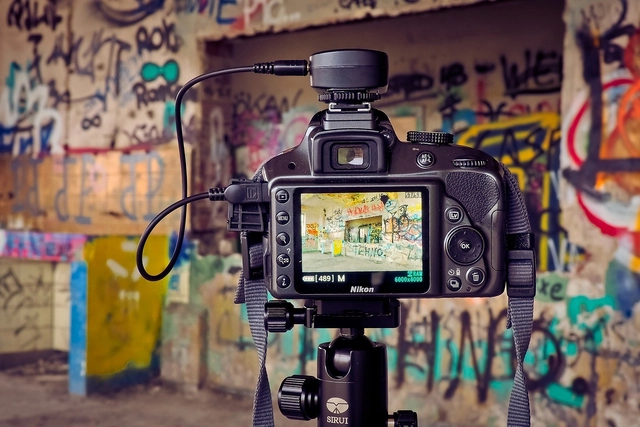
If you've always wanted to take better photos and you have 10-15 hours to dedicate to the endeavor, you'll be pleased to know this: Harvard, one of the world's most renowned universities and home to the mighty GSD (Graduate School of Design)—whose faculty has included Rem Koolhaas, Zaha Hadid, Walter Gropius and many others—is offering a free course in digital photography.
Available via ALISON, an online learning community, the course offers 13 modules that promise to teach the basics behind good photography.
https://www.archdaily.com/803406/take-harvards-online-course-in-digital-photography-for-freeAD Editorial Team
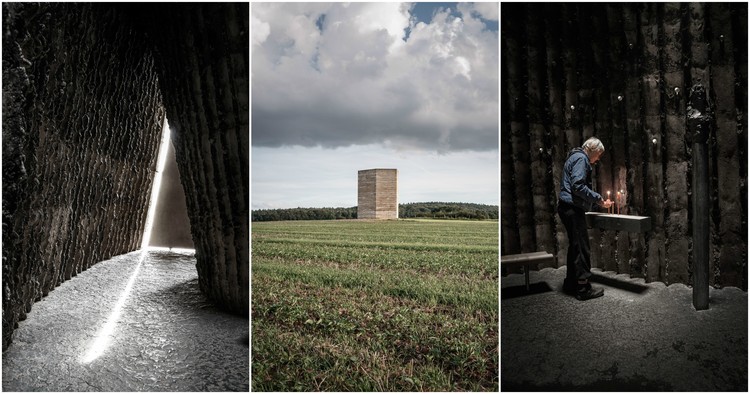
The Bruder Klaus Field Chapel by Peter Zumthor, completed in 2007, is known for its beautiful respect for the materials which were used to construct the sensuous space. The interior of the chapel is a black cavity left behind by 112 tree trunks burnt out of the cast concrete walls. Twenty-four layers of concrete were poured into a frame surrounding the trunks, stacked in a curved conical form, forming a stark contrast to the comparatively smooth angular façade. After removing the frame, many small holes were left behind in the walls, creating an effect reminiscent of the night sky. The chapel’s "beautiful silence" and undeniable connection to its surrounding landscape make it an evocative and popular destination for many.
In this photo series, architecture photographer Aldo Amoretti captures the dramatic relationship between the Bruder Klaus Field Chapel and its natural environment. Despite its concrete surface and straight edges, the chapel doesn’t stand out as brutal. Instead, the images depict a visual manifestation of Zumthor’s words: architecture with "composure, self-evidence, durability, presence, and integrity, and with warmth and sensuousness as well."
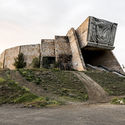
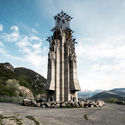
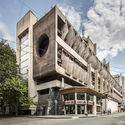
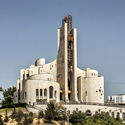
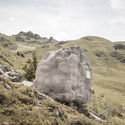
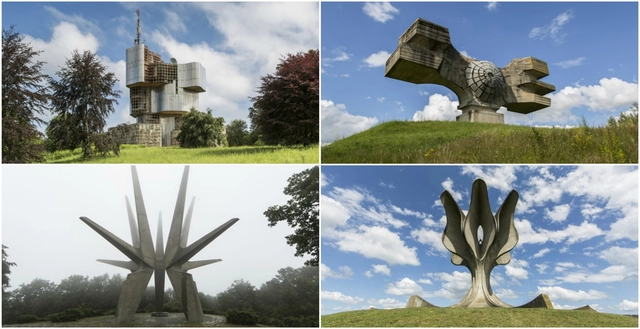
French photographer Jonk drove over 5,000 kilometers through southeast Europe. His subject matter? Yugoslavian monuments, or “spomenik” in Serbian.
Built in the 1960s and 70s under former president Josep Broz Tito, these monuments commemorate the communist resistance during the German occupation. While their sculptors and architects vary (Vojin Bakic, Jordan and Iskra Grabul among others), all of the monuments memorialize WWII battle sites or former concentration camps. Although the monuments attracted a high rate of visitors in the 1980s, many of them have been abandoned or poorly preserved after Yugoslavia’s split. Jonk’s photographs illuminate both the decay and beauty of these sculptures.
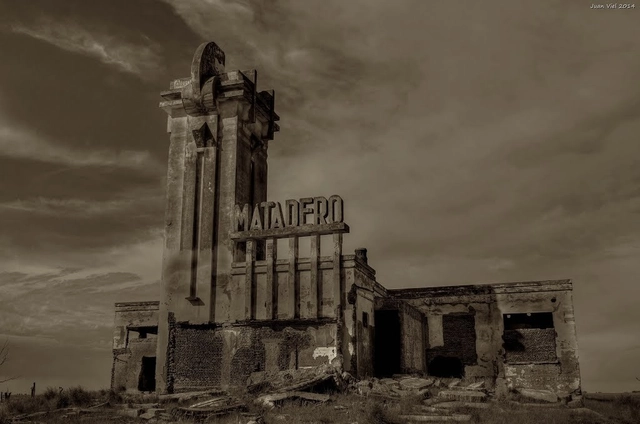
Small stories and architectonic practices that existed in each character filled village and provinces in Buenos Aires are here rescued by Juan Viel when he captures their atmospheres and particularities through his camera.
The variety of images and their subjects invite us to reflect on the substance and architectural heritage in these small Argentinian towns, and to think about the places where we live.

















.jpg?1475695920 "© Jonk")

.jpg?1475695949 "© Jonk")