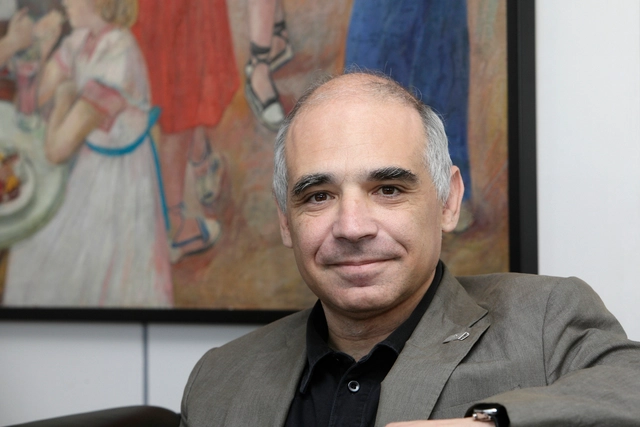
Lluís Comerón, Medalla de Oro de la Arquitectura 2022. Image Cortesía de CSCAE
Spanish architect Lluís Comerón, who recently passed away at 62, has been recognized for his tireless professional practice with the Gold Medal of Architecture. The High Council of Colleges of Architects of Spain (CSCAE) has posthumously awarded the Gold Medal of Architecture to Catalan architect Lluís Comerón Graupera, who served as president of the institution during the 2018–2022 term.
The call for entries for the European Award for Architectural Heritage Intervention (AHI), aimed at professionals and associations linked to architectural heritage, is open until March 17, 2023. Its primary objective is to recognize high-quality interventions in built heritage across all its dimensions. In doing so, the award aims to contribute to their dissemination and establish itself as a catalyst and observatory for the new challenges that contemporary architectural globalization poses to the conservation and intervention of built heritage.
The Spanish Architecture Prize (Premio de Arquitectura Española) has been awarded biennially by the Higher Council of the Colleges of Architects of Spain (CSCAE) since 1993 to promote the quality of architectural works built across Spain.
The award has recognized built works by architects such as Enric Miralles, Mansilla y Tuñón, Sara de Giles, and Francisco Mangado Beloqui, among others, with projects including the Royal Collections Museum and the Palma Convention Center and Hotel. Explore all the winning projects below.
'Heritage and Modernity’ is the main theme of the Euskadi International Architecture Biennale / Mugak 2021 — one of the most significant architectural events in northern Spain. Within this framework, architect and economist Francisco Mangado participated prominently at the Bibat Museum in Vitoria-Gasteiz with a discussion on his architectural work, and we took the opportunity to interview him to learn his views on the subject.
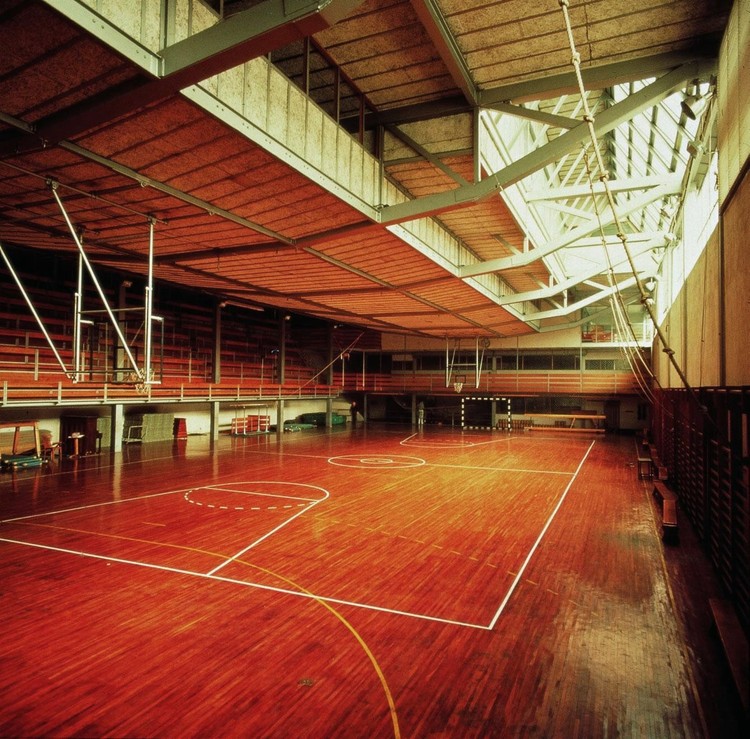
Vista interior del gimnasio Colegio Maravillas / Alejandro de la Sota. Image Cortesía de Fundación Alejandro de la Sota
Surprising as it may seem, Spain currently lacks a national Law on Architecture and Habitability to recognize and promote the value of the profession to the country's economic, social, and cultural development.
However, 2017 brought two major developments that can and should provide the momentum needed to advance toward a crucial national law. First, the passage on November 8 of the Public Sector Contracts Law, which, according to Jordi Ludevid, president of the Superior Council of the Colleges of Architects of Spain (CSCAE), represents "a spectacular and highly positive change" for architects. Second, the approval on June 28, 2017, of Spain’s first-ever architecture legislation, the Catalonia Architecture Law.
Under the title “More Living, More Humanizing,” the 14th Spanish Biennial of Architecture and Urbanism (BEAU) presented the winning projects of its latest edition today, Thursday the 19th, in Santander. This exhibition, housed in a temporary pavilion in Santander's Pereda Gardens, showcases the works selected in the categories of Panorama of Works, 2nd Research Exhibition, and 7th Thesis Projects Exhibition.
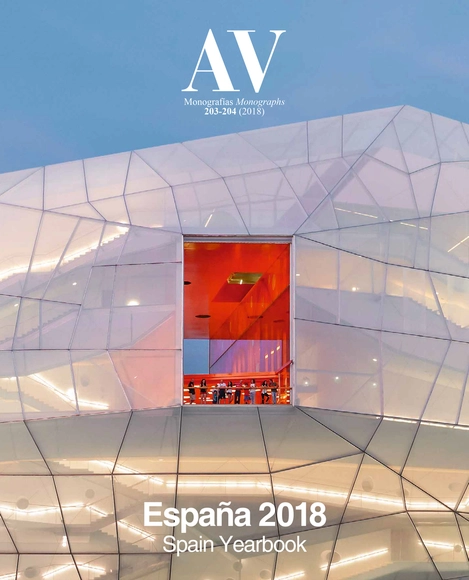
Cover. SelgasCano, Congress Palace, Plasencia (Cáceres). Image
The publisher Arquitectura Viva recently released the monograph 'España 2018'. As it has every year since 1993, the AV Monographs Yearbook brings together, in a double volume, the best buildings completed in Spain over the past twelve months: a selection of 24 projects that provide an overview of the country's most recent architecture, taking stock of its characteristically high quality despite the crisis still affecting the sector.
There is a standard way of telling the history of architecture and food. It begins with the human decision to cultivate, to store, to distribute, to consume, and ends with the building that decision produced. In this version of events, food is the occasion and architecture is the response.
But what if the story runs differently? What if the tomato built Almería? What if the cod redesigned the North Atlantic? What if the soybean is, at this moment, constructing a port in Santos and demolishing a forest in the Cerrado simultaneously, and the architect has simply not been told? These are descriptions of processes already complete, or well underway, that have produced some of the most spatially consequential contemporary landscapes. Much of the built environment is shaped by the pressures, metabolisms, and territorial ambitions of what we eat. Architecture, in this, is often less a project than a consequence, and the discipline has been telling its own story from the wrong end.
How is it possible to reduce the energy consumption of our homes? What design, material, and/or technological strategies can be developed to achieve interior comfort while also addressing the climate crisis? While achieving energy efficiency depends, among other factors, on the state of the homes, there are various strategies related to the implementation of renewable energies, air conditioning technologies, and more that can be applied, taking into account government policies, laws, regulations, and standards specific to each region.
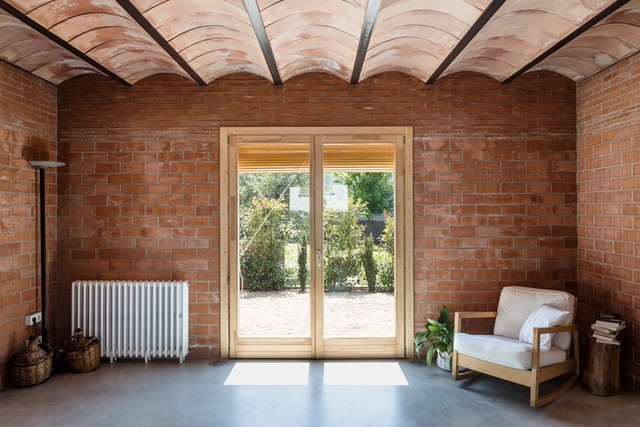
The ample supply, durability, and affordability of brick makes it one of the most widely used and iconic materials in Spanish architecture, especially within the Mudejar tradition. Throughout history, they have added both beauty and function to the spaces that use them, offering protection from the elements while also permitting the entry of natural light and air flow.
In recognition of brick's impact on Spanish architecture throughout history, we have created a compilation of contemporary projects that highlight its aesthetic and functional benefits along with advice from their creators about how best use this tried and true material.
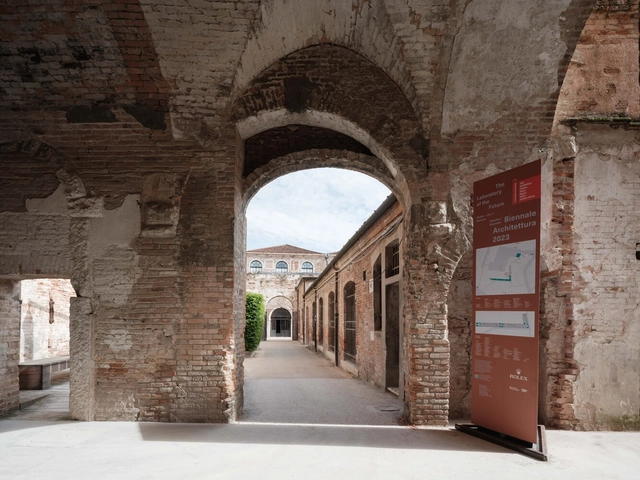
Neri&Hu presented “Liminality”, a multimedia exhibition selected by Lesley Lokko, at the International Architecture Exhibition in Venice. The exhibition took place in the Dangerous Liaisons section of La Biennale di Venezia at the Arsenale. In response to Lokko’s curatorial statement, Neri&Hu’s display explored the concept of liminality, the “zone” between design practice and theoretical exploration. The display consisted of three adaptive reuse projects that represent the practice’s research in “Reflective Nostalgia, Recasting Vernacular, and Ruinophilia/Future Artifact.”
The key to successfully designing or recovering public spaces is to achieve a series of ingredients that enhance their use as meeting places. Regardless of their scale, some important tips are designing for people's needs, the human scale, a mix of uses, multifunctionality and flexibility, comfort and safety, and integration to the urban fabric.
To give you some ideas on how to design urban furniture, bus stops, lookouts, bridges, playgrounds, squares, sports spaces, small parks, and urban parks, check out these 100 notable public spaces.