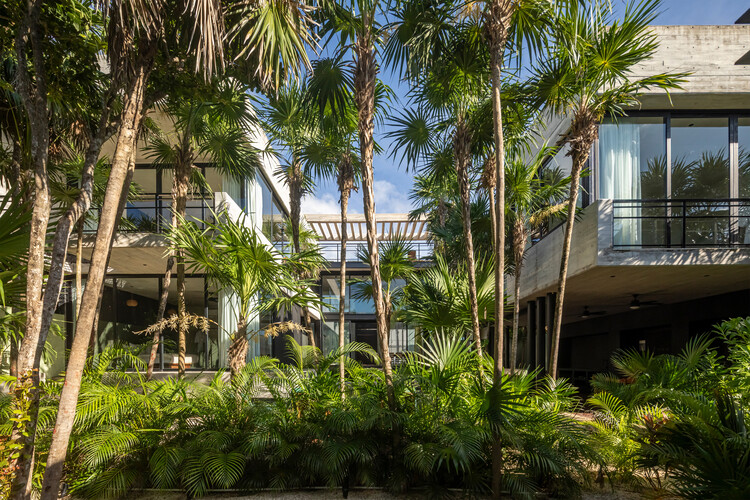
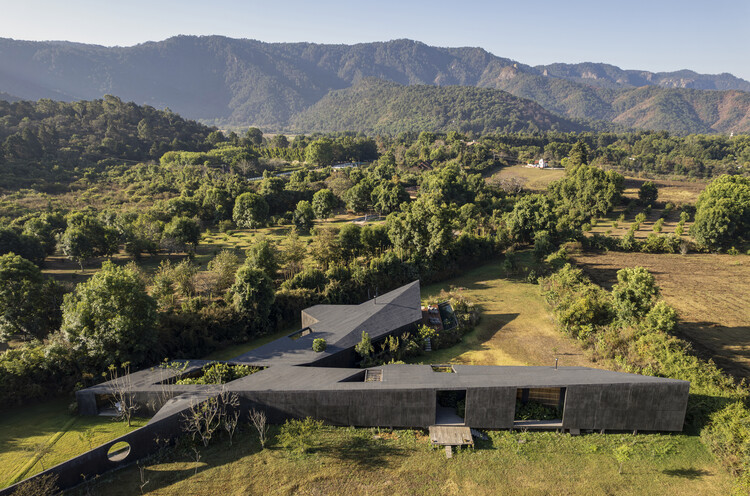
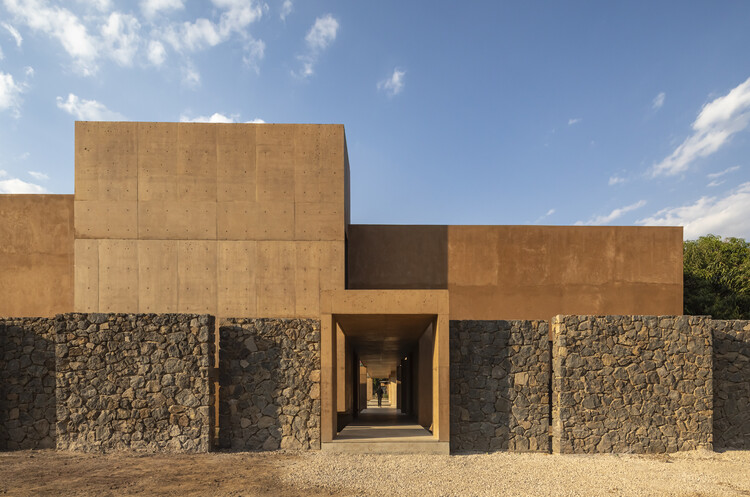
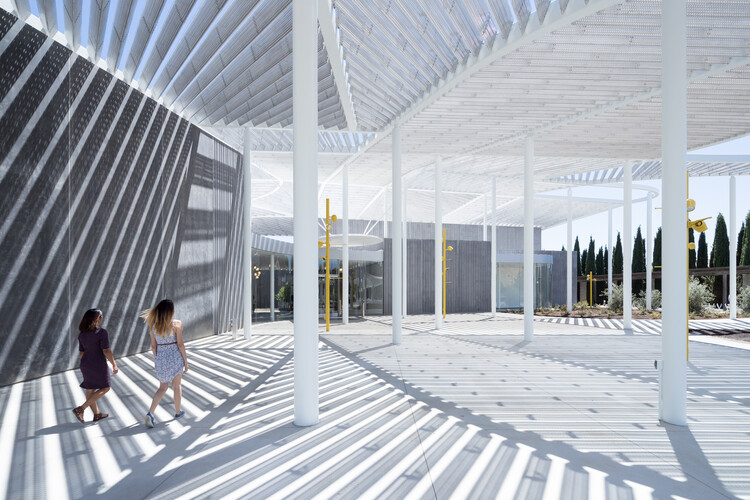
It is well known that Frederick Law Olmsted, designer of Central Park in New York; André Le Nôtre, responsible for the gardens of the Palace of Versailles; and Alan Titchmarsh, among others, were pioneers of landscape architecture for their ability to break the mold of traditional design. However, Latin America has produced outstanding work that deserves recognition. Such is the case in Mexico, where Pritzker laureate Luis Barragán showed the world the richness of the country's green spaces and his mastery in designing them.
“Earthquakes are a naturally destructive effect of our earth's constantly changing surface” -National Geographic, “Latest Earthquakes–and How Earthquakes Work”, February 2018.
ReConstructo is a group exhibition curated by Mexican architects Luis Carbonell and Andres Souto, presented at Zuecca Project Space in parallel with the International Architecture Exhibition of the Venice Biennale 2018. The exhibition offers a multifaceted look at simultaneous and overlapping readings of the actions and agents of destruction that subsequently paved the way for a latent reconstruction following the 2017 earthquakes in Mexico.
The Architectural League of New York is an independent architecture forum that aims to "stimulate thinking and debate about the critical design and architectural issues of our time." Each year, through the 'Emerging Voices' competition, they recognize the work of various North American architectural practices with the potential to positively influence how architecture is conceptualized and built across the continent.
This year's jury is composed of Spanish architect Ángela García de Paredes of Paredes Pedrosa (1999 AR Emerging Architecture Award winner), Indian architect Gurjit Singh Matharoo (2010 AR House Award winner), and Ronald Rietveld of RAAAF (2013 AR Emerging Architecture Award winner).
Throughout 2018, we selected thousands of projects for publication on our site, occasionally highlighting a few for their innovative techniques and materials, their integration with their context, or their community engagement. Working daily with editors in Brazil, the United States, Mexico, Chile, China, and Northern Ireland, and thanks to the extensive network we have forged with institutions worldwide, we have the tools to gain a much broader perspective on current architectural production—not only in Mexico, but globally.
Today, October 1st, marks World Architecture Day. To celebrate in style, ArchDaily invites you to tune in to our live broadcasts of our special programming.
Seven architects from Chile, Mexico, and Venezuela will visit our offices in Santiago and Mexico City to discuss their key projects and share their architectural vision. Follow the live broadcasts on the Instagram accounts of Plataforma Arquitectura and ArchDaily México.
Human Rights Day is observed annually on 10 December worldwide. It commemorates the anniversary of the Universal Declaration of Human Rights in 1948. Drafted by representatives with diverse legal and cultural backgrounds from all regions, the Declaration was proclaimed as a common standard of achievement for all peoples and all nations. For the first time, the document set out fundamental human rights to be universally protected and inalienable, entitling every human being to them regardless of race, colour, religion, sex, language, political or other opinion, national or social origin, property, birth, or any other status. Today, the Declaration serves as a global blueprint for international, national, and local laws and policies. Available in 577 languages, it is the most translated document in the world. The United Nations has set the theme for this year's observance as "Human Rights, Our Everyday Essentials," aiming to "reaffirm the values of human rights and show that they remain a winning proposition for humanity."
For monuments worthy of sustained admiration, conservation practices have been selectively mobilized to reinforce their prestige and secure their place at the center of heritage narratives. Structures whose vernacular ought to be passed down miss the discerning eye of the experts. Rowhouses, shopfronts, and neighborhood structures that form the fabric of our cities are often left to deteriorate beyond repair. Much more is lost, apart from aesthetics.