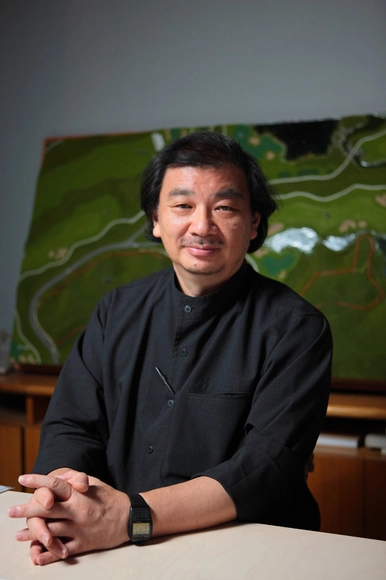
Shigeru Ban has been included in Foreign Policy Magazine's 100 Leading Global Thinkers of 2014, dubbing this year's Pritzker Prize Laureate as "architecture's first responder." The annual list recognizes the 100 people whose ideas and actions have had the greatest impact on the outcome of world events, and this year 'disruption' is the buzzword; acknowledging a tumultuous year, the list focuses on the people who, for better or worse, "smashed the world as we know it."
Calling all architects and students, the Chicago Architectural Club (CAC) wants to see your ideas for The Barack Obama Presidential Library. The recent media coverage surrounding the announced library, drawing bids from New York, Honolulu, and Chicago, once again initiates the desire for speculations and projections. As the fourteenth of its kind, this civic institution will not only function to house a collection of artifacts and documents relating to the president’s life but will also provide an educational infrastructure and framework for outreach and community programs. Thus, in partnership with the Chicago Architecture Foundation (CAF), this year’s Chicago Prize Competition is calling for speculative proposals for the Barack Obama Presidential Library to initiate a debate in order to rethink and redefine this particular building typology.
Porsche Design has narrowed down a list of 20 participating teams to six shortlisted firms for an invited competition to design a new luxury residential tower in Frankfurt, Germany. The project, which will be Porsche Design’s debut in European real estate, will include up to 200 apartments, ranging from “Porsche Design suites” to two-story townhouses and luxury penthouses. The teams moving on to the competition’s second round, include: 3XN (Copenhagen), Stefano Boeri Architetti (Italy), MAD (China), Delugan Meissl (Austria), Neutelings Riedijk (Rotterdam) and Neil M. Denari (Los Angeles).
Winners will be chosen based of the most “fitting” concept and connection to outdoor space. Construction is expected to begin in early 2016; completion is scheduled for 2018.
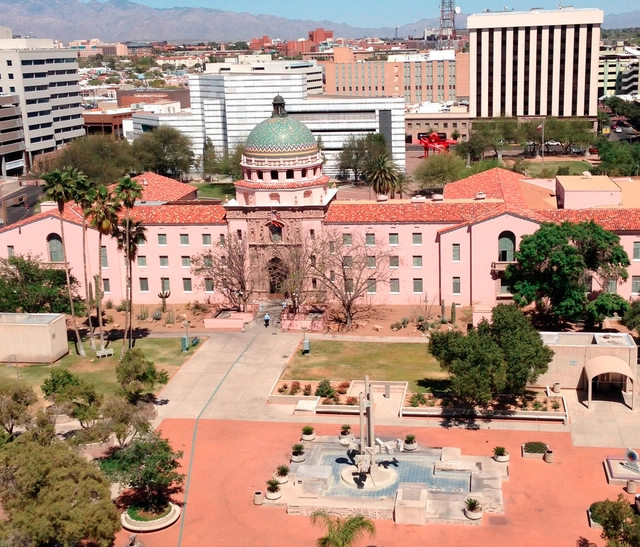
Future site of the memorial. Image Courtesy of January 8th Memorial Foundation
The January 8th Memorial Foundation has selected four finalists out of the 60 practices and artists, both national and international, who submitted applications to create a permanent memorial and master plan concept for the El Presidio Park in Tucson, Arizona. The permanent memorial would commemorate the January 8, 2011, mass shooting that wounded Congresswoman Gabrielle Giffords, killed six people and injured 12 others. The memorial is also intended to honor the spirit of the Tucson community in its responses to the tragedy and to inspire future generations to work together on community issues. The four finalists are:
Encouraging young designers and architects to create and design innovative, sustainable solutions for the bathroom, the sixth edition of the international design contest jumpthegap, organized by Roca and the Barcelona Design Centre (BCD), has been launched at the Roca London Gallery with a presentation from the contest’s UK judge Tom Dyckhoff. An ideal platform for new generations to show their talent and visions for the bathroom of the future, jumpthegap is aimed at young professionals and students of architecture and design under 35. Registration closes February 2015. The jury, which will be led by MAD principle Ma Yansong, is expected to announce the winner in October 2015.
University of Detroit Mercy's Dichotomy Journal has issued an open call for submissions to its 21st edition on the theme of "Odds," inviting discussion on projects that "defy the status quo and aim for greater fortune." Risk takers rejoice: Dichotomy 21 will shine a spotlight on architectural anomalies and the "implications of defying the odds and embracing the strange."The journal aims to stimulate a new discourse on extraordinary and unconventional designs that push the architectural envelope. Submissions are invited to discuss ideas defying the odds in design, architecture, urbanism and community development.
Toronto's life guard stands. Image Courtesy of RAW Design, Ferris + Associates and Curio
RAW Design, Ferris + Associates and Curio have launched Winter Stations, an open international design competition challenging artists, designers, architects and landscape architects re-imagine the life guard stands on Toronto's waterfront as "temporary wintertime installations" that "inject color, movement, humor and more into the landscape.” The theme is “Warmth,” and there is no limit to the size of the installation, but the jurors will take durability and constructibility into account. The selected installations will be built in February 2015. Registration is now open and submissions are due December 5, 2014 with winners announced in early January 2015. All the details can be found, here.
Why do cities exist and how will they grow and change? As more than half of the world’s population now lives in cities it is becoming increasingly important for urban designers and planners to seek answers to these questions. This article by Laura Bliss from City Lab presents the “science of cities,” and the ways in which the urban-planning world is moving away from traditional methods of simply putting cities into categories, in favor of a more evolutionary theory. Benefiting from the vast amounts of data available today on statistics such as crime and voting patterns across cities, researchers have worked to establish the quantifiable characteristics of urban areas as a whole, and recent studies in this area reveal how the shapes of cities themselves could be connected to internal economic and social processes. Learn more about these radical developments in the full article from City Lab.
Eastbanc has tapped Portuguese architect Eduardo Souto de Moura to transform a former "Four Seasons gas station" site into a mixed-use condo. According to a report on the Georgetowner, the developer has asked residents to have "an open mind" for the design, which, as Urban Turf points out, is likely to stand out in the historic Washington D.C. district. Little details have been released. “We are considering all options, from condo to rental to hotel,” Eastbanc President Anthony Lanier stated. “It’s early in the design phase.”
Courtesy of Strelka Institute for Media, Architecture, and Design, via Flickr. Used under Creative Commons
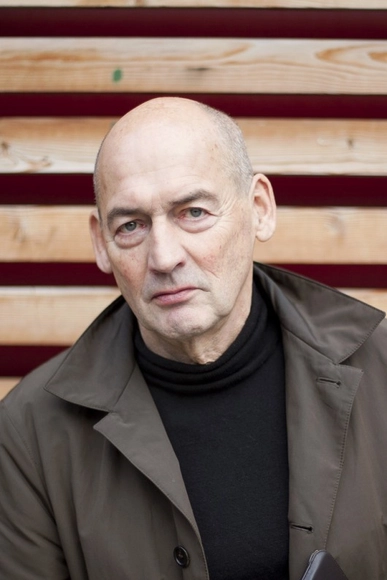
Rem Koolhaas, one of today's most celebrated architects, has lived a significant year. With the closing of his much-talked about Venice Biennale just days away, the Dutchman also turns 70 years old this coming Monday.
https://www.archdaily.com/567462/help-us-honor-rem-koolhaas-on-his-70th-birthdayAD Editorial Team
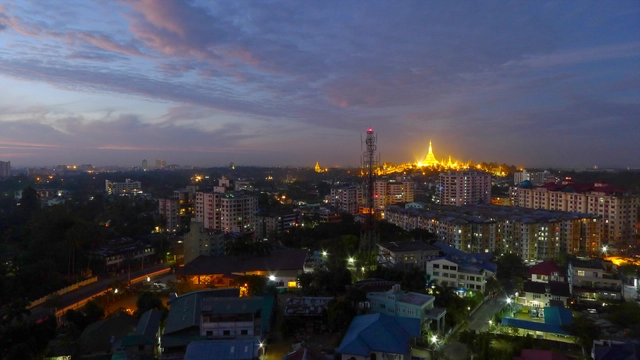
Preservationists are in a race to document and preserve some of Yangon’s most admired cultural icons. Myanmar’s largest city, Yangon is experiencing an all to familiar story: rapid development taking precedence over preservation. As the National Geographic reports, “Hulking monoliths of concrete and blue-plated glass are replacing fine old residential and government buildings…Although much has already been lost, many architecturally or esthetically significant structures have hung on. The question now is how long they will last.” Read the complete story, here.
If ever architects needed a little vindication in their work, this might just be it: a team of neuroscientists have found evidence that good architecture can positively affect the human brain. Testing a highly susceptible group of subjects (i.e. architects), the team demonstrated that so-called "contemplative architecture" can have similar effects to meditation - except with much less effort on the part of the person experiencing it. This article in the Atlantic discusses the team's work at length, delving into the science behind the discovery, but also uncovering an interesting oddity in the world of architectural neuroscience: it seems not much is being done because "it’s difficult to suggest that people are dying from it." In the case of the current study, the team "totally loaded the deck" by only selecting architects as their subjects, apparently not aiming to prove anything but simply to secure further funding. Read the full article here for more on the latest in architectural neuroscience.
Karim Rashid, internationally renowned for his work in industrial design, has recently shifted his focus towards real estate. Alongside his team of nine architects, the New York-based designer is currently working on 11 buildings worldwide, including four in New York. With extensive knowledge in product design and no formal architectural education, Rashid believes designing architecture isn’t out of his realm:
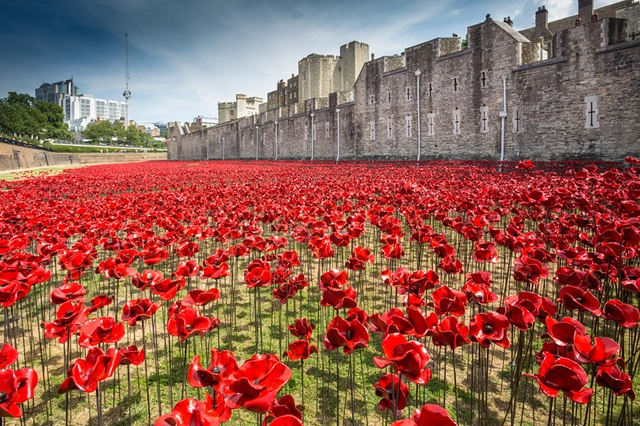
The Observer'sRowan Moore "accidentally got swept into a tide of humanity at the weekend, or to put it another way, couldn’t move for crowds." In memorial of the start of the centenary of World War One, of which today marks the anniversary of the armistice (11.11.1918), the Tower of London have installed a sea of 888,246 ceramic poppies in the former moat. The artwork, created by Paul Cummins and Tom Piper, and entitled Blood Swept Lands and Seas of Red, "has caught the national imagination." For Moore, however, "it is deeply disturbing that a hundred years on from 1914, [the UK] can only mark this terrible war as a national tragedy." He argues that "the spectacle of all these red poppies is emptier than that. [...] It is a deeply aestheticised, prettified and toothless war memorial." Read the article in full here.
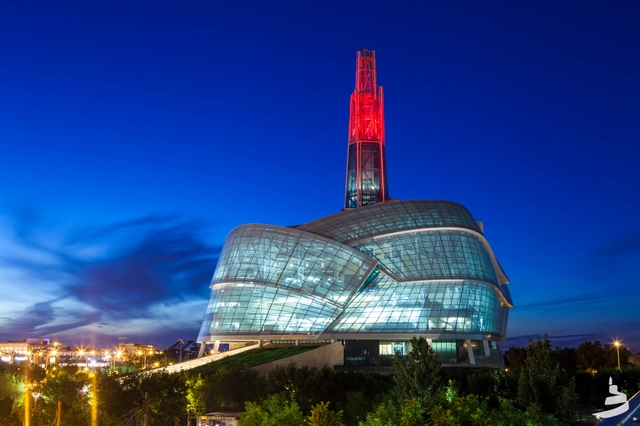
In an article for The Walrus, Adele Weder examines Antoine Predock's (who was recently made a National Academy Academician) Canadian Museum for Human Rights: a "colossal, twelve-storey mountain of concrete and stone, 120,000 square feet of tempered glass, and 260,000 square feet of floor space." Early advocates of the museum "felt that Winnipeg was ripe for such a statement piece," just as Bilbao had been for the Guggenheim. Welder's explorations are clear and concise, finding all sorts "of paradoxes swirling around the Museum for Human Rights." Noting that "it’s definitely a kick-ass building, with its aggressive outer form, jagged paths inside, big black slabs of basalt, thick sheets of glass, and the huge metal girders that hold it all together," Weder argues that it's position as a "failed memorial and white elephant" may be it's eventual undoing.
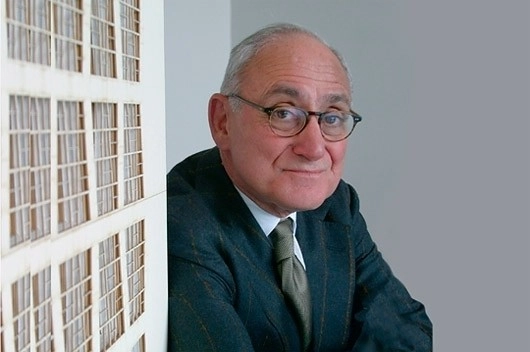
After serving as dean at the Yale School of Architecture for nearly two decades, Robert A.M. Stern is reportedly stepping down. According to Yale Daily News, faculty and administrative staff members have indicated that Stern will be retiring when his term as dean concludes in Spring 2016. “[Stern] took [the school] from a place where people were not paying attention to it many years ago — he has brought incredible international attention to the school,” Professor Michelle Addington stated in regards to Stern's widespread influence as dean. “He has given me the opportunity to rethink my subject, and that doesn’t happen at too many places.” More information, here.
"The Dean of Parsons: Design Education Must Change" (click image for article). Image Courtesy of Metropolis Magazine
The National Council of Architectural Registration Boards (NCARB) has awarded Parsons The New School for Design and Clemson University the 2014 NCARB Award to aid the development of innovative programs that merge practice and education.
"The award honors innovative ways for weaving practice and academy together to address real-world architecture challenges," says NCARB CEO Michael J. Armstrong. "The winning proposals for 2014 explore new paradigms of practice and move students from the theoretical to applied practices working with licensed practitioners."
One of the most important Islamic architectural monuments, the Great Mosque of Samarra in Iraq is one of many priceless monuments that has been “lost in conflict.” Paying homage to the architectural masterpieces that have been victims of war, CNN has put together a list of 19 of the world’s “greatest buildings you’ll never see.” View them all, here.