Kum & Go has enlisted six internationally renowned practices to compete for design of its new $92 million headquarters planned for Des Moines, Iowa: Bjarke Ingels Group (BIG), Bohlin Cywinski Jackson, Morphosis, Renzo Piano Building Workshop, Safdie Architects, and Skidmore, Owings & Merrill LLP (SOM). The 24-hour convenience store chain plans to select an architect by mid-November. The 120,000-square-foot corporate office will be built on the north side of the Pappajohn Sculpture Park, between 14th and 15th streets.
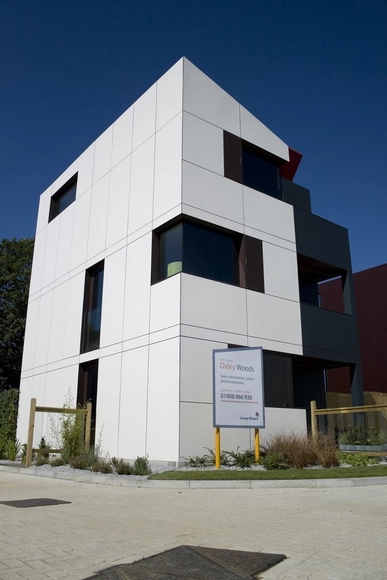
Developer Tom Bloxham has argued that problems with prefabricated homes or other unusual building techniques "must not stop innovation" in the UK housing sector. Bloxham, whose company Urban Splash was responsible for the Stirling Prize-nominated Park Hill regeneration and has worked with architects such as Norman Foster, FAT and Will Alsop, was speaking at an Archiboo event titled "Housebuilding is Ripe for Disruption." Discussing the problems that have befallen RSH+P's Oxley Woods project, he said "Whenever we innovate something inevitably goes wrong. There are risks and it is difficult. But somebody has to take these risks for the industry to move forward," reports the Architects' Journal.
The US Olympic Museum committee has selected Diller, Scofidio + Renfro to design a $60 million museum in downtown Colorado Springs. The New York-based practice will collaborate with Anderson Mason Dale Architects of Denver and exhibit designer Gallagher & Associates to showcase the Olympic and Paralympic's history through exhibits and artifacts. Once complete by early 2018, the museum will include a hall of fame, theater, a 20,000-square-foot exhibit hall and retail space. Designs are expected to be released by mid-2015.
The 2030 Progress Report for the American Institute of Architects (AIA)'s 2030 Commitment - a voluntary program for architects who want to commit their practice to advancing the AIA's goal of carbon neutral buildings by the year 2030 - has found a significant increase in the number of projects that meet its current targets for a 60% reduction in carbon emissions, with over 400 buildings in the program meeting the goal. "There is some very encouraging data in this report that shows how architects are making measurable progress towards reducing the carbon emissions in their design projects," said AIA Chief Executive Officer, Robert Ivy, FAIA. Read on after the break for more results of the report.
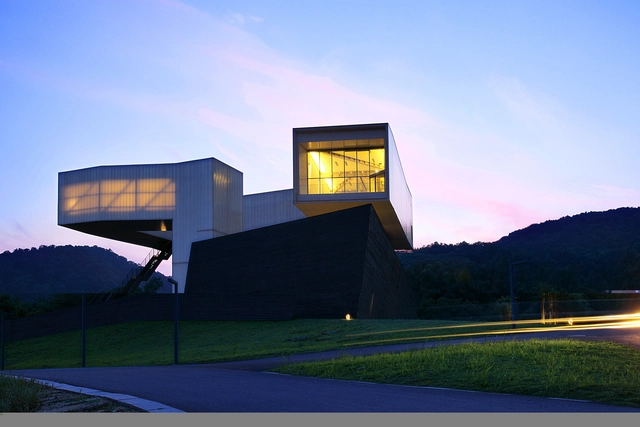
The Medal of Honor was created in 1861 and is the nation’s highest military honor. It is awarded by the President of the United States on behalf of the United States Congress for valor in combat. The Museum is the first part of a multi-phase development of the site on the eastern shore of Charleston Harbor and will become an iconic destination in the region.
Michael Rotondi, principle of Los Angeles-based RoTo Architecture and former student of Cal Poly Pomona, has been selected to receive the Richard J. Neutra Medal for Professional Excellence from the College of Environmental Design at the California State Polytechnic University, Pomona. Co-founder of SCI-Arc and long-time architectural educator at Arizona State University, Rotondi was selected for his “commitment to architectural education, for the concern he shows in his work for society and the environment, and for the inventiveness of his architecture,” says Cal Poly Pomona professor Sarah Lorenzen.
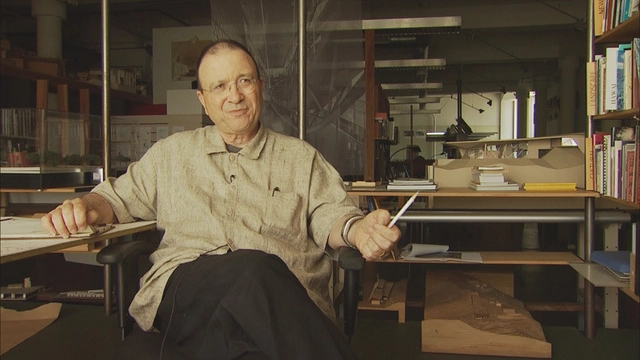
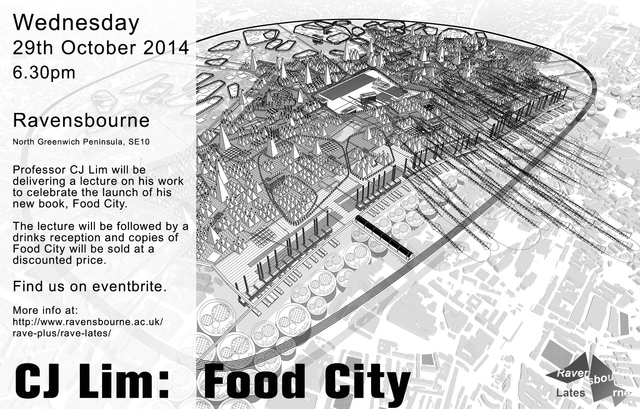
As part of the launch of his latest book, Food City, Professor CJ Lim of the Bartlett School of Architecture will present a lecture at Ravensbourne in Greenwich, London. Food City follows on from professor Lim's previous book, Smartcities and Eco-Warriors, exploring the role that food production and distribution has historically played in day-to-day life, and how we might once again reinstate it as an integral part of our cities through essays on 25 cities around the globe.
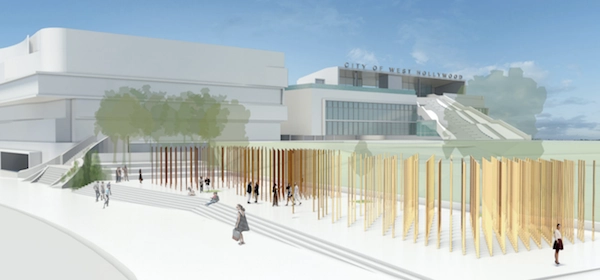
The West Hollywood City Council has selected Australian designer Daniel Tobin to build an AIDS memorial for West Hollywood Park. As stated by the non-profit Foundation for an AIDS Monument, Tobin’s installation of 341 vertical strands “functions as a destination piece — recognizable as an AIDS monument, leaving no question about the work when you leave the space.” Each vertical strand represents 5,000 Americans who have died from or living with AIDS. You can learn more about Tobin’s selection and design, here.
Grab your cardboard, parcel tape, and model building skills: Halloween masks are no longer just for witches and warlocks, but for architects too. A furniture designer turned mask creator based in the United Kingdom has created a series of geometric masks for the creatively inclined, available as a template online. A great way to use up leftover model-making materials, the masks were designed "to create a set of masks that could be built by anyone using local materials removing the need for mass manufacturing or shipping and with the minimum environmental impact," says their creator Steve Wintercroft.
The Bothy Project - Pig Rock Bothy. Scottish National Gallery of Modern Art, Edinburgh, Scotland. 2014. Image Courtesy of The Building Centre
As part of the Dylan Thomas in Fitzrovia festival, The Building Centre is examining the space Dylan Thomas and other writers depend on to create their work. A Shed of One's Own is a photographic exploration of unique sheds with architectural significance and literary connections. From award-winning studios in Central London to weathered bothies in Scotland, this exhibition explores the importance of space for creativity and inspiration.
The Courtowers (currently under construction). Image Courtesy of Hashim Sarkis Studios
Hashim Sarkis - a prominent scholar of architecture and urbanism, a practicing architect whose works have been built in the United States and the Middle East, and a leading expert on design in the Middle East - has been named the new dean of MIT’s School of Architecture and Planning (SA+P), effective in January. Sarkis is currently the Aga Khan Professor of Landscape Architecture and Urbanism in Muslim Societies at Harvard University’s Graduate School of Design (GSD). He has been on the Harvard faculty since 1998, and has been a full professor since 2002.
“The energy and forward-looking attitude I have encountered at one of the oldest schools of architecture and planning in the country makes it feel like the youngest,” Sarkis says. Read the complete press release here.
The Royal Institute of British Architects (RIBA)'s Future Trends Survey for September showed that, for yet another month, confidence is high among UK architects, with the workload index up fractionally to +29 from +28 in August. Again, this positive figure was spread right across the country, with the most optimistic reports coming from Northern Ireland and the North of England, reporting workload index figures of +80 and +46 respectively - promising figures considering that these two areas were "slowest to show signs of recovery" after the recession, according to the RIBA.
Have you ever had the urge to squeeze a lemon on the dome of St. Peters Basilica? Or perhaps, crack a beer with Kohn Pedersen Fox’s “bottle opener”? New York-based designer Nicholas Blechman has put into illustration what we’ve all been thinking, landmark architecture as the food-related items they resemble. Check out Blechman’s “Gastro-Architecture” series here on the New York Times and preview a couple of our favorites, after the break.
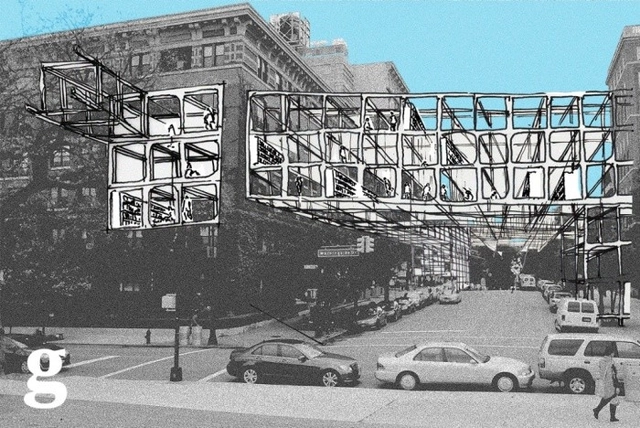
Barack Obama still has two years left in his presidency, but speculative planning for his Presidential Library has already begun for each of the four possible final locations. Just as the election of President Obama broke down historical precedents for who could hold office, could the design of his dedication library represent an architectural shift from previous libraries? This article by Lilah Raptopoulos from The Guardian presents four unofficial visions for the design of the new library, each of them from award-winning architects. Their bold design sketches expand our perceptions of what a presidential library could be, and explore new ways in which these libraries could serve their communities. See all four designs and read the full article from The Guardian entitled, “Obama's presidential library: four radical visions of the future from top architects.”
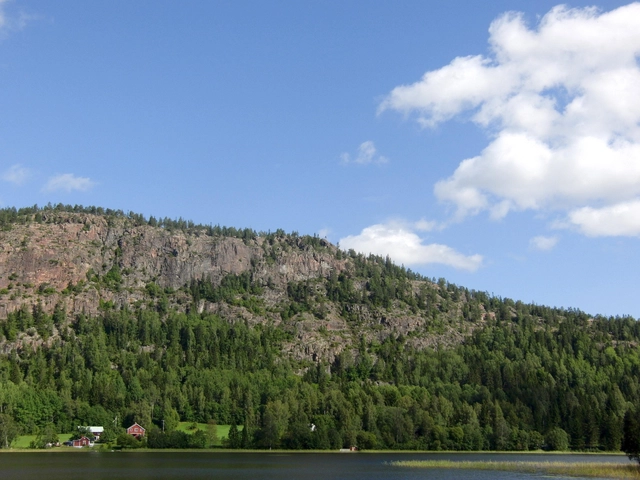
Competition Site. Image Courtesy of Combo Competitions
Combo Competitions' latest ideas challenge, entitled Hello Nature!,centres on a site located in northern Sweden at the foot of a mountain (Omneberget), sat within an area called the High Coast (Höga Kusten) - which is also a UNESCO World Heritage Site. This competition is looking for "structures that celebrate nature", which also involve elements of "both education and recreation, or - if you prefer - business and pleasure." The wider question the competition poses is whether or not architecture can encourage involvement with nature. Previous Combo Competitions have included the London Cinema Challenge and Faith! A Place of Worship in London, both of which attracted a number of high quality proposals.
Aeropuerto Internacional Jorge Chávez. Image Courtesy of LAP
Grimshaw has landed a $950 million expansion project for the Jorge Chávez International Airport in Lima, Peru. As reported by the Architect’s Journal, Grimshaw will work with ARCADIS, CH2MHill and Ramboll to design a seven million square meter scheme that will include a new air traffic control tower and second terminal for the international airport. Designs are set to be revealed in 2015.