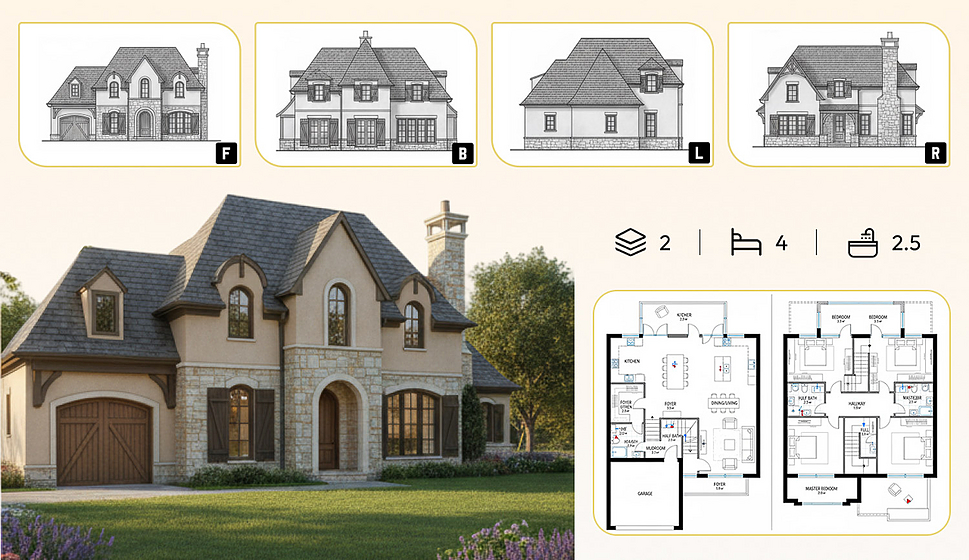
This guide covers a workflow that moves from project parameters to generated floor plans, 3D perspective views, exterior design exploration, and site context visualization, using AI tools in place of preliminary CAD and rendering work.
This guide covers a workflow that moves from project parameters to generated floor plans, 3D perspective views, exterior design exploration, and site context visualization, using AI tools in place of preliminary CAD and rendering work.

After years of publishing projects and articles related to bamboo, we are strongly aware of its qualities as a construction material. But is it really an option that you would use into your next project? Despite widespread appreciation, bamboo seems to be a material that is rarely considered for use in everyday designs.
The team of Manasaram Architects and CGBMT asked themselves the same question. Together they are seeking to understand the current perceptions of bamboo and to discover its potential as a commonly-used material in the construction sector. To help in this pursuit, they have shared a survey with us which seeks to evaluate how often architects and building professionals use bamboo, the problems they face, and how informed they are about the material.
We would like to invite our readers to spare 10 minutes of their time to help us expand knowledge about the use of bamboo using the survey below. The results will be shared on ArchDaily once the study is complete.
As part of a generation of designers that have, in recent years, put Mexico on the map, Tatiana Bilbao is an architect that is increasingly part of the profession’s global consciousness. But, while some Mexican architects have made their mark with spectacular architecture following the international trend of “iconic” architecture, Bilbao opted instead for a more people-focused approach. In this interview, the latest in Vladimir Belogolovsky’s “City of Ideas” series, Bilbao explains how she got into this type of community-building architecture, her thoughts on architectural form, and her ambitions for the future.
Vladimir Belogolovsky: The more I talk to architects of your generation or my generation, the more it becomes apparent that architecture has absolutely no boundaries. In other words, architecture is not just about buildings. More and more, architecture is about building communities.
Tatiana Bilbao: Absolutely. For me, that is the most important part of architecture. Architecture is not about building a building; architecture is about building a community.

We were hoping for it to happen in the early 2000s. We saw it coming with the opening of the exhibition “Postmodernism: Style and Subversion, 1970 – 1990” at the V&A in London in 2011. But now, after recent discussions on the umpteenth supposed “postmodern revival,” it is finally sure: the word “postmodernism” is back and it’s here to stay. But as clear as it is that the word “postmodernism” is once again fashionable, it is not really clear what we mean when using it. Indeed, this word has been used to imply every possible meaning: architects have used it to describe fashionable and “cute” designs, some critics have used it to categorize everything that is colorful, while some theorists have been using it to affirm that, because of this concept, architecture has surrendered to technology or form, becoming nothing more than a caricature of its own presupposed moral values.
Whether we agree with such commentaries or not, there is one thing that we still need to discuss: what does “postmodern” mean? And, even more urgently: what could it mean today? After all, if we have to deal once again with one of the most misinterpreted and contradictory words ever introduced in our field, we should at least discuss what it means, before using it.

This article was originally published by Archipreneur as "How Drones Can Be Used in Architecture."
Small unmanned aerial vehicles (UAVs), commonly called drones, are gaining in popularity not only among the general public and consumers, but also among professionals working in the AEC industry. We’ve seen ambitious predictions for the use of drones on construction sites, as transportation vehicles and marketing tools.
While this new technology, like 3D printing and robotic fabrication in general, promises to revolutionize the architectural profession, it is useful to know to what extent its practical application can affect the way archipreneurs work. It seems that, for now, drones have great potentials when it comes to several aspects of the profession.


The recent availability of automated design and production techniques is changing the development of building details. With parametric and algorithmic design methods and the use of digital fabrication, new abilities are required from architects for the design of details, at the same time as new players are beginning to take part in their development.
Although not always given the necessary attention, architectural details are of extreme importance for many aspects of a building. They can define its theoretical expression and technical character, and impact its production process, its assembly method and even its ecological footprint. Contemporary architecture shows a new interest in detailing, which should not be confused with a return to the appreciation of artisanal work.[1] This new interest is related to the recent re-involvement of the architect with the physical making of buildings, as a result of the use of digital technologies.[2] The new “digital master builder” [3] counts on file-to-factory processes, in which the morphology of construction details is directly related to the knowledge of the available production processes.

Happy New Year! Champagne, hugs, phone calls, and new goals. A few days pass, and it feels like this year you really will achieve everything you want. It's a great attitude, but not everyone is so clear on what those goals are or where to direct their career. In this day and age, anything seems possible. If a friend is traveling the world, you want to do it too. If another joined the gym, you want to do it too. If former classmates are pursuing a master's degree, you want that too—but we know we can't do everything at the same time.
.jpg?1515170830)
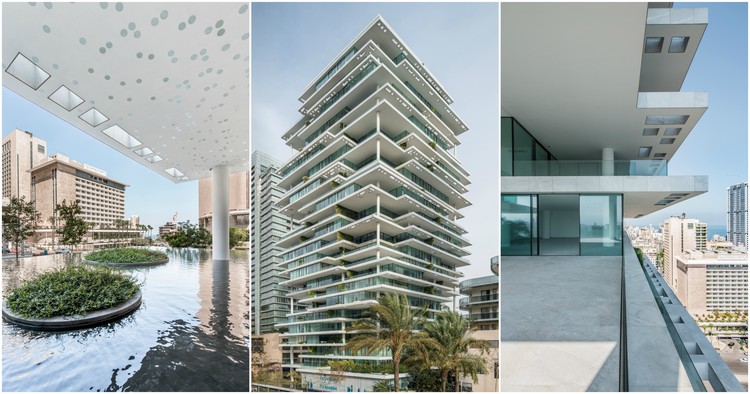
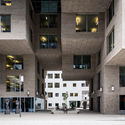
In the rapidly burgeoning city of Beirut, the post-war building boom is far from over. Much like its middle-eastern neighbors, it boasts of a plump share of designer architecture—as critic Oliver Wainwright refers to it, “a diverse shopping list”. It is here that the Beirut Terraces, a residential complex designed by Herzog & De Meuron, rises up to 119 meters, occupying a prominent place in the city’s skyline. In this collection of photographs by Bahaa Ghoussainy, one sees the Beirut Terraces from within, getting a glimpse of both the interior, as well as the multiple, unique views offered from inside the building.
If you are missing the capacity to create emotion, then it doesn’t work, it’s not enough.
– Renzo Piano
In this in-depth biographical video by the Louisiana Channel, Renzo Piano talks about his earliest influences, why traveling is essential, the pleasures of drawing, what creativity really means, how “computers are a bit stupid,” the way “beauty can change the world,” and more.
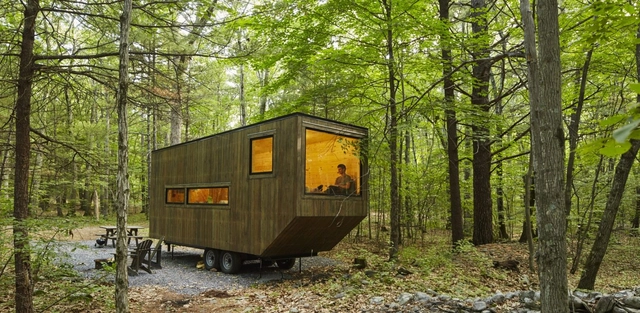
This article originally appeared on Archipreneur as "5 Amazing Tiny Houses and Their Financing Models."
The tiny house movement is taking the housing market by storm, with small homes appearing all over rural and urban areas across the world. They are an affordable and eco-conscious solution to the narrowing housing supply and can offer mobility to an increasing population of young professionals. Tiny houses come in many forms and sizes—from micro-apartments and office spaces, to cabins on wheels and trailers. Similarly, the financing models vary, depending on function, local building codes, size requirements and whether they’re made as commercial products or private housing solutions.
The best option is to design and build the house yourself, using savings instead of worrying about interest rates and debt. Some tiny house manufacturers offer in-house payment solutions to their customers. Other options are RV loans, peer-to-peer lending and crowdfunding. We assembled a list of 5 beautiful tiny houses built for different purposes.
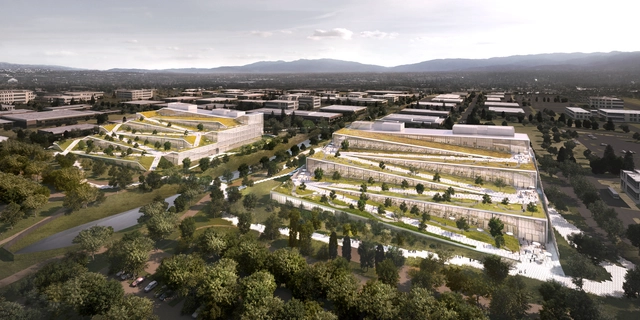
Google has unveiled plans for a new campus in the Moffett Park area of Sunnyvale, California that will be located just a few miles from its long-awaited ‘Googleplex’ headquarters in Mountain View. And just like the company’s Mountain View and London campuses in the works, the building has been designed by Bjarke Ingels Group (BIG).
Located at 100 and 200 W. Caribbean Drive, the complex will consist of two terracing buildings containing over 1 million square feet of office space and room for up to 4,500 employees.



Even with tech like virtual reality, augmented reality, 3D printing, computational design and robotics already reshaping architecture practice, the design community is just scratching the surface of the potential of new technologies. Designers who recognize this and invest in building skills and expertise to maximize the use of these tools in the future will inherently become better architects, and position themselves for entirely new career paths as our profession evolves. It is a uniquely exciting moment for architecture to advance through innovative use of technology. Even just a decade ago, designers with interests in both architecture and technology were essentially required to pursue one or the other. Now, with architecture beginning to harness the power of cutting-edge technologies, these fields are no longer mutually exclusive. Rather than choose a preferred path, today’s architects are encouraged to embrace technology to become sought-out talent.
With much written about how technology is changing the way architects work and the products we can deliver to clients during a project’s lifecycle, there has been less focus on how technology is changing career opportunities in the profession. Architecture companies are now hiring roles that didn’t exist even three years ago. Here’s a look at five emerging career paths design technology will make possible in 2018 and the immediate future.
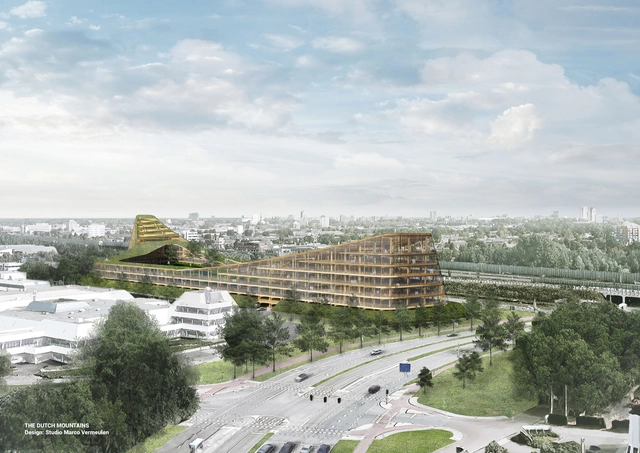
Plans have been revealed for the “largest wooden building in the world” to be located just outside Eindhoven in the town of Veldhoven, The Netherlands. Known as the Dutch Mountains, the complex was conceived via a multi-disciplinary partnership made up of tech companies, service providers, architects and developers, and would contain a hi-tech, mixed-use program for residents and visitors.
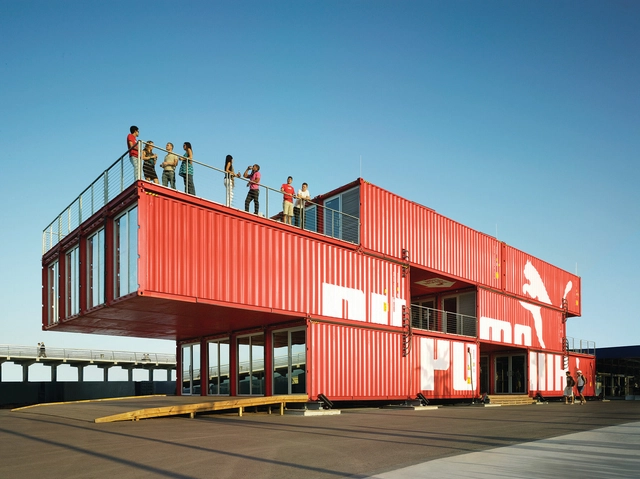
Shipping containers, once a darling of architectural upcycling, have received a lot of criticism recently, as architects are beginning to recognize that their perceived advantages—ready-made habitable space and structure, and an opportunity to recycle a widely available material—are based in little more than hopeful PR spin. But for one of the most prominent practices which regularly uses shipping containers in their work, LOT-EK, the attraction of these architectural ready-mades always went beyond the ecological and practical rationalizations provided by others. In this interview at the firm's New York studio, part of Vladimir Belogolovsky’s “City of Ideas” series, LOT-EK founders Ada Tolla and Giuseppe Lignano discuss the conceptual foundations of their fascination with shipping container architecture.
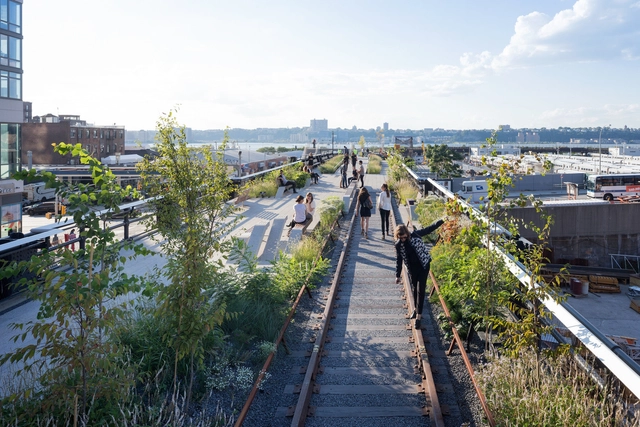
Amongst other placemaking-related news this year, the Boston Society of Architects’ Placemaking Network celebrated its 10-year anniversary by launching the Placemaking Manifesto in November. Co-authored by Christina Lanzl, Robert Tullis, and Anne-Catrin Schultz, the document set down six key ideas: “quality of life,” “sense of place,” “community identification,” “collaboration and communication” between “individuals of all backgrounds, interests and talents,” “inclusivity” and “greater civic engagement,” and “awareness of tradition with an embracing of new and emerging technologies.” While the basic principles that placemaking espouses are often hard to question, this manifesto in particular begs one question: Is placemaking understood and defined clearly enough for it to be a useful tool for urbanists?
In the past decade or so, placemaking has gained considerable momentum, spewing forth an array of approaches, countless lists of best practices (including, in essence, this new manifesto), and complicated sub-categorizations. It is simultaneously a much-lauded global movement, an academic discipline, a field, discourse, process, and tool, but is also, among other charges, heavily criticized for being an “ill-defined buzzword.”

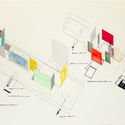
For the past two years, we have found ourselves wanting to highlight what is the foundation of architectural practice: the architectural drawing. We realized that even after almost a decade of publishing the best projects from around the world, we should take on the task of singling out the exceptional cases of representation, taking into account all varieties and species of drawings. Following up on the criteria used in the previous edition, all the architectural drawings we have selected this year have a sensitive expression— whether it be artistic, technical or conceptual—and they all aim to express and explain the respective project using simplicity, detail, textures, 3D and color as main tools.
Below you will see the selection of drawings arranged under eight categories: Architectural Drawings, Axonometrics, Context, Diagrams, Sketches, Animated Gifs, Details and Other Techniques.

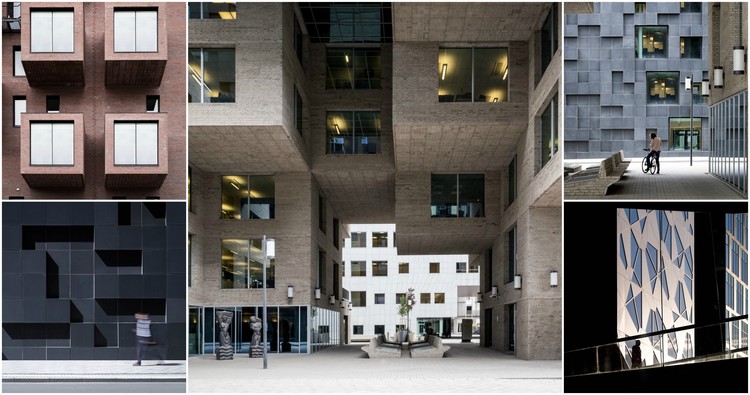
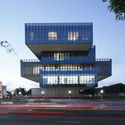
Situated behind Snøhetta's iconic Oslo Opera House is another set of buildings which mark out Oslo as a cutting-edge architectural hub. The Barcode Project is a masterplanning project consisting of a row multi-purpose high-rise buildings which largely make up the skyline of Oslo. Each of the buildings is the creation of different combinations of European architecture firms; however, together they form an enticing composition with the gaps between them creating the impression of a barcode—hence the project’s clever nickname.
Each of the resulting buildings pushes the idea of what a high-rise building can be. Whether they take the form of a giant staircase or resemble a 3D version of Tetris, each of the buildings has its own peculiarities. The firms involved in the project included Dark Arkitekter, A-lab, MVRDV, and Snøhetta adding their stamp on the architecture of Oslo. Read on to see German architectural photographer Rainer Taepper’s stunning set of photographs on the Barcode Project.

“Will you look at that? St. Mark’s Square is flooded!” An Australian day tripper is astonished. “This place is actually sinking,” her friend casually exclaims. They, like so many I’ve overheard on the vaporetti, are convinced that the Venetian islands exist on a precipice between the fragility of their current condition and nothing short of imminent submersion. With catastrophe always around the corner a short break in Venice is more of an extreme adventure trip than a European city-break. If it were true, that is.
Are we going to follow a model of unsustainable building and construction similar to what I witnessed in China—or can we develop a uniquely African model of sustainable, and equitable development? I'm optimistic we can.
In this recent TED Talk, Christian Benimana talks about his journey as an architect—growing up in Rwanda, studying in China, and finally returning to Africa to see the beginnings of a building boom very similar to what he witnessed in Shanghai. Given this background, he then explains why he and MASS Design Group founded the African Design Center, a school and innovation center that intends to be a catalyst for positive urban development on the continent.



.jpg?1515171598 "© Bahaa Ghoussainy")
.jpg?1515171343 "© Bahaa Ghoussainy")
.jpg?1515170657 "© Bahaa Ghoussainy")
.jpg?1515171187 "© Bahaa Ghoussainy")