Award-winning architect Nicolas Valencia is the former Head of Editorial at ArchDaily, leading a global editorial team ---- @nicolasvalencia.cl | nicolasvalencia.cl | hellonicolasvalencia@gmail.com
Happy New Year! Champagne, hugs, phone calls, and new goals. A few days pass, and it feels like this year you really will achieve everything you want. It's a great attitude, but not everyone is so clear on what those goals are or where to direct their career. In this day and age, anything seems possible. If a friend is traveling the world, you want to do it too. If another joined the gym, you want to do it too. If former classmates are pursuing a master's degree, you want that too—but we know we can't do everything at the same time.
The second edition of the workshop organized by the School of Architecture (EA) of Universidad San Sebastián (Chile) had as main guest the Spanish architect Alberto Veiga, founding partner of Barozzi / Veiga and author of projects such as the Philharmonic Hall in Szczecin and Ribera del Duero Headquarters. In addition to engaging in a series of debates with the participants of the workshop, Veiga had a public conversation with the Chilean architect Pedro Alonso (winner of the Silver Lion at the Venice Biennale 2014) and shared the studio’s work and reflections on architecture in a master lecture.
A total of 10 teams from different schools of architecture in the country came together for the 2017 version of this initiative, reaching a total of 67 participants among students and instructors. Seeking to favor the production of projects capable of promoting debate, each day of the workshop dealt with a different topic featuring guest scholars: Ernesto Silva, director of the School of Architecture (strategies), Pedro Alonso, renowned professor and researcher (arguments) and Albert Tidy, dean of the Faculty of Architecture (materialization of the project). For the closing day, on Friday, October 13, there was a joint display with the final projects produced by the different teams (which remained open to the public for the next couple of weeks), and a camaraderie activity to celebrate both the gathering of the schools and the quality of the experience and its results.
As you know, ArchDaily has joined forces with Spotify, the world's largest music streaming platform. From the very beginning, we have been sharing our own playlists for those key moments in the lives of all architects. At the same time, we have invited architects from Latin America and Spain to share the music that inspires them, or better yet, the sounds that have shaped their careers.
In this installment of ArchDaily en Español + Spotify, we share our most popular playlist: Música para Maquetear (Music for Model Making). If you have to spend your day among cardboard and renders, this ten-hour playlist will keep you company during those long late-night sessions.
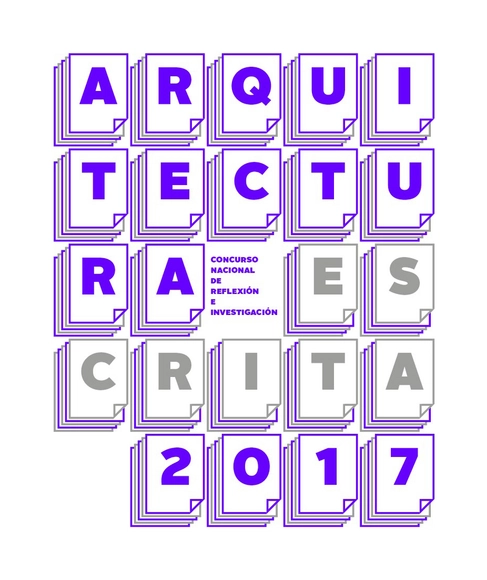
On December 20, the final curating process for the first edition of the National Essay and Research Competition, Arquitectura Escrita 2017, took place at the national headquarters of the Colegio de Arquitectos de Chile.
Organized by Grupo Arquitectura Caliente and co-organized by Ediciones ARQ, the competition awarded the 20 best articles among the 87 proposals submitted in the undergraduate and graduate categories, representing 18 architecture schools across 9 different Chilean cities.
The competition was directed by Gabriela García de Cortázar and featured a jury of 30 prominent academics and professionals who formed the Evaluation Committee. All the articles will be published digitally soon and compiled into a book available for pre-order at this link.
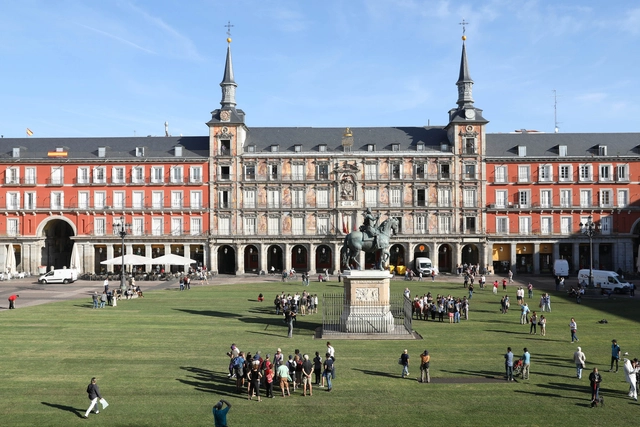
Earlier this year the Plaza Mayor in Madrid awoke covered by a giant meadow of natural grass. A circle of 70 meters in diameter, without any restriction of access, allowed Madrilenians to take a break, sit down, read a book or simply take a picture, enjoying this urban landmark from a new perspective.
This seemingly simple, but impressive doing is the most recent intervention by the anonymous artist SpY was part of Four Seasons (Cuatro Estaciones), an urban art program run by the Madrid City Council to celebrate the IV Centenary of the Plaza Mayor.
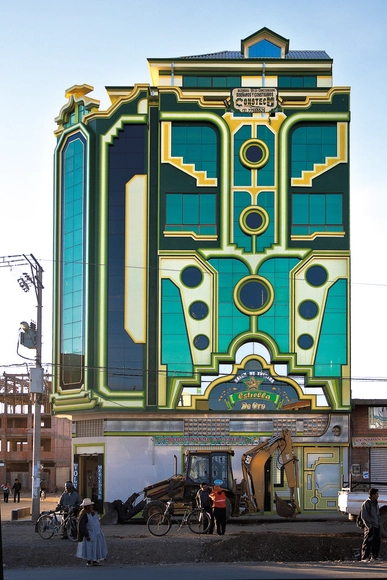
The media outbreak for architect Elisabetta Andreoli and artist Ligia D'Andrea’s book "Andean Architecture of Bolivia", which focuses on the work of Freddy Mamani - ex-bricklayer turned engineer and constructor- has become the excuse to talk about everything else related to the highland country of Bolivia.
Such as the shortcomings and luxuries of the rapid urban expansion dispersed in El Alto, the youngest city in Bolivia; the birth of a new Aymara bourgeoisie in the shadow of the white elites; and the birth of a contemporary architectural identity that bothers purists and makes Aymaras proud, but is rejected by local architecture schools. Below, you can find out more about this new type of architecture together with photos by Alfredo Zeballos.
In the context of the XX Biennial of Architecture and Urbanism in Chile, we spoke with the Spanish architect Andrés Jaque, founder of the Office for Political Innovation. In a conversation named Lucha Libre Jaque argued that "all architects are politicians" by default and the real question is what forms of policy we are willing to defend.
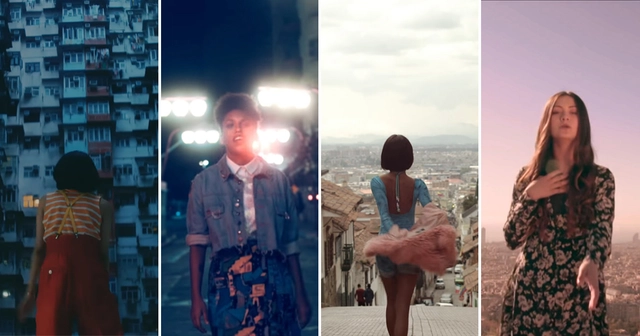
In the age of green screen backgrounds, hyperrealistic renderings and the endless run of superhero movies that rely heavily on special effects, some directors are still betting on turning cities into protagonists of their music videos. In the nineties, Michael Jackson visited Brazil and filmed They Do Not Care About Us in one of the most dangerous neighborhoods in South America – but do you remember which city it was?
Here we compiled ten music videos where the cities, their neighborhoods and their inhabitants serve as the stage for actors, singers, and dancers to display their art around the world.
Can you recognize the cities where these music videos were filmed? Take the test below and find out.
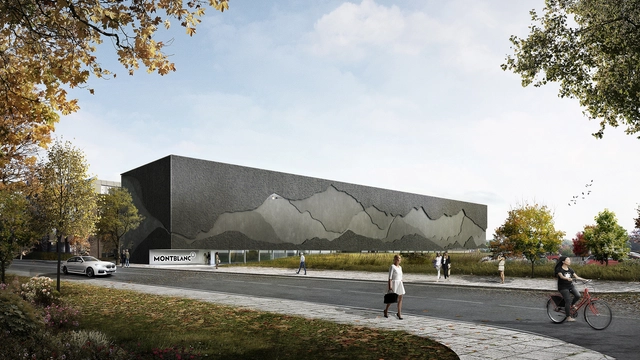
Nieto Sobejano Arquitectos has revealed the design of Montblanc Haus, a new museum, visitor center and event space in Hamburg, Germany dedicated to the "art of writing" and the finely-detailed craftsmanship of Montblanc products. The Spanish firm was selected as the winner of an international competition ahead of top teams including Snohetta (Norway), John Pawson (UK), wHY (USA) and Noé Duchaufour (France).
At the announcement, Hamburg Mayor Olaf Scholz and Montblanc CEO Nicolas Baretzki unveiled the design of the 39,395-square-foot (3,660-square-meter) project for the first time, presenting it as a new architectural icon for the city. Estimated to cost 20 million euros, the museum will tell the story of Montblanc through the company's iconic writing utensils and products.
The Royal Institute of British Architects (RIBA) has revealed the list of 9 architects selected for their 2018 RIBA International Fellowships program, established to "reward the particular contributions non-UK architects have made to architecture." In addition, 14 individuals from diverse backgrounds have been named honorary fellows.
Read on after the break for the full Fellowship lists
On Thursday, July 29th, the Estadio Wanda Metropolitano's roof was officially completed. This new stadium, a renovation of the old Peineta athletics stadium, is the new home ground of Spanish football club Atlético Madrid.
In this video, FCC Construcción captures the intense work on the roof which was designed and constructed by engineers Schlaich Bergermann Partner. The milestone marks four months of intense work since the installation of the first of the 96 PTFE radial panels at the north end of the stadium.
There is always something new to say about Mies van der Rohe’s Barcelona Pavilion. Sometimes we uncover an unknown detail, other times an intervention is revealed or we discover a new lens to observe it. The latter is the case with Spanish architect and audiovisual creator Fernando Ayuso, who wanted to pay homage to this historical work.
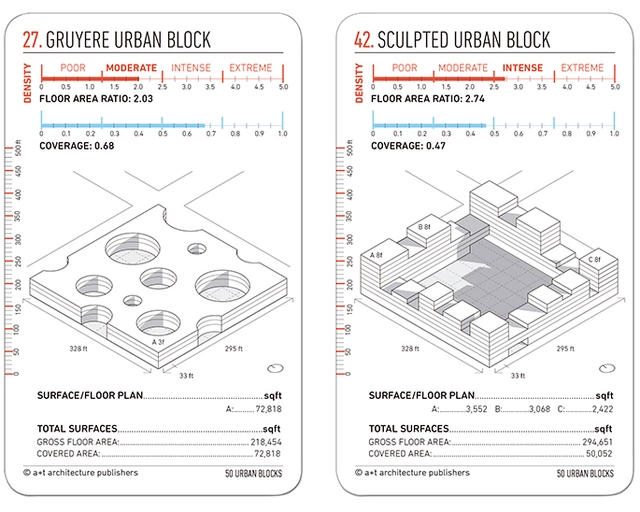
We know perfectly well that learning in architecture and urbanism can take on multiple forms. Just think of all the modeling, drawing, plans, theoretical classes, workshops, 3D models and even virtual reality exercises. In this same line, the team at a+t architecture publishers have put together a collection of cards that seek to facilitate the designing of an urban block with 50 design styles.
Each card measures 13 x 8 cm and is printed on both sides, with a version in English and Spanish. Also, each design includes its axonometric profile, general layout, shade patterns, use coefficient and total built space in both meters and feet.
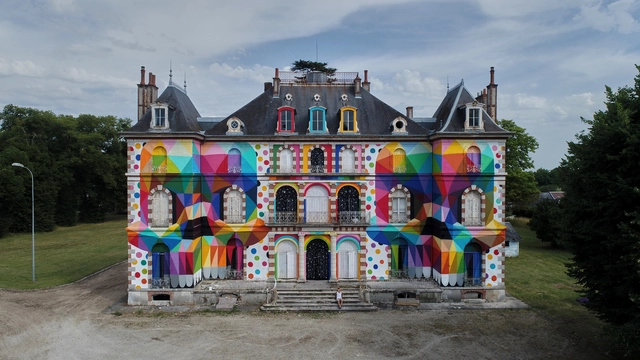
Okuda, the Spanish artist who has been converted into one of the biggest figures in pop surrealism, is continuing his artistic journey in France. After paying homage to the Mona Lisa in the façade of a 19 story building and designing a trampoline above the Seine River, the artist has now taken on the façade of the Valette Castle (1864) in Loiret, which has been abandoned since the 80’s.
The work is titled “Skull in Mirror” and reactivates the Valette Castle whose history links France and Spain. In 1936, during the time of the Spanish Civil War, Republicans purchased the castle, where initially it housed children evacuated from conflict and then later, political exiles. In the 50’s, Spain, under Franco’s rule reclaimed it and used it for holiday camps. Two decades later, the castle was converted into a Spanish school and by 1986 was left abandoned. In 2002, it was acquired by the Pressigny-les-Pins council and a private company.
On Thursday 29 of June, Jan Gehl the Danish architect and urban planner, spoke at the Conference “Thinking urban: cities for people” organised by UN-Habitat and the Official Architects College of Madrid (COAM as it is abbreviated in Spanish) about the urban transformations that have occurred in Copenhagen as a result of the errors of the modernist movement and the challenges facing the cities in the 21st century.
In a prior discussion with José María Ezquiaga (dean of COAM), and José Manuel Calvo (councilor of the Sustainable Development Area at the Madrid city council) at the Conference, Gehl highlighted the urban paradigm at the time of his student years, which is referred to as the Brasilia syndrome.
Scrolling through memes of cats in disguise. Checking if food has magically appeared in your refrigerator every ten minutes. Obsessively arranging books on your shelf by color. Renaming your computer's folders. In short, we seem to thrive on any irrelevant activity to avoid starting a reading, essay, model, or project. Procrastinate now, work later. Your future self can take care of business, after all.
As we suffer through long and strenuous projects, it is likely that we have all slipped into procrastination in order to avoid our next task. Not only do we avoid confronting work at the office or university studio, but also those personal errands which, if we dedicated ourselves, would enhance our daily lives. Below, based on our own experiences and expert opinion, and in order to avoid a host of other jobs around the ArchDaily office, we present 10 tips for architecture procrastinators, helping you to focus on the site analysis diagrams you should probably be doing right now!
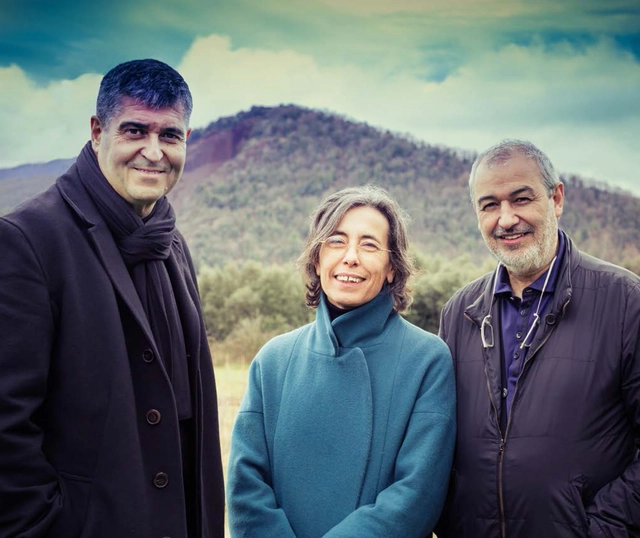
The winners of the 2017 Pritzker Prize, RCR Arquitectes, has been selected to lead the proposal and design of the Catalan pavilion at the 2018 Venice Biennale. The news was announced yesterday by Santi Vila, Minister of Culture of the Generalitat of Catalonia, during the opening of this year’s Venice Biennale of Art.
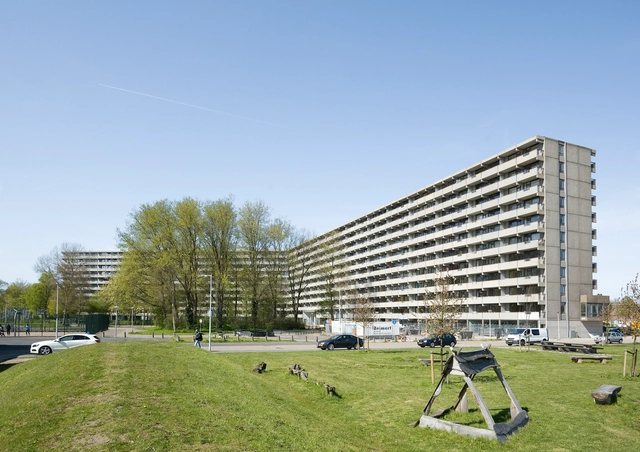
One of the largest residential buildings in the Netherlands, the complex was saved from the wrecking ball through its transformation into a rejuvenated framework called a “Klusflat," within which inhabitants could renovate their apartments by themselves. This is the first time the award has been given to a renovation of an existing building.