Nicolás Valencia

Award-winning architect Nicolas Valencia is the former Head of Editorial at ArchDaily, leading a global editorial team ---- @nicolasvalencia.cl | nicolasvalencia.cl | hellonicolasvalencia@gmail.com

BROWSE ALL FROM THIS AUTHOR HERE

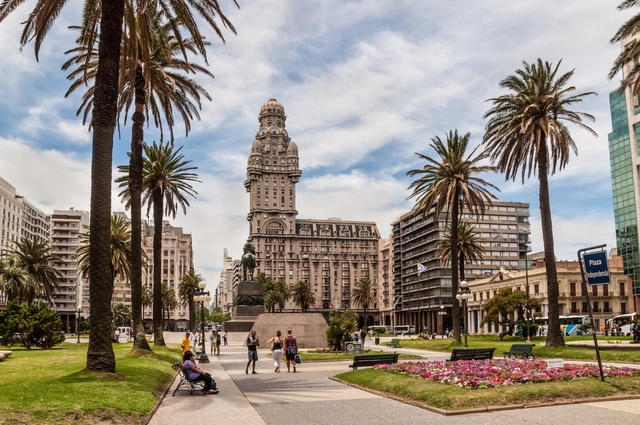
These Are The 20 Most Livable Cities in Latin America in 2019

Subscriber Access | 

Vienna, Austria has been ranked as the city with the best quality of life in the world for ten consecutive years. The ranking made by multinational consultancy Mercer is dominated by Western European cities in the highest positions, while Vancouver, Canada reached third place, becoming the highest-ranking city in North America for the last 10 years.

7 Projects Announced as Winners of 2019 Archiprix International / Hunter Douglas Awards

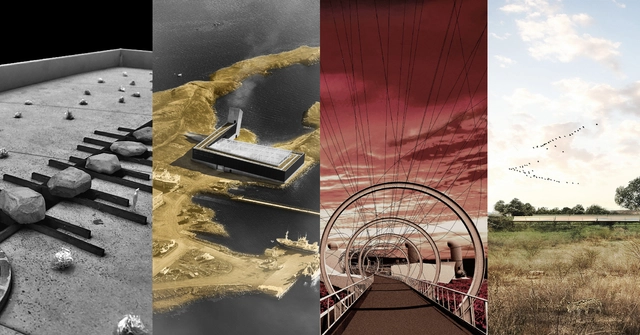
321 graduation projects designed by 407 young architects, landscape architects and urban designers were submitted for the 2019 Archiprix International / Hunter Douglas Awards. Among 22 finalists announced in December 2018, an international jury selected 7 winning projects which spotlight international trends in architecture, urban design and landscape architecture.

The World's Most Liveable Cities in 2019

For ten consecutive years, Vienna ranks first in the Mercer survey on cities with the best quality of life in the world. In this edition to the global ranking, eight Western European cities join the top ten, even when "trade tensions and populist undercurrents continue to dominate the global economic climate", as Mercer points out in its report.

Why Do Architects Love Designing Houses?

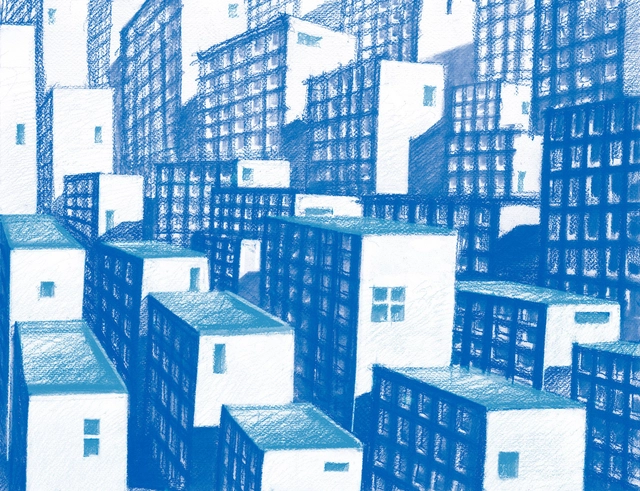
Home. Our shelter. Our private space. In an urbanized world with dense megalopolises like Tokyo, Shanghai, and São Paulo, homes are getting smaller and more expensive than ever. If you are claustrophobic, Marie Kondo is your best ally in the quest to earn some extra space.  And even though private backyards have become a luxury for most, our data shows that single-family houses are still the most popular project type on ArchDaily. Why is this? (Especially when it seems incongruous given the reality of today’s crowded cities.) Why do some universities still insist on designing and building houses as academic exercises? Wouldn’t it be more creative—and more useful—to develop architecture in small-scale spaces? Would it be more rewarding to develop solutions on bigger scales?

From Climate Change to Global South: 11 Editors Choose 11 of our Best Articles

Back in 2008, ArchDaily embarked on a challenging mission: to provide inspiration, knowledge, and tools to the architects tasked with designing cities. In an effort to further align our strategy with these challenges, we recently introduced monthly themes in order to dig deeper into topics we find relevant in today’s architectural discourse. From architects who don't design to reframing climate change as a global issue, we are celebrating our 11th birthday by asking 11 editors and curators to choose ArchDaily's most inspiring articles.

50 AutoCAD Commands You Should Know

Subscriber Access | 

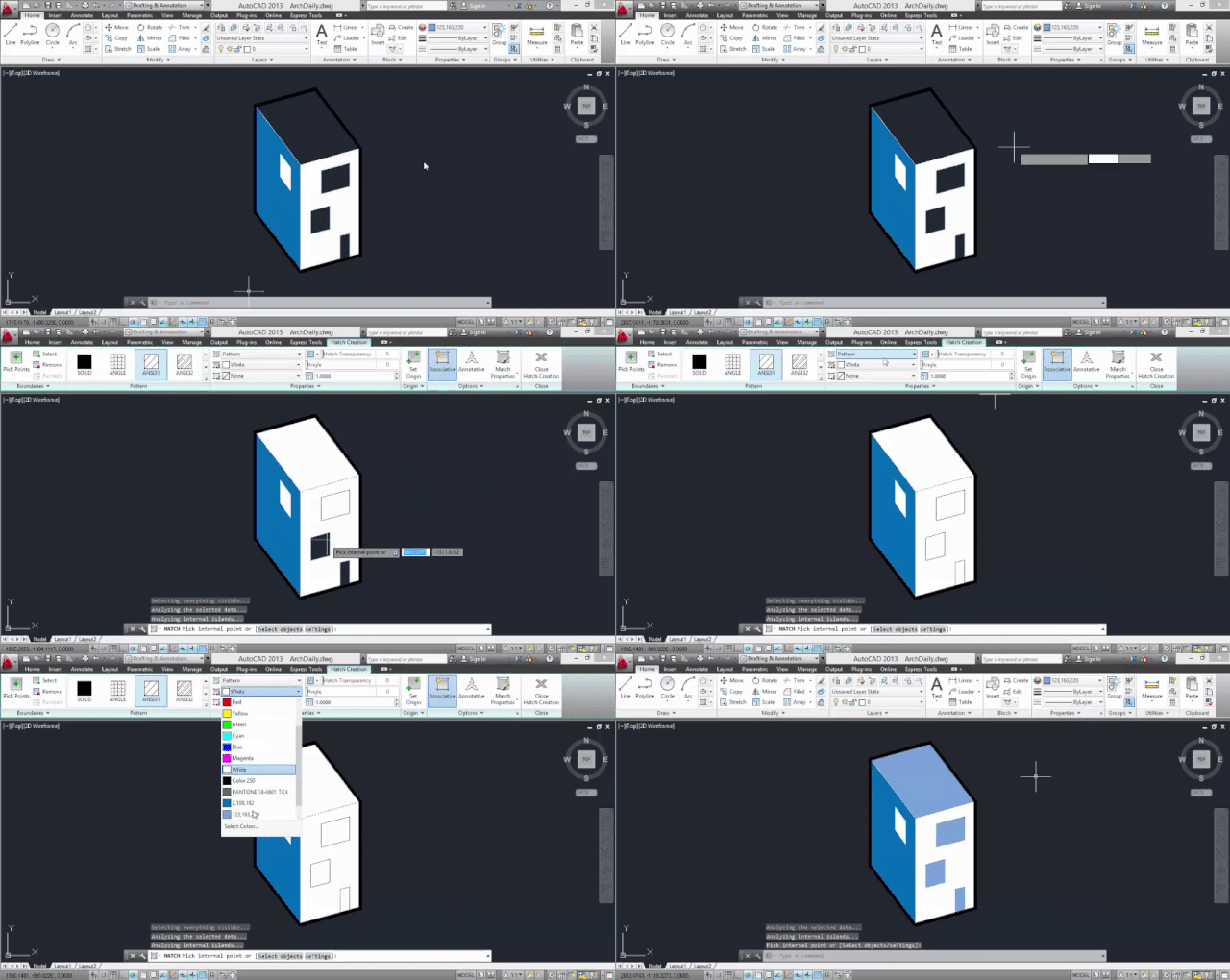
After spending countless hours in front of AutoCAD working on a project, you’re bound to have your own set of favorite commands to standardize a few steps. We also bet that you don’t have them all memorized or often forget them. To help you remember, we've made a list of 50 commands that can help you speed up your work game, discover new shortcuts, or come in use as a handy tool for when you forget what the command you need is called.

The following listing was developed and corroborated by our team for the 2013, 2014 and 2015 versions of AutoCAD in English. We also prepared a series of GIFs to visualize some of the trickier ones.

When you’ve finished reading, we would love to know what your favorite commands are (including those that we didn’t include). We will use your input to help us update the article!

Why Arata Isozaki won the Pritzker Prize 2019

Subscriber Access | 

Named 2019 Pritzker Prize Laureate, Japanese architect Arata Isozaki is incredibly prolific and influential among his contemporaries. Deeply aligned with the period of change and reinvention that Japan experimented after Second World War and Allied Occupation, Isozaki has developed a solid career on a truly global scale, avoiding being labeled in a specific style throughout his life.

Why Keep Drawing When Digital Tools Deliver Hyperrealistic Images?

Starting this month, ArchDaily has introduced monthly themes that we’ll explore in our stories, posts and projects. We began this month with Architectural Representation: from Archigram to Instagram; from napkins sketching to real-time-sync VR models; from academic lectures to storytellers.

It isn’t particularly novel or groundbreaking to say that the internet, social media, and design apps have challeged the relation between representation and building. A year ago we predicted that "this is just the beginning of a new stage of negotiation between the cold precision of technology and the expressive quality inherent in architecture". But, is it? Would you say digital tools are betraying creativity? This is an older dilemma than you think.

In this new edition of our Editor's Talk, four editors and curators at ArchDaily discuss drawings as pieces of art, posit why nobody cares about telephone poles on renders and explore how the building itself is becoming a type of representation.

Why Keep Drawing When Digital Tools Deliver Hyperrealistic Images? - Image 1 of 4Why Keep Drawing When Digital Tools Deliver Hyperrealistic Images? - Image 2 of 4Why Keep Drawing When Digital Tools Deliver Hyperrealistic Images? - Image 4 of 4Why Keep Drawing When Digital Tools Deliver Hyperrealistic Images? - Image 8 of 4Why Keep Drawing When Digital Tools Deliver Hyperrealistic Images? - More Images+ 4

9 Lessons For Post-Architecture-School Survival

Subscriber Access | 

We’ve already talked about this. You’re preparing your final project (or thesis project). You’ve gone over everything in your head a thousand times; the presentation to the panel, your project, your model, your memory, your words. You go ahead with it, but think you'll be lousy. Then you think just the opposite, you will be successful and it will all be worth it. Then everything repeats itself and you want to call it quits.  You don’t know when this roller coaster is going to end. 

Until the day arrives. You present your project. Explain your ideas. The committee asks you questions. You answer. You realize you know more than you thought you did and that none of the scenarios you imaged over the past year got even close to what really happened in the exam. The committee whisper amongst themselves. The presentation ends and they ask you to leave for a while. Outside you wait an eternity, the minutes crawling slowly. Come in, please. The commission recites a brief introduction and you can’t tell whether you were right or wrong. The commission gets to the point.

You passed! Congratulations, you are now their new colleague and they all congratulate you on your achievement. The joy washes over you despite the fatigue that you’ve dragging around with you. The adrenaline stops pumping. You spend weeks or months taking a much-deserved break. You begin to wonder: Now what?

The university, the institution that molded you into a professional (perhaps even more so than you would have liked), hands you the diploma and now you face the job market for the first time (that is if you haven’t worked before). Before leaving and defining your own markers for personal success (success is no longer measured with grades or academic evaluations), we share 9 lessons to face the world now that you're an architect.
11 Architecture Biennials to Pay Attention to in 2019

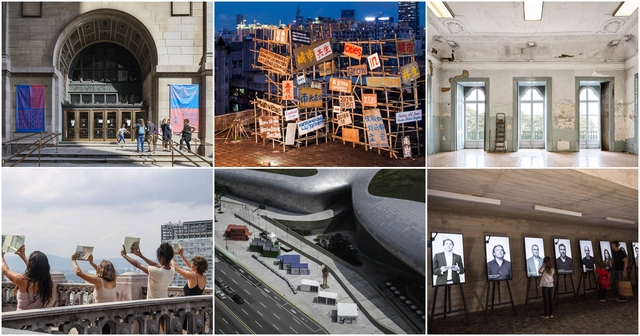
Venice captured all architects' hearts and minds last year, but 2019 —a Venice-less year— will be still a year full of biennials and festivals around the world (many of which we're proud to be official partners of). The excitement is already building. 

From Chicago's new approaches to the traditional practices to Shenzhen's future technology prospect; from Oslo's degrowth agenda to Brazil's focus on everyday architecture, it's time to start saving dates for the following biennials around the world!

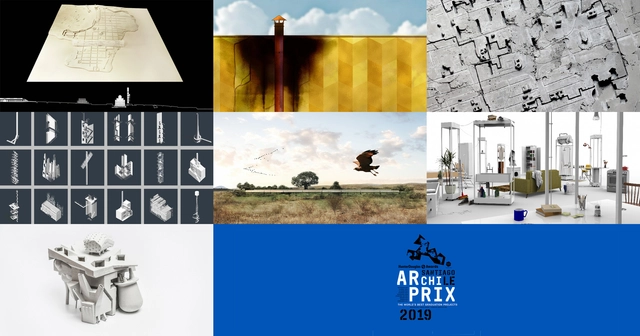
The Graduation Projects Nominated for the Archiprix International 2019

As an initiative of the Archiprix Foundation, Archiprix International 2019 recently invited all schools worldwide in Architecture, Urbanism and Landscape Architecture to select and submit their best graduation project. "This graduation work presents a wealth of ideas for a broad range of contemporary and future challenges", explains the organization on its website.

After analyzing all the submissions sent by universities from more than 100 countries, the jury —Francisco Díaz, Rosetta Elkin, Marta Moreira, Martino Tattara, and Sam Jacoby— nominated 22 projects for the awards in a special session held in Santiago, Chile. The winners of the awards will be announced at the Award ceremony on May the 3rd 2019 in the same city.

The complete list (in alphabetical order) of the projects nominated for the awards, below:

15 Colombian Projects Pushing the Brick Envelope

Subscriber Access | 

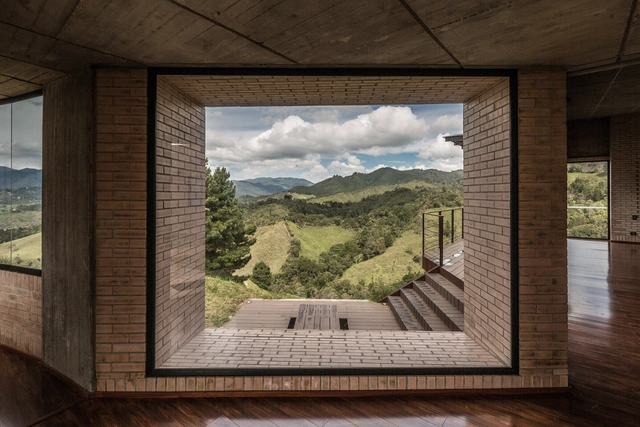
The greats of twentieth-century Colombian architecture were regarded for their genuine interest in brick. To this day, many of Colombia's iconic neighborhoods are filled with brick buildings. 

Below, a selection of stunning Colombian brick projects —available in this My ArchDaily public folder as well.

15 Colombian Projects Pushing the Brick Envelope - More Images+ 11

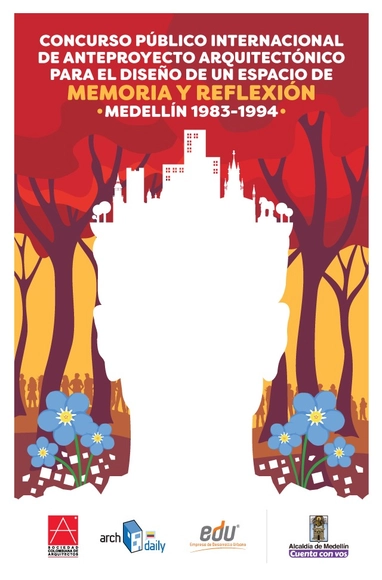
Medellín Launches International Contest to Design a Public Space in Pablo Escobar's Former Residence

With the help of Empresa de Desarrollo Urbano/Urban Development Company (EDU) and La Sociedad Colombiana de Arquitectos/the Colombian Architect's Society (SCA), Medellín has launched an international competition to design a space to remember and reflect on the period between 1983 and 1994.

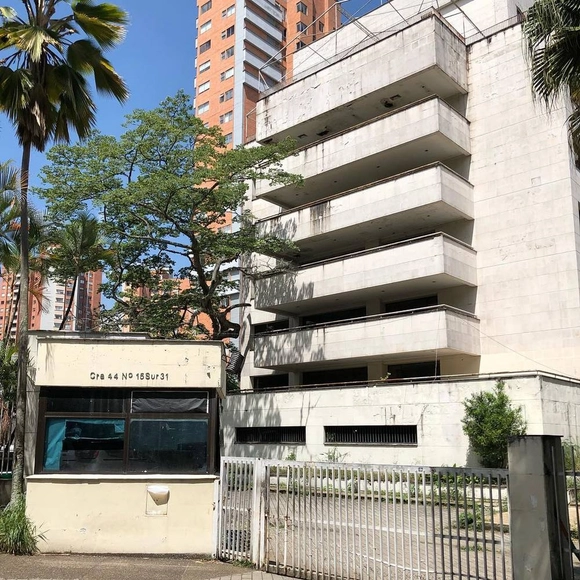
These years were some of the most violent in the Colombian city's history. In January 1988, a car bomb with 80 kilos of dynamite exploded in front of the Monaco Building, the former home of drug lord Pablo Escobar in El Poblado neighborhood. This was the first of a series of attacks between rival drug cartels in Medellin.

Artist Spencer Finch Evokes Kyoto's Ryoan-ji Garden at the Mies Pavilion

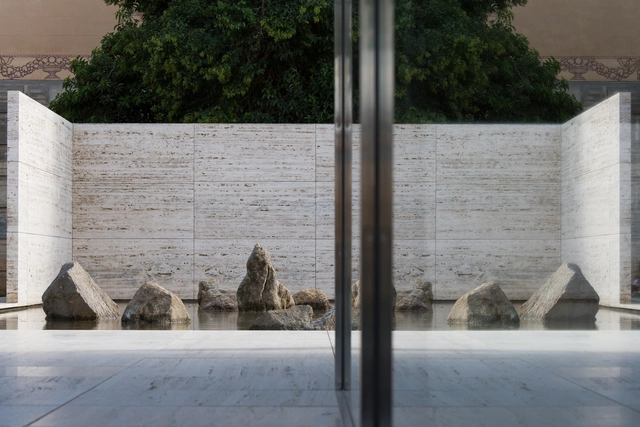
It would be hard to associate zen philosophy with Mies van der Rohe, even harder to associate it with the German Pavilion in Barcelona. Nevertheless, the latest work by American artist Spencer Finch, Fifteen stones (Ryōan-ji), precisely establishes that connection with the iconic pavilion.

Spencer Finch was the latest artist invited to intervene the Fundació's pavilion. With the aim of "provok[ing] new looks and reflections through [his] intervention in the Pavilion, [he] enhanced it as a space for inspiration and experimentation for the most innovative artistic and architectural creation." Finch joined a prominent team of artists and architects, including SANAA, Jeff Wall, Ai Wei Wei, Enric Miralles, Andrés Jaque, and Anna & Eugeni Bach, among others.

Artist Spencer Finch Evokes Kyoto's Ryoan-ji Garden at the Mies Pavilion - Image 1 of 4Artist Spencer Finch Evokes Kyoto's Ryoan-ji Garden at the Mies Pavilion - Image 2 of 4Artist Spencer Finch Evokes Kyoto's Ryoan-ji Garden at the Mies Pavilion - Image 3 of 4Artist Spencer Finch Evokes Kyoto's Ryoan-ji Garden at the Mies Pavilion - Image 4 of 4Artist Spencer Finch Evokes Kyoto's Ryoan-ji Garden at the Mies Pavilion - More Images+ 5

Kazuyo Sejima: "The Building is About the Size, But Also About the Details"

Subscriber Access | 

Kazuyo Sejima, co-founder of the architecture firm SANAA, shared details of their upcoming project the New National Gallery – Ludwig Museum in Budapest at the Hay Festival Segovia in Spain. The 2010 Pritzker Prize winner linked the underlying premise of this project to three iconic museums: the 21st Century Museum of Contemporary Art in Kanazawa (2004), the New Art Museum in New York (2007), and the Louvre Lens in France (2012).

In this conversation, Laszló Baán, General Director of the National Gallery, Budapest and Ministerial Commissioner of the Liget Budapest Project, explained the details of the 100-hectare (247-acre) masterplan at the heart of Hungary's capital city. The Liget Budapest Project will feature ten museums, including Sou Fujimoto's House of Hungarian Music, the expansion of the Budapest Zoo, and SANAA's New National Gallery for Budapest — a museum that will host 19th, 20th century, and contemporary artworks.

Pablo Escobar's Former Residence in Medellín Will Be Demolished to Build a Public Park

After a series of failed attempts, the Monaco building in Medellín will finally be demolished at the beginning of 2019, according to the Colombian newspaper El Tiempo.

The Monaco building, which was converted into a municipal asset this year, was the residence of the late drug trafficker Pablo Escobar in the El Poblado neighborhood of Medellín. In January of 1988, a car bomb with 80 kilograms of dynamite exploded in front of the building giving rise to a series of attacks between the drug cartels in Medellín.

7 Short Films About Architecture That You Won't Find on Netflix

Subscriber Access | 

If a work can be photographed, drawn, or expressed in words, it can also be the star of a film. This can be seen in Arquitectura en Corto, a Spanish cycle of short films about innovation and trends in contemporary architecture.

"The eruption and widespread availability of social media/mobile videos coupled with the need to illustrate and present innovative projects drives the union between architecture and these mediums," explains Roca Gallery and Technal, the organizers behind Arquitectura en Corto.

Last days to apply for the curatorial team open call for the XXI Chile Architecture and Urbanism Biennial 2019

Following the confirmation that the Architecture and Urbanism Biennial will return to Santiago after two editions in Valparaíso, the countdown has begun for the close of the call for applications to select the next curator and their team, who will define the conceptual and curatorial framework for the upcoming edition of the event.

While the 2017 edition, "Diálogos impostergables" (Unpostponable Dialogues), addressed national issues that the discipline needed to confront beyond design itself, for the upcoming edition, the Colegio de Arquitectos de Chile is seeking a curatorial team to address the processes of urban renewal, heritage conservation, and densification currently shaping Chilean cities. In this context, the XXI Biennial will be held in Santiago's Barrio Biobío, a historic commercial district in the Chilean capital currently undergoing simultaneous processes of conservation, gentrification, and real estate speculation.