Nicolás Valencia

Award-winning architect Nicolas Valencia is the former Head of Editorial at ArchDaily, leading a global editorial team ---- @nicolasvalencia.cl | nicolasvalencia.cl | hellonicolasvalencia@gmail.com

BROWSE ALL FROM THIS AUTHOR HERE

Jadue-Livingstone Will Design the Parque Observatorio on Cerro Calán in Santiago

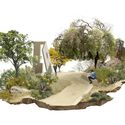
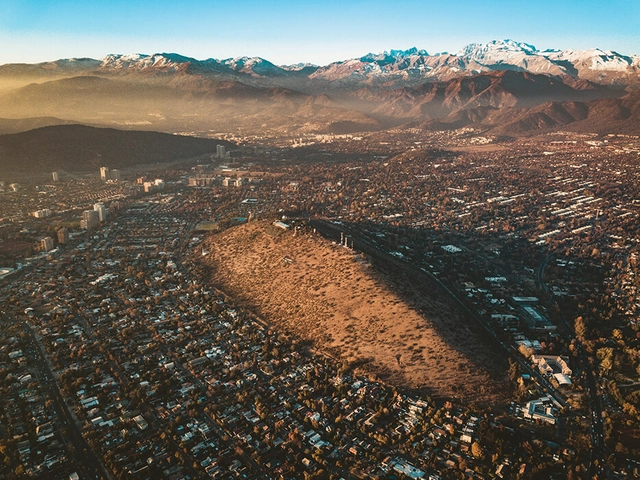
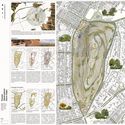
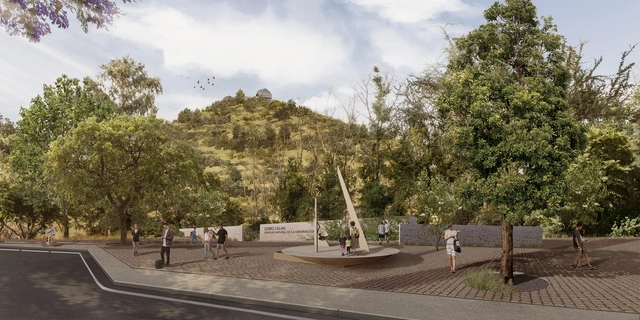
The panel of judges overseeing the design contest for Parque Observatorio Cerro Calán in Santiago (Chile) publicized their final decision on January 28, naming Chilean firm Jadue-Livingstone as the winner out of the five finalists.

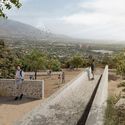
Organized by the Las Condes Municipality in collaboration with the University of Chile and the Cerros Isla Foundation, the contest aimed to find the best architectural and landscape design for an upcoming park in Santiago, Chile: the Parque Observatorio Cerro Calán, a 45 hectare space to be built around the already existing Observatorio Astronómico Nacional.

Jadue-Livingstone Will Design the Parque Observatorio on Cerro Calán in Santiago - Image 1 of 4Jadue-Livingstone Will Design the Parque Observatorio on Cerro Calán in Santiago - Image 3 of 4Jadue-Livingstone Will Design the Parque Observatorio on Cerro Calán in Santiago - Image 4 of 4Jadue-Livingstone Will Design the Parque Observatorio on Cerro Calán in Santiago - Image 7 of 4Jadue-Livingstone Will Design the Parque Observatorio on Cerro Calán in Santiago - More Images+ 8

Finalists Released for New Observatory Urban Park Competition in Santiago

The shortlist for the design of a 111-acres observatory urban park covering the Calan Hill in Santiago, Chile, has been officially released by a jury of experts.

Organized by the Municipality of Las Condes in collaboration with the University of Chile and the Cerros Isla Foundation, the competition seeks to choose the best architecture and landscape proposal for the design of a new urban natural park in Santiago: the Cerro Calan Observatory Urban Park (Parque Observatorio Cerro Calán)

Finalists Released for New Observatory Urban Park Competition in Santiago - Image 4 of 4Finalists Released for New Observatory Urban Park Competition in Santiago - Image 7 of 4Finalists Released for New Observatory Urban Park Competition in Santiago - Image 12 of 4Finalists Released for New Observatory Urban Park Competition in Santiago - Image 14 of 4Finalists Released for New Observatory Urban Park Competition in Santiago - More Images+ 11

What Are the Megatrends Reshaping the Architecture Field and the Construction Industry?

Before the pandemic, the world was already facing a series of global transformations in the field of construction, where emerging countries were at the forefront of a powerful economic shift. As the world's population is expected to reach the 10-billion milestone before 2100, the construction sector should be able to understand and adapt to the megatrends that are reshaping the globe.

ArchDaily Selects the Best Young Practices of 2020

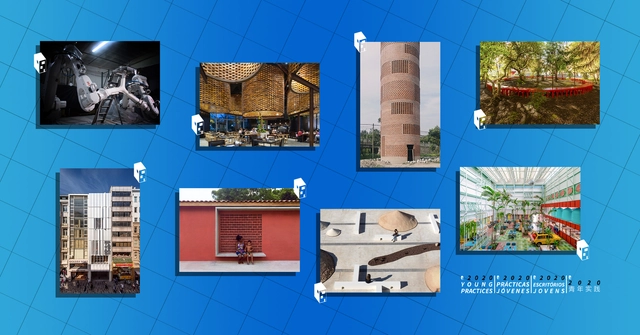
ArchDaily is proud to announce the 2020 Young Practices selection. This premier edition highlights emerging offices that are providing innovative approaches, proposals, and solutions to some of the main challenges Humankind is facing right now. From climate crisis to racial and gender issues. From technological disruption to social cohesion. These challenges are shaping the evolution of architecture, leading the discipline towards a new society and a new economy.

Chosen from over 350 submissions from 72 countries and 215 cities, all over the world, the selected firms reflect the sequential changes architecture has been navigating through over the last twenty years, with the rise and latter consolidation of new technologies, tools, formats, topics, scales, and interdisciplinary approaches.

Public Protests and the Urban Legacies of Colonialism and Military Dictatorship in Nigeria

Subscriber Access | 

This article was originally published on Common Edge.

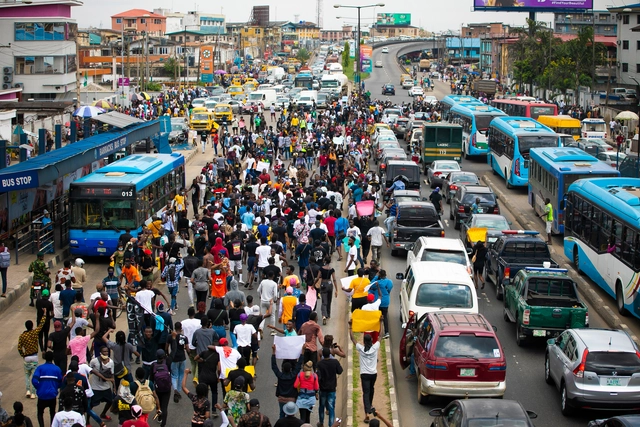
For the past two weeks, cities across Nigeria were hit by protests against the notorious Special Anti-Robbery Squad (SARS), a police unit setup in 1992 to fight armed robberies. The anti-SARS protesters are calling for the unit’s disbandment, due to its high-handedness, extra-judicial killings, extortion, and numerous human rights abuses.

Tragically, the protests came to a brutal climax on October 20, with the shooting of protesters at the Lekki Tollgate by gunmen believed to be agents of the Nigerian state. This led to casualties, which are currently a subject of controversy: the Lagos State government concedes that two persons lost their lives; groups like Amnesty International insist the figures are much higher.

Not All Parks Should be Green: 10 Tips to Design Landscape Infrastructure

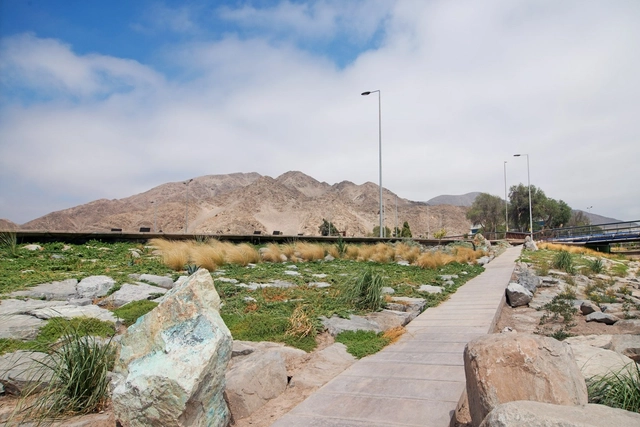
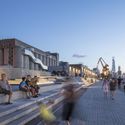
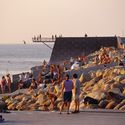
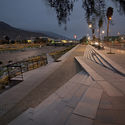
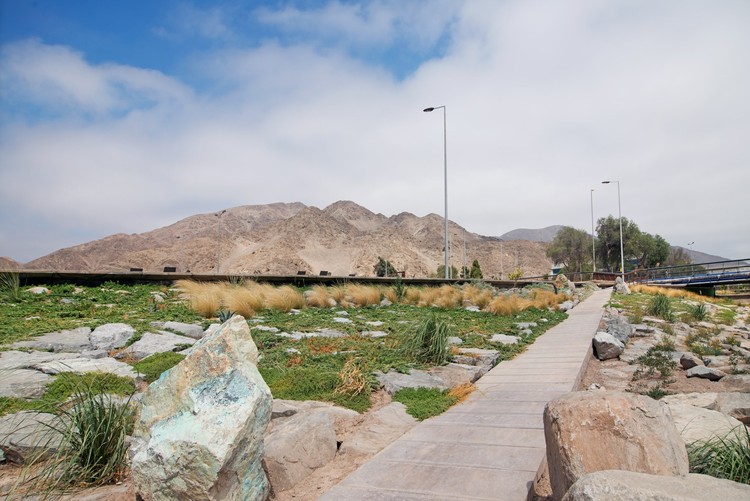
Does it make sense to design green parks in desert cities such as Casablanca, Dubai, or Lima? Ostensibly it does because they contribute freshness and greenness to the urban environment. In exchange, however, they disrupt native local ecosystems, incur high maintenance bills, and begin a constant struggle to ensure water availability.

Not All Parks Should be Green: 10 Tips to Design Landscape Infrastructure - Image 2 of 4Not All Parks Should be Green: 10 Tips to Design Landscape Infrastructure - Image 3 of 4Not All Parks Should be Green: 10 Tips to Design Landscape Infrastructure - Image 4 of 4Not All Parks Should be Green: 10 Tips to Design Landscape Infrastructure - Image 6 of 4Not All Parks Should be Green: 10 Tips to Design Landscape Infrastructure - More Images+ 5

Alfredo Jaar: Sadness as an Uninhabitable Space

Subscriber Access | 

This article is based on a lecture given by Chilean artist and architect Alfredo Jaar at the 20th Architecture and Urbanism Biennale in Valparaiso, Chile, on October 26, 2017.

It's June of 1980. Alfredo Jaar, a recent dropout of the University of Chile's architecture program, walks through the center of Santiago carrying two large signs. He grabs a spot in the shade next to a kiosk and intercepts passers-by to ask them his questions. In the midst of a military dictatorship, Jaar wants the people to vote, but not for the constitutional plebiscite or in the democratic elections. He doesn't even have paper or pencil for them to vote with. There's no line to mark on. His campaign centers on a mint--white and round--like a casino raffle ball.

Jaar's questions are loaded ones. "Are you happy?" (¿Es usted feliz?) he asks. "How many people in Chile do you think are happy?" "How many people in the world?"

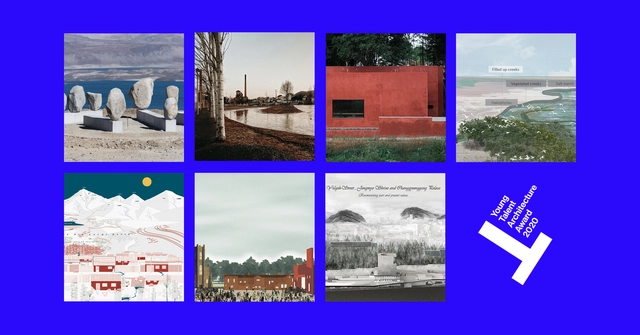
Young Talent Architecture Award 2020 Announces Winners

The Fundació Mies van der Rohe and Creative Europe have announced the four winners of the Young Talent Architecture Award YTAA 2020 and of the Asia Edition of the YTAA 2020

Established in 2016, the YTAA “supports the talent of recently graduated architects, urban planners, and landscape architects who will be responsible for transforming our environment in the future." The third edition of the Young Talent Architecture Award counted with 382 graduation projects that competed to win the YTAA 2020, featuring 478 students of 155 schools registered from 36 different European countries including Brazil, Chile, and Mexico participating as guest countries.

Finalists Released for Asian Edition of YTAA 2020

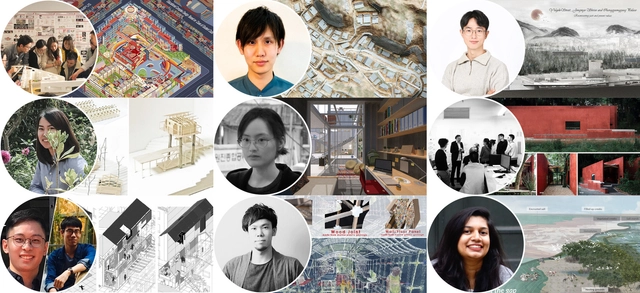
The Fundació Mies van der Rohe and Creative Europe have announced the 9 finalist projects competing to win the Asian Edition of Young Talent Architecture Award 2020 (YTAA 2020). Established in 2016, the YTAA “supports the talent of recently graduated Architects, Urban Planners and Landscape Architects who will be responsible for transforming our environment in the future."

Finalists Released for 2020 Young Talent Architecture Award

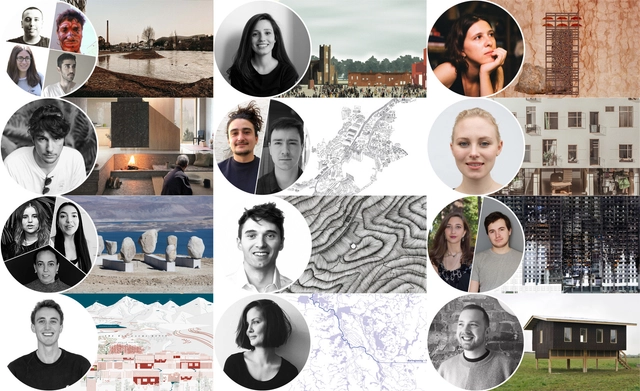
The Fundació Mies van der Rohe and Creative Europe have announced the 12 finalist projects competing to win the Young Talent Architecture Award 2020 (YTAA 2020) and the 9 finalist projects competing to win the Asian Edition of YTAA 2020. Established in 2016, the YTAA “supports the talent of recently graduated Architects, Urban Planners and Landscape Architects who will be responsible for transforming our environment in the future."

Valparaiso Architecture Guide: Places to Visit in Chile's Jewel of the Pacific

Subscriber Access | 

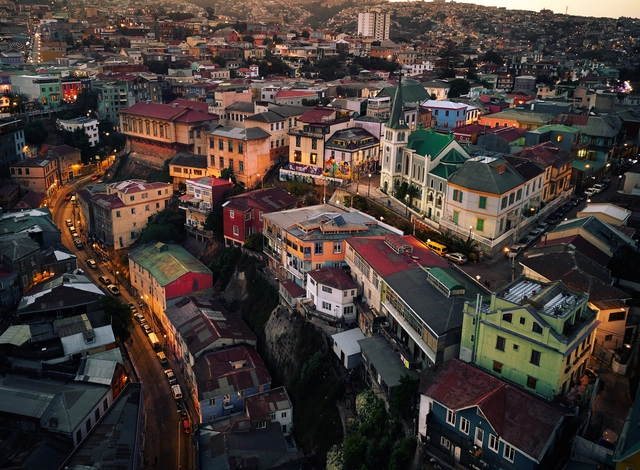
Situated at the foot of 45 hills along the Chilean coast, Valparaíso was a key port in the South Pacific during the 20th century before the construction of the Panama Canal. Thanks to its rapid industrial and commercial growth, the port underwent an urban transformation, attracting thousands of foreigners and cementing its reputation as a bustling South American cosmopolis rich in society, culture, and architecture.  

Described by The Guardian as a "Berlin by the seaside", Valparaiso's historic downtown was declared a World Heritage Site by UNESCO in 2003 and the city's cultural and architectural wealth make it a must-see for tourists and architecture aficionados alike.

In this article, we present a guide written by one of the city's many enthusiasts that will give a complete and in-depth look at the port's many treasures. The guide is written as if for a walking tour, starting in Plaza Sotomayor, the city's main square. The route can be divided into two days, with the first part ending at the Palacio Baburizza and the second beginning with the Valparaiso Cultural Park. Take a tip from the experts--if you get lost, don't trust an app to find your way. Ask a local!

Top Architecture Master Programs 2020 According to BAM

The Best Architecture Masters (BAM) platform presented the third edition of its ranking of the best postgraduate architecture programs in the world.

Based on a list of different postgraduate study programs from the best architecture schools selected in the QS Ranking by Subjects – Architecture / Built Environment, these were evaluated by 11 educational-performance indicators and 41 sub-indicators in relation to the teaching approach, the opportunities they offer, and the programs themselves.

Lydia Kallipoliti and Areti Markopoulou Appointed Head Curators of Tallinn Architecture Biennale 2022

The Estonian Centre for Architecture has announced “Edible. Or, the Architecture of Metabolism” as the topic for the next Tallinn Architecture Biennale 2022 (TAB 2022), while the selected head curators are architects Lydia Kallipoliti and Areti Markopoulou in collaboration with co-curator Ivan Sergejev.

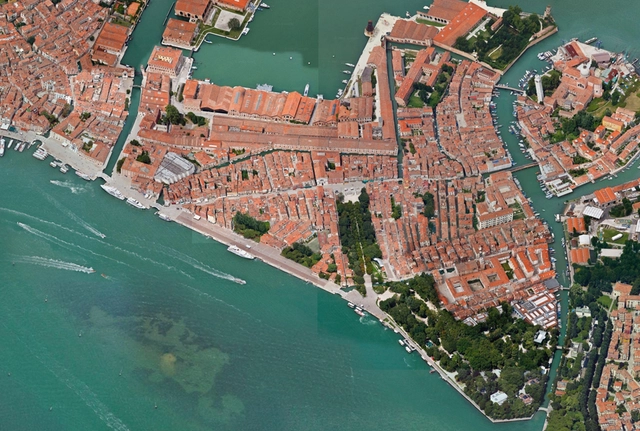
'Restoration' Will Represent Chile in the Venice Biennale 2021

With the submission of "Reparation: Architecture of Action and Everyday Experiences," Chilean architect Emilio Marín will curate the Chilean exhibit at this year's Biennale of Venice, as announced by a spokesperson for the Ministry of Culture, Art, and Heritage.

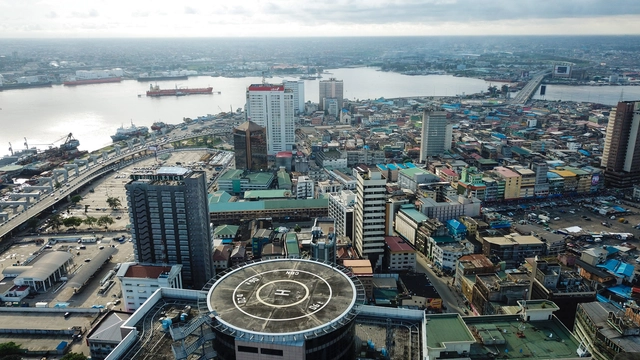
Letter From Nigeria: Coronavirus and the African City

This article was originally published on Common Edge.

Since the outbreak of Covid-19, I, like most of the world, have spent the last few months quarantined at home, perturbed and uncertain about the ramifications of it all. I will spare you my predictions for the Post-Pandemic Future of the African City (there’s presently no shortage of those), but instead, I want to offer up some observations about our current situation. As an African, my perspective is both unique to our continent and universal to everyone. It is, afterall, a global pandemic. 

Carlos García Vázquez: "The Modern Urbanism Has Rediscovered Traditional Cities"

Three years ago, in the wake of the release of his book Theories and History of the Modern City ("Teorías e Historia de la Ciudad Contemporánea", 2016, Editorial Gustavo Gili), we sat down with the author, Carlos García Vázquez, to discuss this complex and "uncertain creature' that is the modern city, focusing on the three categories that define cities today: Metropolis, Megalopolis, and Metapolis.

Based on an analysis of those "who have traditionally led the way in the planning of spaces" (sociologists, historians, and architects), the book illustrates the social, economic, and political forces that, in service to their own agendas, drive the planning, transformation, exploitation, and development of cities. In 120 years, urban centers have transformed from places where "people died from the city" to bastions of personal development and economic prosperity; however, the question remains —have cities really triumphed?

"Yes", says García Vásquez, "but we have paid dearly for it."

Carlos García Vázquez: "The Modern Urbanism Has Rediscovered Traditional Cities" - Image 1 of 4Carlos García Vázquez: "The Modern Urbanism Has Rediscovered Traditional Cities" - Image 2 of 4Carlos García Vázquez: "The Modern Urbanism Has Rediscovered Traditional Cities" - Image 3 of 4Carlos García Vázquez: "The Modern Urbanism Has Rediscovered Traditional Cities" - Image 4 of 4Carlos García Vázquez: The Modern Urbanism Has Rediscovered Traditional Cities - More Images+ 6

What's Your Story? Introducing ArchDaily's Love Wall

Subscriber Access | 

For the past 14 years, ArchDaily has been committed to delivering inspiring content. Our curators select the best architecture projects from around the world —from renowned firms to emerging practices— to join the world's biggest curated architecture library, while our editors cover the world’s major challenges and avant-garde ideas that are shaping the built environment, reporting from influential as well as emerging events.

Public Spaces Aren't Really Available for Everyone

When we talk about public space, we often imagine a park with happy, relaxed people on a sunny day. In actuality, this is a very restricted approach. A young woman does not cross a deserted street at dawn in the same way as a white man wearing a suit or as an immigrant who may not be welcomed by local citizens. Have you ever felt discriminated while visiting a public space?

In this edition of Editors’ Talk, editors from Los Angeles, São Paulo, Argentina, and Uruguay share their views on defining public spaces for everyone