Award-winning architect Nicolas Valencia is the former Head of Editorial at ArchDaily, leading a global editorial team ---- @nicolasvalencia.cl | nicolasvalencia.cl | hellonicolasvalencia@gmail.com
Stores in Santiago, Chile, ran out of yeast in mid-March, such as it happened after the beginning of the social crisis in 2019. Given that Chile has the second-highest bread consumption per capita in the world, it would seem that Chileans handle uncertainty stocking up ingredients for bread making. Everybody wants to make bread, including myself.
In times of quarantine, architects and designers are settling into a new remote working environment. In this process of implementing platforms and workflows to work from home, the risk of social isolation remains real, even for companies used to this environment, such as ArchDaily. As David Basulto, CEO of ArchDaily, wrote last week, the quarantine implies not just working online, but "staying connected and support each other."
Pritzker Prize 2020 Laureates, Irish architects Yvonne Farrell and Shelley McNamara are known for their powerful yet delicate approaches. In this exclusive video for ArchDaily, Martha Thorne, executive director of the Pritzker Architecture Prize and Dean of IE School of Architecture and Design, shares some of the reasons why Grafton Architects has won the Pritzker Prize 2020.
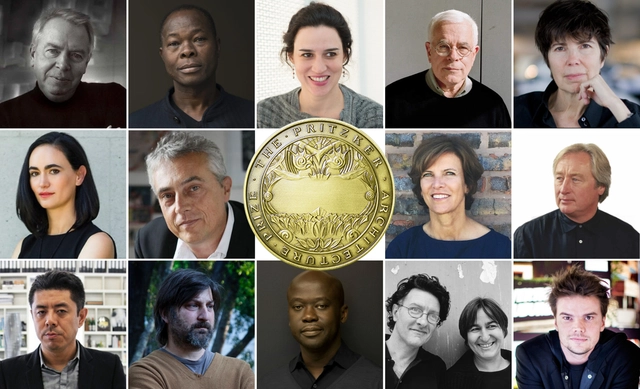
Some of the potential winners of Pritzker Prize 2020, according to our readers in 2019 poll.. Image
Since the winner(s) of the Pritzker Prize 2020 will be announced this Tuesday, March 3, we have asked our readers who should win the most important award in the field of architecture.
The Hyatt Foundation has revealed the announcement date of the Pritzker Prize 2020 Winner. The most relevant recognition in architecture will be announced on Tuesday, March 3rd, 10 am EST.
2019 has been a very fruitful year in architecture, unveiling projects, discourses, and careers that cover most of the multiple layers, interest, and fields related to this discipline, and highlighting how relevant it has become to our societies —from the Pritzker Prize 2019 awarded to Japanese architect Arata Isozaki to the revealed theme of the Venice Biennale 2020. Take a look at the main architectural milestones of this year across the globe.
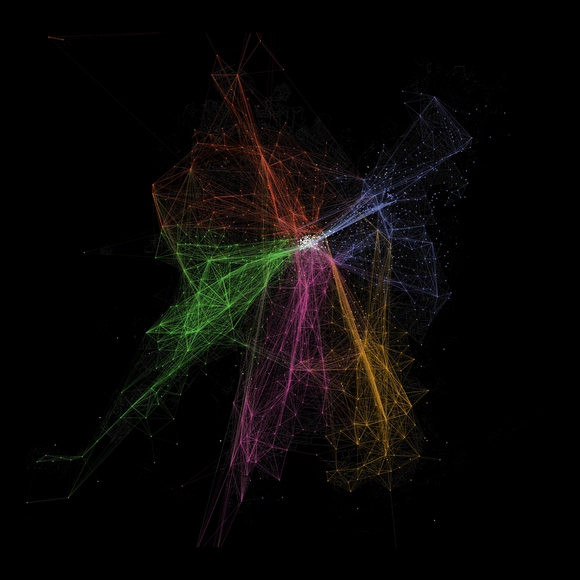
Regardless of where you live or work or who you’re friends with, you usually move around the same neighbourhoods and streets of your city. It may be London, Santiago, Shanghai, or Moscow, but in any of these places, there are always districts you have never set a foot in. Have you ever considered how many ‘cities’ are within your own city?
A research article published in The Royal Society Open Science and signed by Chilean researchers utilizes big data to analyze and visualize urban segregation, delivering spatial tools that allow us to develop strategies in a city of many cities. "We know there are [social] bubbles in Santiago, Chile, and that therefore, there is segregation," says Teodoro Dannemann, co-author of the research paper The time geography of segregation during working hours, in a conversation with ArchDaily. “We know that each person explores only a small fraction of the city, which is basically the home-work trajectory. This implies that we only engage with a small group of citizens," he adds.
This article was originally published in ArchDaily en Español last October 30, twelve days after the social crisis in Chile escalated. Some ideas of the analysis may feel outdated since some structural reforms were recently announced, but the author decided to keep the original spirit of the piece.
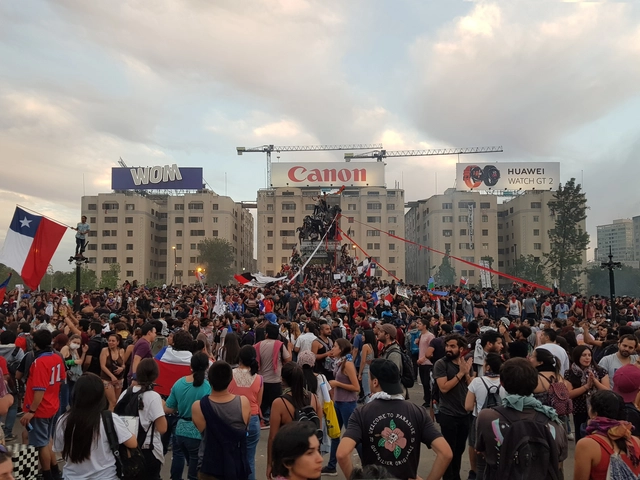
A 4 cent fair increase for the Metro in Santiago sparked mass fare-dodging protests in Chile starting on October 6. Alongside spontaneous street demonstrations, the protests spilled into widespread violence across Santiago during the following days until October 18. That day, the Metro network collapsed, the riots multiplied across the city, and looting and fires were out of control. That night, President Sebastian Piñera declared a state of emergency.
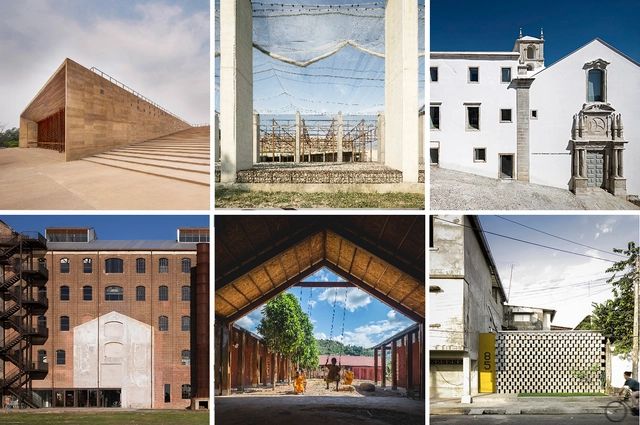
As architects, curators and readers we are always interested in knowing and disseminating the latest trends in architecture, healing the best of architecture around the world and chatting and meeting those who build our cities in English, Spanish, Portuguese and Chinese. However, as much as we try, we will always be ignoring something. In that sense, our only certainty is that the more we know, the more we will ignore.
In Asunción (Paraguay), the XI Ibero-American Architecture and Urbanism Biennial (XI BIAU) have presented the winners of the Panorama de Obras section (Projects Panorama) of this contest edition, "all faithful to the spirit of the XI BIAU: living, the inhabitant," according to the organization.
The Truman Show is a 1998 dramedy starring Jim Carrey as Truman Burbank, the unwitting star of a 24-hour reality show that began at his birth. Set in Seahaven, a city-scale television studio designed to covertly record Truman's entire life, the show attempts to divert Truman from any potential suspicion that every single person he meets is an actor or actress.
Accessibility is often approached as a field related to disability, whether physical or mental. When it comes to architectural design, it always comes up as a peripheral consideration of the project and not as something fundamental. However, there are other barriers.
In this edition of Editor's Talk, editors from ArchDaily Brazil share their thoughts on what they understand as accessibility and whether it's possible to create a neutral architecture.
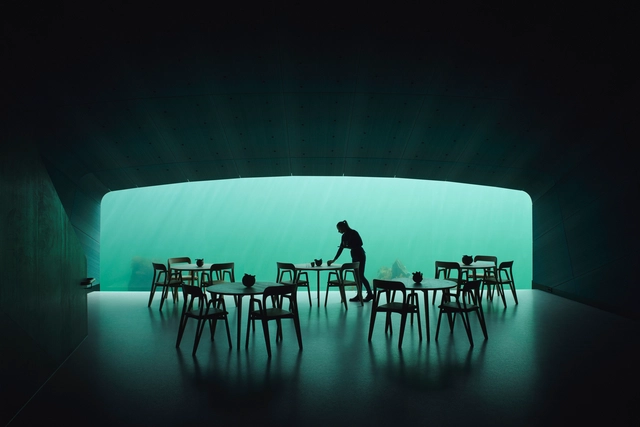
Everyone wants to travel the world, whether it's to meet new people, taste new food, or visit new places. Travel is consequently an extremely lucrative industry, but tourist destinations are getting more crowded than ever and associated pollution emissions are only worsening the climate emergency.
Why do we travel? In this edition of Editor's Talk, four editors from ArchDaily based in Lebanon, the United States, and Chile share their thoughts on the meaning of travel, and why tourists enjoying a beach in a location like Brazil should also care about the cities they visit.
A 301,400-square-feet extension for a shopping center and two 12-story buildings will be the first project by Foster + Partners in Chile, according to local newspaper El Mercurio.
Planned to be built in San Joaquin, a predominantly industrial, working-class neighborhood in Santiago, Chile, the project will be made for real estate company Grupo Patio.
Lahoud, who is also Dean of the School of Architecture at the Royal College of Art, has defined the theme for the inaugural edition —Rights of Future Generations— as an instance to "question how inheritance, legacy, and the state of the environment are passed from one generation to the next, how present decisions have long-term intergenerational consequences, and how other expressions of co-existence, including indigenous ones, might challenge dominant western perspectives."
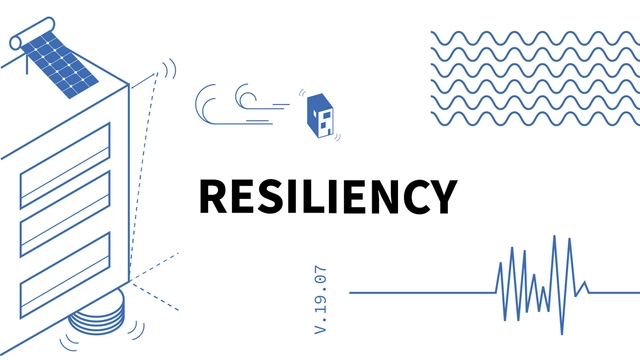
Resilience has become increasingly common in our vocabulary when we talk about people, buildings, cities or even whole societies overcoming all kind of problems. In fact, Google searches related to resilience have continued to grow since 2004 in English, Spanish, and Portuguese.
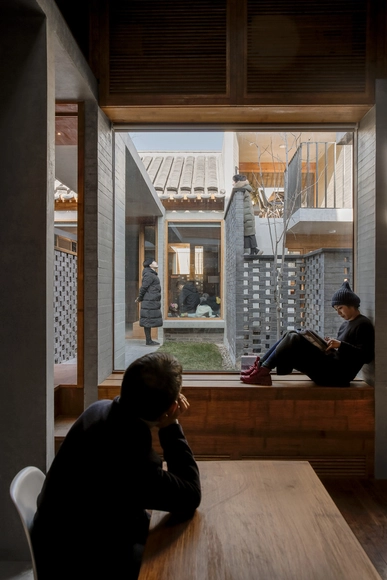
China seems to be at the peak of a refurbishment fever. Not only hutongs in historic downtowns, but abandoned industrial factories are becoming new tech or cultural hubs, and even buildings in the risk of collapse are refurbished to extend their lifespan. Why is this happening? Who is investing? How could this happen in a country where you cannot buy properties?
In this edition of Editor's Talk, our editors from ArchDaily China share their thoughts on how in a fast-paced development process, such as the one China is going through, there is a refurbishment fever in its biggest cities.





.jpg?1568826815&format=webp&width=640&height=580)