Award-winning architect Nicolas Valencia is the former Head of Editorial at ArchDaily, leading a global editorial team ---- @nicolasvalencia.cl | nicolasvalencia.cl | hellonicolasvalencia@gmail.com
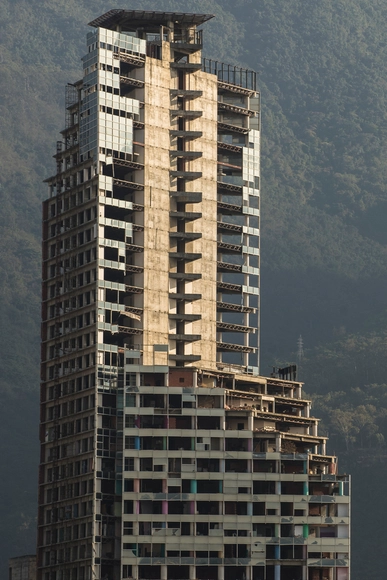
The last five stories of the Torre de David in Caracas have tilted 25 degrees following the largest earthquake to hit Venezuela in 100 years. The well-known building gained infamy as an unprecedented vertical "slum" when its construction was abandoned and squatters began to inhabit the unfinished structure.
The 190-meter skyscraper with 45 stories became Latin America's 8th tallest tower in the 1990s, but it was never completed. Officially known as the Centro Financiero Confinanzas when construction began in 1990, the project succumbed to Venezuela's 1994 banking crisis.
The World Health Organization (WHO) has advised that countries throughout the world eliminate the use of all types of asbestos, a dangerous carcinogen, to prevent asbestos-related diseases. According to the Asbestos Disease Awareness Organization, it was estimated that 40,000 people in the U.S. die each year from asbestos-related conditions.
Despite the WHO's concerns, Fast Companyreported that under Trump's administration, "The [U.S. Environmental Protection Agency] (EPA) has even made it easier for companies to introduce new uses of asbestos-containing products in America." Although Asbestos Nation estimates that 55 countries have outlawed the carcinogen, this issue brings up a common question: Has my country banned asbestos? Below, we have provided a list by International Ban Asbestos Secretariat's Laurie Kazan-Allen on the following 65 countries and regions that have banned asbestos.
Spain-based platform Best Architecture Masters (BAM) has revealed its inaugural ranking of the best postgraduate architecture programs in the world. Based on the QS Ranking by Subjects – Architecture / Built Environment, the rankings were selected by 13 educational-performance indicators, including quality and internationality of faculty, alumni, and postgraduate program.
Harvard's Master in Architecture II has topped the BAM ranking, followed respectively by TU Delft's Berlage Post-master in Architecture and Urban Design, and MIT's Master of Science in Architecture and Urbanism. By region, Tsinghua University's Masters in Architecture was ranked first in Asia (#5); Pontificia Universidad Católica de Chile's Magíster en Arquitectura in Latin America (#11), and Sydney University's Master of Architecture in Oceania ranks 17th worldwide.
Times Higher Education (THE) revealed its ranking of the best universities in Latin America and the Caribean. The list is based on the same 13 indicators used in their global ranking, but with modifications that "better reflect the characteristics of Latin American universities," explains the organization.
The 2018 edition of this regional ranking includes 129 universities from 10 countries rated in the following categories: teaching, research, citations, international outlook, industry income. It should be noted that this measurement is global at the university level and does not measure each academic concentration separately, as QS does in its annual ranking.
Dominated by universities in Brazil, we present the 10 best Latin American universities for architecture, according to Times Higher Education (THE).
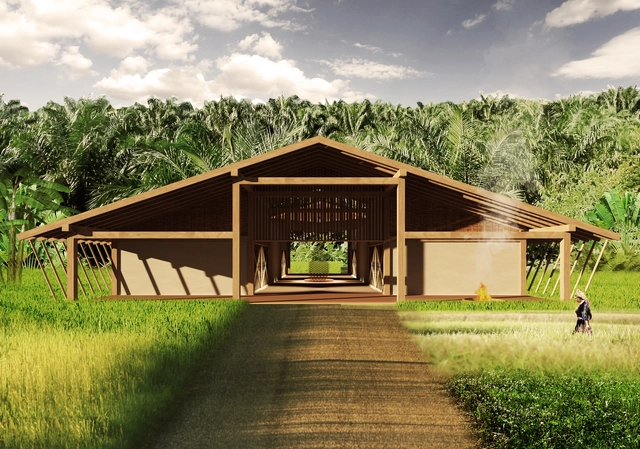
HUBBALI, the winning design by Hanna Haczek & Ewelina Andrecka from Poland. Image Courtesy of DSGN
DSGN (Design Student Global Network) has unveiled the winners of the Innovation Hub Competition, its first international design competition and part of its participation at Fuorisalone Milan Design Week this past April. The winning proposal — an Innovation Hub development scheme for a rural community site in Bali, Indonesia— will be built in a series of international design workshops starting in 2019. The hub will be used by the local Five Pillar Foundation to host classes focusing on community development and social entrepreneurship in the region.
HUBBALI, the winning design by Hanna Haczek & Ewelina Andrecka (Poland), was selected by the Five Pillar Foundation community and DSGN for its focus on participatory design and social development. Based on a 6x6 meter timber construction module, HUBBALI takes up an 18x18 meter area and is flanked by porches on entry sides side for gathering and relaxation. The design will be further developed with the Five Pillar Foundation and the surrounding Pejarakan community in Bali during construction.
On August 4, Chile celebrates National Architects Day, commemorating the enactment of Law 7.211, which established the Colegio de Arquitectos de Chile on that same day in 1942. For this 76th anniversary, the professional association will present its traditional CA Awards to those who have excelled in various fields of architecture.
The Colegio de Arquitectos de Chile Awards (CA Awards) are among the most prestigious honors for architects in Chile, recognizing eleven individuals for their excellence, work, and contributions to the field. The institution also honors a non-architect who has made a significant contribution to the profession.
Students from South Africa, Belarus, and Germany have been chosen as the winners of the 14th edition MultiComfort House Students Contest, a contest created in 2004 and organized by Saint-Gobain. Entrants were to develop a project based on the principles of the multi-comfort concept, that is, "an optimum indoor environment ensuring the right level of fresh air, thermal, visual and acoustic comfort provided in a sustainable and energy efficient manner," as explained by the organizers.
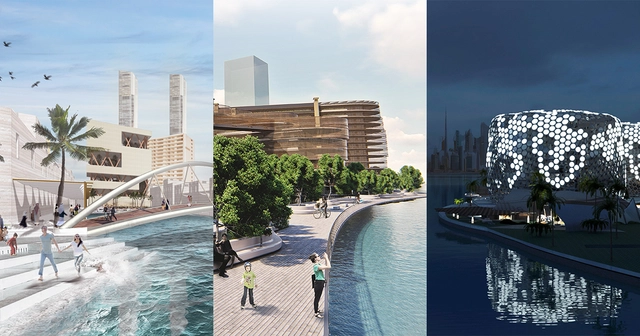
In close collaboration with the Department of Planning of the Municipality of Dubai and the Dubai Properties Group, Saint-Gobain presented the challenge of designing a cross-cultural community project in the cultural village of Dubai, on the shores of the Al Jaddaf inlet.
Considering Dubai's hot and humid climate, the students had to find a way to reconcile reducing the energy consumption of the refrigeration and ventilation systems without compromising any of the comforts of the inhabitants; while at the same time providing an optimal relationship with the environment.
Hours before the start of the 2018 FIFA World Cup Russia's opening ceremony, the soccer organization will reveal if the Canada–Mexico–United States or Morocco will be selected to hold 2026 FIFA World Cup.
Ahead of the announcement, Morocco revealed the design of the stadium that would hold the final match if the North African country wins the bid--a new venue with capacity for 80,000 spectators. This stadium has been designed by Spanish architects Cruz y Ortiz Arquitectos, the firm that recently inaugurated the Wanda Metropolitano in Madrid. They are also currently working on the design of the Dalian Yifan Football Club stadium in China and another sports venue in Switzerland.
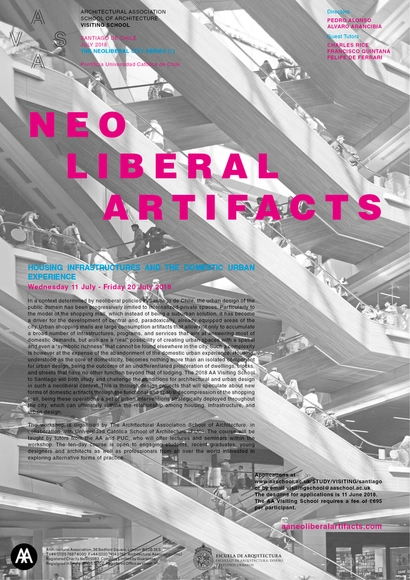
The 2018 AA Visiting School in Santiago will study and challenge the conditions for architectural and urban design within this neoliberal context. Through design projects, it will speculate on new artifacts derived from the spatial and functional decompression of the shopping mall, understood as a series of strategic interventions and operations within the city that ultimately aim to rethink the relationship between housing, infrastructure, and urban design.
Dean Amale Andraos of the Columbia GSAPP has announced the appointment of Andrés Jaque as the new Director of the Master of Science in Advanced Architectural Design program (AAD). Jaque is the founder of the Madrid-based Office for Political Innovation and has been teaching advanced design studios at Columbia GSAPP since 2013.
On June, 1, Jaque will succeed Associate Professor Enrique Walker, who directed the program from 2008 to 2018. "I’m very thankful for the rigorous vision and dedication that Walker has brought to the program during his directorship," acknowledged Andraos. "Enrique established a strong legacy of bringing experimental approaches to research and design and built a program that is firmly grounded in forming positions through design," added.
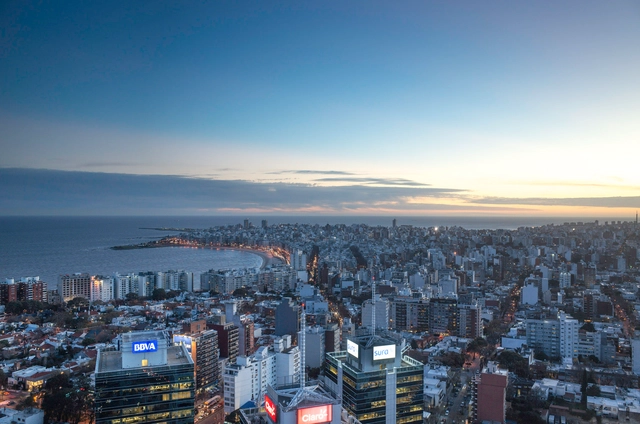
So, what is happening in Latin America? Montevideo, the capital of Uruguay, once again occupies the top position. "Although they are challenged by economic and political turmoil," experts at the consultancy explain, "cities in emerging markets are catching up with major cities, after decades of investment in infrastructure, recreational facilities, and housing for the purpose of attracting talent and multinational businesses," they add.
In its twentieth edition, the consultancy, which specializes in advising multinational companies in employee transfers, evaluates more than 450 cities around the world, analyzing 39 factors divided into 10 categories, including political and economic environment, socio-cultural status, hygiene, educational institutions, leisure, housing, the market, and natural disasters.
Colombian professor Francisco Sanin and South Korean architect Lim Jaeyong were appointed as co-directors for the 2019 Seoul Biennale of Architecture and Urbanism. The announcement is followed by an inaugural edition held in 2017 with 460,000 visitors in total.
Born in Medellin, Colombia, Sanin earned his degree at the Universidad Pontificia Bolivariana. He had a crucial role in Medellin's urban transformation, working alongside former governor of Antioquia Sergio Fajardo, and was co-commissioner of the Korean Pavilion at the 2008 Venice Biennale. Currently, Sanin is an architecture professor at Syracuse University School of Architecture. Also, a practicing architect with works in Colombia, South Korea, and China.
Nine projects that encourage rethinking and shaping the city from a different perspective, through artistic proposals that, by transforming spaces, spark new experiences, encounters, and interactions distinct from those generated by the traditional city. The Imagina Madrid program aims to explore the potential of art to begin imagining a different city—one designed to the scale of all those who inhabit it.
The nine sites proposed for transformation in this inaugural edition of Imagina Madrid are distributed throughout the city's periphery. They were selected for their unique characteristics, challenges, and potential, serving as testing grounds for new ways to inhabit these spaces while honoring their history and identity:
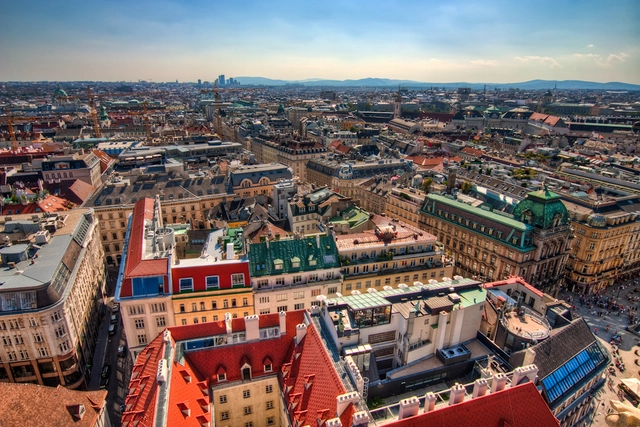
For the ninth consecutive year, Vienna has placed first in Mercer rankings on cities with the best quality of life in the world. Despite the current economic volatility in the European continent, the Austrian capital joins eight other European cities in the top ten.
This is the 20th edition of the Mercer Rankings. The consultancy, which specializes in advising multinational companies in the transfer of employees, evaluated more than 450 cities around the world. Their rankings take into account 39 factors divided into 10 categories, including political and economic environment, socio-cultural status, sanitation, educational and leisure opportunities, housing markets and natural disasters.
At the regional level, Vancouver (5th), Singapore (25th), Montevideo (77th) and Port Louis (83rd) are the highest ranking cities in North America, Asia, Latin America and Africa respectively. According to Mercer, the twenty cities with the best quality of life in the world are:
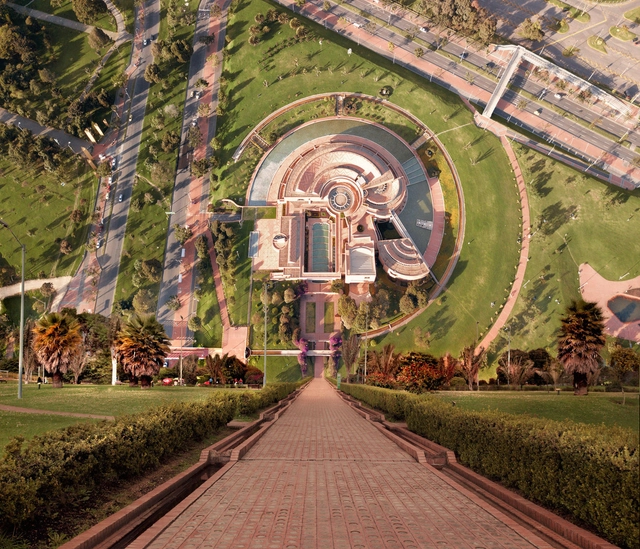
Colombian graphic designer and creative director Camilo Monzón's Instagram account is not your average catalog of Bogotá's iconic architecture.
Camilo explains that his particular way of capturing the city arose while he tried out his drone. "I realized that the tiles from nearby buildings showed me an unedited side of Bogotá that should be revealed and shown to everyone," he said in a conversation with ArchDaily en Español. "I think of it as rediscovering the city."
After making a trip to Doha (Qatar), Alejandro Aravena spoke with Chilean newspaper El Mercurio and shared details about this project. "One of the things we set out to do is to make this endure for the next 1,000 years," explains the 2016 Pritzker Prize winner. "When you look at industrial facilities, especially silos, archaeological ruins are the kind of things that remain," he adds.
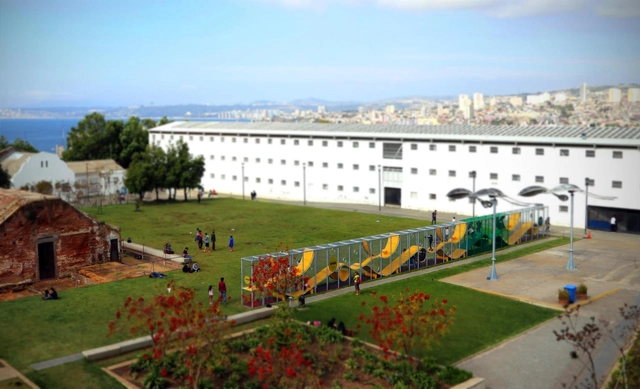
La Serpentina en el Parque Cultural de Valparaíso, Chile. Image Cortesía de ELEMENTAL
A new children’s urban playground has captured the attention and energy of children of all ages in the center of Valparaíso’s Cultural Park (Chile). The metallic structure is 40 meters long and has a colorful undulating path where children can run, jump, hide and slide.
La Serpentina follows a similar design to the equipment at the Bicentenary Children’s Park (2012) in Santiago. La Serpentina is one of two interventions entered by Somos Choapa in the Biennial. The second project is a prototype with a series of touch screens installed in the main area of the Cultural Park of Valparaíso, accounting for over 100 concrete initiatives of the project.
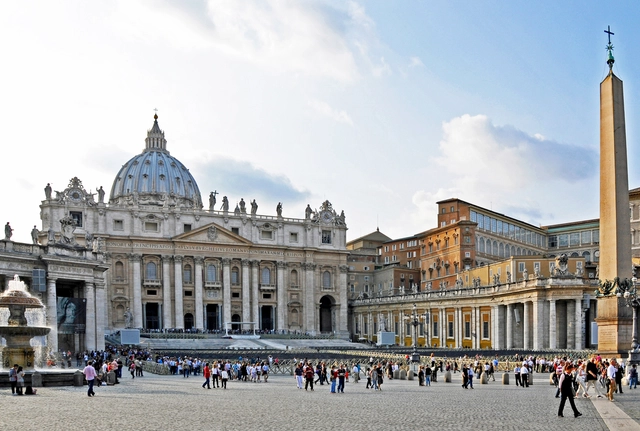
In 2018 the Vatican will participate in the Venice Architecture Biennale for the first time. Ten international architects will construct 10 different chapels as part of the representation of the city-state in the Italian architecture event. The news was confirmed by Paraguayan media outlets ABC y Última Hora, who revealed that one of the participants was local architect Javier Corvalán.
The elite group of architects was selected by Francesco Dal Co, an Italian architecture historian and curator. The designers have been instructed that their chapels must be able to be relocated so that they can be deployed around the world, in places that are in need of these spaces of worship.
The architects who will build chapels in the 2018 Venice Architecture Biennale:
.jpg?1532958011&format=webp&width=640&height=580)







_Malcolm_Reading_Consultants_and_Elemental.jpg?1517319937&format=webp&width=640&height=580)