Fabian Dejtiar

Architect and Project - Team Lead at ArchDaily Instagram: @ fabe.de

BROWSE ALL FROM THIS AUTHOR HERE

Gru.a Receives the Di Tella Architecture Award: Emerging Practices 2023

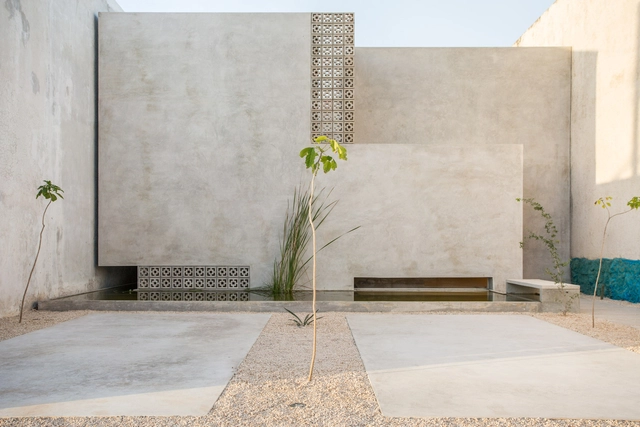
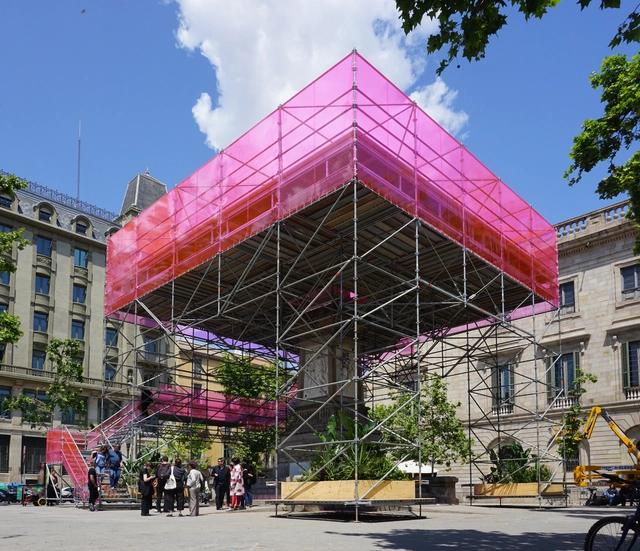
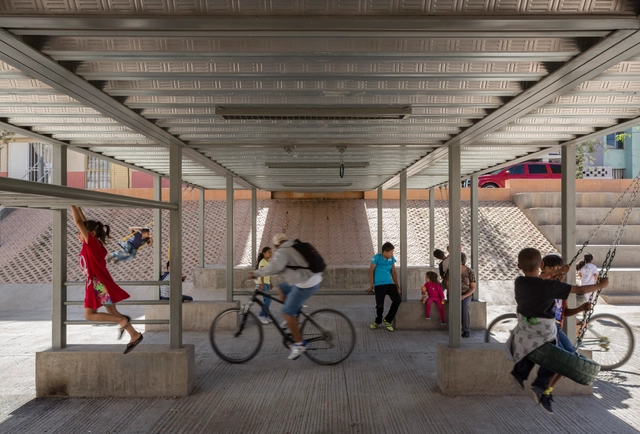
The firm gru.a, established in Rio de Janeiro in 2013 by Caio Calafate and Pedro Varella, has developed small-scale projects and installations, focusing particularly on the intersection of art, architecture, and infrastructure. Notable works include the installation La playa y el Tiempo and the Abrigo Alto and Academia shelters.

On Monday, August 14, the Di Tella Architecture Prize—organized by the School of Architecture and Urban Studies (EAEU) at Universidad Torcuato Di Tella (UTDT) through its Center for Contemporary Architecture Studies (CEAC), and funded by a donation from the Instituto Di Tella—was awarded to this emerging practice.

Open Question: Will timber cities be the next urban revolution?

Subscriber Access | 

Atrium Ljungberg unveiled Stockholm Wood City, the world's largest timber urban development project, serving as a major showcase of Swedish sustainability. At around the same time, on the other side of the world, Tallwood Architects' 'Tamango Project' exemplified both the challenges and opportunities of timber construction in Chile, as it is poised to become Latin America's first 12-story building with a prefabricated timber structure.

Will wooden cities be the next urban revolution?

Subscriber Access | 

Atrium Ljungberg recently unveiled Stockholm Wood City, the world's largest timber urban development project—an effort to showcase Sweden's commitment to sustainability. On the other side of the world, Tallwood Architects' Tamango Project exemplifies the challenges and opportunities of timber construction in Chile and could become Latin America's first 12-story building featuring a prefabricated mass timber structure.

"How to Design a Revolution: The Chilean Road to Design" opens at the CCLM with the reconstruction of Project Cybersyn

On September 7, the exhibition "How to Design a Revolution: The Chilean Road to Design" opened at Santiago's Centro Cultural La Moneda (CCLM), as part of the activities commemorating the 50th anniversary of Chile's civil-military coup. The exhibition showcases graphic and industrial design created during the administration of President Salvador Allende, bringing together over 350 original pieces and featuring a complete reconstruction of the Cybersyn operations room. The show will run until January 28, 2024.

Jointly produced by the Pontificia Universidad Católica de Chile, the Massachusetts Institute of Technology (MIT), and CCLM, in collaboration with the Ministry of Science, Technology, Knowledge, and Innovation and the Goethe-Institut Chile, the exhibition is curated by designer Hugo Palmarola and architect Pedro Ignacio Alonso—both recognized for winning the Silver Lion for Monolith Controversies at the Chilean Pavilion during the 2014 Venice Architecture Biennale. Renowned Colombian science historian Eden Medina of MIT also participated in the project.

A century of Ecuadorian architecture in Pamplona

Subscriber Access | 

Rafael Vélez Calisto, a leading figure in shaping Quito's contemporary image, closed the latest Latin American Architecture Biennial with his lecture "The Trajectory of a Life," while Seville-based architect Manuel Ramos had already opened the event three days prior with his presentation, "The Last Century of Architecture in Ecuador." In the interim, practices ranging from MCM + A Taller de Arquitectura, Surreal estudio, Arquitectura X, Duran & Hermida, Diez & Muller, Espinoza Carvajal, and Arquitectura Sur to the selected young firms Rama Estudio and Emilio López presented a glimpse of both the historic and recent architecture of the country—the guest country of honor for the BAL 2023 edition.

If timber is the future of urban construction, its technological possibilities will need to be expanded.

Atrium Ljungberg unveiled Stockholm Wood City in Sweden, the world's largest urban construction project in wood, and in Norway, just four years ago, Voll Arkitekter completed the Mjøstårnet Tower on Lake Mjøsa, one of the tallest wooden buildings in the world at 18 stories. On the other side of the planet, the Tamango project by Tallwood Architects is an example of the challenges and opportunities of wood construction in Chile, as it could become the first 12-story building with a prefabricated wood structure in Latin America. Meanwhile, in Peru, the Construye para Crecer project by Poggione+Biondi Arquitectos won the XIX National Architecture Biennial 2022 with a residential complex to be built mainly of wood. Nearby, Uruguay recently concluded its social housing in wood competition, paving the way toward innovation in social interest architecture. Furthermore, in 2020, Vicente Guallart won an international competition to define the standards for the buildings of a new city in China. The project, titled The Self-Sufficient City, was already a design that materialized a new urban model in wood across four city blocks.

Across the globe, sustainability and innovation in construction are constantly evolving, and wood structures are presented as a promising option. ArchDaily presented The Future of Wood as its monthly topic, opening up a discussion to explore and hear predictions and thoughts from our readers regarding the future of this material in architecture and urbanism. Is wood the key to a more sustainable and livable urban future? Or are there challenges we must address before embracing this trend? What are the implications for architecture, cities, the economy, and the environment?

Engine of Equality: The Residencia de Señoritas and Madrid's New Cultural Space

The exhibition "Engine of Equality: La Residencia de Señoritas (1915-1936)" will be open until October 15, celebrating a unique, iconic, and pivotal institution in promoting equality in Spain. It is housed in the Ortega-Marañón Foundation's recently opened cultural space—an expansion at the rear of the central "casa" in Madrid that joins the historic 1930s building designed by Carlos Arniches on the corner of Miguel Ángel and General Martínez Campos streets.

Navarre Architecture Guide: 15 Contemporary Works in Pamplona

Subscriber Access | 

The architecture of Navarre is a faithful reflection of the cultural diversity of northern Spain. This is due not only to centuries of Romanesque, Gothic, Renaissance, and Baroque architectural influences but also to their combination with more recent modern works, which serve as the starting point for the "20th Century Architecture Guide of Navarre." This 250-page book is published by T6, featuring the collaborative work of José Manuel Pozo and an extensive documentation, editorial, and design team.

The book is a catalog of nearly 170 modern and contemporary architectural works, spanning from the mountainous and riverside regions to the historic center and the expansions of Pamplona, before opening the doors to the latest buildings constructed between 2000 and 2012.

26th National Congress of Architects in Concepción

The 26th National Congress of Architects, hosted by the Colegio de Arquitectos de Chile (CA), will hold its opening session on November 30. Centered on the theme "Past and Present Challenges for the Future," the event will take place in Concepción, the city that hosted the first National Congress of Architects in 1950.

The 2023 Guatemala Architecture Biennale opens at the Miguel Ángel Asturias Cultural Center with the theme "Public Space."

On November 15, the Guatemala Architecture Biennial 2023 opened at the Miguel Ángel Asturias Cultural Center—one of the country's most important performing arts venues. While the previous 2021 edition recognized the importance of the city, architecture, and urban planning under the theme 'Mobility,' this latest iteration focuses on 'Public Space' under the slogan 'The City, Without Walls.' Over three days, this new approach will highlight public space as one of the most vital elements in urban planning, with a significant impact on citizens' social, psychological, and physical well-being.

The 2023 Guatemala Architecture Biennale opens at the Miguel Ángel Asturias Cultural Center with the theme "Public Space." - Imagen 1 de 4The 2023 Guatemala Architecture Biennale opens at the Miguel Ángel Asturias Cultural Center with the theme "Public Space." - Imagen 2 de 4The 2023 Guatemala Architecture Biennale opens at the Miguel Ángel Asturias Cultural Center with the theme "Public Space." - Imagen 3 de 4The 2023 Guatemala Architecture Biennale opens at the Miguel Ángel Asturias Cultural Center with the theme "Public Space." - Imagen 4 de 4The 2023 Guatemala Architecture Biennale opens at the Miguel Ángel Asturias Cultural Center with the theme Public Space. - More Images+ 10

Technology in Architecture: Design Trends and Innovation in Construction

Subscriber Access | 
Technology in Architecture: Design Trends and Innovation in Construction - Imagen 1 de 4
AI-generated image via Midjourney with the prompt: "artificial intelligence and 3d printing and robots and automation and algorithms and metaverse and augmented reality, all applied in architecture". Image © Midjourney AI / Fabian Dejtiar

While the architecture and construction industry has been advancing in new fields for years, it remains one of the most lagging in terms of automation and efficiency. And indeed, while many of these innovations never progress past the experimental stage, we face a sobering reality: the sector is one of the largest producers of pollutants and waste worldwide. How can we reverse this trend?

Spanish Pavilion at the 2021 Venice Biennale: Is Uncertainty Our Only Certainty?

A brief preview of Uncertainty, the Spanish Pavilion for the 17th International Architecture Exhibition at the Venice Biennale, which will take place from May 22 to November 21.

What do we understand by automation in architecture?

Subscriber Access | 

Years ago, the construction industry was among the most technologically lagging; today, however, we can confidently say that automation is here to stay.

Cecilia Puga, Paula Velasco, Josefina Guilisasti, and Bárbara Barreda design the tribute to the women of Chile

As the values associated with traditional monuments—such as landmarks, historical figures, and heroism—are called into question, the open, the internal, and the sensory are gaining prominence and relevance. In this context, "Dionaea," a forthcoming sculpture in Mapocho Río Park, Cerro Navia, seeks to highlight the historical role and contribution of women in Chile.

How will today's migrations influence the architecture of tomorrow?

Subscriber Access | 

Economic crises, health emergencies, and natural disasters, followed by social conflicts, political instability, and the search for new places to live, have historically driven the displacement of hundreds of millions of people. Consequently, entire populations have had to adapt to changes in residence, habitat, and culture.

Eladio Dieste's Church of Atlántida Joins UNESCO World Heritage List

On Tuesday, July 27, it was announced that Eladio Dieste's Church of Atlántida, one of his most renowned works in Uruguay, has been added to the UNESCO World Heritage List.

What are local materials and how can they be used in large cities?

Subscriber Access | 

The construction industry's role in the current climate crisis is deeply concerning: spanning material production, construction, and building operations, the sector is one of the largest emitters of greenhouse gases. At the same time, urban populations are growing at historic rates, and when looking at the development of large cities—which are major energy consumers—it seems that reducing the discipline's impact relies on small-scale community and individual initiatives rather than broad political and professional actions.

History shows us various local techniques and materials that have proven sustainable over time through the efficient use of resources that require no heavy industrial processing and eliminate the need for long-distance transportation. In some cases, at the end of their life cycle, materials like adobe and timber can even be returned directly to the environment.

How equitable is architecture?

Subscriber Access | 

This September, the 4th edition of the Chicago Architecture Biennial opens under the title The Available City—a perfect opportunity to spark discussion on the role of architecture in urban equity.