Becky Quintal

Former Head of Content. Prior to assuming her role at ArchDaily, Becky worked as an editor for leading architecture firms OMA/AMO, BIG (Bjarke Ingels Group) and Reiser + Umemoto. She also worked as an editor for Princeton University School of Architecture and Harvard University's Graduate School of Design. She holds degrees from Princeton University, Harvard University and the School of Visual Arts.

BROWSE ALL FROM THIS AUTHOR HERE

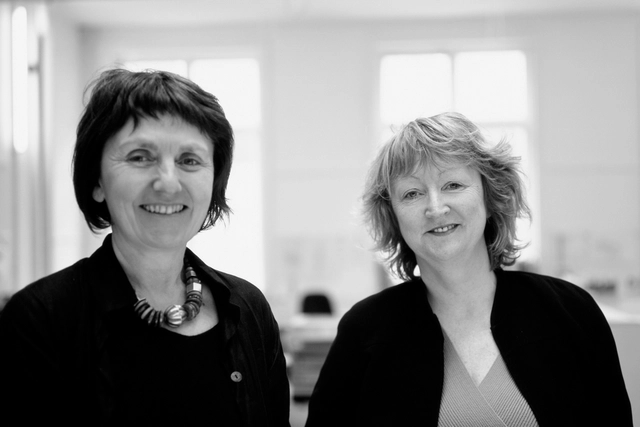
Yvonne Farrell and Shelley McNamara Named Artistic Directors of 2018 Venice Architecture Biennale

In a meeting yesterday, The Board of La Biennale di Venezia appointed Yvonne Farrell and Shelley McNamara of Grafton Architects as curators of the 16th International Architecture Exhibition in 2018. This marks the second time that the Venice Architecture Biennale will be directed by women, after Kazuyo Sejima's role as director for the 2010 Biennale.

Yvonne Farrell and Shelley McNamara Named Artistic Directors of 2018 Venice Architecture Biennale - Image 1 of 4Yvonne Farrell and Shelley McNamara Named Artistic Directors of 2018 Venice Architecture Biennale - Image 2 of 4Yvonne Farrell and Shelley McNamara Named Artistic Directors of 2018 Venice Architecture Biennale - Image 3 of 4Yvonne Farrell and Shelley McNamara Named Artistic Directors of 2018 Venice Architecture Biennale - Image 4 of 4Yvonne Farrell and Shelley McNamara Named Artistic Directors of 2018 Venice Architecture Biennale - More Images+ 2

Architecture on Instagram: The Best Shots of 2016

Instagram and architecture go together like milk and cookies—an irresistible combination in which one brings out the best of the other. As Instagram continues to add features to its globally appealing platform, we take a look back on the year's most-liked photos posted to our ArchDaily account.

We posted 235 'grams that racked up over 2 million likes. Thank you for following. :)

Beautifully-Designed, Downloadable Bauhaus Architecture Books

Subscriber Access | 

Last year Monoskop delighted the architecture and art community by making many of the Bauhaus publications available to freely download. As a perennial fan of all types of architecture communication, I had previously written about the exceptional qualities of Bauhaus-produced books and journals and how these visual teaching tools ultimately influenced more recent, canonical publications. Below we share an edited excerpt from “Architects’ Books: Le Corbusier and The Bauhaus,” a chapter from the larger research project, Redefining The Monograph: The Publications of OMA and Rem Koolhaas.

To access Monoskop’s treasure trove, which includes titles by visionaries such as Walter Gropius, László Moholy-Nagy, Wassily Kandinsky, Paul Klee, and others, visit Monoskop's Bauhaus archive.

As the Bauhaus operated in a generally experimental and revolutionary status, the information taught was not unified in any particularly accessible form. The Bauhausbücher were produced in order to expose the elements of the Bauhaus education to the original, small student body. These books later proved invaluable when the school was closed by the National Socialist Government in 1933, their contents holding authentic records of Bauhaus education. Merging theory and practice, the books, designed by Moholy-Nagy, are a testament to his creative ideas. He saw traditional forms of information dissemination as supplying information to students without stressing the relevance and relationship to the world in which they were living. His books sought to clarify these relationships through stimulating images and insightful (though at times lengthy and ethereal) text.
What Motivates and Inspires UN Studio's Ben van Berkel?

Subscriber Access | 

Last week ArchDaily attended the 2016 World Architecture Festival (WAF) in Berlin. Following his opening keynote address, we talked to Ben van Berkel of UN Studio who spoke of his interest in using technology in architecture to improve not only user experience, but to affect qualitative aspects of design itself. Together with his partner Caroline Bos, Van Berkel recently published Knowledge Matters, a book positioned "to help architects to run a better studio and to share knowledge."

"Creative Cynic" Peter Cook Explains Why Archigram Designs Were Always Meant to Be Built

Last week ArchDaily attended the 2016 World Architecture Festival in Berlin. We chatted with Sir Peter Cook and asked him about the current state of global affairs (Brexit, the US election, etc). He explained how his experience and work has influenced a career that has spanned over five decades, and reminds us of the inspiring power of architecture.

Peter Cook: You have to understand that I'm a very particular kind of animal both politically and in my general opinions. I'm what I would call a creative cynic. I'm an old person and I've seen a lot of not very good things happen. On the other hand I was privileged as a child to have free education and free college. 

The Internet's Unanswered Questions And Strange Assumptions About Architecture and Architects

Subscriber Access | 

The usefulness (and, at times, unintended hilarity or abhorrence) of Google's autocomplete function is nothing new. The screenshots, listicles and articles dedicated to exposing humanity's curiosity, bias and, alas, stupidity have circulated the interwebs since the "Search Suggestion" feature was launched in 2008. As you type a query, topic or name into the the search bar, you are served search predictions, which the company describes as "related to the terms you’re typing and what other people are searching for."

Making Heimat: Inside Germany's Pavilion for the 2016 Venice Biennale

"Making Heimat. Germany, Arrival Country" is a response to the fact that over a million refugees arrived in Germany during 2015. The expectations for 2016 are similar. The need for housing is urgent, but just as urgent is the need for new ideas and reliable approaches to integration. The exhibition therefore consists of three parts: the first part surveys physical refugee shelters - the actual solutions that have been built to cope with the acute need. The second part seeks to define the conditions that must be present in an Arrival City in order to turn refugees into immigrants. The third part of the exhibition is the spatial design concept of the German Pavilion, which will make a statement about the contemporary political situation. Something Fantastic will plan and stage the architectural presentation and graphic design.

Making Heimat: Inside Germany's Pavilion for the 2016 Venice Biennale - Image 1 of 4Making Heimat: Inside Germany's Pavilion for the 2016 Venice Biennale - Image 2 of 4Making Heimat: Inside Germany's Pavilion for the 2016 Venice Biennale - Image 3 of 4Making Heimat: Inside Germany's Pavilion for the 2016 Venice Biennale - Image 4 of 4Making Heimat: Inside Germany's Pavilion for the 2016 Venice Biennale - More Images+ 16

U.S. Bank Stadium: A Game-Changing, Multi-Purpose NFL Stadium

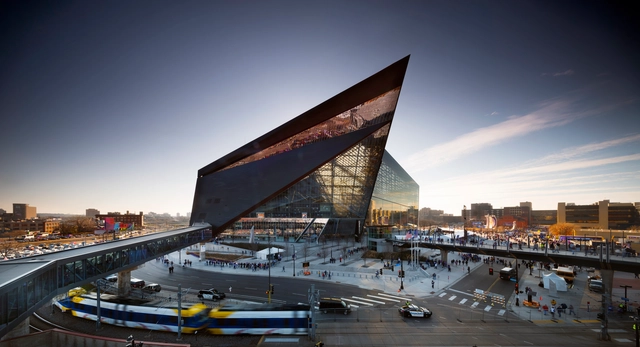
Architecture's ability to bring people together is perhaps one of its greatest, awe-inspiring traits. And while the "bringing people together" part is usually meant figuratively, there is no building type quite as marvelous as the stadium, a place that literally gathers tens of thousands of individuals in one place, at the same time. Though the legacy of the stadium as a building type is already rich and storied, a new chapter in the history of American sports architecture will surely begin with the imminent opening of the U.S. Bank Stadium in Minneapolis, Minnesota.

2016 Venice Biennale Will Begin a "Crusade Against Indifference"

Yesterday, and for the first time in La Biennale's history, the press tour included a stop in the Southern Hemisphere. From his home city of Santiago, Alejandro Aravena shared more details about the upcoming exhibition in Chile's presidential palace (La Moneda) alongside the president of the Biennale and the president of Chile.

The main information to emerge from the press conference was the presentation of the lone image that represents this year's Biennale and the announcement of the participants. In the video above, Aravena gracefully explains how Bruce Chatwin's image of German archaeologist Maria Reiche encapsulates "the Biennale as a whole." 

Aravena stressed that he wanted the disclaimer for the exhibition to be the exact opposite of "Don't Try This At Home." He explained, "Given the complexity and variety of challenges that architecture has to respond to, 'Reporting from the Front' will be about listening to those that were able to gain some perspective and consequently are in the position to share some knowledge and experiences with those of us standing on the ground."

AD Interviews: Hubert Klumpner / 2015 Bi-City Biennale of Urbanism\Architecture

Subscriber Access | 

At the opening to the 2015 Bi-City Biennale of Urbanism\Architecture (UABB) we took a moment to speak with Hubert Klumpner, one of the event's six curators. A professor from the ETH Zurich Swiss Institute of Technology and partner at Urban Think Tank, Klumpner, together with Alfredo Brillembourg, spearheaded the curation of "Radical Urbanism," a sub-theme of the entire Biennale's wider theme, "Re-Living the City."

"...we believe that we have enough buildings, enough construction, enough infrastructure. And it is now time to consolidate it and find the qualities within the built. This is not against future production, it is more about a consideration of what we really want in cities." - Hubert Klumpner

Read on to learn how the "Radical Urbanism" exhibition reveals what we can learn from the interventions and ad-hoc, bottom-up initiatives. Also, don't miss Klumpner and Brillembourg's essay, "The Evolution of Radical Urbanism: What Does the Future Hold for Our Cities."

Follow ArchDaily China on WeChat & RedNote

Subscriber Access | 
Audio available

Smart Moves for Cities: The Urban Mobility Revolution Will Start With These 3 Projects

A smart city isn’t necessarily a city brimming with technology. This crucial (and, thankfully, growingly accepted) clarification was strongly emphasized by a panel of experts during the Smart City Expo in Barcelona. However, the piloted driving—which, in layman's terms means cars that drive themselves—that Audi has been testing and implementing is as high-tech, impressive and brimming with technology as one might expect. Beyond the “ooh and aah” factor of a car that needs no human driver, the spatial implications for our cities are undeniable, and the sooner architects can learn to work with and appreciate this technology, the better. In a city equipped with smart mobility solutions, we can expect technology to drive positive changes to social behavior and the affordability of the cities. But for this, we need visionary leaders.

Last week Audi showed their commitment to finding these visionary leaders in the field of architecture by announcing the implementation of three Urban Future Partnerships in Somerville/Boston and Mexico City. In the words of Audi CEO Rupert Stadler, the three pilot projects represent a key move for the car manufacturer: “The development of an investment logic for mobility infrastructure in cities will be an integral part of our company strategy.”

AD Interviews: Sou Fujimoto / Chicago Architecture Biennial

Subscriber Access | 

Sou Fujimoto Architects' "Architecture is Everywhere" was among the ArchDaily editors' favorite exhibitions in the Chicago Architecture Biennial. The thought-provoking, entertaining collection of mundane objects truly embraced the idea that the public—not solely architects—should be included in the Biennial's celebration of architecture.

Before the fruits of architectural labor are realized, we rarely revel in the seeds cultivated in the minds of architects. It's hard to capture these formative ideas, much less present them in a way that seizes the satisfying moment in which architecture is "found." 

The deceiving simplicity of displaying "found architecture" actually imparts a deeper, thoughtful lesson, which Fujimoto has inscribed on an accompanying placard "Architecture could come into being from anywhere. I believe fostering that architecture-to-be into real architecture itself is also architecture."

25 Architecture Instagram Feeds to Follow Now (Part III)

Subscriber Access | 

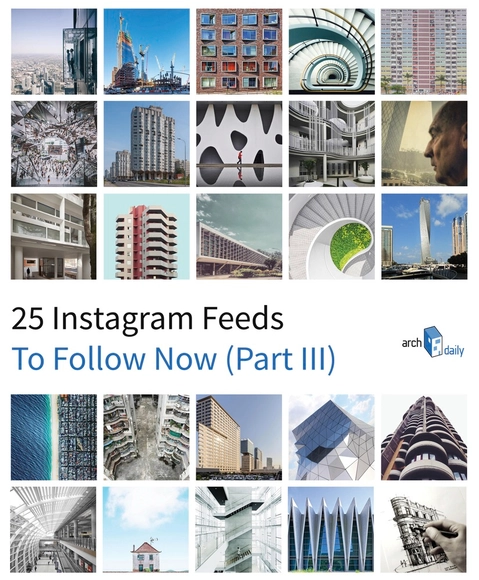
In 2013 and 2014, we published two posts rounding up some of the best architectural Instagrammers out there. Now, with the #ArchDaily hashtag recently surpassing 500,000 posts across the whole of Instagram, we thought it was high time for an update. Our latest list, of course, includes many very talented photographers that are sure to fill your stream with great architectural images. Also included though are a number of photographers who fill more niche areas of interest: from updates on major New York construction projects from field_condition, to updates from filmmaker tomaskoolhaas as he creates his documentary on his father Rem; and from dailyoverview's captivating images of our Earth from above, to sejkko's charming photographs of Portugal's "Lonely Houses," there's something to interest everyone.

CEMEX Announces International Finalists for XXIV Building Awards

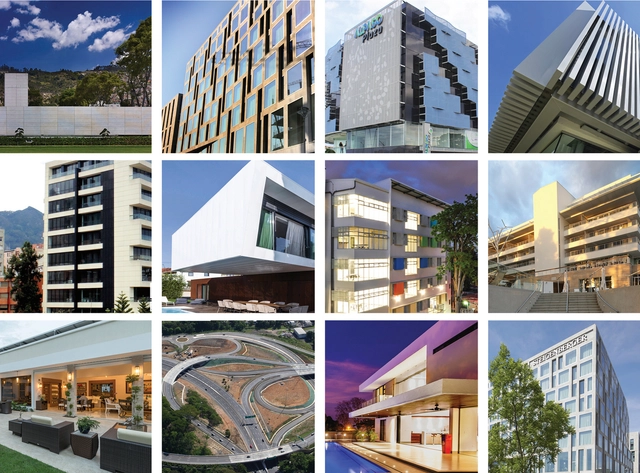
From the Metro Line 4 in Budapest to the Faculty of Health Sciences in Granada and the Hotel Steingerberger in Berlin, CEMEX has revealed a diverse list of international finalists for the XXIV Building Awards. The awards aim to recognize the best architecture and construction projects internationally, honoring projects completed during 2014 that stand out for their constructive solutions, aesthetics and innovative techniques.

The finalists span five categories: housing, institutional/industrial, infrastructure/urbanism, sustainable building and accessibility congruence. The winners will be announced on November 5. See all of the finalists after the break and check out the winners of last year’s awards here.

Now Streaming: Álvaro Siza at the CCA

Subscriber Access | 

Watch Álvaro Siza celebrate the opening of the exhibition "Corner, Block, Neighbourhood, Cities. Álvaro Siza in Berlin and The Hague" and the arrival of the Siza archive at the CCA. You can also follow the conversation on Twitter using #SizaCCA.

Video: Immeuble Home / Hamonic + Masson & Associés + Comte Vollenweider

Subscriber Access | 


PA#51 - Immeuble Home, Paris 13 por Pavillon-Arsenal

Video: Immeuble Home / Hamonic + Masson & Associés + Comte Vollenweider - Image 1 of 4

Our friends at the Pavillion de l'Arsenal have shared a collection of videos from their "Paris Architectures" series. Dive into these short films that document remarkable architecture around France's capital city. 

This week we get a glimpse of Hamonic + Masson & Associés' Bâtiment Home.

AD Quiz: Guess the Le Corbusier Building

Subscriber Access | 

How well do you know the works of the Swiss master Charles Edouard Jeanneret (aka Le Corbusier)? Take our quiz to find out!