Few cultural events bring the world together like the Olympics. Today, athletes from around the world continue to participate in a variety of competitions after the covid-19 pandemic. The Olympic Games are considered the world's foremost sports competition with more than 200 nations participating. In turn, they bring to question the role of architecture and design in each host city's urban evolution.
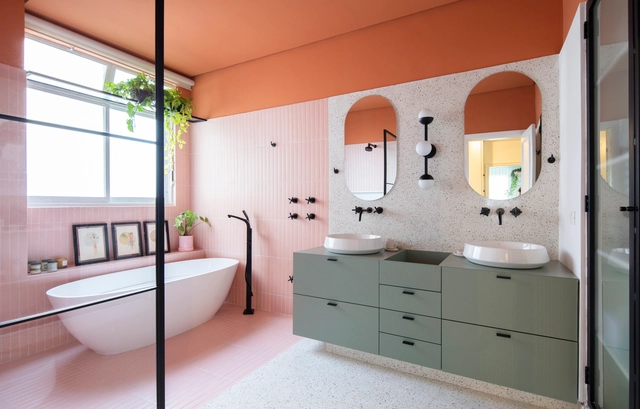
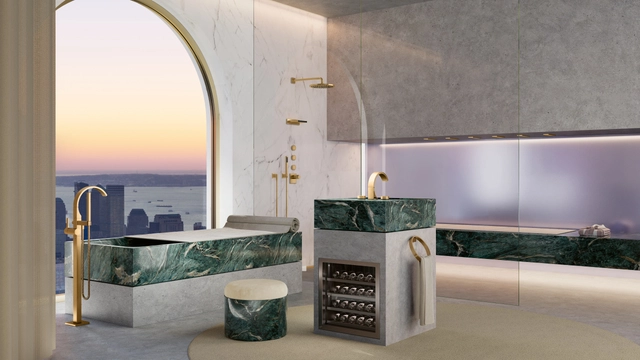
CYO Metropolitan bathroom. Image Courtesy of Dornbracht
As cities become denser and the pandemic continues to shape living and working patterns, people have become well aware that the space they inhabit greatly influences their physical and mental well-being. As a result, the interior design of homes has focused on promoting sensitivity, comfort and calmness as a way of escaping the uncertain outside world. As a safe space where we practically start and end each day, the modern bathroom has also adapted accordingly, taking on a key role as an environment dedicated to relaxation and self-care. Hence, what used to be a purely functional zone is now perceived as an energizing personal retreat and flexible living space that can even adopt other functions – from a gym to a private spa.
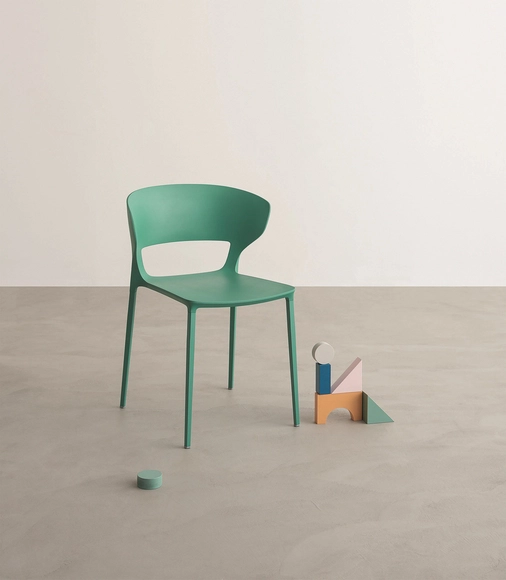
During their university years, architects acquire a wide range of skills apart from learning to design buildings. Some of these include creative problem solving, project management, high attention to detail, coordinating teams and accurately responding to consumer needs. Therefore, a degree often provides the necessary tools to design at any scale – from urban to product design – and to explore other creative fields, such as art, photography, journalism or industrial design. Of the many possibilities that open up, it is especially common for many to make the leap towards furniture design, particularly chair design, instead of following the traditional route.
Metropolitans take pride in their storied cultural venues, the chroniclers of intellectual acumen and architectural achievement. While these icons revel in their ornate design, immersive grandiosity, and dramatic acoustics, the pandemic has introduced numerous challenges to the rules of assembly.
Recognizing changes in the rituals of attending a show—from procession and gathering to engagement—architects and cultural leaders are designing the next generation of performance venues while asking the question: How does architecture solve issues raised by a building’s inherent purpose? Is it possible to maintain the essence of a venue through gentle yet effective changes in people’s habits? The answers seem to rely on updating the auditorium culture (which dates as far back as the Colosseum) with contemporary design solutions rooted in new technologies.
https://www.archdaily.com/976581/what-will-post-pandemic-performance-venues-look-likeOsman Can Yerebakan
For designers and architects, ugliness has historically not been something to strive for. Culturally, however, we are increasingly weary of perfection.
Following decades of designs that behaved in similarly simple and orderly ways—particularly during the twentieth century, with the rationalism and purity of Modernism—we now long for expressions that are less sanitized and, at the same time, more human.
On February 8, at Torre Glorieta Cibeles and as part of Mexico City Art Week, MASA Inc. presented an exhibition showcasing pieces by Manuel Bañó, Hollie Bowden, Frida Escobedo, Héctor Esrawe, Mario García Torres, Adeline de Monseignat, Marrow, Brian Thoreen, Joe Sweeney, ROOMS Studio, EWE Studio, and VISSIO.
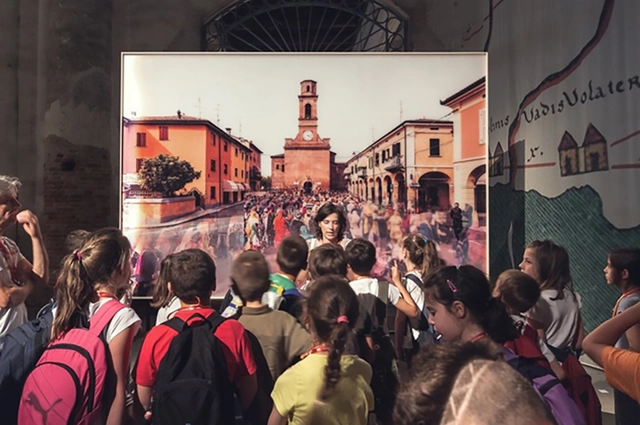
Figure 6. Matilde Cassani, Countryside worship/A celebration Day, 2014 — XIV Venice Biennale. Source: http://www.matildecassani.com/. Image via VAD
Italian law never explicitly denied women access to university. Nevertheless, their minimal presence in the 19th century—only 224 women graduated in Italy between 1867 and 1900—demonstrates how a double discrimination, based on both gender and social class, operated through an inherently elitist and dualistic educational system.
Broadly speaking, the performing arts are all those disciplines that take place on a stage, although the main ones are dance, theatre and music. However, parades, religious processions, holiday celebrations and carnivals also have a clear scenic quality. That is why the stage space is so important not only for the presentations of these disciplines but also for carrying out a whole bodily and spatial process that is supported by the architecture.
It is fascinating to think how Scandinavia - such a small geographic region - has had such a strong influence on design, starting in the middle of the 20th century and continuing into the present day, globally. Scandinavian design is known for combining simplicity, craftsmanship, elegant functionality and quality materials. Sophistication is present in its details and its furniture is characterized by well-studied dimensions, economy of materials and the lack of information overload. In fact, there is even a Danish and Swedish term that defines this philosophy: “hygge” refers to the coziness that provides a feeling of well being and contentment. But how can we incorporate some lessons from Scandinavian design so that our interior projects can become more cozy and comfortable?
The elaboration of an architectural project is a complex process that involves different scales, from structure to small refinements, such as the choice of coatings, paint colors, baseboards, metals, ware and, of course, lighting.
In addition to the issues of power and shade of lamps, the design of the luminaires is also essential in the project process. It can contribute to the appreciation of spaces and the comfort of the inhabitants.
In the early twentieth century, artist Luigi Russolo presented his work “Dinamismo di une Automobile” (Dynamism of an Automobile), which depicted the power and force of automotive speed. Russolo was an enthusiast of the future and a leading voice of Futurism, an artistic avant-garde that celebrated technological development and innovation.
https://www.archdaily.com/1131875/reducing-vehicle-speeds-can-improve-trafficRuan Victor Amaral
Following decades of ongoing socio-cultural and economic crises across the globe, the design community has realized that it is time to “design like they give a damn”. And with that, they embraced a movement that saw architects and designers use their acquired skills to develop design-based solutions to humanitarian crises, ranging from building modular housing and mapping landscapes, to developing mobile applications and documentaries, all from an altruistic standpoint. But since pro bono work is not yet ingrained in the ethos of architecture, how have architects broken out of the traditional model of “corporate” architecture and established a way to ensure ethical responsibility for human welfare?
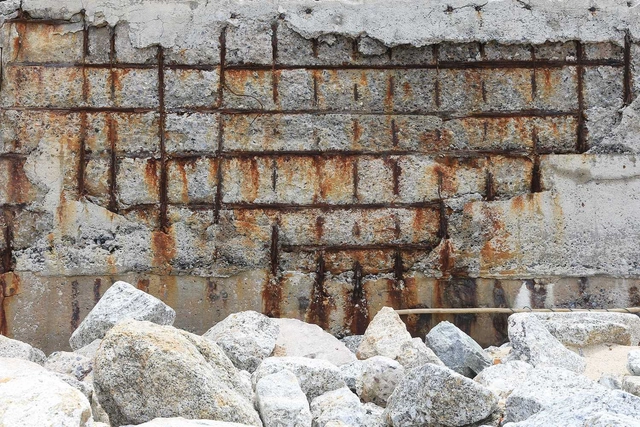
Reinforced concrete with exposed rebar. Image via Shutterstock
Reinforced concrete is the most widely used building material in the world. In Brazil, the nation's greatest architectural icon, Oscar Niemeyer, was passionate about the material, claiming it was the only one capable of giving shape to his sinuous curves.
Builders love concrete, making it the most widely used construction material in the world–but the production of the cement used in most concrete accounts for 8% of global greenhouse gas emissions.
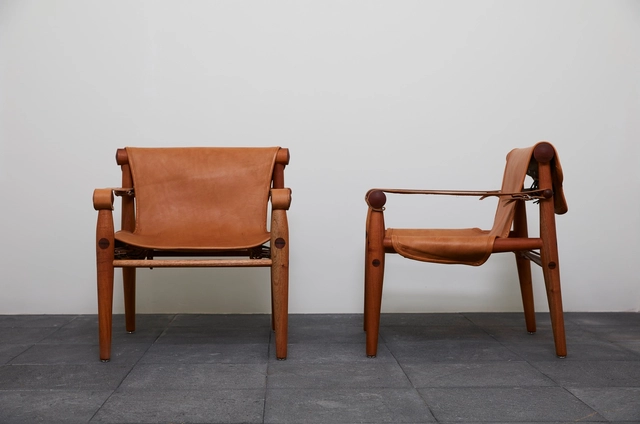
The historical memory and research project "Clásicos Mexicanos"—which recovers the work of key figures in mid-20th-century Mexican design by manufacturing some of their most iconic pieces—once again opens its doors to celebrate the work of Armando Franco (b. 1921), a key figure in the Mexican architecture and design scene.
https://www.archdaily.com/1132268/clasicos-mexicanos-presents-armando-franco-and-his-cofran-collectionArchDaily Team
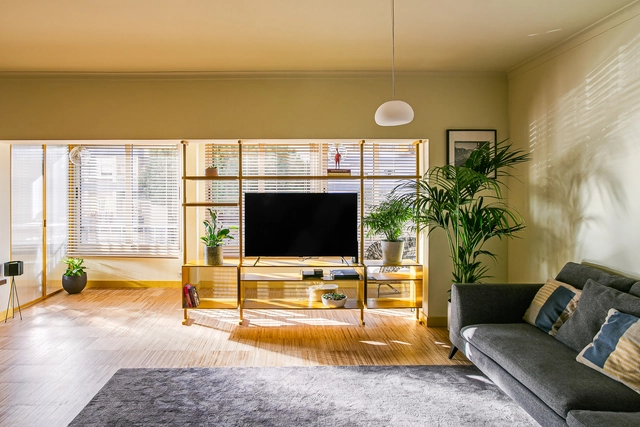
The TV is one of the main elements that make up the living room, especially in most Brazilian homes, where the living room is the place both for receiving visitors and for enjoying rest and leisure. However, it is not always easy to position this equipment, which varies so much in size and especially to combine it with the rest of the space.
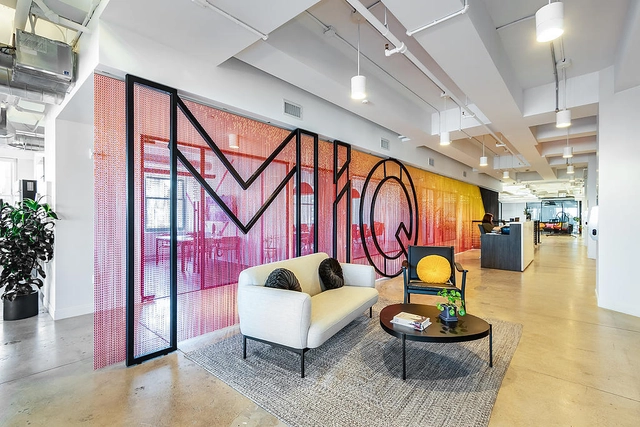
MiQ Media company use a suspended aluminium chain partition from Kriskadecor to separate a reception space from a busy walkway, while creating striking branding. Image Courtesy of Kriskadecor
Space partitioning can often be dismissed as a bland, acoustic-only solution. But projects show how space can be artfully divided while adding color, character, and personality.
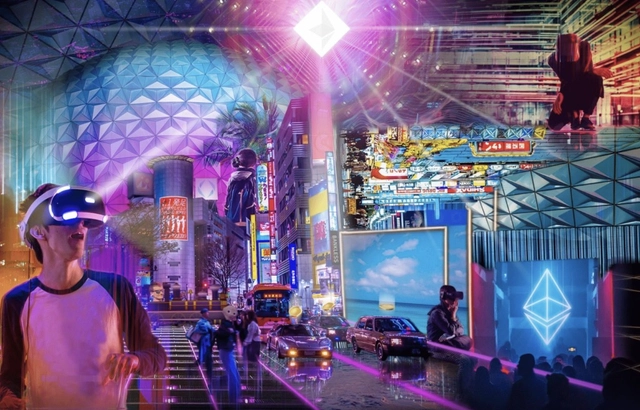
All aspects of society today are becoming increasingly more digital. Our interconnectedness and speed at which we are able to search and transfer information have made us more accustomed to exploring new ways that technology can impact our lives. Over the last few years, the rise of bitcoin, blockchain, and now the metaverse, has caused architects and designers to reconsider the notion of physical and virtual space. But beyond that, there’s an “in-between” of spaces that will be designed to support the technological escapism that the metaverse and web3 offer. While these virtual worlds are on the frontier of the digitization of everything, architects will play a huge part in designing the real-world physical spaces that can support them.
A mano alzada: paisaje y dibujo en la provincia de Misiones. Image Cortesía de Sebastián Galarza
Since the 15th century, the territory of Misiones, Argentina, has witnessed the constant passage and local overlap of a vast number of highly diverse cultures. Indigenous Guaraní, Spanish conquistadors, Jesuit missions, Paulist bandeirantes, people from the Republic of Entre Ríos and later the Province of Corrientes, Paraguayans, Brazilians, and, finally, a sweeping influx of European immigrants fleeing the world wars make up some of the layers of its immeasurable cultural fabric.
https://www.archdaily.com/1131931/freehand-landscape-and-drawing-united-in-sketches-of-misiones-argentinaElías Barczuk Pasamán y Sebastián Galarza
While innovations like 3D printing and laser technology dominate the market, printing on paper—or rather, on a wide range of materials—remains indispensable for the daily workflows of architects, designers, and engineers. Commonly known as "plotters," large-format printers transfer drawings from a computer to a physical format using software that recognizes coordinates, calculating the most efficient path to permanently translate a digital language onto paper. Consequently, whether printing blueprints, advertisements, photographs, or signage, having a versatile, precise, and high-tech printer is essential within any creative discipline.
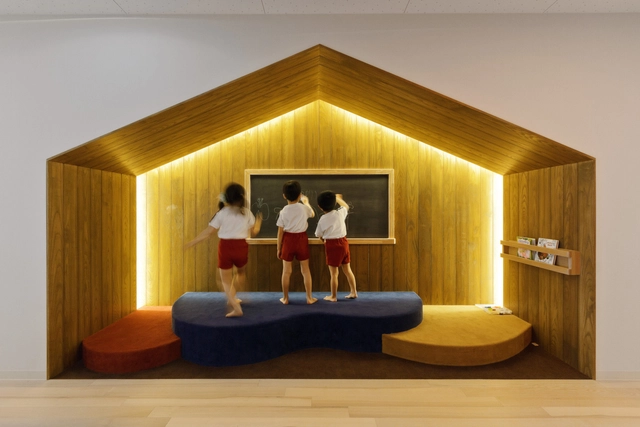
OB Kindergarten and Nursery / HIBINOSEKKEI + Youji no Shiro. Image
Many believe that lighting is of little importance beyond its aesthetic function, considering primarily the appearance of light fixtures and ensuring only that they produce at least an adequate amount of light. However, there is a strong consensus among architects that good lighting design can vastly improve the comfort of interior spaces, adding an enormous aesthetic, functional, and environmental value. In addition, the choice of lighting system may contribute to improved efficiency and sustainability within the building as a whole.
As for the needs of children, it is essential to pay attention to the quantity, quality, and type of lamp for every different environment, whether it be a space to sleep, play, or learn. Below, we delineate more specific considerations.
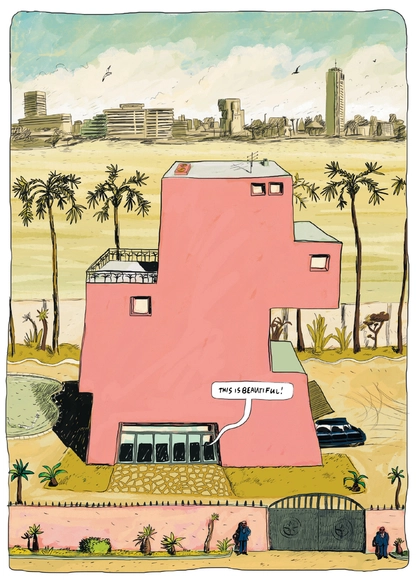
Modernist House - From Aya: Life in Yop City by Marguerite Abouet and Clément Oubrerie, translated by Helge Dasche. Image Courtesy of Drawn & Quarterly
The comic strip, la bande dessinée, the graphic novel. These are all part of a medium with an intrinsic connection to architectural storytelling. It’s a medium that has long been used to fantasise and speculate on possible architectural futures, or in a less spectacular context, used as a device to simply show the perspectival journey through an architectural project. When the comic strip meshes fiction with architectural imagination, however, it’s not only the speculation on future architectural scenarios that takes place. It’s also the recording and the critiquing of the urban conditions of either our contemporary cities or the cities of the past.
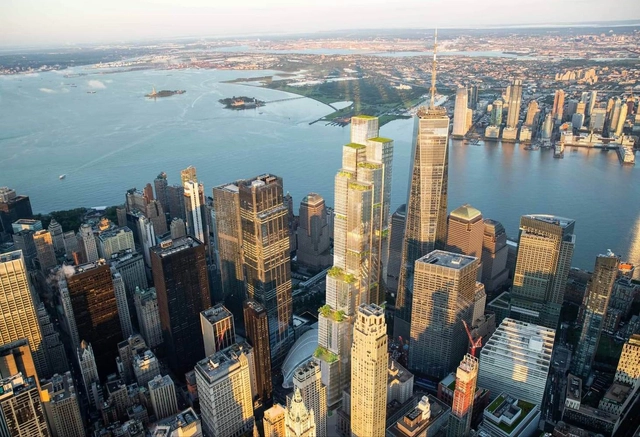
The new design for Foster + Partners’ Two World Trade Center tower builds in the footprint of its original design, but has scrapped a fractal diamond crown for staggered volumes and green roofs. The tallest roof will reach about 1,350 feet. . Image Courtesy of Visualhouse
Is the third time truly the charm for Two World Trade Center? New renderings spotted by New York YIMBY on February 1 seem to reveal the long-delayed tower’s new look, a marked departure from what was first unveiled by Foster + Partners back in 2005.
That’s not too much of a surprise. Although Foster + Partners was awarded the project 17 years ago and the foundation was laid in 2013, work has been proceeding at a slow clip and the original team was replaced by BIG in 2015 after developer Silverstein Properties decided to take a more contemporary approach and position the tower as the future home of Rupert Murdoch’s News Corporation and 21st Century Fox.
For many design teams, logging into multiple applications a day to access BIM information is the norm. Yet the information contained in each of these applications tends to be siloed, making it difficult for project teams to make informed decisions, collaborate, and share information.
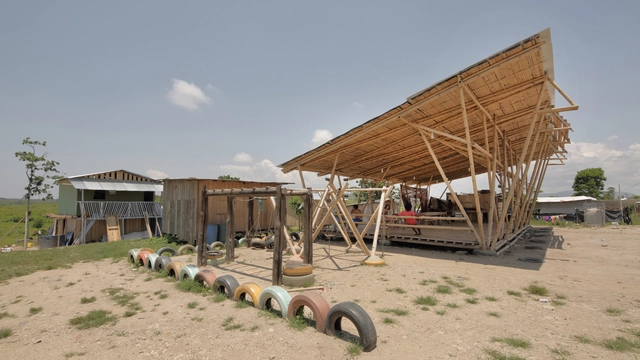
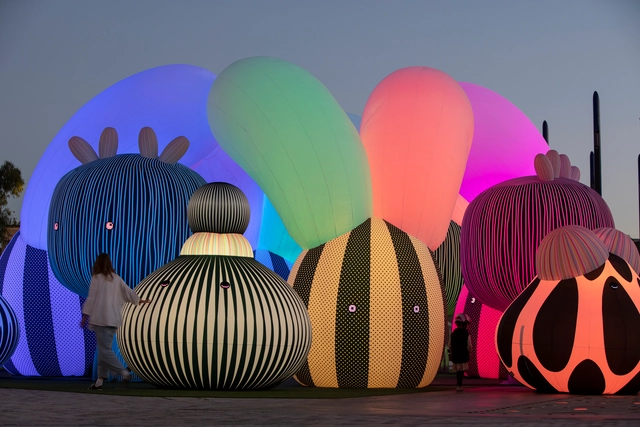
Architecture is a broad field offering diverse opportunities for practice. Increasingly, young architects are striving to carve out new paths and explore alternative professional domains. Ephemeral architecture, with its experimental and artistic nature, plays a significant role in this pursuit, prompting practitioners to observe and discuss urban, social, landscape, and environmental issues. Here, we present examples of temporary installations that highlight these concerns and transform their surroundings.





”(2).jpg?1644348981&format=webp&width=640&height=580)
”(1).jpg?1644349308 "Brian Thoreen, “Red Ribbon Circle (2022).” Image © Alejandro Ramírez")
”(3).jpg?1644349027 "Manuel Bañó, “OBJ-02 (2022).” Image © Alejandro Ramírez")

”.jpg?1644348676 "Frida Escobedo, “Creek Bench (2021).” Image © Alejandro Ramírez")
”(2).jpg?1644348981)

.jpg?1643867734&format=webp&width=640&height=580)


.jpg?1643867734)