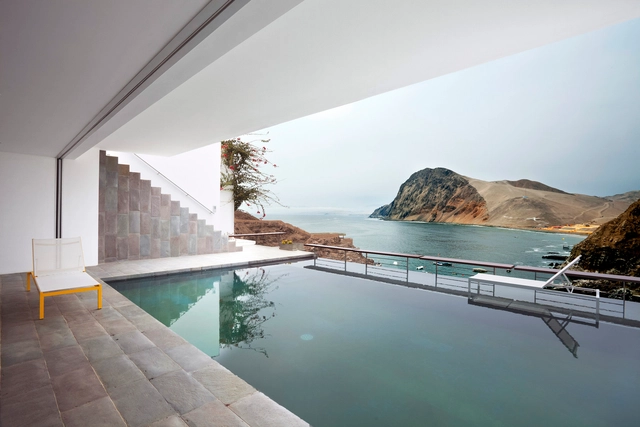
LA DISTANCIA FÍSICA REPERCUTE EN EL CONTACTO SOCIAL. Si muchos integrantes de nuestra familia viven cerca, se les ve mucho más seguido que si lo hicieran a 20 o 30 kilómetros. Entonces, por supuesto, si las circunstancias permiten que la familia o varios miembros de ella puedan vivir cerca, se tendrá una red más densa que si se encuentran diseminados.. Image Cortesía de Revista City Manager
Jah Gehl is recognized as a follower of Jane Jacobs, the “grandmother” of urbanism and humanist planning. He has been a professor at the Danish Real Academy of Fine Arts in Copenhagen and visiting professor in Canada, the United States, New Zealand, Mexico, Australia, Belgium, Germany, Poland, and Norway. In 2000, he created his own consultancy along with Helle Søholt, Gehl Architects, in Denmark, where he completed diverse urban projects from around the world using data and strategic analysis.
The below text comes from an interview with the Danish architect, theorist and world leader in urban development, and promoter, following Jane Jacobs, of the human scale in the design of public spaces.
https://www.archdaily.com/877602/jan-gehl-in-the-last-50-years-architects-have-forgotten-what-a-good-human-scale-isRodrigo Alonso
Interiors is an Online Publication about the space between Architecture and Film, published by Mehruss Jon Ahi and Armen Karaoghlanian. Interiors runs an exclusive column for ArchDaily that analyzes and diagrams films in terms of space.
The first season of Stranger Things, which debuted on Netflix in July 2016, pulls its influences from the likes of Steven Spielberg, John Carpenter, and Stephen King, and stands on its own merits as a result of the inventiveness of its creators, filmmaking duo Matt and Ross Duffer.
Interiors spoke with Production Designer Chris Trujillo on the visuals of the series and several of the core spaces used throughout the first season, including Hawkins Laboratory, Will Byers’ house and, of course, the mysterious world of the Upside Down, which takes bits and pieces of the real world and twists them into a space entirely its own, one that exists both as part of, and outside of, the real world.
Starting a company can be extremely stressful. Fresh graduates, freelancers and directly employed architects looking to create startups face various initial obstacles and need to have a clear view of the operating model for their businesses. They have to choose where to cut costs, which can relate to choice of location, office space and limited living expenses.
Following the guidelines of The Lean Startup method—popularized by author and entrepreneur Eric Ries—can be very beneficial for the early phase of a company’s development. This can mean focusing on budget-friendly setups, and creating businesses on the idea of developing products and productizing design services. Being part of an entrepreneurial community can also influence the way owners grow their businesses, as it provides opportunities to establish valuable contacts and partnerships.
We have compiled a list of 6 startup hubs in Europe, which includes established centers for entrepreneurship as well as cities emerging as exciting new places for experimentation at the intersection of digital technology and architecture.
https://www.archdaily.com/882377/the-6-best-european-cities-to-start-your-architecture-businessLidija Grozdanic for Archipreneur.com
Courtesy of Archive of Affinities / Chicago Architecture Biennial
This article was originally published on the blog of the Chicago Architecture Biennial, the largest platform for contemporary architecture in North America. The 2017 Biennial, entitled Make New History, will be free and open to the public between September 16, 2017 and January 6, 2018.
In the era of the Internet every image is an advertisement. Almost every architect contributes to the limitless overabundance offered by social media by sharing instantaneous personal archives, student projects, and their own work. Each image is a miniature manifesto shared with the broader public, circulating freely and endlessly – they shape and identify the work of architects, they track and create lineages and alliances, and they also begin to form and transmit sensibilities, ideologies, and aesthetic preferences, both individually and collectively.
If the Great Pyramid were to be built today, it would cost between 1.1 and 1.3 billion US dollars, according to a cost estimate by the Turner Construction Company—not surprising, considering how that is roughly the same amount of money that it took to build the Trump Taj Mahal or the Petronas Twin Towers. Complicated structural requirements, delayed work timelines, complex building programs, the need for good earthquake or typhoon proofing, the use of advanced mechanical and electronic systems, and costly materials and finishes can all add up to the eventual cost. But sometimes—and especially in cases in which governments or powerful clients set out to beat existing records such as the “tallest building in the world”—money is spent for no real reason except for an unabashed display of wealth, power or strength.
Emporis, the renowned global provider for building data, has compiled a list of the top 200 money-guzzlers from recent years, and not surprisingly, a lot of high-rises have made the list. Read on to see the top 20.
https://www.archdaily.com/881766/the-worlds-most-expensive-buildingsZoya Gul Hasan
The bidding process for HQ2, Amazon's second headquarters in North America, reached a crescendo last week as the submission deadline drew close. While 238 American cities scrambled to submit proposals and run campaigns in the hope to woo Amazon—or as Slate witheringly described the process, "The Bachelor: Corporate America Edition"—the internet abounded with all sorts of discussions on the project. Does our city have what it takes to house the second headquarters? How would HQ2 affect the selected city? Why are smaller cities submitting proposals when they clearly don’t meet the criteria? Can we predict which cities are more likely to make the cut?
https://www.archdaily.com/882078/the-top-10-predicted-cities-for-amazons-hq2-and-why-hq2-will-be-a-major-urban-catalyst-for-the-winnerZoya Gul Hasan
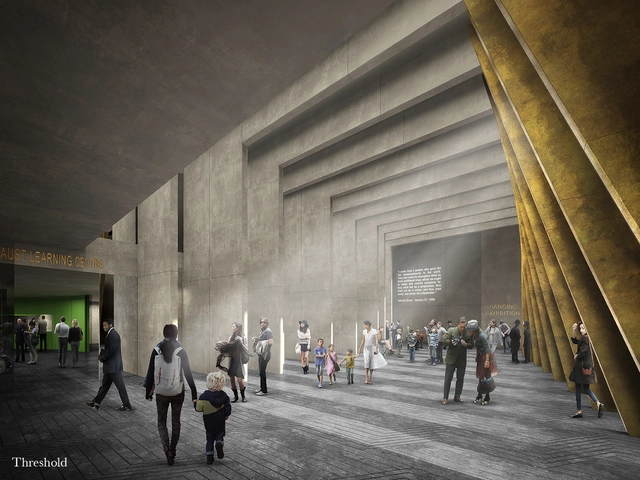
A proposal by Adjaye Associates and Ron Arad Architects, with Gustafson Porter + Bowman, has been announced as the successful design for the UK's new Holocaust Memorial and Learning Center. The landmark will be located on the banks of the River Thames and adjacent to the Palace of Westminster, and will honor the six million Jewish men, women and children who were murdered in the Holocaust, and all other victims of Nazi persecution, including Roma, gay, and disabled people.
Two honorable mentions were awarded to heneghan peng architects with Sven Anderson, and Diamond Schmitt Architects.
https://www.archdaily.com/882240/sir-david-adjaye-and-ron-arad-architects-selected-to-design-uks-new-holocaust-memorial-in-central-londonAD Editorial Team
All-nighters: the bane of all architecture students. The new academic year brings in an influx of fresh, enthusiastic architecture students alongside slightly more hardened veterans of the degree, and students of all experience levels are reminded of the unfortunate tendency for work to stretch through the night. It's an easy habit to slip into for both students and even those working in practice; however many times we may tell ourselves at the end of a project that we will be more organized next time, the work always piles up and it seems like the only option – but it’s not!
With architecture holding the title for the degree that works the longest hours, it is important to maintain a healthy work-life balance throughout. If you feel that you are falling into the trap of staying up until 6am every day then this article should prevent any further sleep deprivation. With advice taken from several architecture students with years of experience dodging the twilight hour, this list will guide you on your way to enough sleep and decent grades.
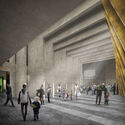
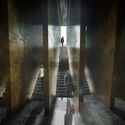
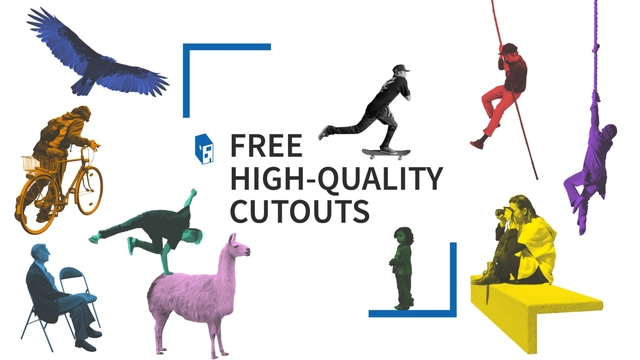
Even though a solid majority of architectural visualizations adhere to similar style guidelines, that doesn't mean you have to follow suit. Unless, of course, you want to (or your boss is forcing you). Either way, there are many resources out there to help you create visualizations in any style you want, and we've compiled 13 super-useful sites to help you give your unbuilt creations a human—or canine—touch. The number of sites dedicated to representing the diversity of the world's 7.6 billion inhabitants is growing, which means that our readers from outside of the Nordic countries have solid, appropriate options for populating their renderings. And if you're in the market for something edgier than the painstakingly-cut photo of a real person, sites like ARTCUTOUT and cutoutmix provide less realistic, more artistic alternatives.
https://www.archdaily.com/881988/13-free-sites-that-offer-high-quality-2d-people-and-objects-for-your-architecture-visualizationsAD Editorial Team
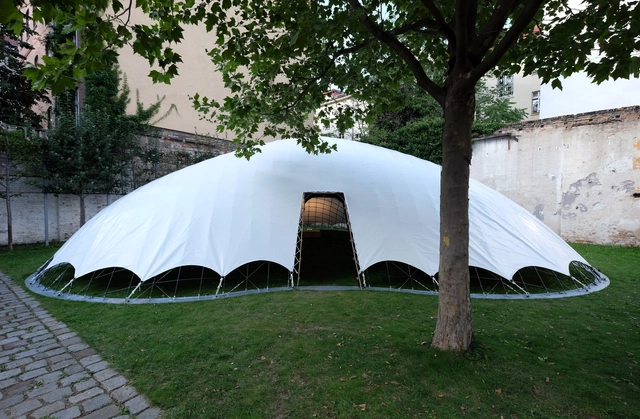
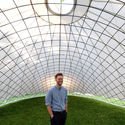
SheltAir, a pavilion developed and designed by Gregory Quinn as part of his doctoral thesis at the Berlin University of the Arts is, as its name suggests, a shelter constructed with the help of air: a meticulously devised system comprising an elastic gridshell and pneumatic falsework in the form of air-filled cushions.
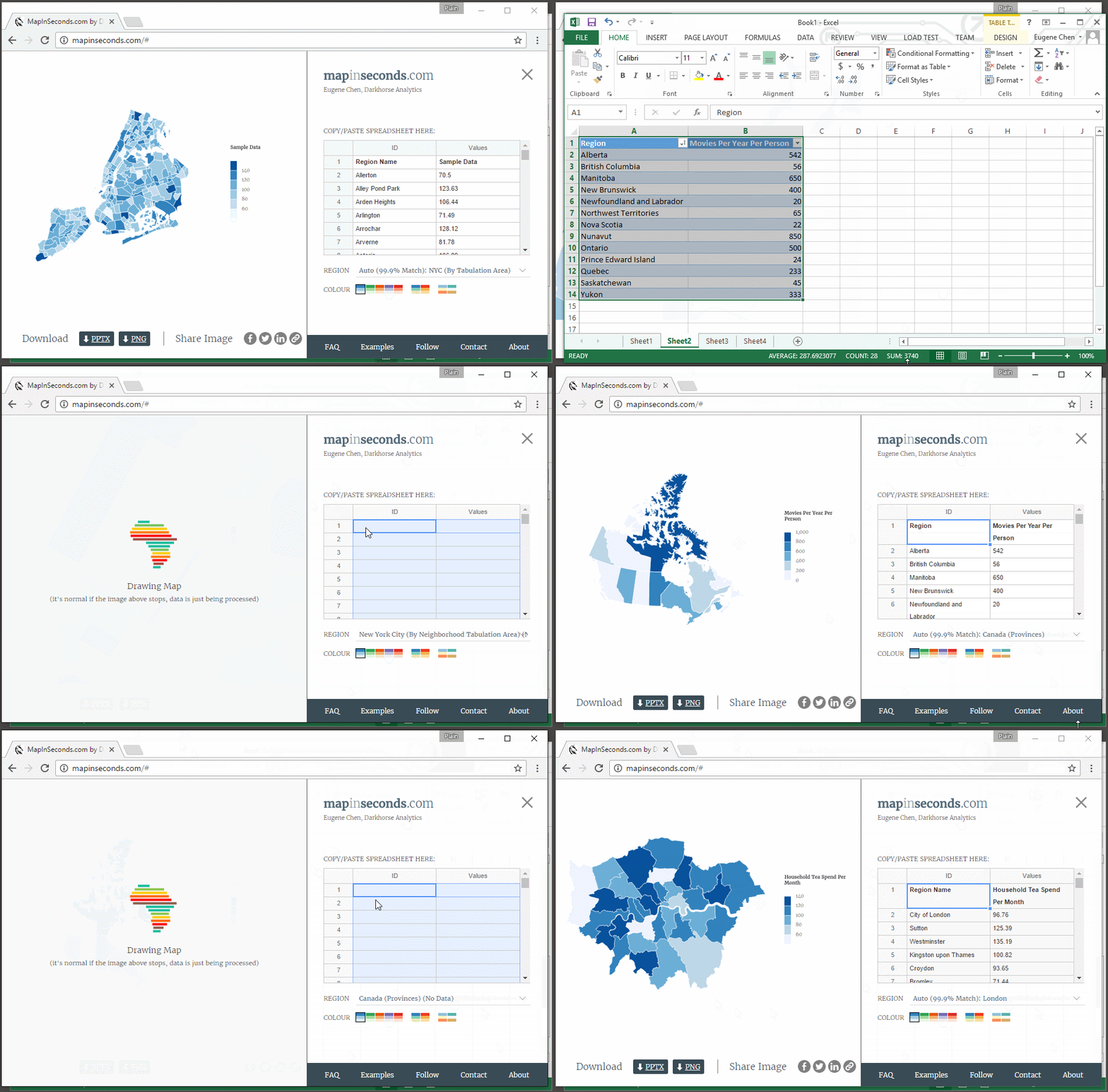
Have you ever had to create a map for your project, thinking you could get it done within 30 minutes, but then spent an entire afternoon on it? Between collecting data, creating a base map, choosing a color scheme, and finally putting together a graphic, creating a map can be a long, trying process, taking up precious time when you could be doing other work. Map-making shouldn’t be this way.
Created by Darkhorse Analytics, mapinseconds.com is a free online productivity tool which generates clear, quality maps based off of your data. Here’s how it works: collect and organize your data into two columns on either an Excel or Google spreadsheet, open mapinseconds.com, paste your data into the application’s spreadsheet, and voila! Your custom map is finished!
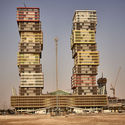
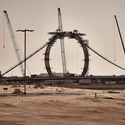
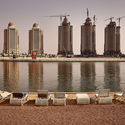
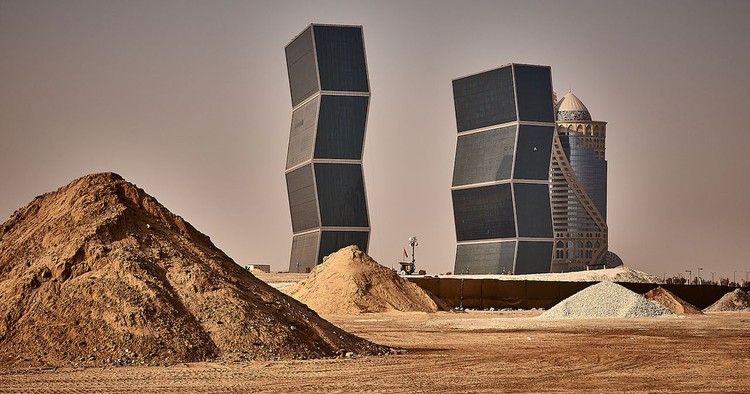
The history of the Qatar Peninsula—or Catara, as first labeled on an ancient map drawn by the Greco-Roman polymath Claudius Ptolemaeus—dates back to the Paleolithic Age. By the 1930s, the tiny Gulf state was struggling to maintain its position as the center of the pearl trade, but soon after, in the 1940s, it found itself at the forefront of economic growth and progress after the discovery of its vast oil reserves. Today, Qatar is the world’s richest country per capita; its capital Doha an ever-growing crop of shiny high-rises, with occasional buildings by the world's most sought-after architects thrown in for effect, its skyline flecked with tireless cranes, and its suburbs strewn with bulldozers, machinery, and endless mounds of displaced sand.
Seen in these photographs by Manuel Alvarez Diestro is a record of the country's impatient race towards an extravagant desert dream—but perhaps it can also be read as a subtle nod towards Qatar’s sheer determination to forge ahead, despite being steeped in controversies and crises during recent years.
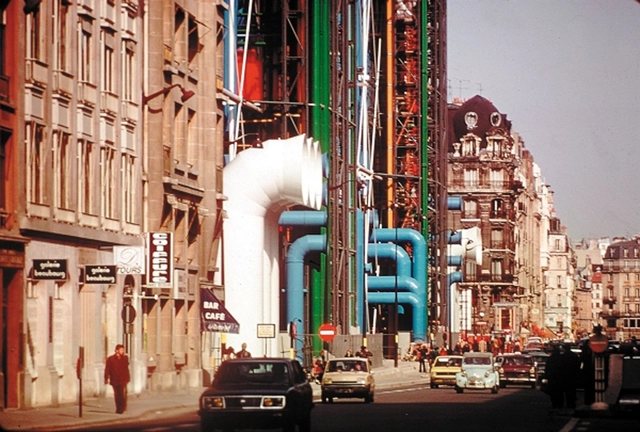
Centre Pompidou (1970s). Image via Rogers Stirk Harbour + Partners
The following is an extract from A Place for All People, a new semi-autobiographical manifesto by Lord Rogers. It is a mosaic of life, projects and ideas for a better society, ranging backwards and forwards over a long and creative life, integrating relationships, projects, stories, collaborations and polemics, with case studies, drawings and photographs.
https://www.archdaily.com/881986/richard-rogers-architecture-is-a-place-for-all-people-bookBaron Rogers of Riverside
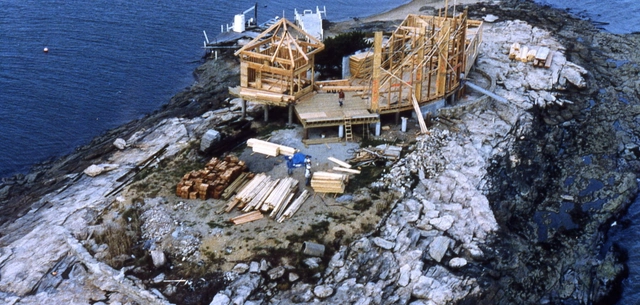
The construction site for a house (designed by the author), located on one of the Thimble Islands, off the coast of Connecticut, circa 1990. Image Courtesy of Duo Dickinson
Truth be told, many architects I know are a little uneasy about their lack of building knowledge. Since architecture without construction is largely a graphic arts exercise, this is either deeply ironic or grimly paradoxical. To bridge this yawning gap, architects today typically hire a slew of consultants—roof, skin, curtain wall, interior, sustainability, preservation—who join the growing influence of software-driven structural and mechanical engineers to absorb much of what architects once assumed they could handle.
A new museum dedicated to the life and work of French fashion icon Yves Saint Laurent has opened in the Moroccan city of Marrakech. Designed by Studio KO, the building sits a short distance away from Jardin Majorelle – the home acquired by Saint Laurent and Pierre Bergé in 1980. With a large permanent exhibition space designed by scenographist Christophe Martin, showcasing the collections of it's namesake, the museum also features temporary exhibition spaces, a research library and archives, an auditorium, bookstore, and a terrace café.
https://www.archdaily.com/881893/studio-kos-yves-saint-laurent-museum-opens-in-marrakechAD Editorial Team
This article originally appeared on guggenheim.org/blogs under the title "How Analog and Digital Came Together in the 1990s Creation of the Guggenheim Museum Bilbao," and is used with permission.
The Guggenheim Museum Bilbao, which celebrates its twentieth anniversary this month, has been hailed as a pinnacle of technological progress since its October 1997 opening. While the use of the modeling software CATIA (Computer Aided Three-Dimensional Interactive Application) was without question groundbreaking, some of the greatest moments of ingenuity during the building’s design and construction were distinctly low-tech. Developed between 1991 and 1997, the curved and angular titanium-clad building was conceived at the turning point between analog and digital practice. This profound shift enveloped and permeated every aspect of the project, from the design process and construction techniques to the methods of communication technology put to use.
In the decade since the start of the financial crisis, there has been an explosion in the number of architectural practices that have pursued unusual and ingenious business models—among the most popular of which is the concept of the developer-architect, who serves as their own client. With his architecture firm and development company JSa, Javier Sanchez has been proving this concept since long before the financial crisis hit. In the latest interview of his City of Ideas series—and the third of his interviews with Mexican architects after Enrique Norten, Alberto Kalach and Mauricio Rocha and Gabriela Carrillo—Vladimir Belogolovsky speaks to Sanchez about the benefits of working as one’s own client and how JSa leverages its business model to improve the city.
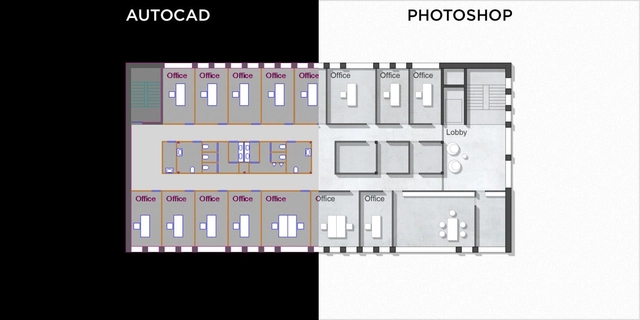
Rendering plans in Photoshop is an essential part of presenting your work to your client or to convince a competition jury to pick your design as a winner. Whenever you publish your work for books, websites or presentations the design quality of your plans will be your business card to future clients and the audience you build around your practice. Let’s start step by step.


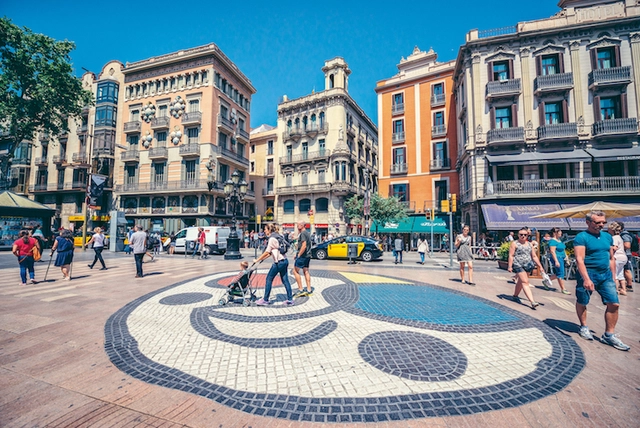


















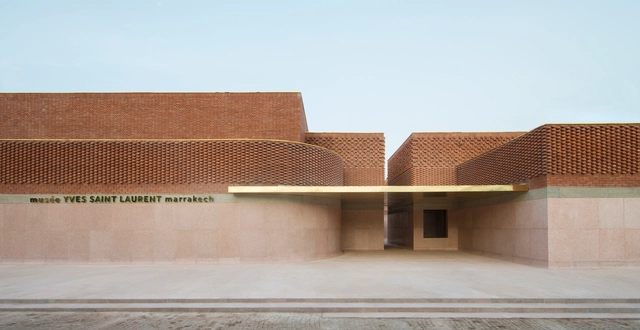
.jpg?1508351746 "musée YVES SAINT LAURENT marrakech. Image © Nicolas Mathéus")