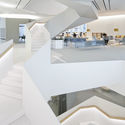
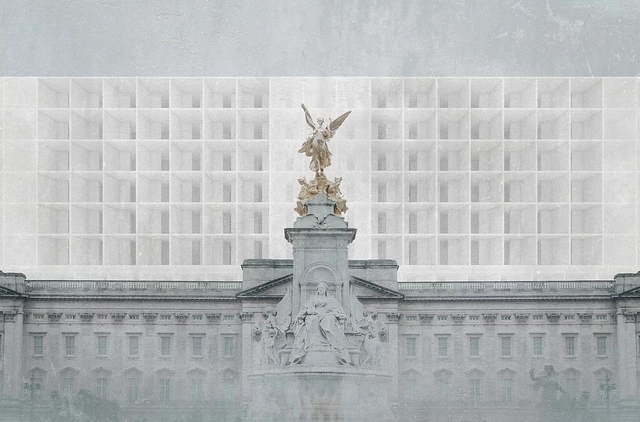
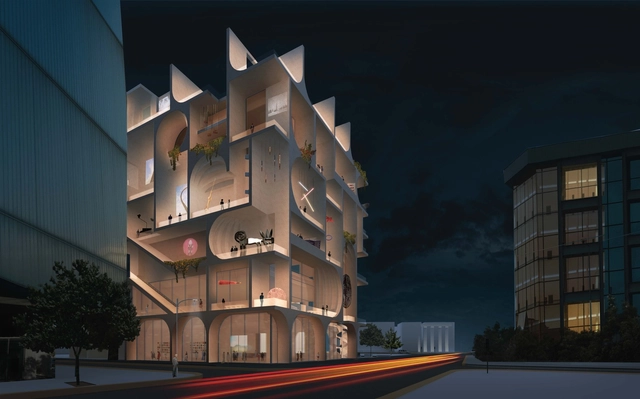
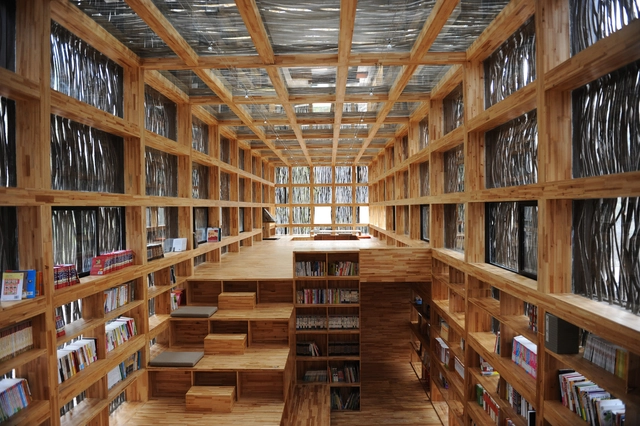
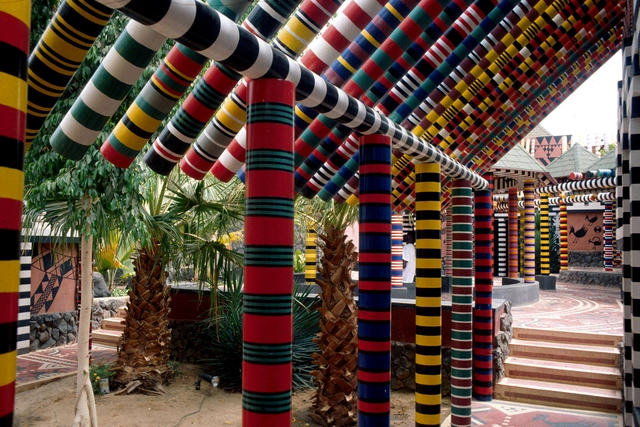
European children spend approximately 200 days a year at primary school. Even though the academic year in most parts of the world is not as long as in Europe, the place where children and adolescents spend the most time, following their own homes, is usually in educational institutions. These can be places for learning, playing and socializing, and as sad as it may be, they can also be safer places for children living in environments of abandonment, hunger, and violence, providing them with opportunities and even meals. A United Kingdom-wide survey found that the differences in physical characteristics of classrooms accounted for 16% of the variations in learning progress over the course of a year. In other words, the better a classroom is designed, the better children perform academically. According to the study, the factors that most affect children are sunlight, indoor air quality, acoustic environment, temperature, the design of the classroom itself and the stimulation within it.
Train stations are usually complex programs since they must not only solve the departure and arrival of trains but also respond to the circulation of its users, provide certain services and be a connecting space between the transport systems of a city. Architects from different parts of the world have developed different solutions to this program. Below you can find 10 examples of train stations, their floor plans and sections.
Opening on July 5th, “Architecture Speaks: The Language of MVRDV” will provide an immersive, diverse, multimedia experience for visitors to the Tyrolean Architecture Center (aut) in Innsbruck, Austria. The exhibition centers around a spatial intervention of 4 towers constructed inside the aut’s Adambräu Building, a former brewhouse. Each tower embodies a word that represents key concepts in MVRDV’s designs: stack, pixel, village, and activator. “Architecture Speaks” aims to present the concepts in an approachable, engaging manner, with the colorful towers enhanced by images, text, models, drawings, videos, audio, and interactive elements to present MVRDV’s projects.
During Milano Arch Week 2019, we had the chance to speak with one of the most influential Swiss architects, Mario Botta. Defining himself as a stonemason, Botta has been working since the age of 16, realizing a vast number of projects of different typologies — from private homes to museums and churches.
We are delighted to introduce Open More Doors, a new section by ArchDaily and the MINI Clubman that will take you behind the scenes of the world’s most innovative offices through exciting video interviews and an exclusive photo gallery featuring each studio’s workspace.
It is expected that within the next few of decades, Earth will have absolutely nothing left to offer whoever/whatever is capable of surviving on it. Although the human race is solely responsible for the damages done to the planet, a thin silver lining can still be seen if radical changes were to be done to the way we live on Earth and how we sustain it.
Since architects and designers carry a responsibility of building a substantial future, we have put together an A-Z list of every sustainability term that you might come across. Every week, a new set of letters will be published, helping you stay well-rounded on everything related to sustainable architecture and design. Here are the terms that start with letters G, H, and I.
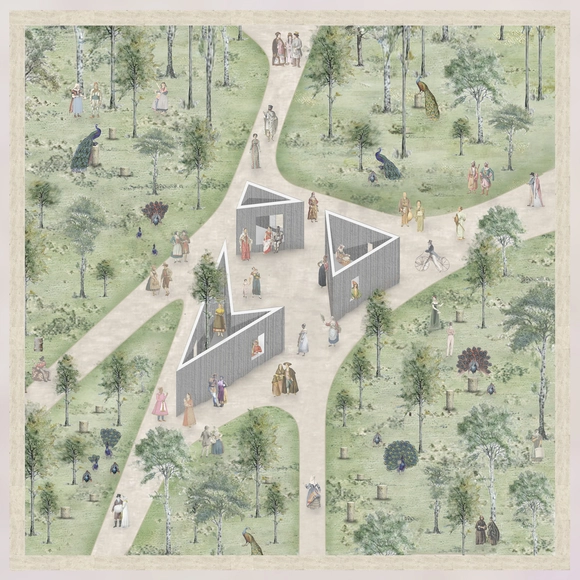
My commitment to pavilions—to the idea of making constructional follies—is connected with needing to develop prototypes and carry out constructional research away from the normal practice of architecture. Without being subject to a client’s brief, the pavilions give me an opportunity to develop and test different methodologies, which is something that has always interested me about teaching. They are investigations into various kinds of context, dealing with urban scenarios and landscapes—they are about making something in space for its own sake, when the guiding idea comes from a reading of place. The pavilions fine tune my engagement with a specific situation, allowing me to see what is essential in terms of an action or construction. I did not set out with the idea of working in series, but as different opportunities came up, the process of designing them became more organic, the language seemed to make sense, and as one thing reinforced another, they took on a life of their own.
The need to substantially reduce our impact on the planet must be translated into a significant change to our lifestyle and habits. One of these is to consume responsibly and consider that waste does not exist, but that all material can be transformed into something useful again following a circular ecological system.
In his book Upcycling Wood, Reutilización creativa de la madera, the architect and artist Bruno Sève writes and edits a non-exhaustive guide of the uses and possibilities of recovered wood, as a framework for responsible reuse; from small scale, such as furniture or artists' canvases, to medium scale, with its use in interiors and facades. This book seeks to raise awareness among professionals and citizens in general through analysis of the life cycle, examples of uses and finishing processes, leading to an ecological and responsible framework. The book is illustrated by numerous design and architecture teams who follow the guidelines of ecological design with reclaimed wood.
Though only the Italian screenings have officially been announced, for May 20-22, international screenings of the upcoming 97-minute docu-film are promised to be announced soon. Created by Giacomo Gatti together with Scientific Director and Co-author Gregorio Carboni Maestri, “Palladio” features well-known scholars and aficionados of Palladian architecture, including Kenneth Frampton and Peter Eisenman, discussing the great architect’s legacy.
The Midnight Charetteis an explicit podcast about design, architecture, and the everyday. Hosted by architectural designers David Lee and Marina Bourderonnet, it features a variety of creative professionals in unscripted and long-format conversations that allow for thoughtful takes and more personal discussions. Honesty and humor are used to cover a wide array of subjects: some episodes provide useful tips for designers, while others are project reviews, interviews, or simply explorations of everyday life and design. The Midnight Charetteis available for free on iTunes, YouTube, Spotify, and all other podcast directories.
https://www.archdaily.com/916813/neil-denari-on-the-high-line-urban-design-and-experimental-musicThe Second Studio Podcast
The winner of the Installation Program “Huts and Habitats”: Steampunk, designed by Soomeen Hahm Design, Igor Pantic, and Fologram. Image Courtesy of Tallinn Architecture Biennale
TAB 2019, Tallinn’s 5th Architecture Biennale, will commence with its Opening Week from September 5-11, 2019. Earlier this week, the Biennale announced its programme of events for this year’s festival, which bears the theme “Beauty Matters: The Resurgence of Beauty”. TAB is an international celebration of architecture, organized by the Estonian Centre for Architecture and curated this year by Head Curator Dr. Yael Reisner. The Biennale consists of five main events, to take place in various venues in the heart of Tallinn, as well as a Satellite Programme hosting other events around the city.
As technology moves forward, so does architecture and construction. Architects, designers, and planners around the world now have infinite tools and resources to design and build the cities of today and the future. As promising as this may sound, new construction is also consuming our world’s limited resources faster than we can replenish them.
This situation leaves architects with an important responsibility: the rehabilitation and reuse of the existing built environment. This means using creative thinking and design to save and incorporate old or historic buildings that currently exist, in the present and future of our cities, by adapting them through creative and sensitive treatments.
Architects are often noted for having bad work-life balance, a lot of stress and little free time. How can you take time off while still improving your skills as an architect? Can that time off even give you an extra edge? Compared to other fields, architecture stands out as a field in which you need to “know a little bit about everything." Thus, in order to live up to our name we must also do a little bit of everything, and as they say, a little goes a long way. So with that in mind, here are 11 activities which, while not obviously architectural, just might make you a better architect.
Amidst efforts to revitalize and improve urban centers, the peripheral areas of cities are often ignored or forgotten. The intense focus on the downtown core means, in terms of land use, that only a relatively small area receives the majority of designers’ attention. "Dvorulitsa" (literally "Yardstreet" in Russian) is an urban development strategy proposed by Russian architecture firm Meganom, aiming to shift that focus. Taking the idea of the “superpark” from the 2013 study, "Archaeology of the Periphery," the yardstreet project presents an alternative method of viewing the periphery of a post-soviet city.
The passion for cinema and TV shows, combined with that for scenography and architecture, led Italian architect Riccardo Masiero to play with the different spaces and dimensions of the elements that make movies in order to create "MAKE IT ISO!", a series of drawings portraying famous movies and TV icons such as Breaking Bad, Twin Peaks, Harry Potter, Star Wars, The Shining and UP in an architectural way.
These illustrations represent iconic scenes of TV and cinema through the isometric illustration method, giving an overall picture of the construction of the scene, as well as providing a different point of view to the observer.
Keep reading to see the full "MAKE IT ISO!" series and the author explaining his work.
Oscar Ko was born in Harbin, China and moved with his parents to Hong Kong at the age of five. He earned his Bachelor of Science in Architecture at the University of Michigan and Master’s from Columbia University in 2006. After spending seven years in America, he relocated to Europe where his original plan was to stay for four-five years or longer but after talking to older friends practicing in China he quickly realized that there are more opportunities in his native China. After working for less than two years for several prestigious firms – Josep Lluis Mateo Architects in Barcelona, David Chipperfield Architects in Berlin, and Space Group Architects in Oslo, Norway – he returned to China where he worked at two leading Beijing-based practices: Studio Zhu-Pei and Chiasmus Partners for several years.
Over the past few days, exceptional products have been exhibited at the Salone del Mobile, ranging from furniture pieces and light fixtures, to textiles and finishes. As part of Milan Design Week, the Salone saw impressive collaborations with architects and the use of never-seen-before materials, all displayed at the Milan Fairgrounds, while some projects — too grand and imposing for a constraint exhibition — took place at the second part of the event, the Fuorisalone.
What would historic cities look like if scale didn’t exist and functions were manipulated?
Dutch artist Tamara Stoffers found inspiration from an old Soviet Union book published in the early 1960s, which featured images of mass-housing apartment blocks without any ornamentation or color. The book highlighted the symmetry and functionality of Soviet architecture, representing what a communist future strived to look like. It became clear to her that a lot of stories lie in the history of USSR that deserve to be explored.
Stoffers' admiration extended beyond Russian architecture, looking at everyday objects, banners, postcards, and books. In a matter of 4-5 years, she put together a series of surreal collages taken from more than 30 picture books. The images, which seemed intriguing on their own, were mixed and matched with complementary photographs in an exaggerated, amusing way, presenting the Soviet Union as never seen before.