Image of Thomas Jefferson Memorial courtesy of shutterstock.com
This blog was written by Doug Wingall, the President of HDR Architecture, for the AIA Blog Off on the theme “What does architect as leader mean to you?” It was originally published on HDR Architecture's blog BLiNK.
Architects and designers are trained in school to be creative and critical thinkers. We are shaped and molded into being the purveyors of ideas that can have a positive influence not only on the built environment, but society in general. By the very skills and talents which architects and designers possess, we are inherent problem solvers.
In fact, one of our country’s greatest politicians, Thomas Jefferson, believed that architecture embodied the soul of his new country–a building was a metaphor for American ideology, the process of construction equal to the task of building a nation.
So why aren’t there more architects and designers working on the national and global stage to solve pressing social, environmental and economic challenges? Currently, lawyers comprise 37 percent of all U.S. senators and nearly 24 percent of all U.S. congressmen. Banking and business occupations account for 20 percent of the Senate and 22 percent of the House. According to the AIA, in the last 50 years, only one architect has served in a national capacity: U.S. Congressman Richard Swett, who represented New Hampshire from 1990 to 1994.
Why aren’t there more architects on a national or global leadership level influencing the policy that ensures positive change?
The architecture that sunk the architecture school. Thom Mayne's $111 million New Academic Building. Via Wikipedia
Beginning in 2014 The Cooper Union for the Advancement of Science and Art (known more commonly as Cooper Union), the famed New York City college, will start charging tuition.
For more than 100 years, Cooper Union, which includes a prestigious architecture school, has been “free” (full-tuition support to all students). As such it has always stood apart, charting its own path and following its own independent mission. That Cooper Union is now dead.
For Cooper Union to have survived it would have had to remain simpleminded. And I mean this in the most flattering way.
Wang Shu receiving his Pritzker Award in 2012. Oddly, his wife and co-partner, Lu Wenyu, was not acknowledged.
The Pritzker Prize had idealistic beginnings: recognising achievement within architecture, a profession that had long lost its status in public opinion. Pritzker 'seamed' this fragmentation, celebrated the architect and broadcast this stellar contribution to society, as a creative, a singular author whose uniqueness set him/her apart from a field of practitioners.
The Prize has since assumed a role of gatekeeper to the 'starchitect' it once helped define. While it is inspiring that architecture as a profession has reaffirmed its status and cultural significance, The Pritzker places itself on an archi-centric proscenium, running the risk of being consumed by a synthetic reality within the profession. If Pritzker and other similar models of recognition are to evolve, they must illuminate widespread transformations in practice and emphasise the changing of the guard within the profession.
Firstly, Denise Scott Brown should be recognised retrospectively. Opinion does not change facts.
Read more about the (d)evolution of the Pritzker Prize, after the break...
London is engrossed in a vigorous debate over recently unveiled plans for the South Bank Centre, the cluster of Brutalist concrete buildings on the River Thames including the Queen Elizabeth Hall (QEH) and Hayward Gallery.
Today, the Centre has as its neighbour one of the city’s biggest tourist attractions – The London Eye – and this, with the addition of retail and other leisure-led developments in and around the South Bank, has refocused both commercial and cultural attention on the complex.
Last month, British architects Fielden Clegg Bradley Studios (FCBS) unveiled their vision for a “Festival Wing” on the site, focussing on the QEH and the Hayward Gallery. It isn’t the first time an architect has been asked to look at these buildings in recent decades. However, it is the most likely to come to fruition.
Read more about the Southbank Centre and its future development, after the break...
Abandoning Apple’s classic “white” detailing, architects Foster + Partners have opted to clad the 2.8 million square foot, circular monolith in black - a stylistic remedy that seems to be in line with the overarching campus goal to “provide a serene environment reflecting Apple’s brand values of innovation, ease of use and beauty.”
Architectural discourse has gradually become incoherent with the social and ethical needs of the contemporary city. With the relationship between theory and practice strained, lack of social relevance in design is ubiquitous. Practising architects frequently regard theory as esoteric and non-transferable, whilst many theorists do not manifest their ideas into reality and build. With the connection gripping the precipice by its fingers, this paper is conceived; written to persuade, motivate and encourage that there is real value in instigating ideas put forth in this paper. Concepts proposed are not only applicable to the city of Lincoln but are relevant and adaptable to all cities. Inspired by the architecture which has not yet manifested, it hopes to ignite the spirit needed to eradicate social inequities in urban design.
As Albert Einstein said: “If the facts don’t fit the theory, change the facts”. In order to palpably grasp an understanding of what it is truly like to be physically disabled in Lincoln, I rented a wheelchair for one day to see for myself whether the facts fitted the theory.
Read more of Sophia Bannert's prize-winning story, after the break...
After carefully considering six international architecture firms - Ammar Curiel; Frank Gehry; Herzog & de Meuron; Kimmel Eshkolot, Kolker Kolker Epstein and Renzo Piano - an esteemed selection committee has chosen Herzog & de Meuron to design the new National Library of Israel in Jerusalem. The result comes after a controversial first attempt that ended in the dismissal of the initial competition winner for alleged copyright infringement.
Architects and students worldwide are highly anticipating the Monday premiere of Archiculture - a documentary that offers a unique glimpse into the world of studio-based, design education through the eyes of five architecture students finishing their final design projects at Brooklyn’s Pratt Institute. The film, directed and produced by two architect-turned-filmmakers Ian Harris and David Krantz of Arbuckle Industries, features exclusive interviews with leading professionals, historians and educators to help create a crucial dialog around the key issues faced by this unique teaching methodology.
Eager to learn more, we sat down with director Ian Harris for an exclusive interview. Read the interview and share your thoughts after the break.
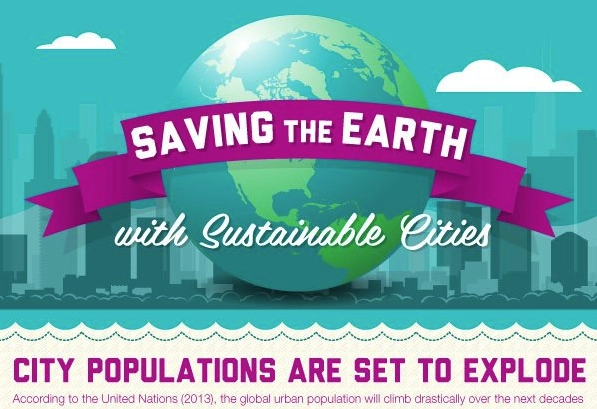
With Stockhom, Hamburg and Copenhagen leading the way, urban metropolis’ worldwide are beginning to rethink their infrastructure and envision ways to transform their city into an efficient, sustainable model of the future in an effort to preserve a high quality of life and stay competitive in the global society. This shift is already being reflected in the education system, with the rapid growth of sustainability-focused academic programs and a sizable, projected increase in “green” jobs.
Get an understanding as to how sustainable cities will save the earth with an infographic after the break.
Most parking is free - but that doesn’t mean it doesn’t have a high cost. A recent podcast from Freakonomics Radio examined parking in US cities, investigating the “cost of parking not paid for by drivers” - a cost paid not just by the government, but by the environment - due to congestion and pollution caused by people searching for kerbside parking. For example, in a 15 block area of Los Angeles the distance traveled by drivers looking for parking is equivalent to one trip across the USA per day.
One potential solution which they discuss is a San Francisco project called SF Park, which makes use of sensor technology to measure the demand for parking in certain areas of the city and adjust price according to demand. In theory, this would create a small number of empty spaces on each block and dramatically reduce the time that many drivers spend cruising for parking spaces.
Though the idea is certainly an intelligent approach to the problem of kerbside parking, unsurprisingly all this talk of supply, demand and pricing sounds very much like an economist's answer to a problem. But what can designers do to help the situation?
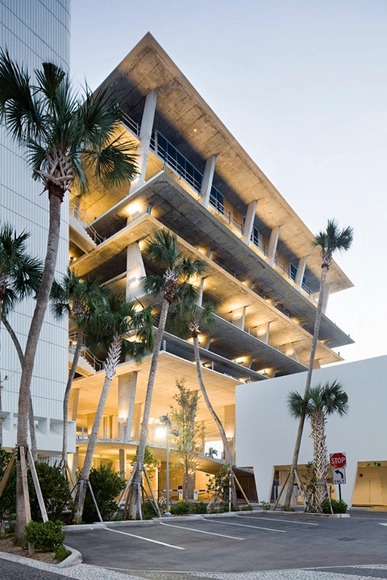
Perhaps, from the designer’s point of view, the real problem with kerbside parking and surface lots is that they are always seen as a provision “coupled with” a building or area of the city. There have been a number of attempts by architects – some successful and some tragically flawed – to make parking spaces less of a rupture in a city's fabric and more of a destination in themselves. Could these point to another way?
Read about 3 examples of parking’s past, and one of its potential future, after the break...
A decade before Kickstarter made "crowdfunding" a buzzword (particularly in architecture circles), a similar concept - going by a far more poetic name - was already alive and well in the streets of Buenos Aires.
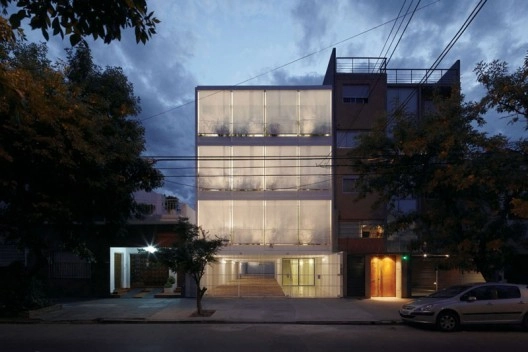
Fideicomiso is a system of development which gained popularity in Argentina after the financial crisis of 2001; banks crashed, the public grew wary of developers, and a more democratic system of development gained prevalence. Under fideicomiso, the architect himself takes on the risk of development; residents collect their assets and provide them to the architect, who buys the land, funds the project and oversees the design/construction.
Now, Elias Redstone, a researcher who took part in Venice Takeaway (Britain's Pavilion at last year's Venice Biennale) and spent time investigating this model in Argentina, has returned to his home country - and is anxious to see if this system could be applied in Recession-struck Britain.
Read more about this revolutionary model of development, after the break...
The American Institute of Architects (AIA) and its Committee on the Environment (COTE) have selected the top ten examples of sustainable architecture and green design solutions that protect and enhance the environment.
The COTE Top Ten Green Projects program, now in its 17th year, is the profession's best known recognition program for sustainable design excellence. The program celebrates projects that are the result of a thoroughly integrated approach to architecture, natural systems and technology. They make a positive contribution to their communities, improve comfort for building occupants and reduce environmental impacts through strategies such as reuse of existing structures, connection to transit systems, low-impact and regenerative site development, energy and water conservation, use of sustainable or renewable construction materials, and design that improves indoor air quality.
Architecture has changed irreparably in the past decade, but those who know how to adapt just might find themselves in a far better place in a few years. It has now been 8 years since construction peaked in 2005, nearly 6 years since the subprime meltdown, and close to 5 years since the big meltdown that really kicked off the Great Recession.
Today, it appears that construction is finally beginning to pick back up, but it's too late for architecture as we knew it. Here are seven reasons why...
According to the survey, large firms such as Foster + Partners make up just 3% of practices, but employ 40% of architects. Image courtesy of Foster + Partners
A recent survey by the RIBA of over 2,100 UK practices revealed there is now a widening gap between 'massive' and 'micro' practices, with a 'squeezed middle' in between, as reported by BD.
This was the first mandatory survey of its members conducted by the RIBA, and gives a glimpse, for the first time, into the workings of every chartered UK practice. The RIBA's executive director of membership and profession Richard Brindley described the findings as a "tale of two professions operating in different universes". The polarized profession is most damaging to the practices in the middle; those of 10-50 employees which are large enough to have costly overheads, but not large enough to absorb them.
Large practices, employing 50 people or more, include just 3% of practices, but, thanks to their size, include 40% of registered architects. At the other extreme are practices of 10 employees or less, who account for 53% of practices despite employing a meager 10% of architects. The survey found that the majority of practices employs fewer than six people.
Read on for more results and analysis of the survey
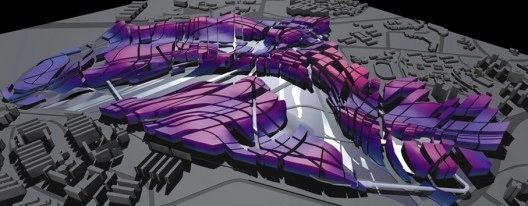
According to Business Insider and a number of other real estate development outlets, the "Dream Hub" project in Seoul Korea that drew designs from internationally renowned architects including Daniel Libeskind -designer of the master plan - MVRDV, Dominique Perrault, BIG, REX, KPF and Tange Associates is on the verge of collapse. The Yongsan Development Corporation reportedly defaulted on a major loan repayment, citing difficulties in raising funds due to the real estate slump since the 2008 global financial crisis. The collapse of the project is still speculative, as it is unclear how the next round of loans that are to mature in June will fare.
The $28 billion real estate "Dream Hub" project was to develop 56-acres in central Seoul into a modern business hub. In its planning it included shopping malls, hotels, department store, apartment blocks, and mixed-use office towers. Follow us after the break for a recap of the projects that were planned for this development.
Light matters, a monthly column on light and space, is written by Thomas Schielke. Based in Germany, he is fascinated by architectural lighting, has published numerous articles and co-authored the book „Light Perspectives“.
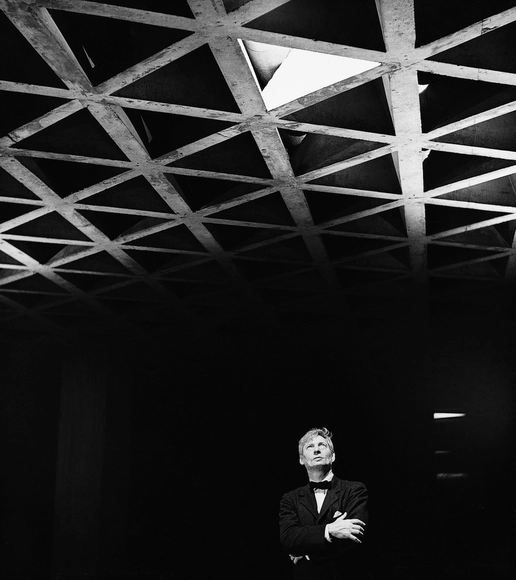
Does shadow have the power to give form to architecture? The increasing number of transparent buildings and LED installations would enforce the impression that light has eliminated the relevance of shadow. But to answer that question, let’s look back to a master of light whose architecture was shaped by shadow: Louis Kahn.
According to writer Ana Lui, architecture is an "unlevel playing field." From unpaid internships to the C-suite, the profession has made itself awfully difficult to break into - unless you come from privilege, of course. However, there is one factor contributing to the profession's inaccessibility that you may not have considered: the prohibitive costs of design software for young, budding architects.
In 2011, UN-HABITAT and Project for Public Spaces (PPS) signed a 5-year cooperative agreement to aspire to raise international awareness of the importance of public space in cities, to foster a lively exchange of ideas among partners and to educate a new generation of planners, designers, community activists and other civic leaders about the benefits of what they call the "Placemaking methodology." Their partnership is helping to advance the development of cities where people of all income groups, social classes and ages can live safely, happily and in economic security and in order to reach these ambitious goals, the duo recently released 10 informative steps that cities and communities can take to improve the quality of their public spaces.