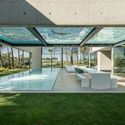
Home to vast geographic features like the Gobi Desert, Mongolia is not a country associated with its urban environment. But after economic reforms following the withdrawal of the Soviet Union in 1990 and the discovery of vast reserves of coal, gold and copper, a large portion of Mongolia’s historically nomadic society has recently begun to settle down, particularly in the capital city of Ulaanbaatar, where nearly half of the country’s 3 million residents now live.
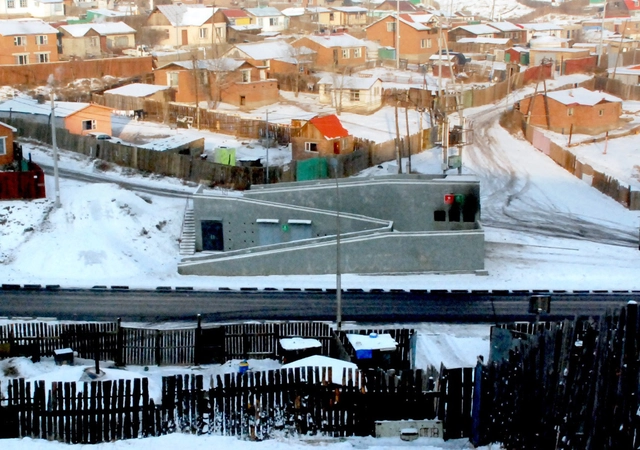
Unfortunately, the infrastructure of the city hasn’t yet had a chance to catch up to these rapid growth patterns, resulting in sprawling slum-like settlements consisting mainly of traditional felt tents - known as gers - encircling the city. Civic buildings throughout these neighborhoods are rare, and even travelling within the city is difficult due to the lack of official maps.
The Architectural Review has announced the final winners in its 2016 Women in Architecture awards, awarding Mexican architect Gabriela Etchegaray with the Moira Gemmill Prize for Emerging Architecture, and Jeanne Gang with the Architect of the Year award. In honoring Gang and Etchegaray, the AR noted that both "have demonstrated excellence in design and a commitment to working both sustainably and democratically with local communities." The pair join other Women in Architecture Award winners Odile Decq and Julia Peyton-Jones, who last week received the 2016 Jane Drew Prize and Ada Louise Huxtable Prize, respectively. Read on for more about the awards.
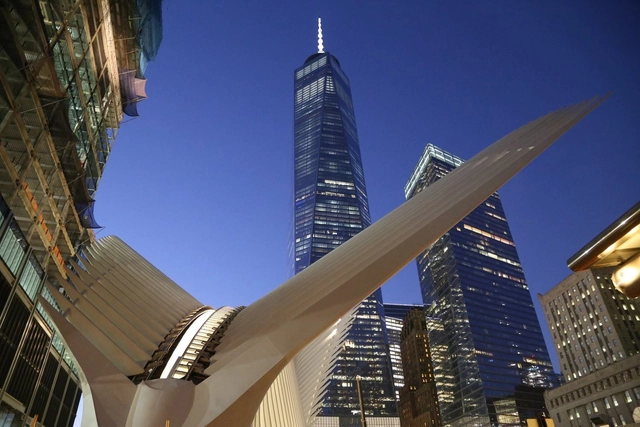
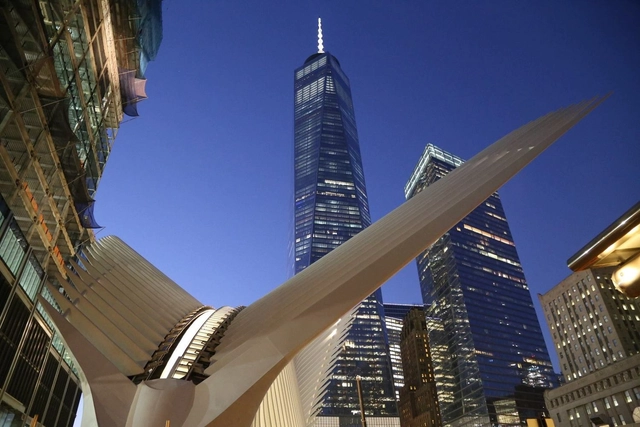
After 12 long years and a series of construction headaches, Santiago Calatrava’s $4 billion World Trade CenterTransportation Hub has finally opened to the public. Once widely regarded as a symbol of hope for post-9/11 New York, the project’s ballooning budget and security-related revisions gradually soured the opinions of the public and top design minds including Michael Graves and Peter Eisenman, and provoked a multitude of mocking nicknames ranging from “Calatrasaurus” to “squat hedgehog” to “kitsch dinosaur.” All the while, Calatrava urged critics to reserve their opinion until the project’s opening. Now that day has arrived - did Calatrava receive the vindication he was insistent would come? Read on for the critics’ takes.
Yesterday, and for the first time in La Biennale's history, the press tour included a stop in the Southern Hemisphere. From his home city of Santiago, Alejandro Aravena shared more details about the upcoming exhibition in Chile's presidential palace (La Moneda) alongside the president of the Biennale and the president of Chile.
The main information to emerge from the press conference was the presentation of the lone image that represents this year's Biennale and the announcement of the participants. In the video above, Aravena gracefully explains how Bruce Chatwin's image of German archaeologist Maria Reiche encapsulates "the Biennale as a whole."
Aravena stressed that he wanted the disclaimer for the exhibition to be the exact opposite of "Don't Try This At Home." He explained, "Given the complexity and variety of challenges that architecture has to respond to, 'Reporting from the Front' will be about listening to those that were able to gain some perspective and consequently are in the position to share some knowledge and experiences with those of us standing on the ground."
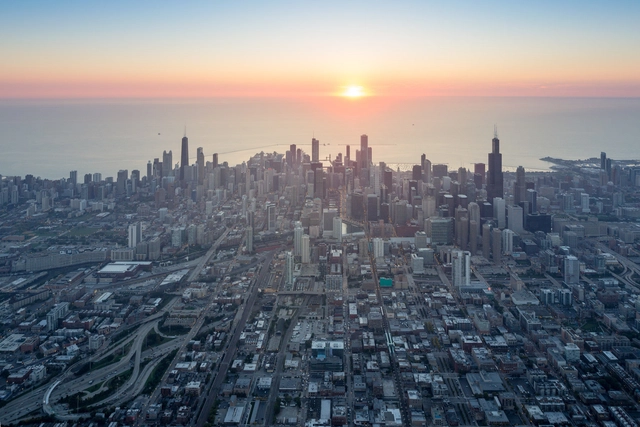
For a number of years now, Smart Cities and Big Data have been heralded as the future of urban design, taking advantage of our connected, technological world to make informed decisions on urban design and policy. But how can we make sure that we're collecting the best data? In this story, originally published on Autodesk's Redshift publication as "'Array' of Possibilities: Chicago’s New Wireless Sensor Networks to Create an Urban Internet of Things," Matt Alderton looks at a new initiative in Chicago to collect and publish data in a more comprehensive way than ever before.
If it hasn’t already, your daily routine will soon undergo a massive makeover.
For starters, when your alarm clock goes off, it will tell your coffeemaker to start brewing your morning joe. Then, when you’re on the way to work, your car will detect heavy traffic and send a text message to your boss, letting her know you’ll be late. When you arrive, you’ll print out the agenda for today’s staff meeting, at which point your printer will check how much ink it has left and automatically order its own replacement cartridges.
At lunch, you’ll think about dinner and use your smartphone to start the roast that’s waiting in your slow cooker at home. And when you come home a few hours later, your house will know you’re near, automatically turning on the lights, the heat, and the TV—channel changed to the evening news—prior to your arrival. It will be marvelous, and you’ll owe it all to the Internet of Things (IoT).
We'd like to discuss this common critique. The point of the role of visualizations in our communication is relevant but, even though we fully understand where the criticism comes from, arguments such as these are in our opinion not correct.
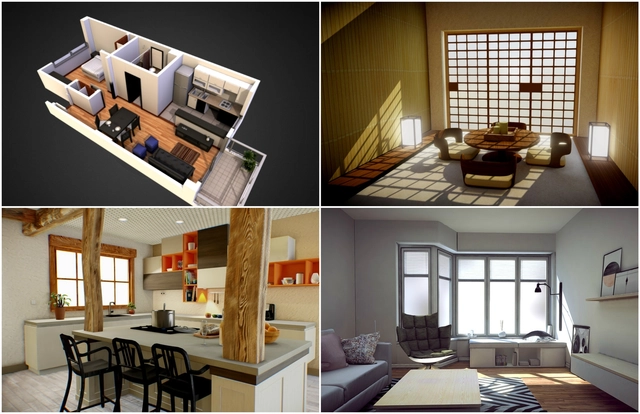
When making a 3D model, just as with a physical model, one of the biggest challenges is in effectively conveying the feeling of a design's interior. This is made worse by the fact that historically, 3D modeling and viewing software has treated the design being modeled as primarily an object to be orbited around, rather than as a space to be viewed from within. The introduction of first-person viewing modes has improved this, but these still are hampered by the fact that movement is never as simple or intuitive as simply walking around in real space. All of this can make presenting interior spaces a frustrating experience.
However, there are a variety of techniques you can use to display interiors more effectively. In the second of our Selected by Sketchfab series, our partners at Sketchfab have picked out the best examples of from their platform of models that inventively show off interior spaces.
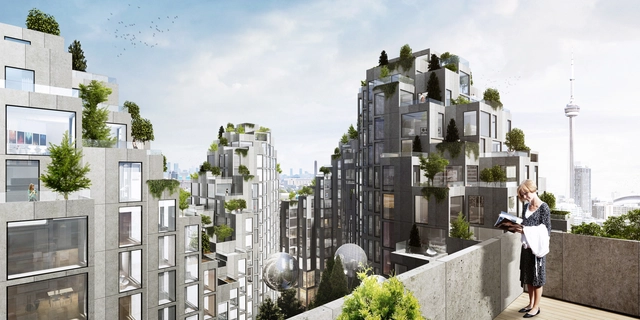
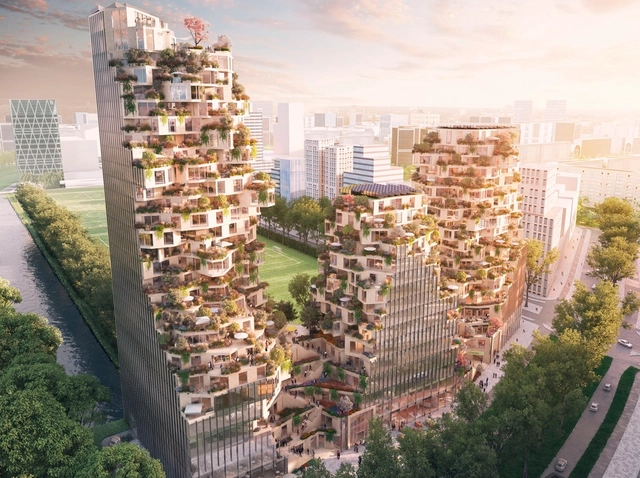
BIG has unveiled plans for a new residential development on downtown Toronto's King Street West. A "ziggurat" designed to "create communities," as The Globe and Mail says, "Toronto 2.0" features two "pixilated" towers likened to Moshe Safdie's Habitat 67.
In the face of global doomsday predictions, sustainability has become one of the most crucial aspects of the 21st century, now playing a huge role in everything from politics to the way you dispose of your trash. Fortunately, most architects understand sustainability implicitly, and have adopted it into their lives and work. Or have they? In this article, originally published on Common Edge as "Why Architects Don't Get It," green building expert Lance Hosey highlights the failures of the architecture community in reaching their stated sustainability goals, and argues for a new conception of architecture in which good design and sustainable design are integrated.
A few years ago, the American Institute of Architects, the self-declared “voice of the architecture profession,” announced that "AIA members will no longer need to complete the sustainable design requirement to fulfill their AIA continuing education." Why? Because “sustainable design practices have become a mainstream design intention.” Hooray! If sustainability is “mainstream” now, and knowledge about it is no longer necessary “to maintain competency” and “to advance and improve the profession”—the purpose of continuing education, according to the AIA—then the profession must have met its environmental goals, and there’s nothing left to improve. Mission accomplished.
There's no question that virtual reality has the potential to change architecture. But as with all new technologies, it can be difficult to understand at first. In this article originally published on his LinkedIn page, Kym Porter answers five commonly-asked questions about VR in architecture.
There's a movement about to happen in the industry of design and architecture and it involves VR (Virtual Reality). I've been using it for well over a year now and thought I'd share five of the commonly asked questions I've received so far.
Videos
WeWork's South Lake Union office in Seattle. Spaces such as these have proved very popular for small businesses, but they don't exactly work for architects.. Image Courtesy of WeWork
As part of the current "sharing economy" revolution, coworking facilities have transformed the creative marketplace. Since 2005, when the first coworking space was founded in San Francisco, the popularity of working in a shared environment has taken off. Today, hundreds of coworking facilities exist in cities of varying sizes across the world, supporting small businesses ranging from app developers to furniture makers to recording studios. But how have they grown so quickly? It’s all in the community. WeWork, which owns a number of coworking spaces worldwide, sums it up as “a place you join as an individual, ‘me,’ but where you become part of a greater ‘we.'”
Let yourself be silently drawn by the stronger pull of what you really love.
To the bewilderment of many friends, this quote by Rumi adorns the cover of my portfolio. It justifies my pursuit of a career in architecture instead of a more stable field. Although I teasingly explain that “architecture is chronic,” the quote still holds some truth.
As an architect, I thought I did my due diligence: working long, underpaid hours and late nights to build a solid portfolio. But, despite the recognition one’s work may receive, underpayment and employment uncertainty are considered part of the job. On the other hand, the diversity inherent to the profession promotes creative thinking and an aspiration to incite meaningful change; thus, it continues to ignite the imagination.
That’s why, when the opportunity presented itself in the summer of 2014, I took leave from work to visit the Middle East. Yes, that is correct. Having the opportunity to grow up in the East and then to live in the West, I know better than to submit to the media’s fear-inspiring propaganda. I figured that speaking the language and being a seasoned traveler would come in handy. So I set out on an expedition that not only reconnected me to architecture, but also led to one of the most meaningful projects I have worked on.
The benefits and capabilities of building information modeling in large-scale architectural practices are well known. But is BIM really necessary for smaller firms? Many small firms have been operating using traditional CAD methods for some time now, and switching technologies can seem a daunting task, especially for companies that operate on small budgets and without the specialized personnel of large international firms. But this is 2016 and the economic landscape has changed, with more and more expected from architects all the time. Time is more valuable now than ever. Where BIM software programs were once seen as simply nice to have, their large range of benefits have now made BIM an essential part of the design process. And as the following reasons show, BIM is just as important a tool for small offices as it is for larger ones.
https://www.archdaily.com/782695/7-reasons-why-transitioning-to-bim-makes-sense-for-small-firmsAD Editorial Team
This month's interactive 3D floor plan shows a simple and beautiful steel frame structure designed by Charles Eames and Eero Saarinen. The Case Study House Program, initiated by John Entenza in 1945 in Los Angeles, was conceived to offer to the public models of a low cost and modern housing. Predicting the building boom after World War II, Entenza invited renowned architects such as Richard Neutra to design and build houses for clients, using donated materials from manufacturers and the building industry.
Entenza was the editor of the monthly magazine Arts & Architecture, in which he published the ideas of the participating architects that he had invited. Two of those architects were Eero Saarinen and Charles Eames, who for Case Study House number 6, Entenza commissioned to design his own home. The house was built just a few meters away from Charles and Ray Eames’ house which the duo also constructed as part of the Case Study program.
Videos
Pavilion design by BIG. Image Courtesy of BIG
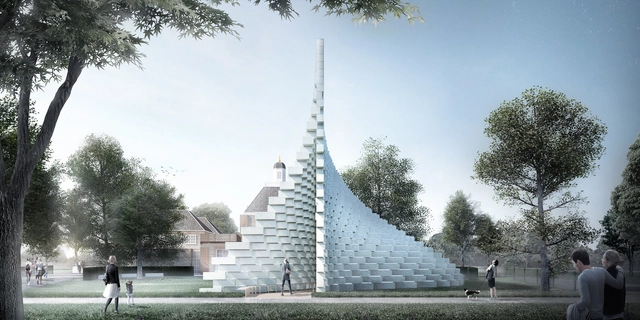
The Serpentine Gallery in London has unveiled the designs for this year's prestigious Serpentine Gallery Pavilion, designed by BIG, showing an "unzipped wall" which rises to a point above the entrance. In addition to the pavilion, this year the Serpentine gallery will host four smaller "summer houses" designed by Kunlé Adeyemi - NLÉ, Barkow Leibinger, Yona Friedman and Asif Khan. For these summer houses, the Serpentine Gallery asked the participants to take inspiration from Queen Caroline's Temple, a small, classical summer house near to the gallery that was built in 1734.
In this video, one of Jean Prouvé's famous 1944 demountable houses - in this case a 6-meter by 6-meter variation - is rapidly constructed on a beach, showing off the design's ruthlessly efficient structural system and sequence of construction. The video is one of a series in recent years, almost always published in a time-lapse format, that show off how quickly this early example of mass-produced, temporary social housing could be put together.
The video, as with others before it, is an interesting look at such an early example of small-scale modular buildings - but with the advances made in material and manufacturing technology in the 70 years since its design, the building is hardly a revelation in how to create buildings quickly and cheaply. So what's behind all this interest in the Prouvé demountable house?
From architecture to music, directing and production, Portuguese photographer Ricardo Oliveira Alves worked in several different creative industries before combining his two biggest passions and starting his own architectural photography studio, Ricardo Oliveira Alves Architectural Photography, in 2010.
Alves captures emblematic national architecture projects in addition to work by prominent architects worldwide, “fusing the vision of the architect” with that of the photographer. He is also known for his “Archilapse” videos, which feature timelapse montages of architectural works.
Read an interview with Alves and view a selection of his images after the break.






_Hedrich_Blessing_015.jpg?1457105259&format=webp&width=640&height=580)


_Rob_'t_Hart.jpg?1456927640 "The 5th-floor forest at MVRDV's EXPO 2000 Dutch pavilion, photographed during the expo in 2000. Image © Rob't Hart")