-
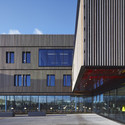
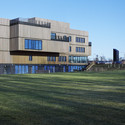
Architects: Bennetts Associates
- Year: 2013



_Hufton_Crow.jpg?1370195371)

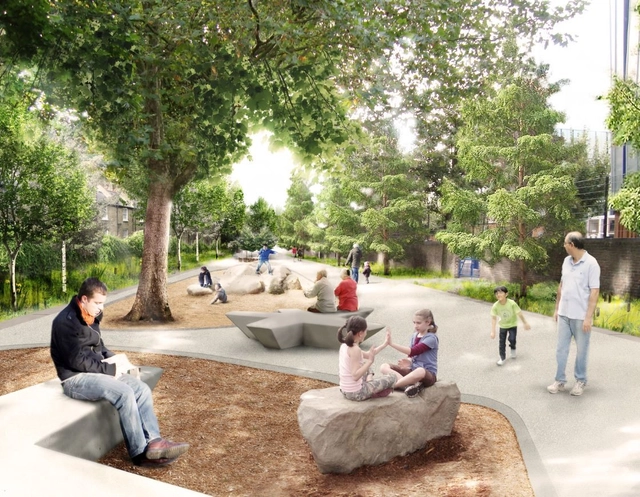
Westminster City Council has just announced Feilden Clegg Bradley Studios, urban designers and architects and Grant Associates, UK landscape architects, as part of a multidisciplinary team to devise a twenty-year infrastructure and public realm plan for Church Street, London, to support the council’s housing renewal strategy. Residents have just voted in favor of proceeding with the first phase of regeneration plans for Church Street in a ward-wide referendum. More images and architects' description after the break.
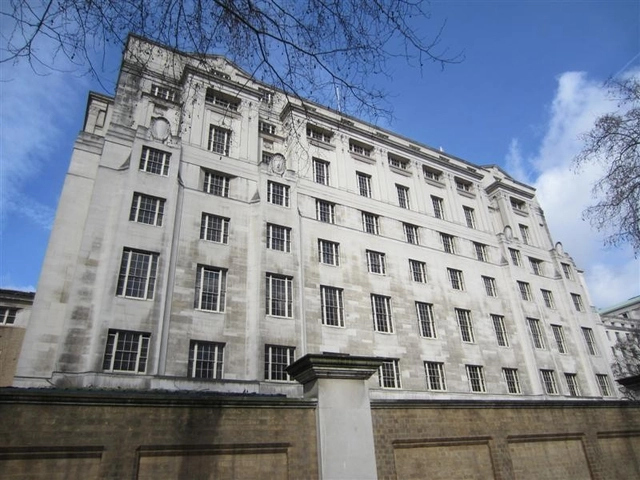
The Royal Institute of British Architects (RIBA) just announced the launch of a new design competition on behalf of the Mayor’s Office for Policing and Crime (MOPAC) and Metropolitan Police Service (MPS) to create a new central London Headquarters - replacing their existing New Scotland Yard building. The Invited Design Competition provides architects/practices with the opportunity to produce a design for the renovation of this landmark in one of London’s most important and historic areas - to provide a modern, flexible and secure office environment for the MPS. The deadline for submissions is June 27. For more information, please visit here.

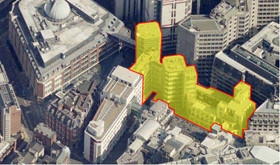
RIBA is now inviting expressions of interest from architect-led design teams with exceptional design skills for the London School of Economics and Political Sciences (LSE) New Global Center for the Social Sciences, the world’s leading center for social sciences. The next step in the campus development program is to further improve the School’s teaching, research and support facilities through the complete redevelopment of the center of its Aldwych campus. The new building that will be constructed will have a vital role to play in cementing the LSE’s position as a world renowned educational establishment and will become a place that inspires existing LSE students and will help attract new high caliber students and staff to the School. The deadline for submissions is June 14. For more information, please visit here.
Make.jpg?1369433093&format=webp&width=640&height=580)
As part of the on-going debate surrounding the UK’s future aviation strategy, Make Architects just unveiled further studies to support its proposals for an expansion of Stansted Airport as a viable option. Building on existing infrastructure, the architects strongly believe that Stansted can connect with central London within 25 minutes, thereby making it one of the most deliverable and affordable solutions currently on the table, costing £18billion to deliver and providing up to £100billion in investment for the east of the country. More images and architects' description after the break.
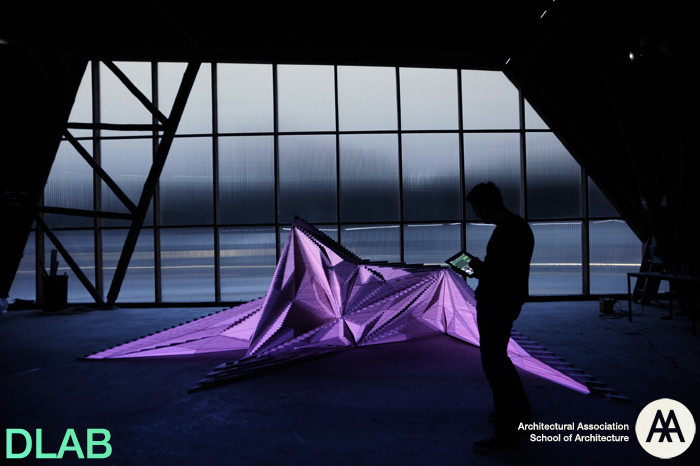
The Architectural Association announces the 2013 edition of the DLAB, the intensive computation and fabrication oriented workshop. The workshop continues the experimentation of last year's edition, which resulted on the Fallen Star installation.
DLAB experiments with the integration of algorithmic and generative design methodologies as well as with large scale digital fabrication tools. Continuing its color based agenda DLAB will immerse in blue for its 2013 cycle as a way to investigate natural growth processes in relation to innovative concepts of architectural tectonics and fabrication. Blue will become the inspiration for diving into the depths of emergence, differentiation and complexity which are found at various scales in nature. We will carefully interweave these concepts with interaction and participatory design in order to create full-scale working prototypes. The programme will be formulated as a two-phase process. During the initial phase participants will benefit from the unique atmosphere and facilities of AA’s London home. The second phase will shift to AA Hooke Park campus and revolve around the fabrication and assembly of a full-scale architectural intervention which will unify the design goals of DLAB.
Some of the most prominent features which the participants will be exposed to during DLAB include:

Shiro Studio, in collaboration with Mesh Partnership and Equals Consulting were just announced by RIBA as the winning team of the Great Fen Visitor Center competition. Sitting beautifully within the expansive landscape, the team had skillfully incorporated elements of the traditional Fenland building typology within an exciting contemporary visitor center design. The silvery and bog-oak black exterior, shimmering with the play of Fenland light, would contrast markedly with, and complement, its spacious, light-filled interiors and panoramic views onto the surrounding landscape. More images and architects' description after the break.
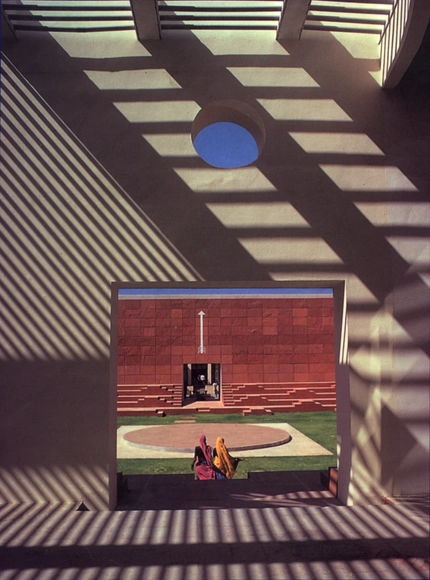
The Royal Institute of British Architects (RIBA) presents the first major UK exhibition showcasing the work of renowned Indian architect Charles Correa (born in 1930). Rooted both in modernism and the rich traditions of people, place and climate, Correa has played a pivotal role in the creation of an architecture and urbanism for post-war India. He has designed some of the most outstanding buildings in India and has received many of the world’s most important architecture awards including the RIBA Royal Gold Medal (1984), Aga Khan Award for Architecture (1988) and Japan’s Praemium Imperiale (1994), and is still working today.
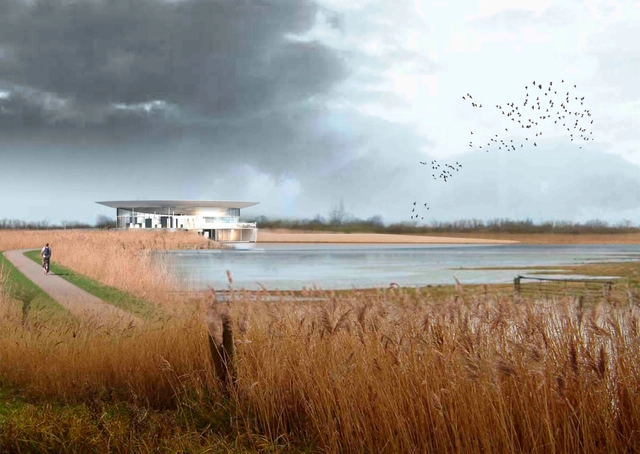
The ‘Great Sky Visitor Center’ is a shimmering mirrored disc floating above the flat horizon of the Great Fen atop a shallow cone of fenland planting - a dramatic profile and marker in the landscape, but also one camouflaged when seen from the air. Designed by Nicholas Hare Architects, the silvered surface, that seen from within, dematerializes its edge against a reflected sky, intends to patinate and change over time in sympathy with the landscape it reflects. More images and architects' description after the break. Their design is a spherical surface reflecting 360 degree views of the continually evolving Fen landscape. In place of selective framed views, all views would be accepted into the heart of the Center from this ever changing landscape. A shallow landscaped cone provides added drama on approach to the upper viewing level: a device that allows the circular structure to act as a compass, allowing orientation and a literal and metaphorical sinking into the landscape from any chosen point of departure.
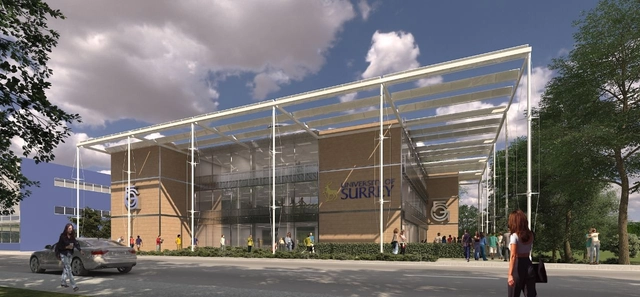
Scott Tallon Walker Architects just won the competition to design the new £35 million 5G Research Centre for the University of Surrey which will be the world’s first center for research into the next stage of mobile technology at the University. Their concept for the new building creates a flexible space with a circular atrium that acts as a central lung and focus, to ensure maximum interaction amongst researchers. The building will house the UK’s largest academic research center for mobile communications with 130 researchers and around 90 PhD students. The project has been given an urgent status and it is being undertaken immediately/ The project is expected to be completed well before the end of next year. More images and architects' description after the break.
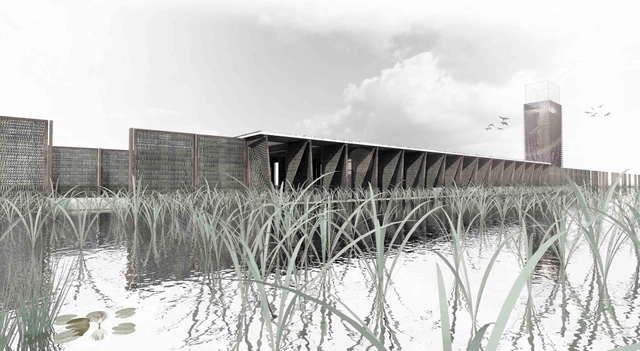
Titled, 'The Fenland Beacon', this proposal for the Great Fen Visitor Center is rooted in the landscape; responding to the inherent qualities of the Great Fen. Designed by Nicholas Hare Architects, the expansive sweep of the timber façade that ventures out and dissolve into the landscape is punctuated by the tower dramatically rising above the Fenland horizon, anchoring the visitor centre within the wider context; an orientating beacon within the expanse of the Great Fen. More images and architects' description after the break. Visitors are invited to embark upon a journey, aiming to elevate their understanding and deepen their relationship with the Great Fen. The linear sequence of experiences through the site, pavilion and tower distil the beauty of the environment into their elements whilst silencing the others, allowing the appreciation of each individual aspect that makes up the whole. Culminating in the ascent of the tower, the visitor is rewarded with a unique 360-degree panorama of the Great Fen.


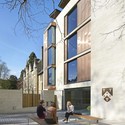


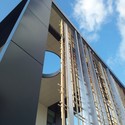


_Hufton_Crow.jpg?1370195392 "© Hufton+Crow")
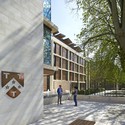
_Hufton_Crow.jpg?1370195338 "© Hufton+Crow")
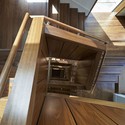
_Hufton_Crow.jpg?1370195354 "© Hufton+Crow")
_Hufton_Crow.jpg?1370195361 "© Hufton+Crow")
_Hufton_Crow.jpg?1370195371)