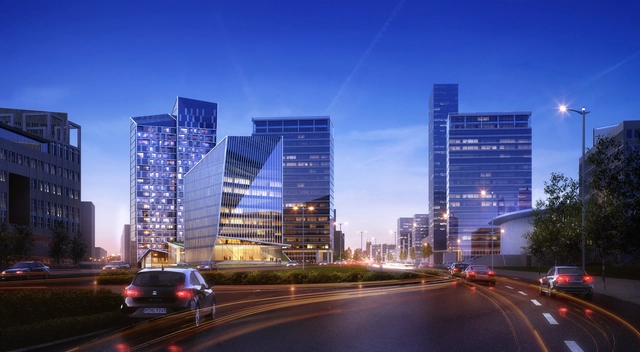
DITTEL | ARCHITEKTEN GmbH has created Pop Up Box, a convertible retail space located in a shopping center in Stuttgart, Germany. With its cube design, the Box serves as a self-contained, customizable presentation area, where retailers can move three of the four pieces to create his or her own sales space.
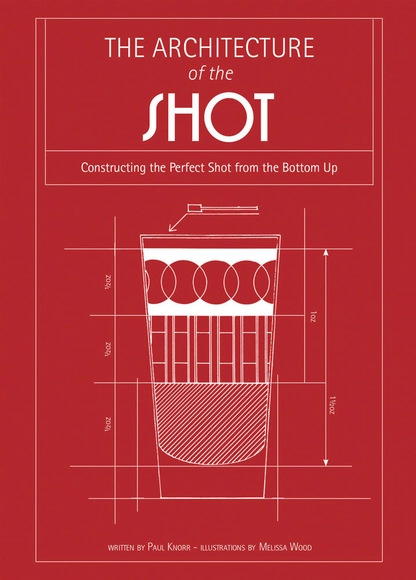
The best buildings always start with a background, materials, and a plan. With a little help, now shots can too. In their new book, The Architecture of the Shot, author Paul Knorr and architectural planner Melissa Wood teamed up to create 75 blueprints detailing the creation of "the perfect shot from the bottom up." With historical backgrounds, detailed materials lists, and precise plans, anyone with an architectural eye will feel right at home constructing the “perfect” mixtures.
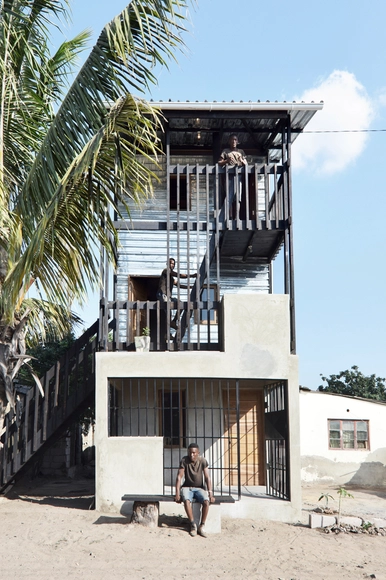
The Department of Human Settlements at the Royal Danish Academy of Fine Arts' School of Architecture, Design, and Conservation has developed a new low-income housing prototype for Maputo, Mozambique in southeast Africa as part of the Casas Melhoradas research project. The prototype reinterprets the area’s traditional “Casa de Madeira e Zinco,” which is made of wood and corrugated iron sheets, and the "Casa de Blocos," which is composed of concrete blocks.
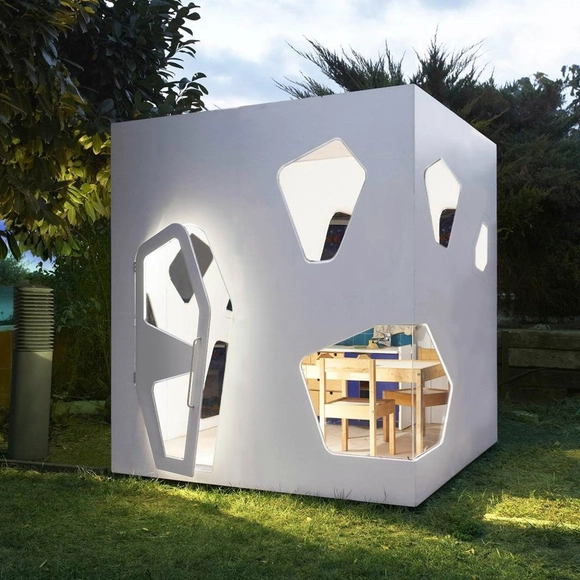
Barcelona-based designer David Lamolla of SmartPlayhouse creates children’s playhouses based on contemporary architecture styles, aiming to create fun spaces for children that are also sculptural elements for the garden. His Kyoto playhouse series is inspired by minimalist Japanese architecture, taking on a form reminiscent of Toyo Ito’s Mikimoto Ginza 2 building.
Museum of Modern Art; New York, United States of America. Image Courtesy of The Leading Culture Destinations Awards
The winners of the 2015 Leading Culture Destinations Awards have been announced at a ceremony in London. The Awards recognize the success of “museums, art organizations, and cultural destinations from around the world [that] are investing in iconic architecture, cross-sector collaborations, [and] audacious programming […] to diversify the experiences offered to visitors and establish their global reputations.”
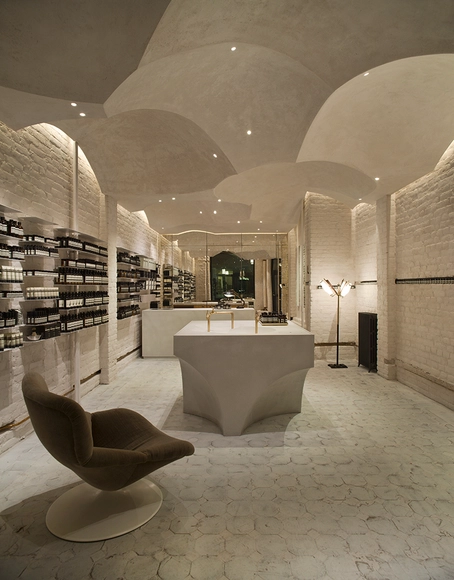
To pay "tribute to the creative processes, materials and features" that characterize each of its store designs, Aesop has a launched a new website called Taxonomy of Design. Inspired by the compendium, we’ve rounded up some of the best Aesop store designs, each of which is distinctly developed, largely by local designers who are inspired by the location of the store. Read on for nine Aesop shops that revitalize architectural simplicity.
Patano Studio Architecture has created a proposal for a 45-acre, two-mile park spanning over the top of the Interstate-5 freeway in Seattle. Called C.A.P., the plan “proposes a city-wide architectural infrastructure solution to multiple issues facing the fast growing city.”
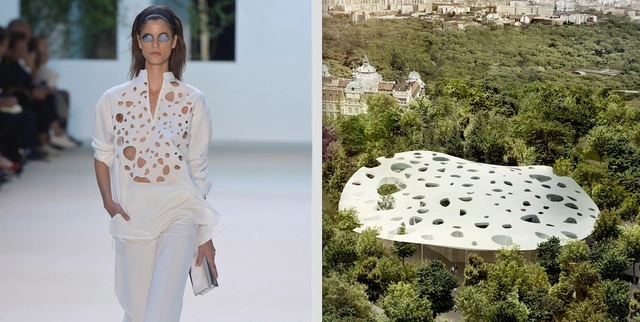
At this year’s Paris Fashion Week, Switzerland-based fashion house Akris showed its 2016 Spring/Summer Collection -- an assembly of garments based on the work of Japanesearchitect Sou Fujimoto.
Akris’ creative director, Albert Kriemler, was introduced to Fujimoto by photographer Iwan Baan while working on the Université Paris-Saclay. From a stance of admiration, Kriemler was thus influenced by Fujimoto’s work: "We share a vision to create an effortless relation between the body and the environment with utmost simplicity. Sou Fujimoto is an architect who understands that we have more senses than just the eye," said Kriemler.
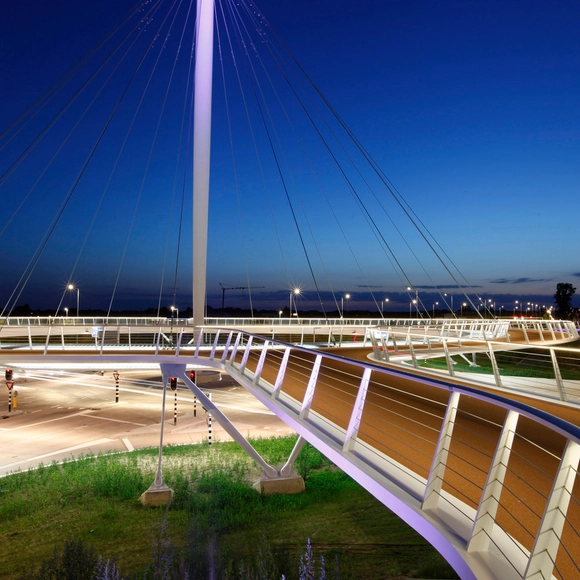
WIRED Magazine has created a list of Eight Cities That Will Show You What The Future Will Look Like in the latest edition of their design issue. In the relatively short span of time that humans have been planning cities, more and more decisions have been made that have shaped the path of new technologies and methods that will make cities better. Such projects—like new streetlights, bicycle infrastructure, and traffic-sensitive museums—highlight some of these advances in the urban lifestyle.
"The cities of tomorrow might still self-assemble haltingly, but done right, the process won’t be accidental. A city shouldn’t just happen anymore. Every block, every building, every brick represents innumerable decisions. Decide well, and cities are magic," writes Wired author Adam Rogers. Read on after the break to see how 8 different cities from around the world are implementing innovative projects.
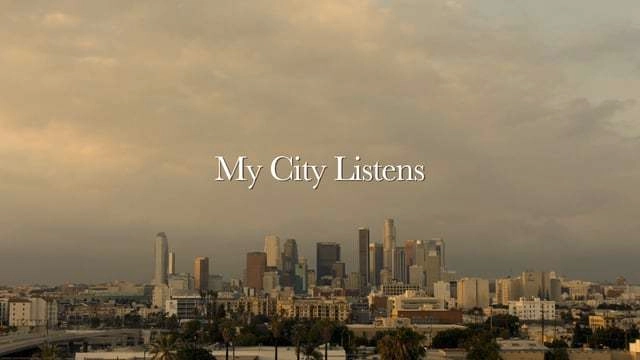
Since we looked at this aerial footage of London in 2012, some major changes in the architecture of the city have occurred. Shot by the same photographer, Jason Hawkes, this new footage of London travels over greenbelts, Piccadilly Circus, the Thames River, The Shard, and Canary Wharf, among other impressive views. Take a look at London’s changed landscape by watching the video above.
“We as a profession have to encourage young architects to understand that the technology they’re using is merely a tool. They have to understand how to build the building that they’re creating, but also understand that this place is going to affect somebody. So what can we do to make it a place that—in a sense—I want to be a part of, that I want to attach to?”
Architect and designer Neri Oxman, head of the Mediated Matter research group at MIT and developer of the “Material Ecology” approach, has given a TED Talk on design as the intersection of technology and biology. Oxman begins her talk by introducing the juxtaposition of left- and right-brain thinking in the design world, noting that her work seeks to marry the two by making design less about assembly of parts, and more about growth. Learn more about Oxman’s distinct work and views by watching the video above.
Pro-Form Architects has created Rolled Table, an information booth made of flexible plywood that challenges the standard form of a table. Created for the Water and Land Niigata Art Festival, which has been held every three years since 2009, Rolled Table displays guide books and pamphlets better than an average table due to its distinct curvature and lighting system.
The Jane; Belgium / Studio Piet Boon. Image Courtesy of The Restaurant & Bar Design Awards
The winners of the seventh annual Restaurant & Bar Design Awards—the only awards in the world dedicated to the design of food and beverage spaces—have been announced in London. Out of over 860 entries from the United Kingdom and 70 other countries, 36 designs were awarded, with two grand prize winners.
The winners of the Restaurant & Bar Design Awards are:
The government of Luxembourg has announced that Miami-based firm Arquitectonica has won the competition to design a major mixed-use project in Luxembourg City. Set in the new district of Kirchberg in Luxembourg, the 40,000 square meter complex design by Arquitectonica won the bid over notable names in architecture like Bjarke Ingels Group (BIG), Massimiliano Fuksas, and Neutelings Riedijk Architects.
Out of 26 entries for the competition launched earlier this year, a jury of architects and media professionals selected three top prize winners and recognized seven additional films in themed categories. The winning pieces best represent the competition’s call for films that highlight the impact that architects have on communities.
“Something I always tell my students is that it’s important to fail on a continuous basis—and I’m not talking about the grade. I mean it’s in the spirit of risk, that you have to be willing to free yourself from a set of preconceptions in order to get to this new place. And if failing constitutes making mistakes in order to learn from these mistakes, then you have achieved an enormous amount. In fact, you’re only able to move forward because of this new-found knowledge.”



.jpg?1444925222&format=webp&width=640&height=580)

.jpg?1444011708&format=webp&width=640&height=580)

.jpg?1444075319&format=webp&width=640&height=580)