Boris Brorman Jensen and philosopher Kristoffer Lindhardt Weiss have been appointed to curate the Danish contribution to the 2016 Venice Biennale. Their exhibition will centre on the theme of 'humanism', a "central leitmotif in Danish architecture," which "promotes a sense of community and expresses civic pride." Although it is top of the agenda, they state that "there is not much agreement on how, when and by what means this 'humanistic architecture' should be realised."
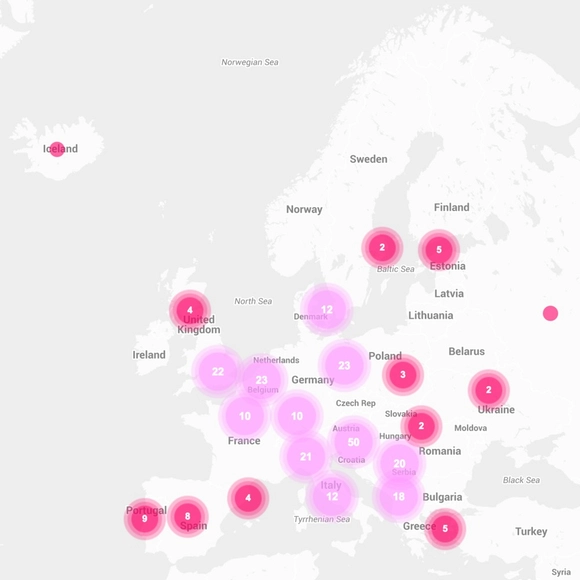
Geographical range of the selected Ideas. Image Courtesy of Future Architecture Platform
The results of the 2015 Future Architecture Call for Ideas have been announced, "revealing the critical thinking of the currently emerging generation of designers and architects in relation to the existing models that shape architecture as a discipline." Submissions presented visions "of what architecture could be, and highlighted architects and designers as initiators of change in the larger societal picture." As the first pan-European platform of architecture museums, festivals and producers, it has been designed to both bring together ideas about the future of cities and architecture closer to the wider public.
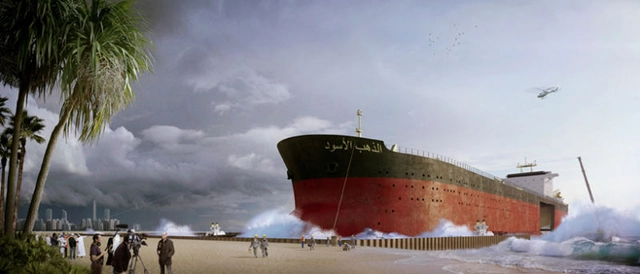
Four Dutch designers—Chris Collaris, Ruben Esser, Sander Bakker and Patrick van der Gronde—have envisioned a sustainable design of re-use for a discarded oil tanker in the Southern Gulf Region, which they have entitled The Black Gold. They believe that the oil tanker is the "perfect icon" for representing "the geographic, economic and cultural history of the Arabic oil states" – an icon which they predict will become more and more obsolete as the supply of crude oil is moved away from shipping and into pipe infrastructure.
For this edition of The Urbanist, Monocle 24's weekly "guide to making better cities," the team ask whether the typology of the department store – their urban impact and the ways in which they have redefined the shopping habits of many. The show examines the history of the London department store and heads to Paris to explore France’s first, Le Bon Marché. The team also draw parallels between Istanbul’s old 'hans' and their contemporary equivalents.
Following an international open call for 'Intervention Strategies' which connect and correspond to the 2016 Oslo Architecture Triennale’s theme—After Belonging—five proposals have been selected to be developed as part of its core program, to be displayed and discussed throughout the course of the event. The jury have been "pleased and impressed by the wide range of proposals, their creativity, seriousness and sometimes also the humor with which [the submissions] approach issues of real gravity, and by the care and hard work that was evident in almost all of them."
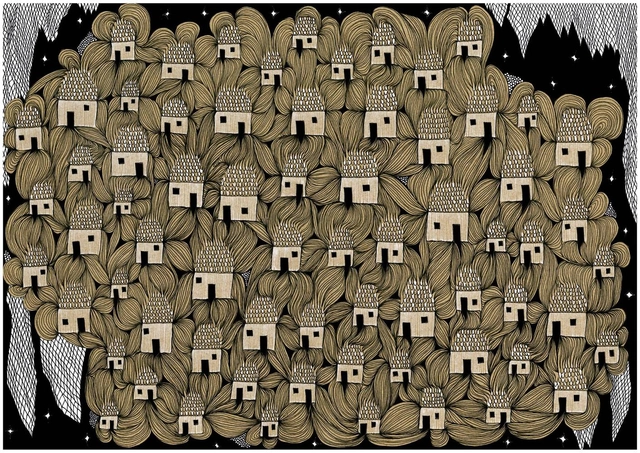
Lima-based architect Karina Puente has a personal project: to illustrate each and every "invisible" city from Italo Calvino's 1972 novel. The book, which imagines imaginary conversations between the (real-life) Venetian explorer Marco Polo and the aged Mongol ruler Kublai Khan has been instrumental in framing approaches to urban discourse and the form of the city. According to Puente, who has shared six drawings with ArchDaily, "each illustration has a conceptual process, some of which take more time than others." Usually "I research, think, and ideate over each city for three weeks before making sketches." The final drawings and cut-outs take around a week to produce.
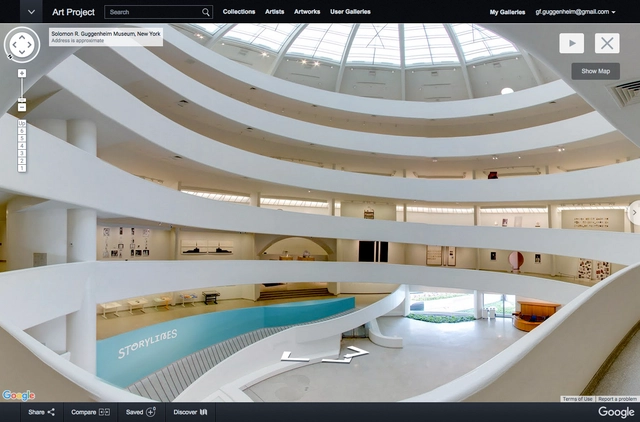
The Google Cultural Institute have teamed up with New York City's iconic Solomon R. Guggenheim Museum, designed by Frank Lloyd Wright and completed in 1959, to open its doors through Street View. Additionally, the Solomon R. Guggenheim Foundation has made over 120 artworks from its collection available for online viewing. "Using Street View technology, it will now be possible to tour the museum’s distinctive spiral ramps from anywhere online," the Foundation said.
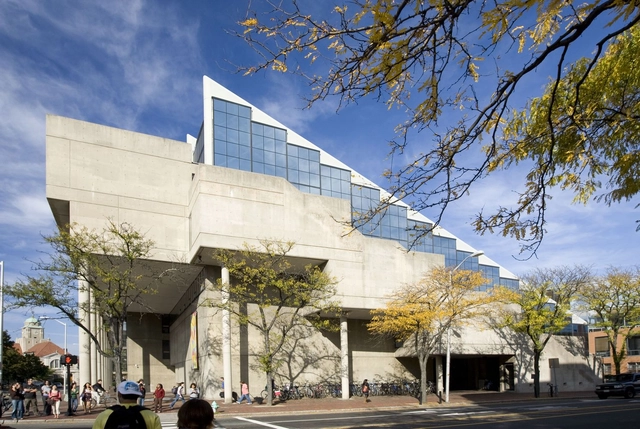
The Graduate School of Design. Image Courtesy of Harvard GSD
The Harvard Graduate School of Design (GSD) have announced Mohsen Mostafavi, Eva Franch i Gilabert, K. Michael Hays, Jeannie Kim, Benjamin Prosky, Rafael Moneo, and Kiel Moe as the jurors of the 2016 Wheelwright Prize. The award, "an open, international competition for early-career architects that supports travel-based research with a $100,000 grant," was relaunched as an international competition in 2012 and is now open to all graduates of professionally accredited programs within the last fifteen years. Last year's winner was Erik l'Heureaux for his proposal to study the extreme climatic conditions of equatorial zones.
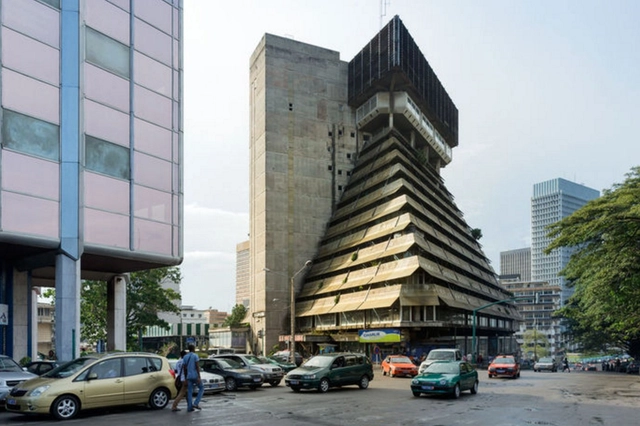
A new exhibition opening later this month at Chicago's Graham Foundation seeks to explore the complex history and legacy of modernist architecture in sub-Saharan Africa during the 1960s and 1970s. Architecture of Independence: African Modernismwill feature nearly eighty buildings in commissioned photographs by Iwan Baan, Alexia Webster, and Manuel Herz. Alongside archival material, the exhibition "imparts a new perspective on the intersection of architecture and nation-building in Ghana, Senegal, Côte d’Ivoire, Kenya, and Zambia and investigates some of the most compelling yet under-studied examples of 1960s and 1970s architecture worldwide."
New York City's Van Alen Institute have announced four new members—Haptic Architects, Mecanoo, Studio Libeskind, and Trahan Architects—to their International Council, a platform for exchange among leading architects, designers, developers, and planners. Furthermore, Jing Liu (SO–IL), Kim Herforth Nielsen (3XN), and Raymond Quinn (Arup) have joined its board of trustees to help guide the organisation's cross-disciplinary research, provocative public programs, and design competitions.
In the latest episode of The Urbanist, Monocle 24's weekly "guide to making better cities," the team tackle the 'establishment'. From small businesses to citizen collectives, the show discovers how "championing transformative change from the ground up can be the best way to alter the status quo in our cities." Investigating how the Ministry of Space is reclaiming public spaces in Belgrade, how ordinary citizens in Vienna are welcoming refugees, and how a collective in Rio de Janeiro wants to reshape the politics of the city, the episode also explores how small businesses in London’s West End are fighting against increasing rent.
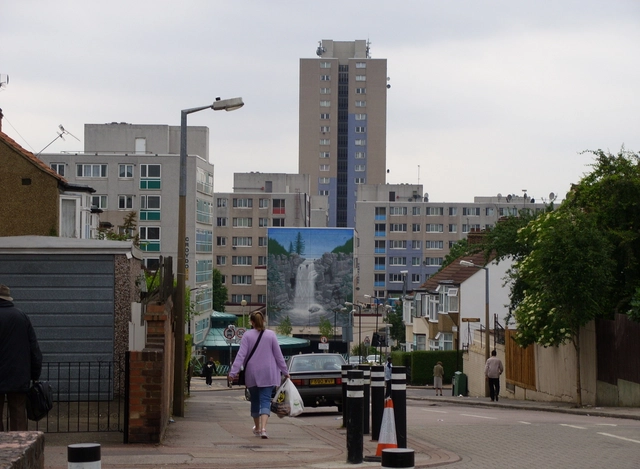
Broadwater Farm Estate ('The Farm') in Tottenham, North London. Image via Wikimedia
David Cameron has written an article for the Sunday Times denouncing "brutal" post-war housing estates as part of "an all-out assault on poverty and disadvantage" in the United Kingdom. Recalling time spent campaigning in "bleak, high-rise buildings, where some voters lived behind padlocked and chained-up doors" during the 1980s and since, he declares that "not enough has changed." "Some of them, especially those built just after the war," he writes, "are actually entrenching poverty in Britain – isolating and entrapping many of our families and communities."
A new short film, made by Jeremy Riggall for Alain de Botton's School of Life, gives insight into the working day of Tamiraa – a Civil Engineer working in Mongolia's burgeoning capital city of Ulaanbaatar. Aside from following Tamiraa's daily responsibilities, the film also touches upon issues related to working in a rapidly growing city with an urgent demand for better educational and healthcare provision, alongside new housing and its supporting infrastructure.
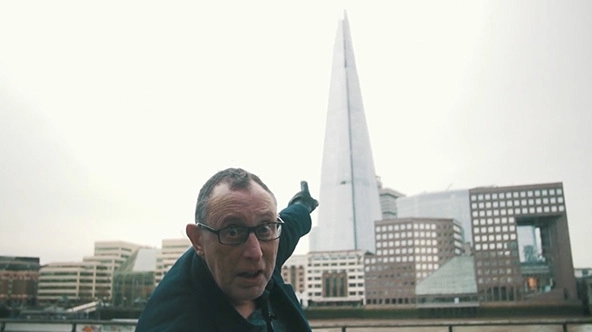
Ian Martin and London's 'Shard'. Image via Unbound
Ian Martin is an Emmy award-winning comedy writer who has been part of the architectural writing establishment since, it feels, time immemorial (which, in this case, is 1990). His satirical column in the British weekly Architects' Journal provides a spread that every reader looks forward to and now, after accumulating over a quarter of a century's writing, is crowdfunding to compile a compendium entitled Epic Space.
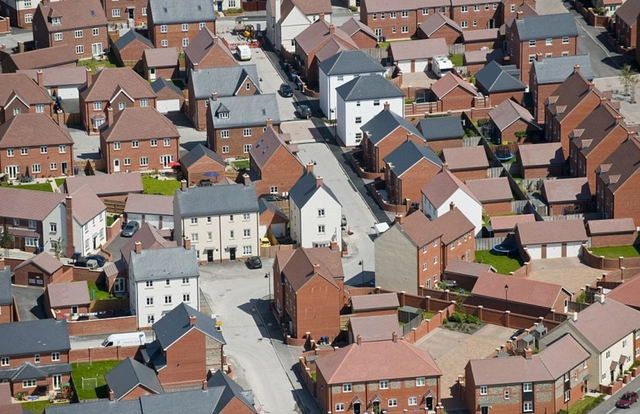
In his essay "Figures, Doors and Passages", the architectural historian Robin Evans described how "it is difficult to see in the conventional layout of a contemporary house anything but the crystallization of cold reason. Because of this," he asserted, "we are easily led into thinking that a commodity so transparently unexceptional must have been wrought directly from the stuff of basic human needs." His words, which highlight the passive approach of designers, developers and dwellers when it comes to the vast majority of British housing being built today, were first published in 1978 – two years before the Conservative government under Margaret Thatcher introduced the 1980 Housing Act.
A new exhibition, opening later this month in London, aims to examine the varying ways that cities and communities have been re-imagined in the aftermath of natural, or man-made, disasters. Including work by Yasmeen Lari, ELEMENTAL, OMA, Shigeru Ban, NLÉ, Toyo Ito, Metabolism (Kenzo Tange and Kurokawa Kisho) and Sir Christopher Wren, who redesigned London in the aftermath of the Great Fire of 1666, the exhibition will primarily explore contemporary responses to earthquakes and tsunamis. Posing questions about the fragility of architecture, our relationship to nature, and the power of architects to instigate change, it will ask whether we are facing a paradigm shift in the way that cities and communities recover from destruction.
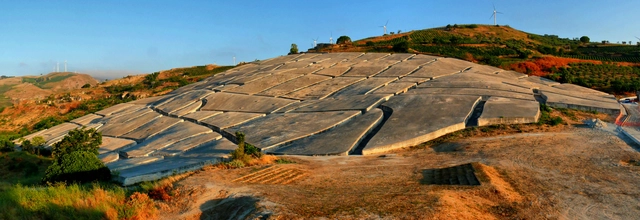
This first major retrospective of Alberto Burri's (1915-1995) work in the United States in nearly forty years will close at New York City's Guggenheim Museum later this week. More than one hundred works are on display covering his entire career, culminating in a film of Burri's largest work: the reinterpretation of the ruins of Gibellina, in Sicily. The old city, destroyed by the 1968 Belice earthquake, was later encased in concrete preserving the morphology of the buildings and the city's medieval streetscape. Alongside his two-dimensional work, the exhibition ultimately seeks to demonstrate how Burri blurred the line between painting and sculptural relief that directly influenced the Neo-Dada, Process art, and Arte Povera movements.
A new mobile application created by Dutch designer Richard Vijgen visualises the 'infosphere'—an interdependent 'network of networks' that is "populated by informational entities"—in realtime augmented reality, transforming our intangible environment into an abstracted world of pulsating waves of energy. We are "completely surrounded by a hidden system of data cables and radio signals from access points, cell towers and overhead satellites," according to the designer. The Architecture of Radio works by "reversing the ambient nature of the 'infosphere', hiding the visible while revealing the invisible technological landscape we interact with through our devices."





_MOMA.jpg?1451989017&format=webp&width=640&height=580)