Videos
Flinders Street Station Proposal. Image Courtesy of HASSELL + Herzog & de Meuron
Herzog & de Meuron and HASSELL's winning design for Melbourne's Flinders Street Station might not be built due to the fact "the State Government has of yet, refused to promise funding for the design, and ruled out selling the station in order to finance the construction." The project was estimated to cost "approximately $1 billion to $1.5 billion to be realised", which is "on top of the $1.6 million already spent on the competition", leading critics to describe the competition as a "waste of money."
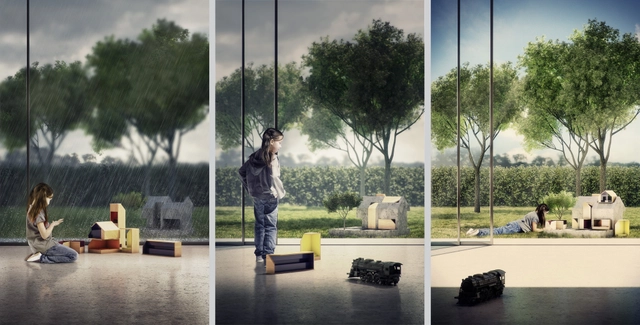
Inspired by the dolls' house that Edwin Lutyens designed for The British Empire Exhibition in 1922, twenty British practices are each designing a contemporary dolls' house in aid of the disabled childrens' charity KIDS. Each version will sit on a 750mm square plinth to be exhibited during this year's London Design Festival (14th - 21st September, 2013) before being auctioned. Each design must contain "a unique feature to make life easier for a child who is disabled."
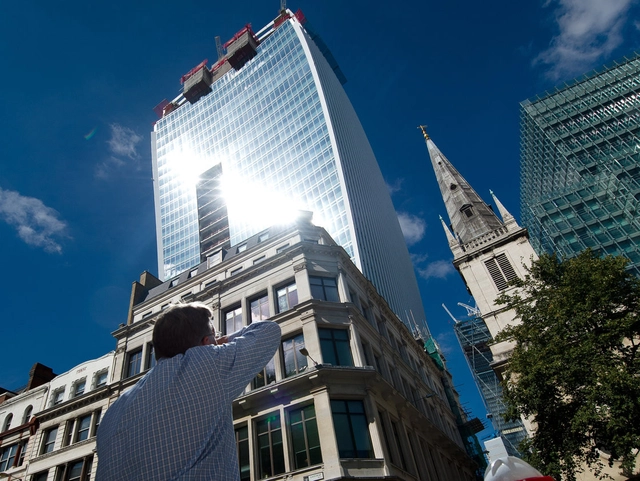
With the recent news that Rafael Viñoly Architects'20 Fenchurch Street (or the "Walkie Talkie") in London has been producing an unusually hot solar reflection, dubbed the "Death Ray," we've put together a list of seven architectural blunders around the world - from the worrying to the downright absurd.
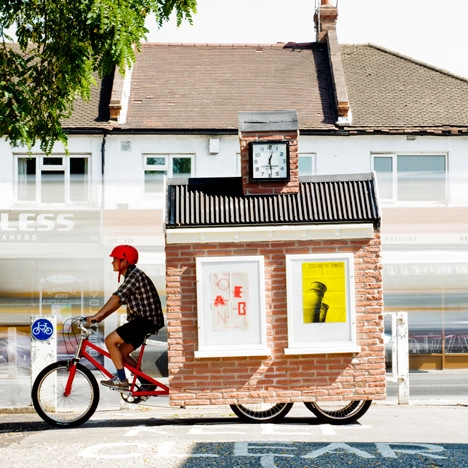
A Mobile town square designed for Cricklewood, by Studio Harto and Studio Kieren Jones. Image Courtesy of http://cricklewoodtownsquare.com/
Cricklewood, a North London suburb devoid of public space, is finding a new lease of life through a series of pop-up interventions - including a mobile town square designed by Studio Hato and Studio Kieren Jones - put together by civic design agency Spacemakers. While the project might have a bit further to go before any benefits are truly felt by the local residents, the project is part of a wider scheme financed by the Mayor’s Outer London Fund which will hopefully lead to the rejuvenation of more of the capital's suburbs. Read Liam O'Brien's full article in The Independenthere.
The term 'green' is notoriously difficult to define, and even more so when it comes to architecture. An often overused and fashionable way of describing (or selling) new projects, 'green' design seems to have permeated into every strand of the design and construction industries. Kaid Benfield (The Atlantic City) has put together a fascinating case study of a 1,700 dwelling housing estate near San Diego, challenging what is meant by a 'green' development in an attempt to understand the importance of location and transport (among other factors) in making a project truly environmentally sustainable. In a similar vein, Philip Nobel (The New York Times) explores how 'green' architecture is less about isolated structures and far more about "the larger systems in which they function". Read the full article from Kaid Benfield here, and Philip Nobel's full article here.
With Birmingham's new public library opening last week, Mecanoo's latest large-scale public building has received mixed reviews from critics in the UK. Check out the critical responses from Hugh Pearman, The Telegraph's Stephen Bayley, The Guardian's Oliver Wainwright, The Observer's Rowan Moore, and The Financial Times' Edwin Heathcote after the break...
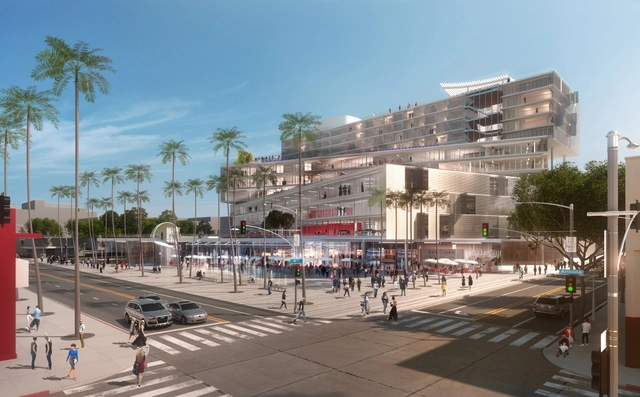
In July the Office for Metropolitan Architecture's (OMA) competition proposal for a mixed-use development in the heart of downtown Santa Monica was recommended by City Council members after they "seemed genuinely wowed by OMA's theatrically-terraced design." City officials have since voted to re-evaluate the recommendation over concerns of a lack of affordable housing in the development, as well as issues "related to design [and] economics." They have also invited Related California, a team comprising of BIG, Koning Eizenberg Architecture, and Rios Clementi Hale Studios, to revise its original proposal that was shortlisted in March of this year.
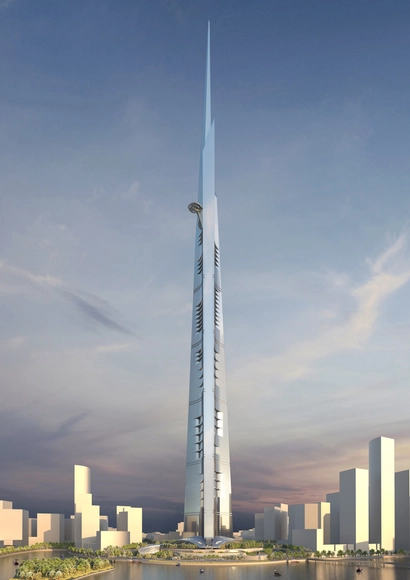
Ever expanding population growth coupled with the continuous development of urban centres mean that buildings, in general, will continue to get taller. With the topping out of One World Trade Centre in May this year the worldwide competition to construct towers with soaring altitudes doesn’t seem to be slowing, especially in China and the UAE. The question on many people’s lips, however, is how much of these colossal buildings is actual usable space?
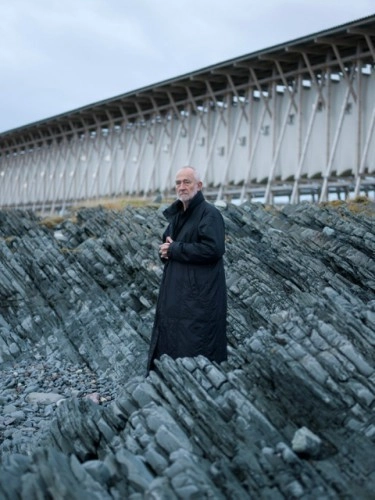
In an article for Vanity FairPaul Goldberger unravels the Swiss Mystique surrounding Peter Zumthor's personality and work, describing him as a "cross between Mies van der Rohe and Marcel Proust, with perhaps a tiny bit of Bob Dylan thrown in." With completed projects few and far between, but executed with intense experiential thought and craftsmanship, the article explores how Zumthor's motives has informed his rigorous attitude to architecture. Having recently been awarded the RIBA Gold Medal, the "cult following" that Goldberger described in 2001 seems to only be getting stronger. You can read the full article here.
The latest Future Trends Survey, published by the Royal Institute of British Architects (RIBA), shows a decrease of 3% in average earnings bringing the average salary in the UK to around £40,000. The largest fall in earnings is with sole principals, a quarter of whom are receiving less than £18,500 per annum. This is compared to principals in partnership who continue to average a salary of around £50,000.
The shortlist for the 2013 Royal Institute of British Architects (RIBA) Manser Medal, awarded to the best new house or major extension in the UK, has been revealed. Amongst the five competing projects, which have all won either National or Regional RIBA Awards, is Astley Castle, which has also been shortlisted for the 2013 RIBA Stirling Prize.