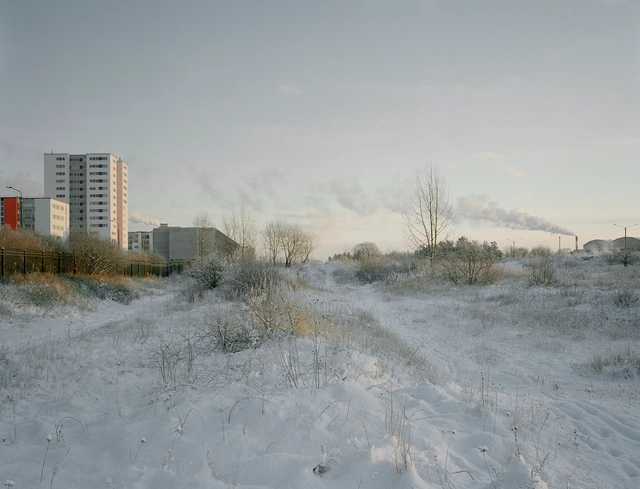
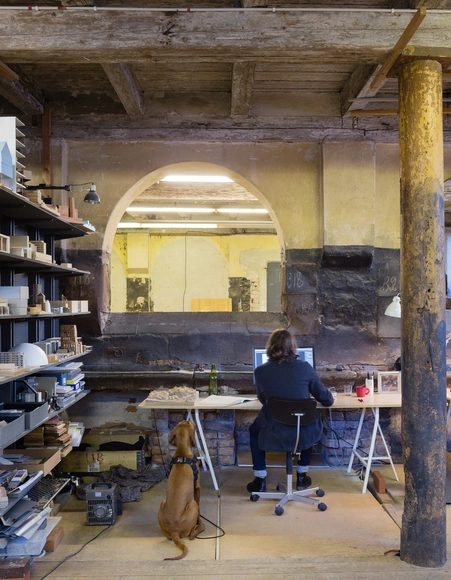
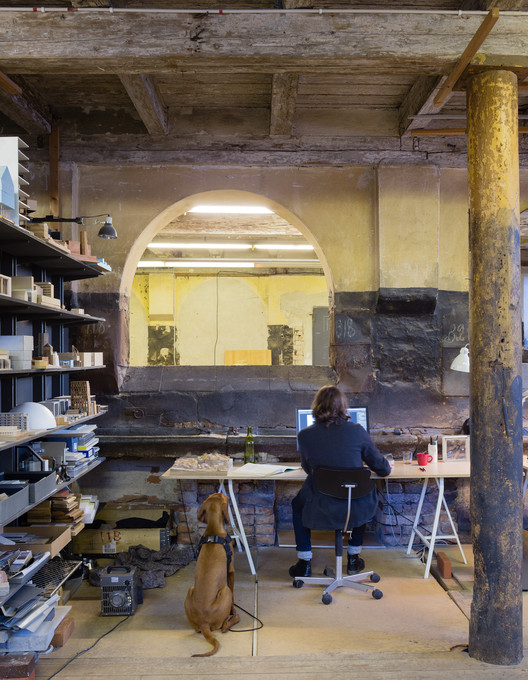
Architectural photographer Marc Goodwinhas recently completed "the ultra-marathon of photoshoots:" twenty-eight architectural offices in twenty-eight days, spread across four capital cities – Oslo, Stockholm, Copenhagen, and Helsinki. His aim was to understand what sort of spaces architects in the Nordic countries operate in, and how they differ between each respective country. From former boathouses to stables and coal deposits, Goodwin has captured some of the most unique working environments the profession has to offer.
The Moscow-based Strelka Institute for Media, Architecture and Design and the HSE Graduate School of Urbanism have launched a new collaborative international Masters programme entitled Advanced Urban Design. The two-year English language program, specifically designed for Bachelors, researchers and young professionals, intends to guide students through best practices in the area of urban planning. Under the guidance of a collection of tutors from Russia and around the world, the course aims to investigate conditions of growing cities by focusing on unstable socioeconomic contexts.
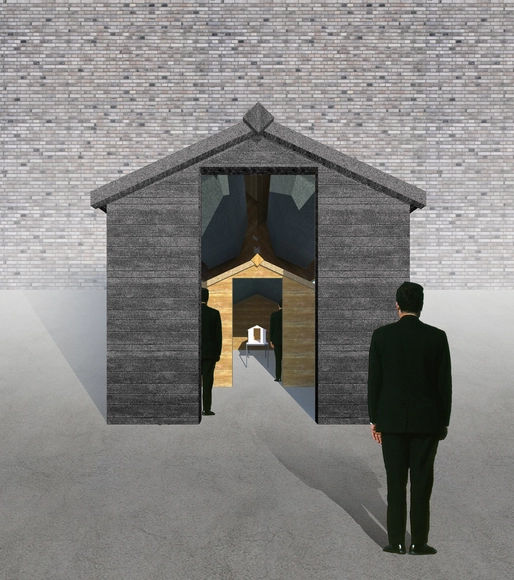
Sto Werkstatt have announced that Sam Jacob Studio will be creating "a unique installation" for their London gallery space that will "explore the exchange of information between digital and physical worlds." Entitled One Thing After Another, the project has its origins with what Jacob considers the most mundane, yet essential form, of architecture: the garden shed. The structure will be 3D-scanned to create a digital copy which will then be processed and scaled to fabricate a new CNC’d version from Verolith, a lightweight type of volcanic stone made of 90% perlite.
In this short film, Monocle speaks to Penelope Evatt Seidler about the Modernist home she designed and built with her late husband, Harry Seidler, at Killara on Sydney's north shore. Far removed from the skyscrapers and residential towers for which the Seidler practice is known for, this house—completed in 1967—is a manifesto in early Modern and Bauhaus aesthetics that "are just as forward-thinking today as they were back then," built into the Australian landscape.
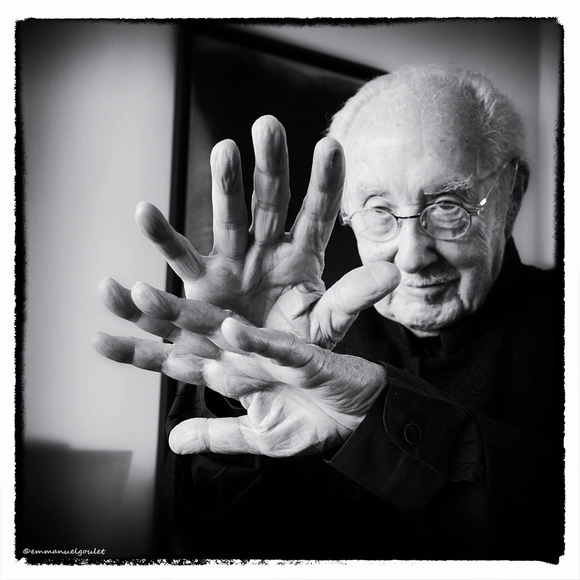
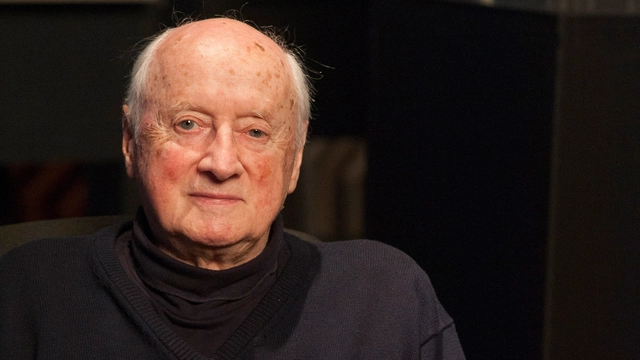
Claude Parent, a celebrated French architect and Commandeur de la Légion d'honneur, died on the evening of the 27th February 2016, the day after his 93rd birthday. Born in 1923 in Neuilly-sur-Seine, Parent was a member of the Académie des Beaux-Arts in Paris and, throughout his career, developed a limited but extremely influential body of built work ranging from nuclear power stations to shockingly unconventional shopping centers, such as his project in Sens. Described as both a utopian and a 'supermodernist' in his own lifetime, the methodology he shaped has played a significant role for his peers of all generations and for contemporary artists and thinkers including Jean Nouvel, who began his professional life as a collaborator.
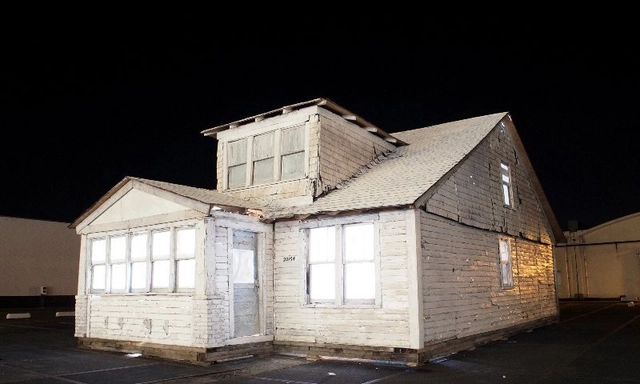
An empty house from Stoepel Street 20194, Detroit, is now in Rotterdam, The Netherlands. In this article for The Guardian, artist Ryan Mendoza describes his impetus and process for translocating a worn, abandoned former family home from one continent to another – as well as the statement he hoped to make. "When I arrived in Detroit in March 2015 I realised that this city – in the country I had left in 1992 out of distaste for its nationalistic, isolationist, police-dog mentality and its privatised prison system, [...] had, aside from the positive developments that were mostly in the downtown area, begun to look like a war zone."
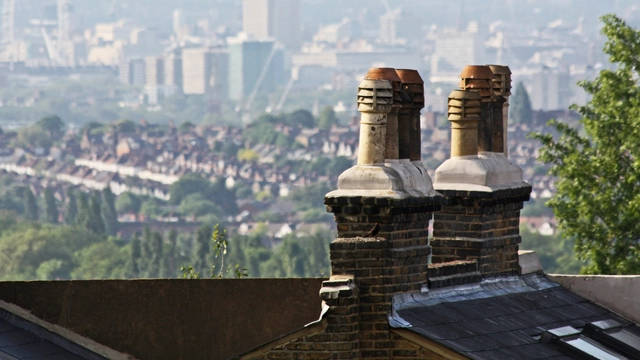
For this edition of The Urbanist, Monocle 24's weekly "guide to making better cities," the team head back in time to explore London in 1891, examining some of the city’s achievements to get a glimpse of what life was like in the British capital. They investigate the architectural legacy of Victorian London, see how the introduction of the railway changed the city, and chat about Charles Booth’s pioneering study into Victorian Londoners’ quality of life. They also take a tour around the country’s first council estate.
The Baltic Pavilion at the 2016 Venice Biennale, representing Estonia, Latvia and Lithuania, will explore the "transformative efforts at play" that are currently "reprogramming an inert region beyond the delineations of separate nation states." It "intends to explore the built environment of the Baltic States as a shared space of ideas." Located in Enrichetto Capuzzo's Palasport Arsenale Giobatta Gianquinto, a Brutalist architecture sports hall located next to the Arsenale, the exhibition will also be accompanied by a series of related events that will be presented in the form of a cross-section through Baltic space unfolding as "a non-linear stratigraphy."
ARQ Magazine, described as of the most prestigious academic architectural journals in Latin America, have released a new app (ARQ Yearbooks) dedicated to collecting and presenting English-language articles published in their magazine over the past three years. Since its foundation in 1980, ARQ (the journal of the Pontificia Universidad Católica de Chile School of Architecture in Santiago) has been published without interruption. In this new app, papers which address issues related to representation, construction techniques, urban history, cultural processes, landscape architecture and more have been aggregated together.
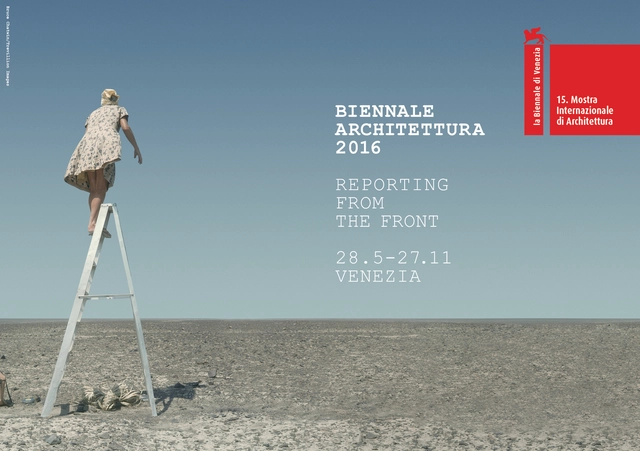
The 2016 Venice Architecture Biennale, directed this year by Alejandro Aravena, have revealed more information about the central exhibition and associated projects which will be on display at a press conference today in Venice. According to La Biennale, 'Reporting from the Front' will form one single show spanning the venues of the Arsenale and the Central Pavilion in the Giardini, featuring work from 88 participants from 37 countries. Of these, 50 will be presenting work for the first time and 33 are architects under the age of 40. "Reporting from the Front" will share work from Architects tackling issues relating to segregation, inequality, suburbia, sanitation, natural disasters, the housing shortage, migration, crime, traffic , waste, pollution, and community participation.
In 2000, in a trial held in London, the notorious British Holocaust denier David Irving sued an American historian and her publisher for libel. He posited that the Holocaust didn't really happen – "was the planned and systematic murder of six million European Jews an elaborate hoax?" The battle over the meaning of the architectural evidence took centre stage. Ultimately, forensic interpretation of the blueprints and architectural remains of Auschwitz became crucial in the defeat of Irving, in what remains to date the most decisive victory against Holocaust denial.
In an exclusive thirty minute-long discussion with Kevin Roche, described in this interview as "arguably the greatest living architect you've never heard of," Monocle's Steve Bloomfield hears about his early years in practice through to the evolution of his design philosophy over a career which has spanned five decades.
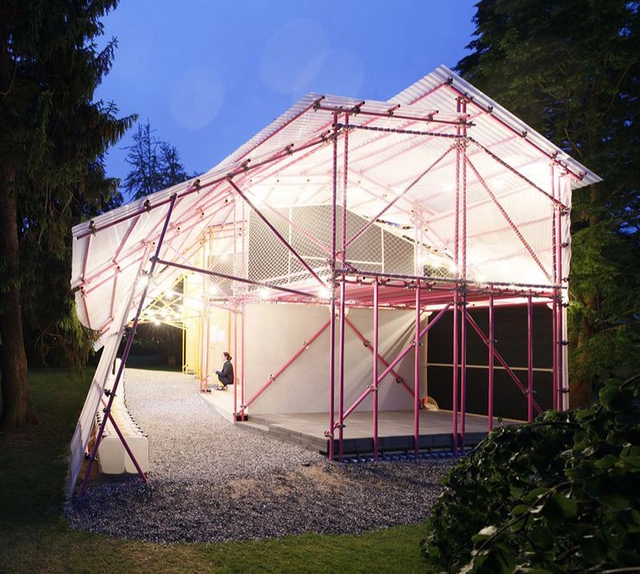
SelgasCano's Louisiana Hamlet Pavilion, designed in collaboration with Helloeverything, has been dismantled from its Copenhagen home and is set to be reconstructed in the sprawling Kibera slum, Nairobi, where it will begin a new life as a school. The structure, which is in transit to one of the largest slums in the country, will replace a dilapidated shelter which currently houses 600 pupils. The pavilion, originally commissioned by the Louisiana Museum of Modern Art (Copenhagen), has been relocated following discussions between Iwan Baan, SelgasCano, the museum, and Second Home.
In the latest edition of The Urbanist, Monocle 24's weekly "guide to making better cities," the team revisit the theme of heritage, asking why we should "learn to cherish the history of our cities." They visit one of the world's oldest medinas in Tunis, Tunisia, and explore some of the Austrian capital's less than charming Listed buildings, before asking whether or not the quintessential British terraced (row) house is still a cultural icon.
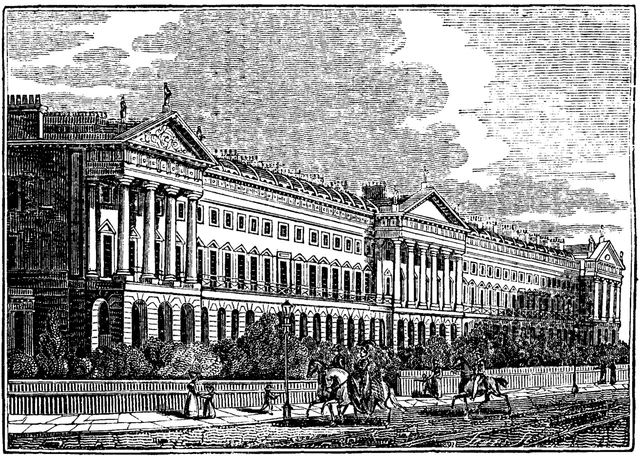
Hanover Terrace, London (designed by Sir John Nash) of which Hirst owns a portion
Damien Hirst has outgrown his 14-bedroom, nineteenth century London home. As reported by Hyperallergic, Hirst is in the process of enlarging his villa – downwards. In the spirit of the London 'super-basement' trend, for which the Royal Boroughs of Kensington and Chelsea first took opposition to in 2014, the Turner Prize-winning artist's plans appear to be some of the most ambitious yet. The proposed subterranean warren of rooms—including a sauna, a steam room, a cargo elevator leading to a double height "art room", and an 82-foot long swimming pool—will all be excavated from his half-acre back garden. Although the plans have faced local opposition the artist's "lair", designed by Purcell, is now set for construction.
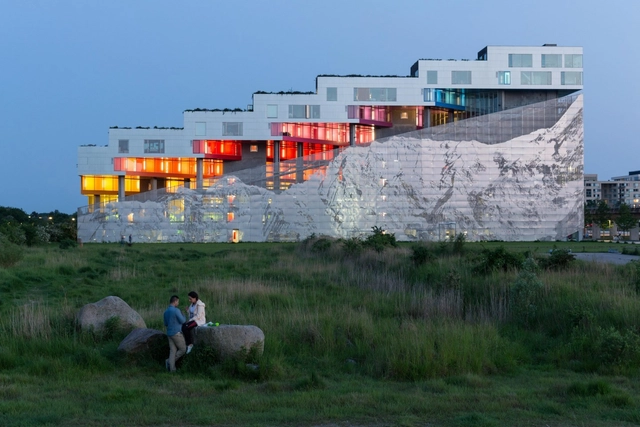
The Mountain, Copenhagen / BIG. Image Courtesy of Serpentine Galleries
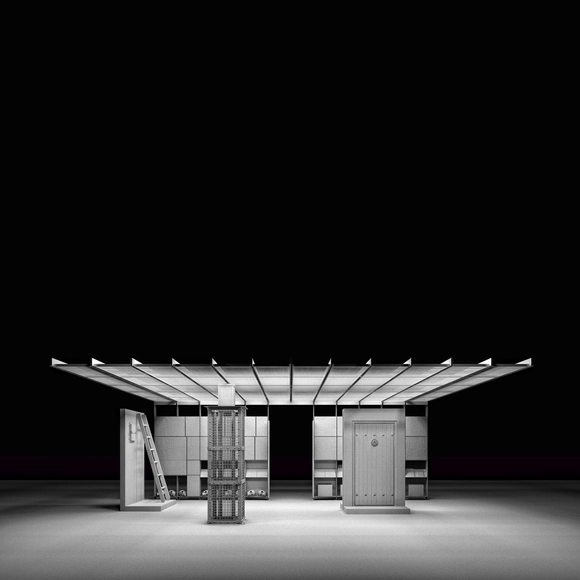
The Serpentine Galleries have revealed that the 2016 Serpentine Pavilion will be designed by Bjarke Ingels Group (BIG), alongside a surprise announcement that four "Summer Houses" will also be built by internationally acclaimed practices. Kunlé Adeyemi – NLÉ (Amsterdam/Lagos), Barkow Leibinger (Berlin/New York), Yona Friedman (Paris), and Asif Khan (London) will each design a 25sqm structure inspired by the nearby Queen Caroline’s Temple, a neo-Classical summer house built in 1734 and "a stone’s throw from the Serpentine Gallery." In line with the criteria for the selection of the Serpentine Pavilion architect, each chosen to design a Summer House has yet to realise a permanent building in England.
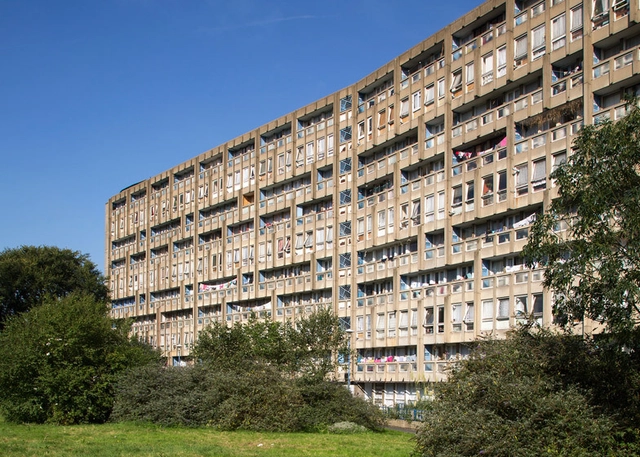
Following the news in 2015 that Alison and Peter Smithson's Robin Hood Gardens was committed to demolition, Stirling-Prize winning practice Haworth Tompkins have been selected to work on the buildings' replacement. Alongside Metropolitan Workshop Architects existing master plan—entitled the Blackwall Reach Regeneration Project—the second phase of the regeneration will see the west block razed to make way for approximately 200 homes. The east wing will not be demolished until the third phase of the regeneration begins.
Zaha Hadid, who was named as the the first sole woman to be awarded the UK's highest honour for architects in her own right in 2015, received the Royal Institute of British Architects (RIBA) 2016 Royal Gold Medal at a ceremony in London yesterday. Hadid, who was appointed a Dame of the British Empire in 2012, received the Pritzker Prize in 2004. Her practice also took both the 2010 and 2011 RIBA Stirling Prizes.




_Olga_Ivanova.jpg?1457079888)