The Guardian’s Jonathan Meades has named the “incredible hulks” of Brutalism with a thought provoking A-Z list that ranges from Hans Asplund, who coined the term “nybrutalism,” to California’s fascination with Zapotec-like adornments in the 1960s. Read the list in full and discover why Quebec City, Yugoslavia’s Janko Konstantinov, and Danish architect Jørn Utzon are all considered incredible hulks here.
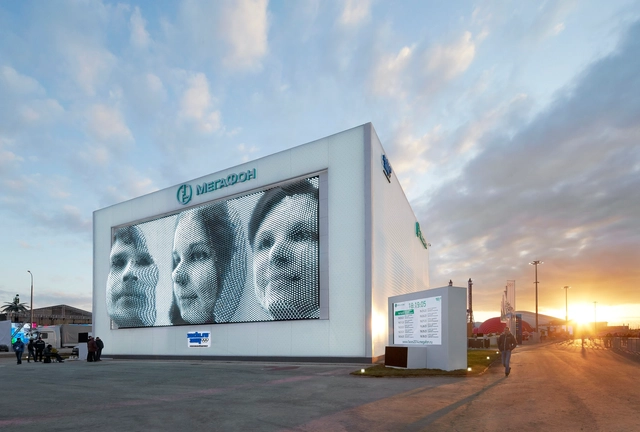
The Olympics are in full swing and, although the "Coastal Cluster" of stadiums has attracted a considerable amount of attention, there is one installation demanding interaction from every spectator. Built at the entrance of Sochi's Olympic Park isAsif Khan Studio's "MegaFaces," a pavilion that "contorts itself to recreate 3D images of the faces of visitors relayed via digital face scans made in photo booths installed within the building."
Comprised of 11,000 actuators sitting underneath the cube's stretchy fabric membrane, the installation allows for three, eight meter tall faces to emerge from the wall at a time (the faces that emerge from the side of the pavilion are enlarged by 3500%). According to the designers, this feature of the building "has been likened to a giant pin screen and a digital, architectural Mount Rushmore."
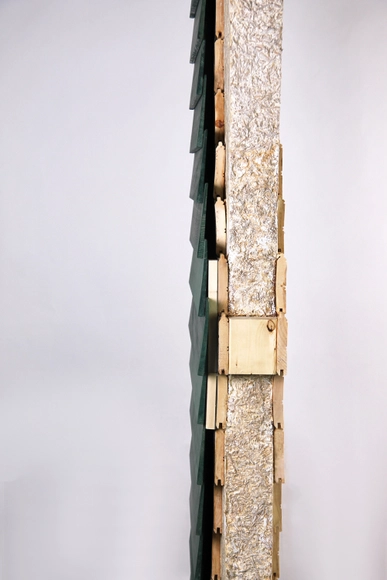
Inspired by the woods of Vermont, a US biotechnology startup have developed a system for using agricultural byproducts with fungal mycelium (a natural, self-assembling binder) to grow high performance insulation. Ecovative Mushroom® Insulationis seen as a viable competitor to plastic foams that can be found in both in packaging and building insulation, for which the project recently won second place in the Cradle to Cradle Product Innovation Challenge.
Raimund Abraham's last project, a "stunning" design for a building atop an unused NATO missile base in Hombroich, has been realized four years after the architect's death. At the time of his passing, Abraham was working on this project as part of a unique outdoor art complex close to Düsseldorf, Germany. A competition has now been announced to determine the future for the space which has become an "an integral part of Hombroich's cultural sphere."
Adobe has unveiled a major update to Photoshop CC (Creative Cloud) with the hope that a "radically simplified 3D printing process" will make their software the "go-to tool for anyone who wants to print a 3D model." Their new software allows for designers to create a model from scratch or refine an existing design leading to perfect print ready 3D models. Since one of the most common problems with 3D printing is the human errors in virtual modeling, Photoshop includes automatic mesh repair and will insert a support structure if necessary to ensure that the model will print reliably and without faults.
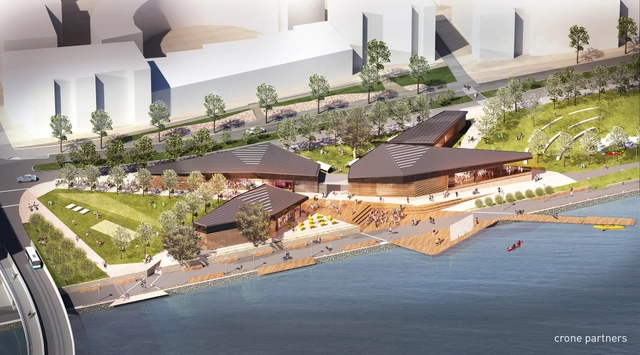
Australian practice Crone Partners has recently won a competition to design a new community precinct in Rhodes, New South Wales. Starting with the intention to rethink the traditional community building and civic space typology, Crone Partner's winning design features clusters of spaces with programs subdividing by size and demands. In moving away from traditional public buildings, which are "characterised by [their] scale, elaborate and sometimes extravagant aesthetic", their proposal was no longer "constrained by a singular form".
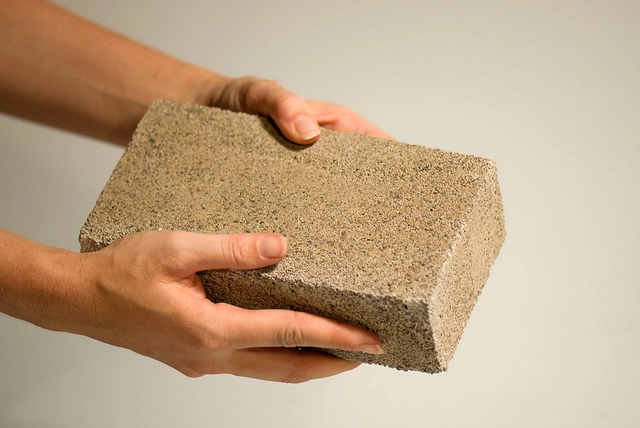
A unique biotechnology start-up company have developed a method of growing bricks from nothing more than bacteria and naturally abundant materials. Having recently won first place in the Cradle to Cradle Product Innovation Challenge, bioMason has developed a method of growing materials by employing microorganisms. Arguing that the four traditional building materials - concrete, glass, steel and wood - both contain a significant level of embodied energy and heavily rely on limited natural resources, their answer is in high strength natural biological cements (such as coral) that can be used "without negative impacts to the surrounding environment."
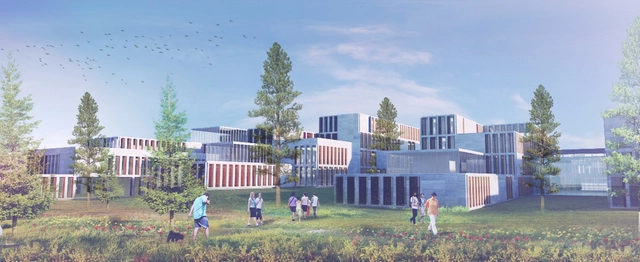
View. Image Courtesy of Marc Koehler / ONZ Architects
Marc Koehler Architects, in collaboration with ONZ Architects, have recently won an invited competition for their design of the Kastamonu Campus in Turkey. Their winning proposal, described as "an asymmetrical star", embodies excellence and is an endeavor to create the largest high school campus ever designed. Featuring laboratories, libraries, performance spaces, sports centers, a health centre, places of worship, dormitories and 29,000 square meters of educational spaces, the campus is expected to welcome 10,000 students.
First Place / Caterina Spadoni, Valentina Brunetti. Image Courtesy of YAC
The results for the latest Young Architects Competition (YAC), Post-Quake Visions, have been announced. The competition aimed to discover innovative ways to overcome the effects of a seismic catastrophe over a medieval Mediterranean town. Participants were encouraged to rethink and redesign the quake-inflicted gaps left inside ancient urban tissues. With 356 enrolled teams comprising of 808 designers, see the winning results and Gold Mentions after the break.
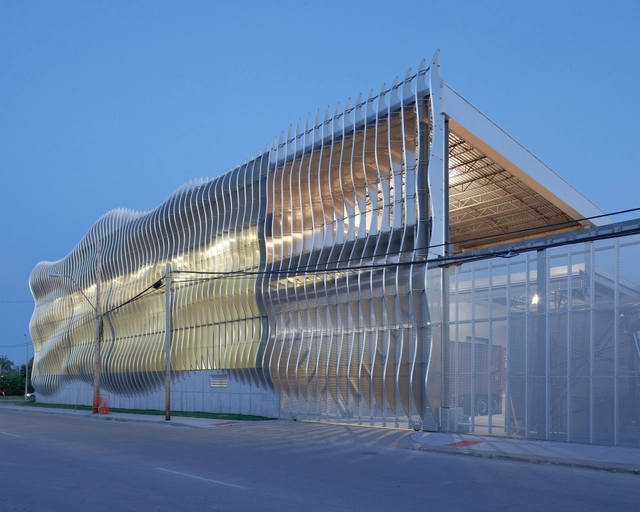
Original design by Crawford Architects on the Zahner Headquarters in North America / Mike Sinclair. Image Courtesy of Zahner
Zahner, one of the world's foremost fabricators of façades, have launched new software to assist in design, fabrication, costing and delivery. CloudWall, part of Zahner's ShopFloor platform, is a web based programme which provides an interface for users to design and fabricate curving facades in metal. It is a tool that uses Zahner's "factory floor like a massive rapid prototype machine".
In an hour long documentary for PBS, Geoffrey Baer tours the USA in search of the ten buildings that "changed America." From a state capitol designed by Thomas Jefferson to resemble a Roman temple to Henry Ford's factory that first saw the Model T enter production, the film explores the "shocking, funny, and even sad stories of how these buildings were created." Investigating places of worship, shopping malls, concert halls and skyscrapers this film is tipped as "a journey inside the imaginations of the daring architects who set out to change the way we live, work, and play."
Videos
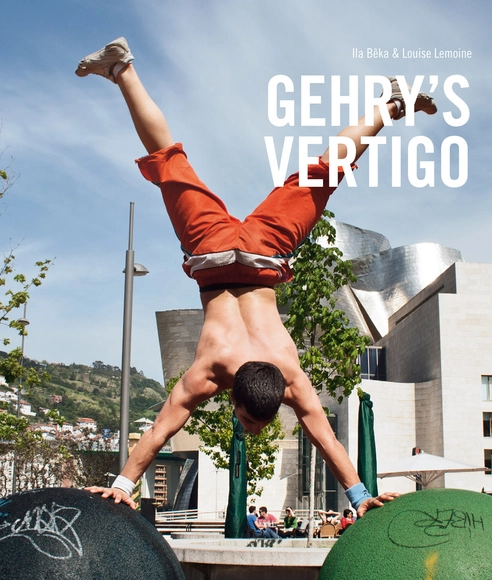
Gehry's Vertigo. Image Courtesy of Living Architectures
This time last year we published our 30 Architecture Docs to Watch in 2013featuring a fantastic range of films telling the tales of some of the world's greatest unsung architectural heroes. We now bring you eleven more for 2014, looking past the panoply of stars to bring you more of the best architectural documentaries which will provoke, intrigue and beguile.
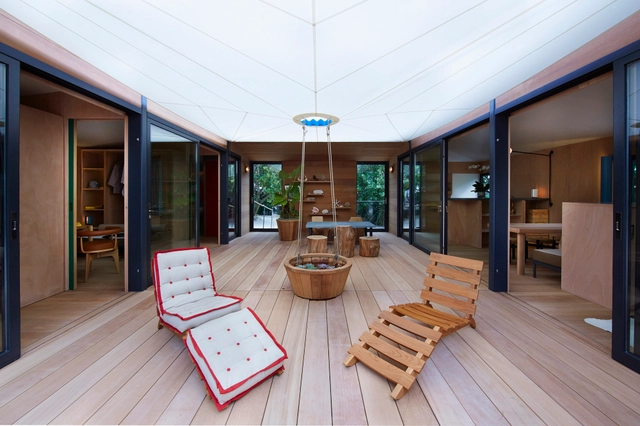
La Maison au Bord de L'Eau, an unrealized beach house in Miami designed by architect, designer, planner and photographer Charlotte Perriand, has been built by Louis Vuitton for a Design Miami 2013satellite exhibition. Designed in 1934, the house was first conceived for a design contest held by L’architecture d’aujourd’hui magazine with the aim of creating a simple, economical form of holiday lodging for the mass market. After winning second prize it was never built but, eight decades later, "Perriand’s studies prove quite contemporary in light of the advancements in wooden architecture."
Following a year of high-profile debates surrounding women in architecture, the results from the Architects' Journal (AJ) third annual survey entitled Women in Architecture has been revealed. According to the AJ, "two thirds of women in architecture have suffered sexual discrimination at work, an eight point increase since the survey began in 2011", and "88% of women respondents believe that having children puts women at a disadvantage in architecture." Even though women in architecture believe that they are paid equally to men, they can in fact "earn as much as £10,000 ($16,500) less than their male counterparts." More, after the break.
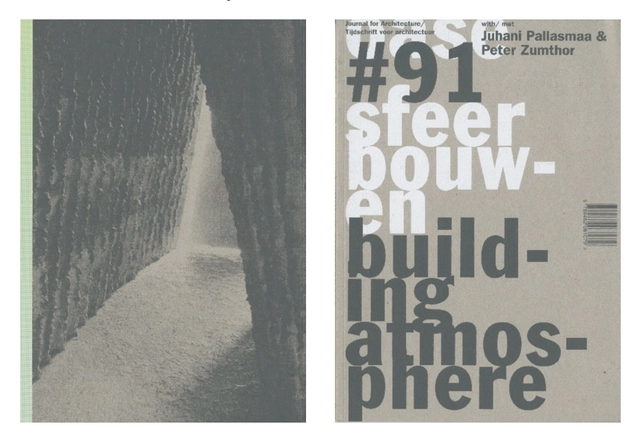
In OASE's91st edition, Building Atmospheres, the elusive craft of creating, capturing and understanding 'atmosphere' in architecture is explored in a carefully chosen collection of themed essays by Peter Zumthor, Juhani Pallasmaa and philosopher Gernot Böhme. Zumthor, famous for his 1996 text Atmospheres, identifies and discusses "a series of themes that play a role in his work in achieving architectonic atmosphere". Alongside this, the OASE team have visited his studio and interviewed him about the current relevance of his writing and how he captures 'atmosphere' in his design process.
You can now use ArchDaily's content on Field Trip, an app which notifies you when you get close to something architecturally interesting. With ArchDaily's daily feed now embedded within the app, when you approach a building we've covered your phone will alert you and provide you with photos, facts and information. More info, after the break...
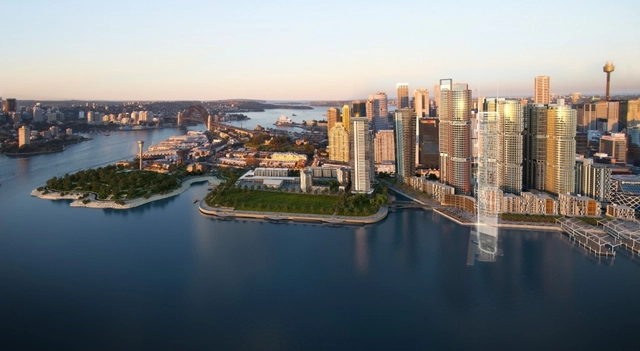
A recent, well-written article for The Guardian chronicles the story of Sydney's East Darling Harbour (also known as 'Barangaroo'), from the city's optimism in 2003 to the relative disappointment of today. David Shoebridge, a New South Wales Greens MP and the party's planning spokesperson, recounts the series of compromises and sellouts that have turned what was meant to be a "prime public space" into - to add insult to injury - the site for a casino.You can read this cautionary tale in full here.
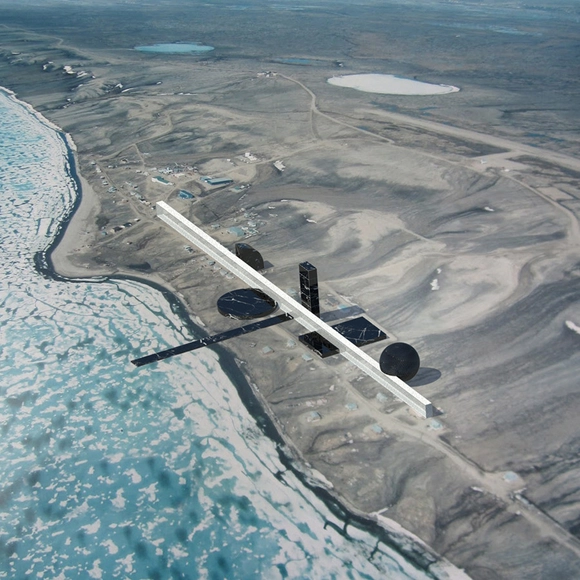
The results from the first brief of Think Space's MONEY themed cycle of competitions, Territories, have been announced. David Garcia (MAP Architects), juror of the Territories competition, invited participants to send in proposals "that tackle the present economic and territorial challenges in the present and future of the Arctic lands." See them all, after the break...







.jpg?1391806773&format=webp&width=640&height=580)