Videos
Montage. Image Courtesy of Eindhoven University of Technology
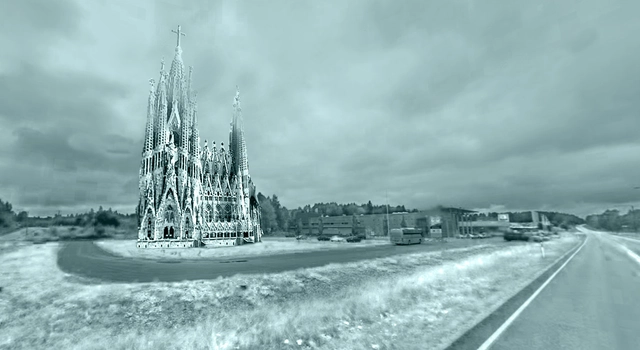
A team of students from Eindhoven University are to build a forty metre high model of Antonio Gaudí'sSagrada Familia. The project, which follows the completion of the world's biggest ice dome last year, will be constructed from pykrete and reinforced with wood fibres. Impressively, the 1:4 scale model will be built in only three weeks. Thin layers of water and snow will be sprayed onto large, inflated molds. The pykrete (water mixed with sawdust) will be immediately absorbed by the snow before freezing. According to the organisers, "the wood fiber content makes the material three times as strong as normal ice, and it’s also a lot tougher." Find out more about the project here.
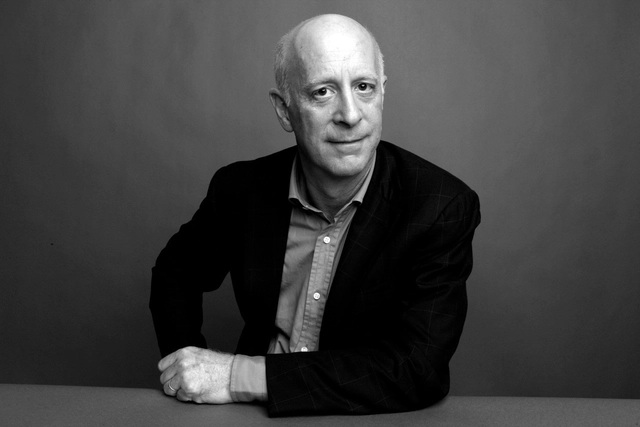
In an interview with Julia Ingalls Paul Goldberger, former architecture critic of the New York Times and forthcoming biographer of Frank Gehry, discusses the critical relevance of architecture in what he dubs the "new media age." According to Ingalls, Goldberger has thrived "by writing informed narratives that examine not just the trendy cladding of a building, but the deep historical, social, and political environments that invariably give rise to it." Goldberger is a writer who has embraced Twitter, using it as a platform for discussion and debate just as, in prior years, his writings in print media would act as less immediate provocations.
House Housing is the first public presentation of a multi-year research project conducted by the Temple Hoyne Buell Center for the Study of American Architecture at Columbia University. Situated in the Casa Muraro in Venice and staged as an open house, the exhibition responds unsolicited to the proposal by Rem Koolhaas, curator of the 14th International Architecture Exhibition, that architecture focus on its "fundamentals."
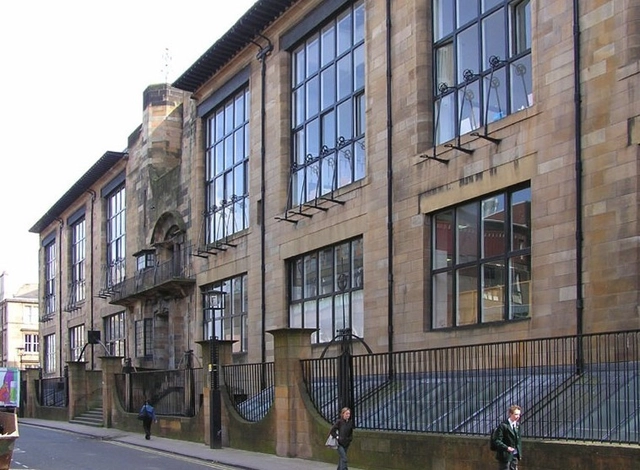
Following the devastating news that the Mackintosh School of Art's iconic library was recently destroyed, Steven Holl - designer of the adjacent Seona Reid Building that opened earlier this year - reflects on the "magic" of what has been lost in an article for the Architectural Record. The Charles Rennie Mackintosh building, for Holl, "embodies a refreshingly direct conviction", the sudden loss of which brought on a "deep sadness." Placing it within a canon of architectural masterpieces, Holl gives insight to his emotional connections with this Glaswegian masterpiece: "the Glasgow School of Art has an inner worth and a dignity beyond all measurable value." Read the article in full here.
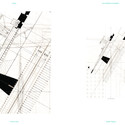
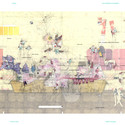
The Draftery, a printed platform to "discuss the role of architectural drawing today", brings together a fascinating collection of images and words in a publication on three distinct platforms. Figures, Captions and Archive facilitate a multi-disciplinary conversation about how drawings are made and their role in the built environment. Now approaching their third anniversary, how far have they come and where is the project headed?
January 2013 saw the re-launch of The Draftery and the total reconstruction of the project. Their crisp publications now have a strong editorial thread which compliments the carefully curated collections of architectural drawings. Seeking to "demonstrate that drawing, more than mere representation, is a method of acting in the world", good drawings provide a moment of visual solice in a fast paced profession.
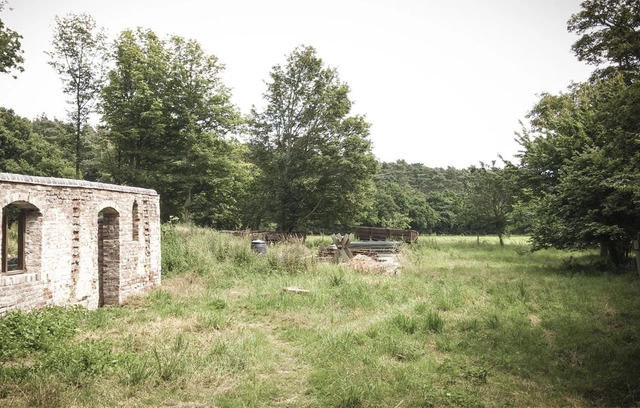
The site in Norfolk, UK. Image Courtesy of Studio Bark
Studio Bark, a London based collaborative practice, are inviting students to join them for a summer workshop in order to develop a "prototype for environmental low-energy student led construction." In collaboration with TRADA, the Timber Research and Development Association, the organisers hope to begin to bridge the "enormous chasm between architectural education and the on-site application of architecture" through a live-build project. They plan to give participants an understanding of construction terminology, materials, or technical detailing, all through on-site practice.
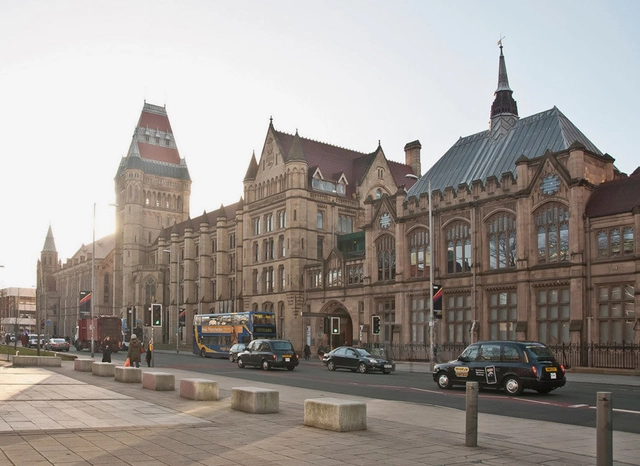
With the recent news that Dutch practice Mecanoo, along with Penoyre & Prasad, have been selected for a £200 million new engineering campus at the University of Manchester, Amanda Baillieu of BDOnline argues that they "need to set their ambitions a whole lot higher." Alongside's Manchester's announcement, universities in Sheffield, Newcastle and Oxford also recently announced a big investment in their campuses. The trick, Baillieu suggests, will be in ensuring the architecture is not "safe and office-like" (which fits universities’ "business-like" mindset). As we enter a "golden age" in university capital investment, educational architecture will be playing a central role. Read the article in full here.
This year's Venice Biennale, curated by OMA'sRem Koolhaas, is "interested in the banal". In an article in the Financial Times', Edwin Heathcote discusses the paradox between exploring generic modernism at an event which celebrates the individual. Heathcote raises interesting questions about the extent to which world architecture has developed in modernity, ultimately arguing that, "in a way, architecture is over." You can read the article, which neatly investigates the curatorial rationale behind this year's Biennale, in full here.
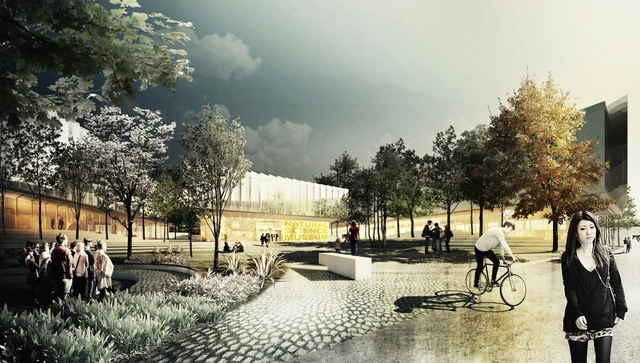
The winners of the international competition to design Berlin's new Natural Science Museum have been announced. The brief, which called for a large scale iconic building in the heart of the German capital, offered the opportunity for architects and students to design in a city founded in the 13th century.
Understanding that natural science museums are often simply seen as places for public spectacle, the organization behind the competition wanted to ensure that the "importance of the museum's specimen collections for documenting historical and present-day patterns of biological diversity cannot be overstated."
See the winning entry, along with the runners up, after the break.
The Royal Institute of British Architects' (RIBA) latest Future Trends Survey indicates a small drop from February's index, "down to +35 from its all-time high of +41." Despite this, "confidence levels about an improvement in future workloads for architects remain very solid." All types of practice size, ranging from those with fewer than 10 employees to those with over 50 staff, are "reporting positive balance figures." The strongest future workload forecasts came from Scotland and the North of England, suggesting that "the recovery in confidence levels is now widespread across the UK and has spread beyond London and the South East."
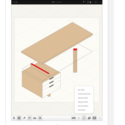
Framebench, an online tool for visual collaboration, seeks to alleviate the digital sharing problems architects and designers commonly face in practice. Aiming to do away with file storage systems, FTP clients and other kinds of complex software, this web application allows for teams and individuals to share, discuss and annotate drawings in real time. Framebench suggest that "this could be the online space where you can organize all your drafts and finals, get feedback and approve the work that's finished" - in realtime.
The system works by creating workspaces for teams to quickly share their files with one another. You can share any image, video, or document with your team, who can then view it right there without any downloads or installation. While viewing, anyone can annotate on top or leave comments; these comments transform into discussion threads that can be referred back to and added to later.
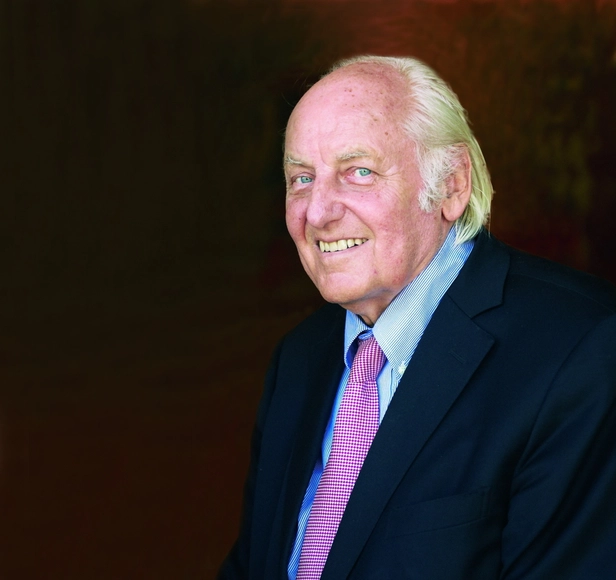
Austrian artist, architect, designer, theoretician and Pritzker Prize laureate Hans Hollein has passed away twenty five days after he celebrated his eightieth birthday. Hollein, particularly known for his museum design, including Vienna’s Haas House (1990) and Frankfurt's Museum of Modern Art, was once described by Richard Meier as an architect whose "groundbreaking ideas” have “had a major impact on the thinking of designers and architects."
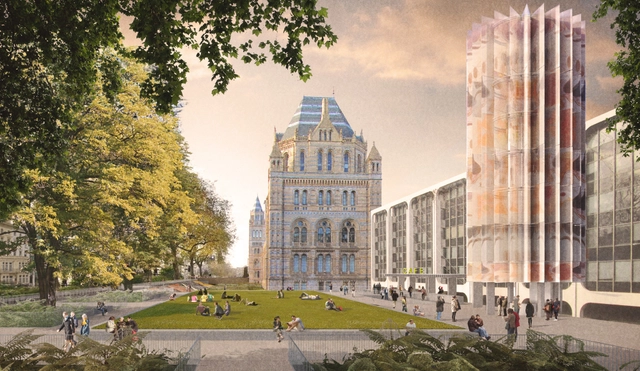
British practice Níall McLaughlin Architects together with Kim Wilkie have been unanimously selected as the winners of the competitionto reimagine the external grounds of London's Natural History Museum. The competition, which attracted proposals from shortlisted teams such as BIG (Bjarke Ingels Group), Stanton Williams Architects, and Feilden Clegg Bradley Studios, called for entries to "reshape the Museum’s grounds and reinvigorate its public setting" with an aim to creating "an innovative exterior setting that matches Alfred Waterhouse’s Grade I listed building whilst also improving access and engaging visitors."
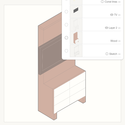
Although tablets have opened up a whole new range of possibilities for architects and designers, using them for drawing and doodling is often a clumsy experience. In many cases there's far too little accuracy and far too much complexity when it comes to working simple operations. Archisketch, which was formerly known as Archipad, seeks to streamline this experience with a smooth, cleanly designed app for iPad that not only allows you to import drawings and doodle over them, but also draw to scale.
Videos
Visualisation. Image Courtesy of Han Seok Nam
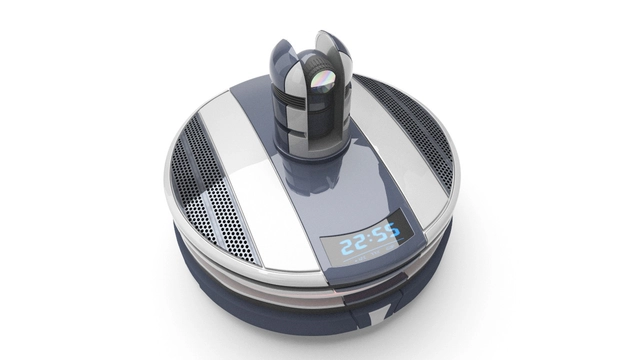
Archibot, a project currently being developed by South Korean architectural designer Han Seok Nam, aims to "revolutionize" how architects and contractors work on construction sites by printing digital CAD plans onto the ground "error free." Having recently been granted a patent, the robot seeks to avoid the human errors associated with interpreting information from construction documents.
According to Nam, a contractor "will be able to grasp exactly where the door and the wall needs to be constructed by having the construction documents be printed directly onto the site without measurements. Errors will be easily detectable since the construction document can be directly compared to a life-size print out directly on the construction site." It would be "just like following a map and driving towards a destination."
See a video of the robot at work, after the break...
Visualisation (day). Image Courtesy of Boogertman + Partners
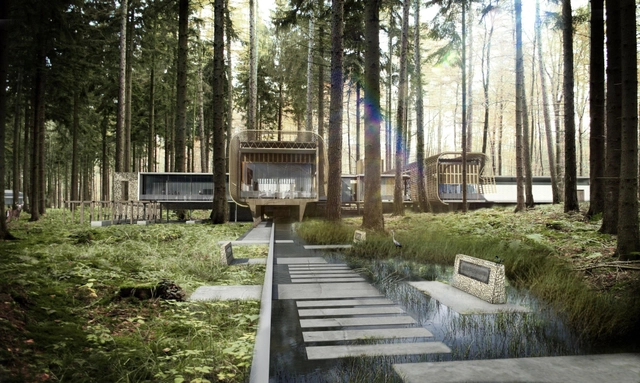
South African-based practice Boogertman + Partners has recently won a competition to design a new education centre for the Karura Forest Environmental Education Trust in Kenya'sKarura Forest Reserve. The centre, situated on around fifteen acres of a former sports club, will be surrounded by the closed-canopy forest close to the Kenya Teachers Training College, the International Center for Research in Agro-forestryand the United Nations Environment Programme Headquarters.
Located in the northern part of Nairobi County, bordering the Muthaiga, Gigiri and Runda residential areas, the centre will seek to educate people on the many species of plants, birds, insects and mammals to be found within Karura's diverse landscape.
The Strelka Institute, Moscow’s most innovative school for architecture and urbanism, "might be soon forced to leave its current venue in the heart of the Russian capital" due to proposed redevelopment of the area. Faced by the threat of this possibility, the school formed a competition in order to collect ideas for the relocation. The winning proposal, developed by Squadra Komanda, proposes a "visionary program of development for the disputed and immense architectural legacy from the late-Soviet period."
Late Soviet architecture constitutes "almost two third of all buildings in Moscow." As it represents "an unpleasant reminder of the recent past," many Russians dislike this kind of building. As a result, the Strelka Unsettled, with the possibility for collaboration with the outdated cultural institutions hosted inside the building of the All Russian State Library for Foreign Literature (built in 1966), seeks to offer new scenarios for this "neglected kind of architecture."