By the late 1960s, two dynamics were shaping a new urban reality in Italy: on the one hand, TV was heavily influencing Italian society, becoming an intrinsic part of daily life; on the other, the social tension resulting from student protests and accelerated immigration had begun to impact cities in a chaotic way. These dynamics paved the way for Milano Due, a new town on the outskirts of Milan, which promised a new, idyllic type of urbanism.
The complex, although traditional in appearance with its red pitched roofs, put into practice modern concepts: its 2,600 apartments, which had access to amenities for education and entertainment, were arranged around a giant artificial garden/lake and were connected via an elevated circulation system. Below ground, the complex housed the studios of the first private TV channel in Italy, a fact that would shape the lives of the inhabitants of Milano Due and eventually all of Italian society.
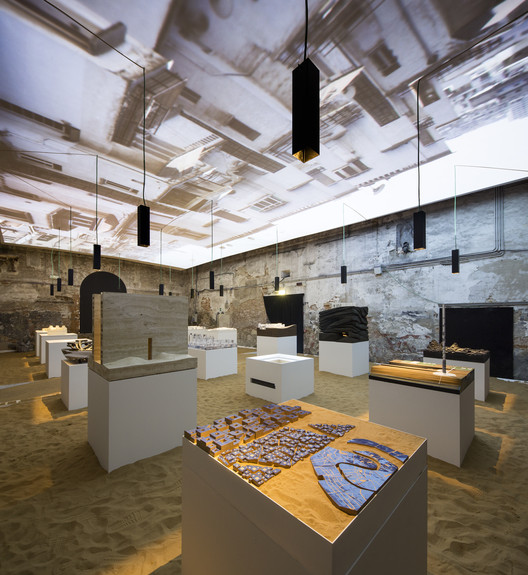
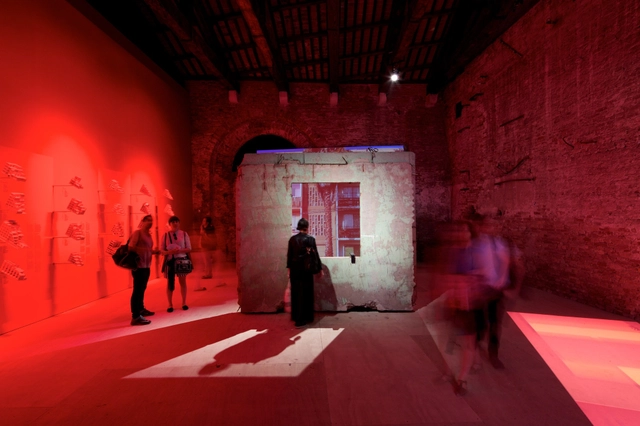
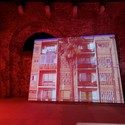
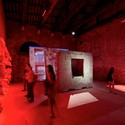
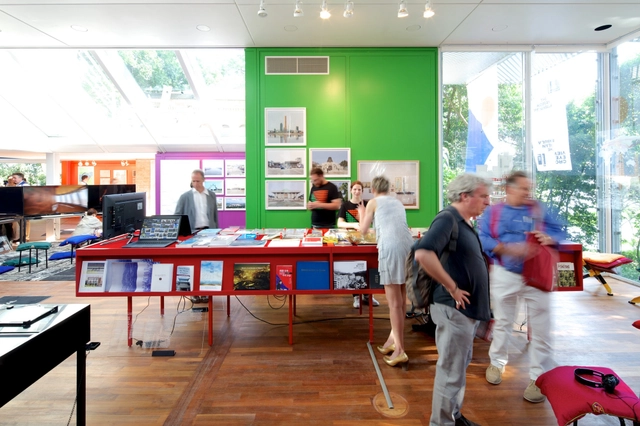
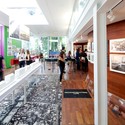
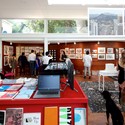
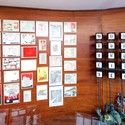
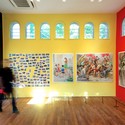
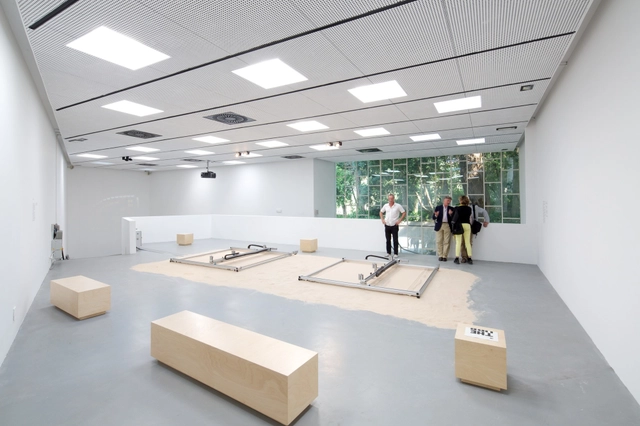
This interesting urban phenomena is analyzed by Andrés Jaque / Office for Political Innovation in “SALES ODDITY: Milano 2 and the Politics of Direct-to-Home TV Urbanism,” a project that was part of the Monditalia section at the Venice Biennale and was awarded the Silver Lion for the Best Research Project. According to the jury “The project presents critically a fundamental aspect of modern societies: how the power of media occupies other social spaces, both physically and politically. It is based on innovative research combining surveys and interviews with planners and residents and re-appropriation of the mass media language. While based on an Italian case, this issue is present in many international contexts dominated by contemporary technological and neo-liberal cultures.”
Dossier, trailer, and more photos of the project by Miguel de Guzmán, after the break:
SALES ODDITY. Milano 2 and the Politics of Direct-to-Home TV Urbanism
by Andrés Jaque / Office for Political Innovation