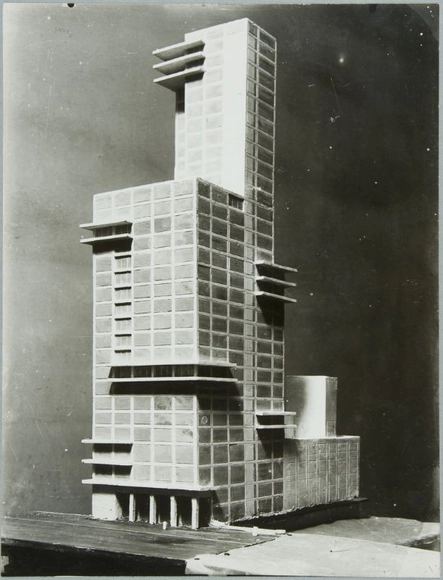
Entries to the Chicago Trinbune Competition, such as this one by Gropius and Meyer, may have sparked debate about modernism in the US, but lost to a more traditional design. However, a decade and a half later, competitions for three colleges revived the debate. Image via thecharnelhouse.org
Though modernism was developed in the 1920s, and was popular among many architects by the time the 1930s arrived, in many places it took years for the style to gain favor among clients. In the USA, people often point to the 1922 Chicago Tribune Tower Competition as a turning point, the winning entry was actually a neo-gothic design. In this article, which originally appeared on Curbed, Marni Epstein looks at another potential turning point: three high-profile competitions in the late 1930s where modernist designs were (sometimes controversially) successful.
The Great Depression of the 1930s hit everyone, and hard—even architects and draftsmen found themselves out of work as development and construction dried up amid vanishing capital. They found a partial solution in the Historic American Buildings Survey and Historic American Engineering Record, two programs of Franklin D. Roosevelt's Works Progress Administration that involved surveying and cataloging the country's existing infrastructure. These programs, however, were a long way from the prestige, creativity, and financial rewards that came with new architectural commissions. The work available was limited, and what work existed was focused on the architecture of the past, not designs for the future.
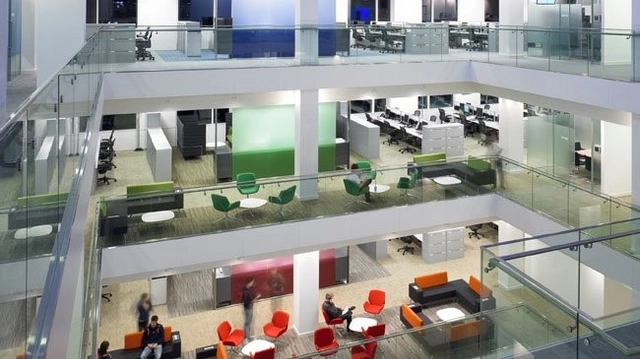
How much impact can the configuration of an office have? Microsoft, Thames Valley Park by Perkins+Will. Image Courtesy of David Churchill
We spend a lot of time and effort debating and researching how to design the perfect office - perhaps too much time, according to Rachel Casanova, a Principle and Director of Workplace at Perkins + Will. In this post, originally published by Metropolis Magazine as "When the Open Office Isn't Always the Problem or Solution", Casanova argues that we ought to be thinking about office design more holistically, taking into account not just the physical space of the office, but also how the client runs their workplace. At best, design can catalyse a more nurturing office environment, but for each company the way to achieve this may be different; there is no 'one-size-fits-all' office solution. Read on after the break to find out why.
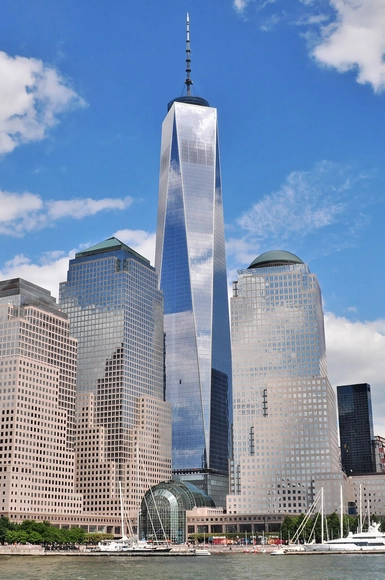
Recently, ArchDaily editors received an interesting request from an anonymous Communications Director of an unnamed New York firm, asking us “In your reporting, please do not repeat as fact, or as "official," the opinion that One World Trade Center in New York will be the tallest building in the United States.” He or she goes on to explain that the decision maker who 'announced' the building as the tallest in the US, the Council on Tall Buildings and Urban Habitat (CTBUH), is not officially endorsed by the AIA or the US Government, and that while their work is beneficial for architecture and cities as a whole, their criteria for height evaluation are flawed and have been criticized by many in the industry.
The desire to have the tallest building in a city, country or even the world goes back to at least the medieval period, when competing noble families of Italian hill towns such as San Gimignano would try to out-do each other's best construction efforts (jokes about the Freudian nature of such contests are, I imagine, not much younger). Perhaps the greatest symbol of this desire is the decorative crown of the Chrysler Building, which was developed in secret and enabled the building to briefly take the prize as the world's tallest, much to the surprise and ire of its competitors at the time.
With this competitive spirit apparently still very much alive, I thought it might be worthwhile to address the issue raised by our anonymous friend.
Originally published by Metropolis Magazine, this comprehensive analysis by sustainability expert Lance Hosey examines the current disputes within the green building industry, where market leader LEED currently finds competition from the Living Building Challenge, aiming for the "leading edge" of the market, and the Green Globes at the other end of the scale. Arguing for a more holistic understanding of what makes materials sustainable, Hosey examines the role that materials, and material industries such as the timber and chemical industries, can have in directing the aims and principles of these three sustainability rating systems - for better or for worse.
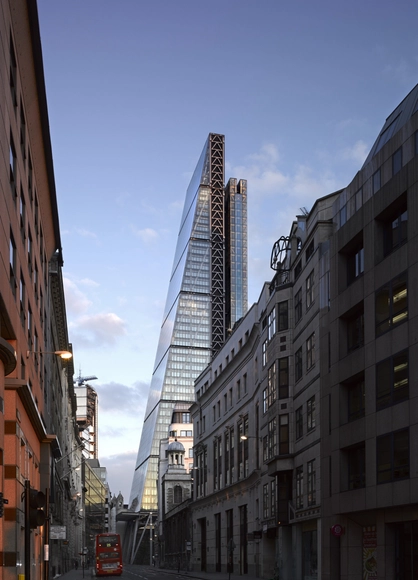
Settled comfortably around a black conference table – the only item of furniture in an office space still lacking its carpet tiles – on the 40th floor of the new Leadenhall Building, I had the opportunity to discuss with lead designer Graham Stirk and his partner, practice co-founder Richard Rogers, the forces that shaped their new building and how they came to be working in the City of London once again.
Rogers Stirk Harbour + Partners has a rich presence in the Square Mile, including the landmark Lloyd’s of London, standing directly opposite the Leadenhall Building. The firm has specialised in assured, sometimes assertive insertions within the City’s fine, historic urban grain, and so setting aside the sheer bravura of the 52-story, 225 meter skyscraper, with its sloping glass façade to the south (giving it the popular nickname of the Cheesegrater) the first question that arose was a simple one – how did the building come about?
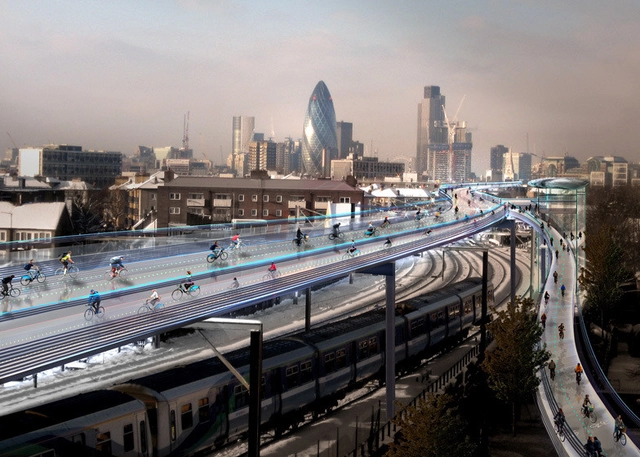
There's no doubt about it - cycling in cities is a big deal these days. But, while cycle lanes and bike-sharing schemes are all well and good for our cities, the cycling revolution hasn't yet brought us many examples of beautifully designed infrastructure to gawp at. This article, originally printed on The Dirt as "Do Elevated Cycletracks Solve Problems or Just Create More?" discusses two seemingly similar examples of high profile cycling infrastructure, examining why one is a success and the other a non-starter.
This year, two designs – one proposed and one built – for elevated cycletracks, which create bicycle highways above street level, have gained considerable media attention. They highlight questions at the heart of urban design: Should cities blend or separate transportation options? How can cities best mitigate the hazards created when cars, bikes, mass transit, and pedestrians mix? How can cities create low-cost transportation networks in increasingly dense urban cores?
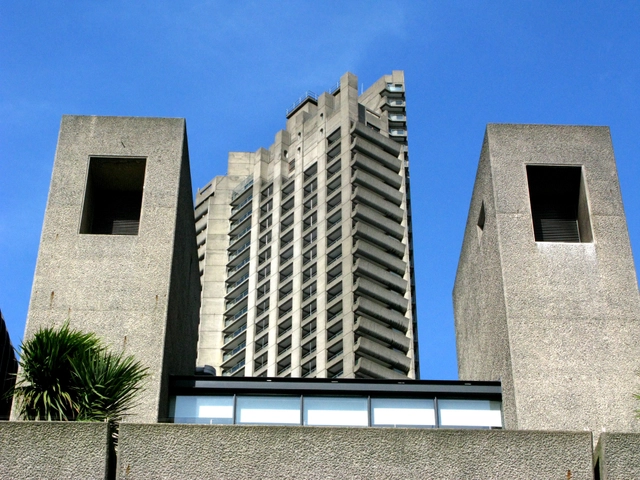
Are Brutalist buildings, once deemed cruel and ugly, making a comeback? Reyner Banham's witty play on the French term for raw concrete, beton brut, was popularized by a movement of hip, young architects counteracting what they perceived as the bourgeois and fanciful Modernism of the 1930s. Though the use of raw concrete in the hands of such artist-architects as Le Corbusier seems beautiful beneath the lush Mediterranean sun, under the overcast skies of northern Europe Brutalist architecture earned a much less flattering reputation. Since the 1990s, however, architects, designers, and artists have celebrated formerly denounced buildings, developing a fashionably artistic following around buildings like Erno Goldfinger's Trellick Tower, "even if long-term residents held far more ambivalent views of this forceful high-rise housing block." To learn more about this controversial history and to read Jonathan Glancey's speculation for its future, read the full article on BBC, here.
For many years, the world of office design remained relatively stagnant, with a light, open plan office floor and a generously-sized cubicle about as much as most employees could hope for. But recently all this has changed: the world of the technophilic, fun loving "Generation Y" has taken over, and with it come offices that mix the best elements of the traditional office with design culled from living rooms, coffee shops and children's playspaces. This will remain the future of office design for some time - or will it? According to Dr Michael O'Neill, senior research strategist at Haworth, the Gen-Y office's days are already numbered, as he explains in this article originally published by Metropolis Magazine. Read on after the break to find out why.
“Absorbing Modernity: 1914-2014 is an invitation to the national pavilions to show, each in their own way, the process of the erasure of national characteristics in architecture in favor of the almost universal adoption of a single modern language and a single repertoire of typologies.” In this article, originally published on Metropolis Magazine as "Whose Modernity?", Avinash Rajagopal investigates the conflict this mandated theme at the 2014 Venice Biennale unintentionally created between the Northern and Southern pavilions - with Northern pavilions tending to declare sole ownership over Modernism and many Southern pavilions denying that their countries were passive recipients of the North's globalization. For more on how the Southern pavilions challenged the typical conveyance of architectural history, continue reading after the break.
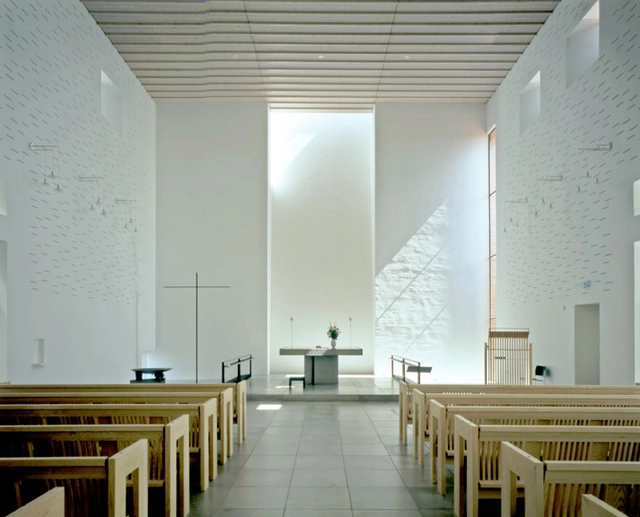
The Scandinavian countries have developed great buildings that resonate with both the scarce light in winter and the long summer days. Henry Plummer, Professor Emeritus at the University of Illinois at Urbana-Champaign, has very carefully studied the various daylight phenomena in the Nordic countries, with extensive photo journeys and brilliant writing that combines an analytical perspective with a poetic touch. His view of daylight looks beyond the practical advantages of using reflective white spaces to facilitate bright rooms; the passionate photographer is much more interested in the light effects that play with the local beauty of nature and touch the human soul.
Read on for more about how Nordic light enters white spaces
Mathews Nielsen Landscape Architects' designs for Pier 42. Image Courtesy of Mathews Nielsen Landscape Architects
As part of Mathews Nielsen Landscape Architects' ongoing blog at Metropolis Magazine about effective implementation of landscape design principles, this article discusses one of the more unusual methods developed to create resilience and prevent storm damage: oysters. Drawing on her experiences creating an oyster reef at Mathews Nielsen Landscape Architects' Pier 42 project in New York, Johanna Phelps explains the challenges and opportunities that arise in establishing this unusual type of natural infrastructure in an urban location.
Since Hurricane Sandy struck New York in 2012, the city’s waterfront design discussions have focused on ideas of resiliency and planning for storm events. The recent Rebuild by Design competition sponsored by the U.S. Department of Housing and Urban Development (HUD) and the Presidential Hurricane Sandy Rebuilding Task Force, featured six winning proposals that all envisioned a beefed-up Manhattan shoreline capable of handling large storm events and other hazards effects of climate change. Of the handful of ambitious designs, Scape/Landscape Architecture's Living Breakwaters plan was the most interesting: the project called for the reestablishment of New York's erstwhile oyster reefs, which the architects said would improve local ecology.
The use of fiberglass allowed for the pavilion to be thin and brittle, but also had the strength to span a large face. The pigment made it fire retardant. Image Courtesy of Louis Webb Bird/AECOM
Settled neatly in the quiet hum of London's Kensington Gardens rests Smiljan Radić's 2014 Serpentine Pavilion, an ethereal mass of carefully moulded fiberglass punctuated by precisely cut openings. Radić desired a structure that appears thin and brittle, yet was strong enough to support itself, and his affection for the rudimental layered qualities of papier-mâché - his maquette medium of choice - inspired the use of fiberglass by AECOM, who engineered Radić's wild ideas. In this article, originally published by Metropolis Magazine as "Paper-Thin Walls," an AECOM engineer explains their solution. Read on after the break to find out more.
International design, architecture, engineering and planning firm HOK has recently announced its plan to acquire 360 Architecture, a firm specializing in sports facility design. With HOK’s global influence and 360 Architecture’s expertise, the acquisition could bring about significant advances in sports facility design and expand the market reach for each firm. When it comes to the business of architecture, acquisitions such as this often enable large corporate firms to take on a wider variety of projects, giving them a competitive edge against famous designer names in the industry. But what else can we learn from the growth of the world's largest firms?
Gentrification is seen as a rising menace in many cities. The process whereby rich "gentrifiers" move into neighborhoods, driving up property prices and thus driving out those unable to afford those prices, has drawn criticism from activists and planners for years. However, this article by io9 writer Annalee Newitz, first published by io9 as "This is What Gentrification Really Is", tells us that the issue is not quite the struggle between good and evil that it first appears to be. Gentrification is a process dependent on economy, political climate, and the mercurial nature of urban development itself - and sometimes fighting against it only serves to exacerbate the problem. Find out what we can do in the face of gentrification after the break.
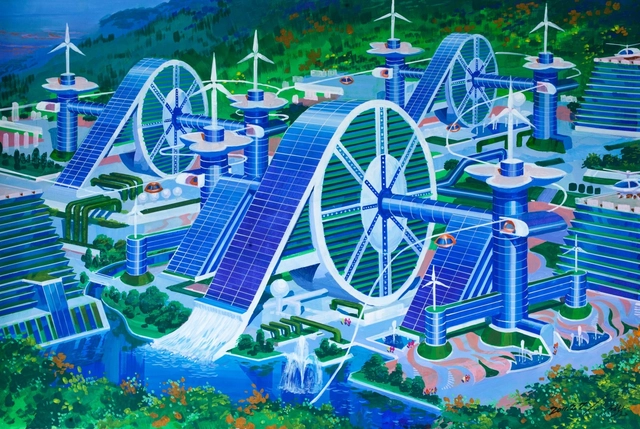
A silk co-operative clad with acres of PV solar panels, one of several illustrations exhibited at the Korean Pavilion in Venice. Image Courtesy of Koryo Tours
Originally published on Metropolis Magazine as "The Future of Architecture, According to a North Korean Architect," this interview with Nick Bonner, Curator of the North Korean Portion of the Venice Biennale's Korean Pavilion, delves into the realities of architectural work in one of the world's most secretive countries.
There's good chance you'll never step foot in North Korea, which isn't the same as saying you can't. Interest in the socialist state is increasingly high, a fact reflected by a rise in tourists eager to discover the sites and spectacles of Pyongyang. Nick Bonner, founder of Koryo Tours, has been bringing visitors to the Democratic People’s Republic of Korea (DPRK) for over two decades. He recently curated a small exhibition in the Korean Pavilion at this year’s Venice Architecture Biennale.
For “Utopian Tours” Bonner commissioned designs from an unidentified North Korean architect, asking him to envision a whole new infrastructure for accommodating larger and larger groups of tourists. The resulting handdrawn illustrations are fascinating: the future of architecture—at least in North Korea—looks a lot like yesterday's future, where tourists travel in hovercraft RVs, and workers live in ziggurat-shaped hotels inspired by mountains and trees.
Metropolis asked the trained landscape architect to give us a tour inside the present architecture scene of one of the world’s most isolated countries today.
Originally published by Metropolis Magazine as “Playing in Traffic“, this article by Jack Hockenberry delves into the relationship between man and vehicle, illustrating the complex dynamic created in New York - a city with over 2.1 Million registered vehicles. Contrary to the car-centric schemes of New York's infamous former Master Planner Robert Moses, Hockenberry argues that the city is the "negative space" while vehicles are obscured by our unconscious.
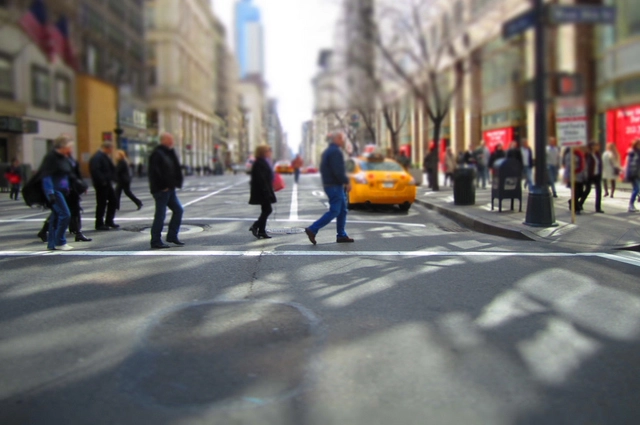
It is a curiosity of modern urban life that the more cars crowd into cities, the more they become invisible. It’s a great feature that comes standard on any model these days. Unfortunately we can’t control it from the driver’s seat—however much we would like to wave our hands and watch through our windshields as gridlocked cars disappear, liberating us from traffic imprisonment. The invisibility I am speaking about only works if you’re a pedestrian or bicyclist. The number of motorized vehicles parked or driving at any given moment on the streets of New York City is astounding. An estimated 2.1 million are registered in the city, according to the state’s Department of Motor Vehicles. Yet we never fully register them visually when we’re walking on the streets. The city is the negative space and that is how our eyes increasingly navigate urban landscapes. Everything around the cars and trucks gets knitted together by the eye and, even though the vehicles are present, we have gradually learned to ignore them unless we’re standing in the direct line of moving traffic.
As modernist architects broke free from vernacular architecture and developed a homogenized international style, many created sterile spaces and places out of touch with the decorative warmth of historical forms of human inhabitation. Negative reactions to the brutality of Modernist spaces encouraged architectural movements such as post-modernism and deconstructivism, but these never managed to usurp the rational modernist box as a dominant architectural paradigm.
However, the intended machine-like precision of these buildings has often become unintentionally humanized over time, through the addition of curtains, coloring, or even through accidental breakage and imperfect repairs or alterations. I believe that building on the successes and failures of modernism has spawned a new and previously unclassified architectural style: Pixelism. Find out what this new phenomenon is after the break.
Wondering what to do with the last, lingering weeks of summer? There's still plenty of time for some enticing summer reading! Peruse this online collection of select books on Architecture, chosen from academic publisher Routledge's titles on themes of Professional Practice and Sustainable Architecture, and available in their entirety for free throughout the month of August.
Including compelling and notable works, these books tackle relevant and significant contemporary issues facing the design world today. See what's available after the break.
ArchDaily has partnered with CEMEX, a global leader in the building materials industry, to bring you an industry perspective into the latest advances that are relevant to architects. In this installment, we explore the role concrete plays in the development of forms in architecture.
Like splicing DNA, specific physical traits can be selected depending on a project’s needs. Adjusting the mix or adding exotic materials to concrete can make it waterproof or sponge-like; it can change its acoustic properties, generate energy from footsteps or even clean pollution from the air. Concrete is amazingly versatile. It can even used like ink in giant 3D printers to print buildings.
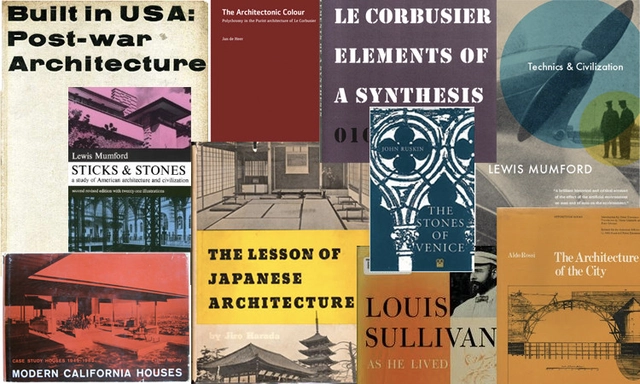
If you don't have access to an architecture library (and even if you do), sifting through shelves can take hours. Buying books can be even more painful — for your wallet, at least. Instead, why not browse this list of 25 books that are all free and easily accessible online? Some are well-known classics of architecture literature, but we hope you find a few surprises as well.
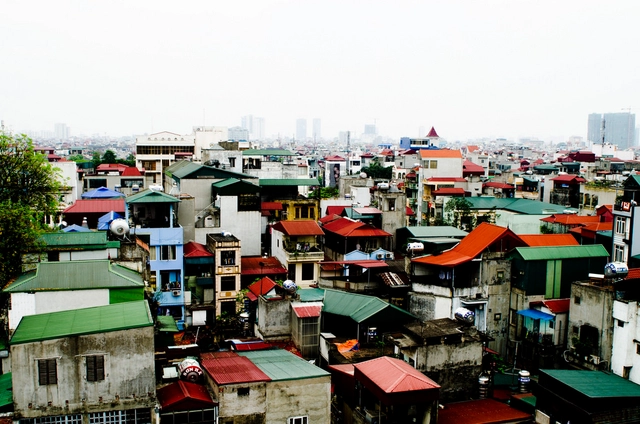
As the tide of urban migration sweeps across the developing world, cities experience an overpowering pressure to provide basic services such as electricity and sewage treatment to an enormous amount of people building illegal shacks on city outskirts. When they fail, the slum is born - but is it possible for a city to expand without slums? In Hanoi, Vietnam, officials hope to answer this question, with a number of tactics that have led to a "culture of semi-legal construction." Read this article in The Guardian to learn how Hanoi manages to curb slums and provide a basic standard of living to its poorest inhabitants.
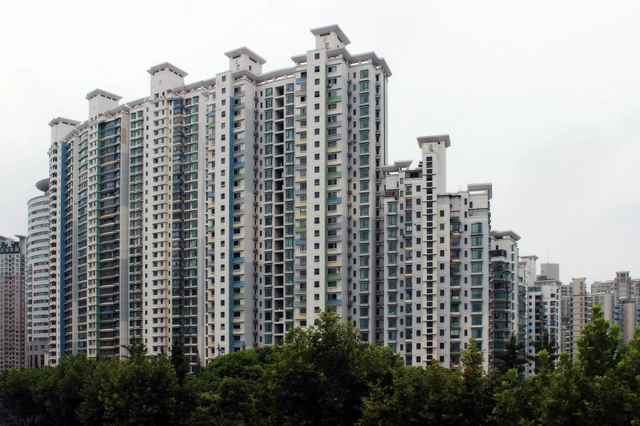
The world is looking at the urban machine of Chinese cities, at the newly founded theme-cities and at the new urban economic investment areas around the cities. The buildings are repetitive, the areas are sometimes uninhabited, but the thing that leaves urban planners, architects and the public amazed is that these buildings are often completely sold out even before they are completed.
To buy these freshly constructed residences takes money, and over the last three decades the Chinese economic miracle served precisely to grow the per capita income. The reform of the economic system in 1978 was the driving force that triggered the mechanism of capital production. The reform led to millions of people migrating to the cities from the underdeveloped west of the country in search of higher salaries and a well-founded hope of revolutionizing their economic existence.
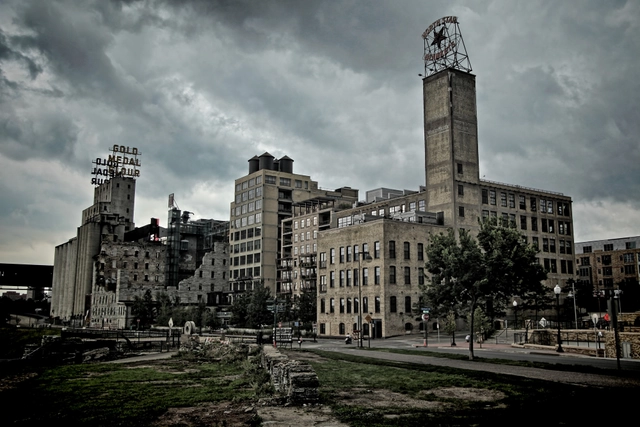
Historic mill city ruins in downtown Minneapolis. Image Courtesy of Flickr CC License / Joey Lax-Salinas
Lately, architects are sharing an increasing captivation with ruins. As our technologies for envisioning the buildings of the future become ever-more accurate – enabling us not only to walk through, hover over, and inhabit walls, but also to calculate exact quantities of materials, structural load capacities and costs – our fascination for ruin, a process that is governed by laws of nature and time in a manner that is spatially unpredictable and rarely uniform, has also seen a rise in popularity.
Blogs such as Ruin Porn, Abandoned America and Architecture of Doom draw from a recent sub-genre of photography, identified as ‘ruins photography’ or ‘ruin porn’. While buildings can go into decay for many reasons, these images tend to focus on urban decay, especially in cities such as Detroit, Chicago and Berlin, which saw a surge of industrialization in the last century that has since dwindled.
https://www.archdaily.com/537712/beyond-ruin-porn-what-s-behind-our-obsession-with-decayShayari De Silva
Architecture students are constantly beset by questions concerning where they want to work, and for what type of firm - and these two questions often boil down to a decision concerning the size of the firm they want to work for. This article, originally posted on Arch Shortcuts thankfully makes this difficult choice a little easier. In it, blog Co-Founder Udit Goel reviews the pros and cons of big firms and small firms, including compensation, expected working hours, and responsibilities. Read the full article, after the break.






.jpg?1408972517&format=webp&width=640&height=580)